Artwork
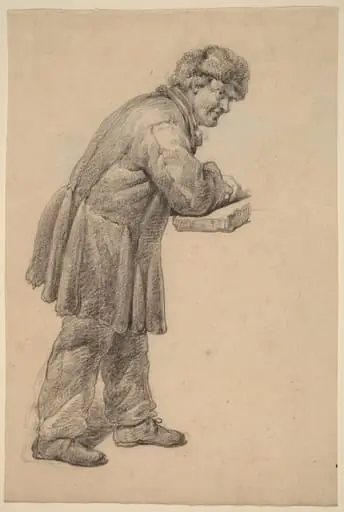
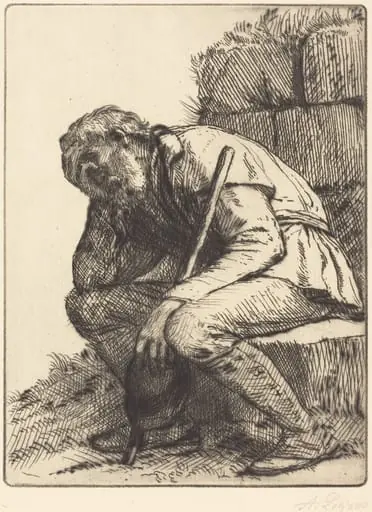
Man Leaning on a Counter
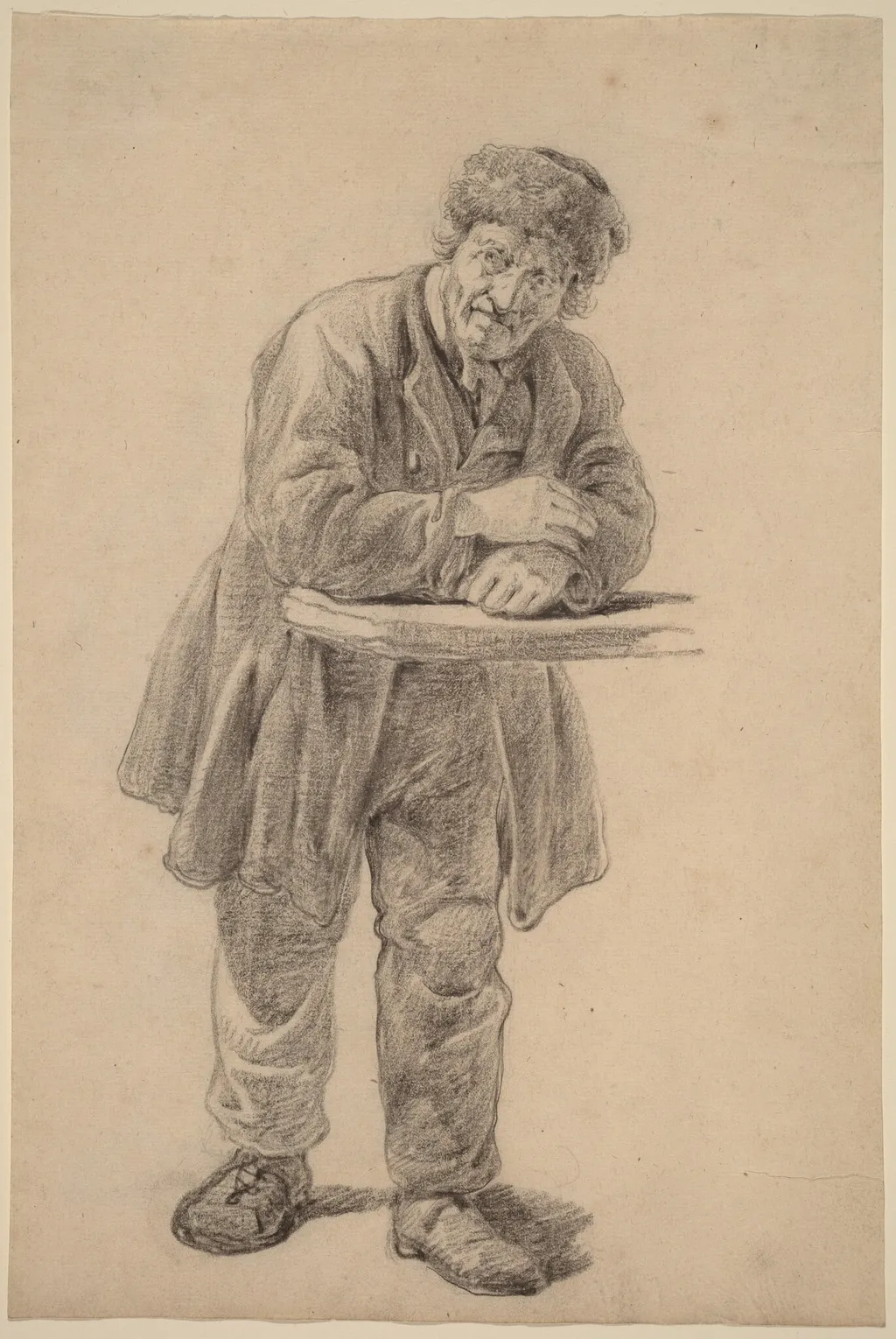
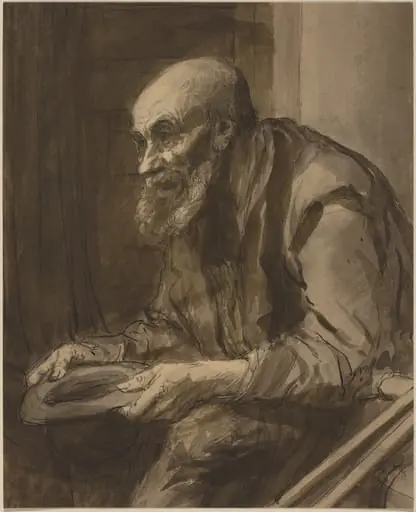
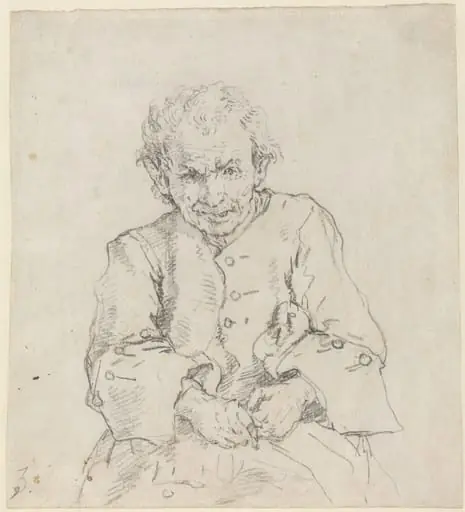
Man Leaning on a Counter is a chalk drawing by the Romanticist artist Charles Wesley Jarvis. It dates from 1824 and is held in the collection of the National Gallery of Art.
About this work
Overview
Man Leaning on a Counter is a drawing executed around 1824 by American artist Charles Wesley Jarvis. Rendered in black chalk and graphite on laid paper, the work measures a modest size typical of preparatory sketches. It captures a solitary figure in a moment of repose, rendered with a spontaneity that suggests a study rather than a finished composition.
Subject & Meaning
The composition presents an elderly man supported by a low table, his weight shifted onto both hands. He wears a loose, weathered coat, baggy trousers and simple slippers, while his unkempt hair frames a face marked by deep lines and a faint frown. The expression conveys fatigue tempered by alert eyes, hinting at a narrative of age, labor, and quiet endurance.
Technique & Style
Jarvis employs rapid, gestural strokes of black chalk and graphite to delineate the figure’s anatomy, clothing folds, and facial features. The sketchy line work, combined with the rough texture of the laid paper, creates a tactile sense of immediacy. Subtle chiaroscuro—contrasting light and shadow—models the form, giving the drawing a three‑dimensional presence despite its minimal means.
History & Provenance
Created circa 1824, the drawing belongs to the early period of Jarvis’s career, when he was active in New England producing genre scenes and portrait studies. The work has remained in private collections before entering a museum holding of 19th‑century American drawings, where it serves as an example of Jarvis’s observational practice and his interest in everyday subjects.
Own this work as a print
Artist & collection