Artwork
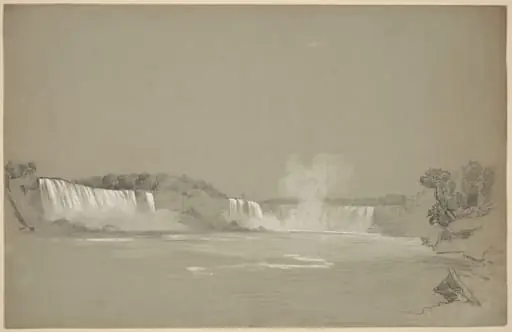
American Falls, Niagara
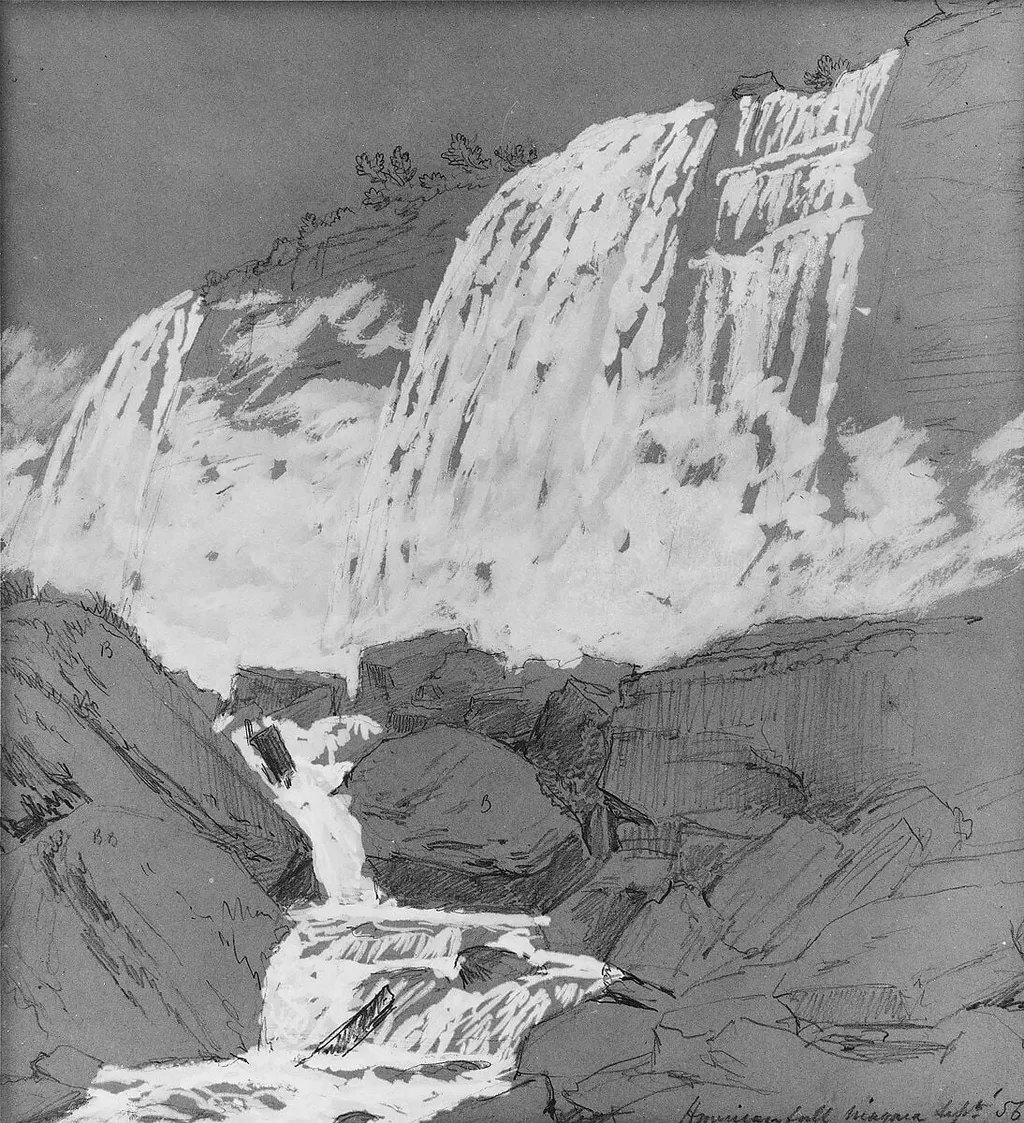
American Falls, Niagara is a gouache drawing by the Impressionist artist Jasper Francis Cropsey. It dates from 1855 and is held in the collection of the Metropolitan Museum of Art.
About this work
Overview
Jasper Francis Cropsey’s work titled *American Falls, Niagara* is a small-scale study executed around 1855. Rendered on dark buff‑colored wove paper, the piece combines graphite drawing with white gouache, capturing the tumult of Niagara’s western cascade in a compact, immediate format.
Subject & Meaning
The composition centers on the Niagara River’s American Falls, portrayed as a series of jagged, descending tiers. Mist and spray are suggested by wispy strokes, evoking the roar and power of the water while the stark white against the dark ground emphasizes the fleeting, luminous quality of the scene.
Technique & Style
Cropsey worked en plein air, applying a dense, chalk‑like white gouache over a graphite underdrawing. The dark paper serves as a tonal base, allowing the opaque white to convey highlights without obscuring the underlying sketch. The result is a brisk, unfinished study that foregrounds gesture and light over detailed finish.
History & Provenance
Created during the mid‑nineteenth century, the study reflects Cropsey’s interest in American landscape and the burgeoning fascination with natural wonders. It entered the American Wing collection of the museum, where it is displayed as an example of his early field sketches.
Context
At the time of its making, Niagara Falls was a popular subject for artists documenting the nation’s scenic grandeur. Cropsey’s approach aligns with the Hudson River School’s emphasis on dramatic light and the sublime, yet his use of gouache on dark paper marks a departure from the more polished oil canvases typical of the movement.
Artist & collection
Artist
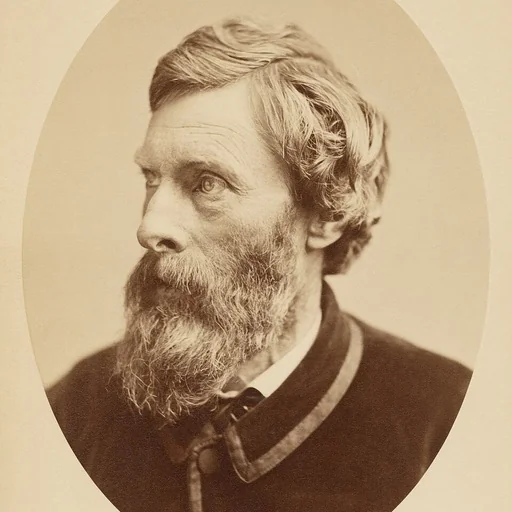
Jasper Francis Cropsey was an American architect and artist. He is best known for his Hudson River School landscape paintings.