Artwork
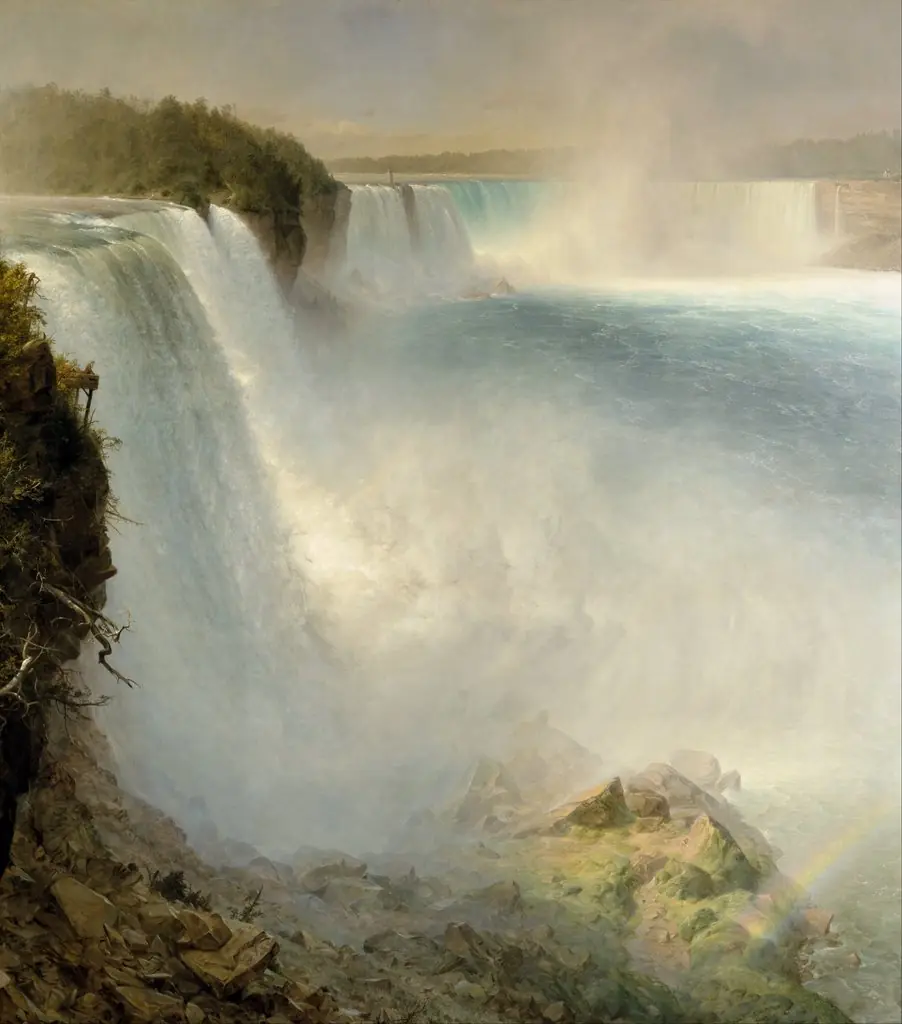
Niagara from the American Side
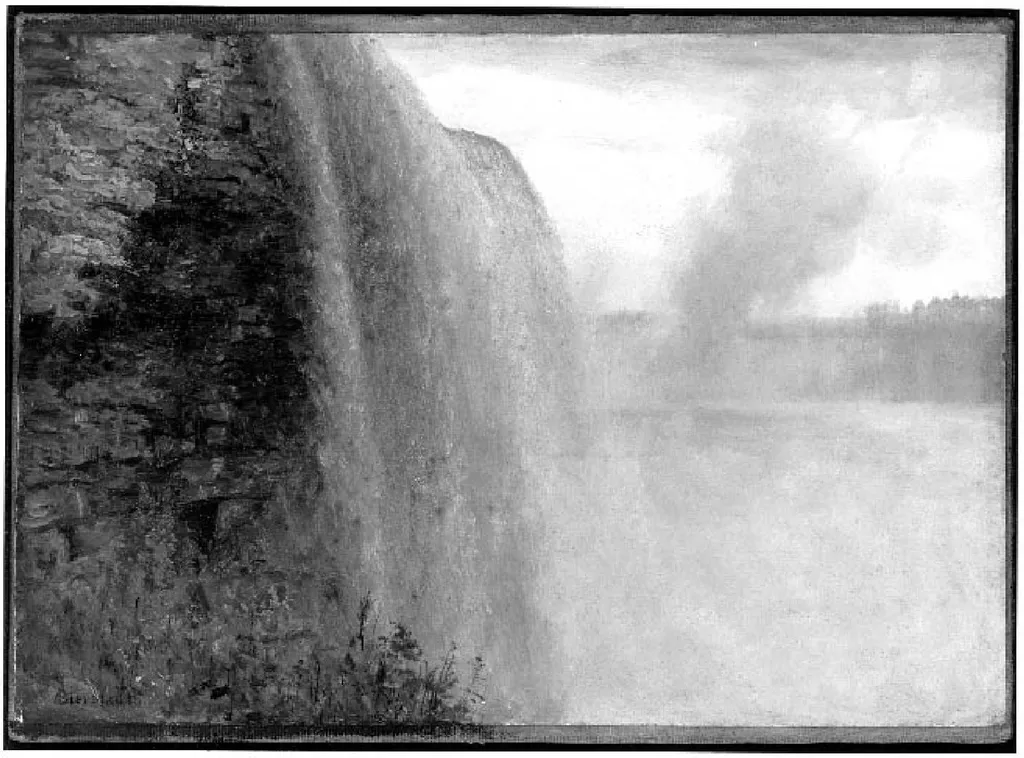
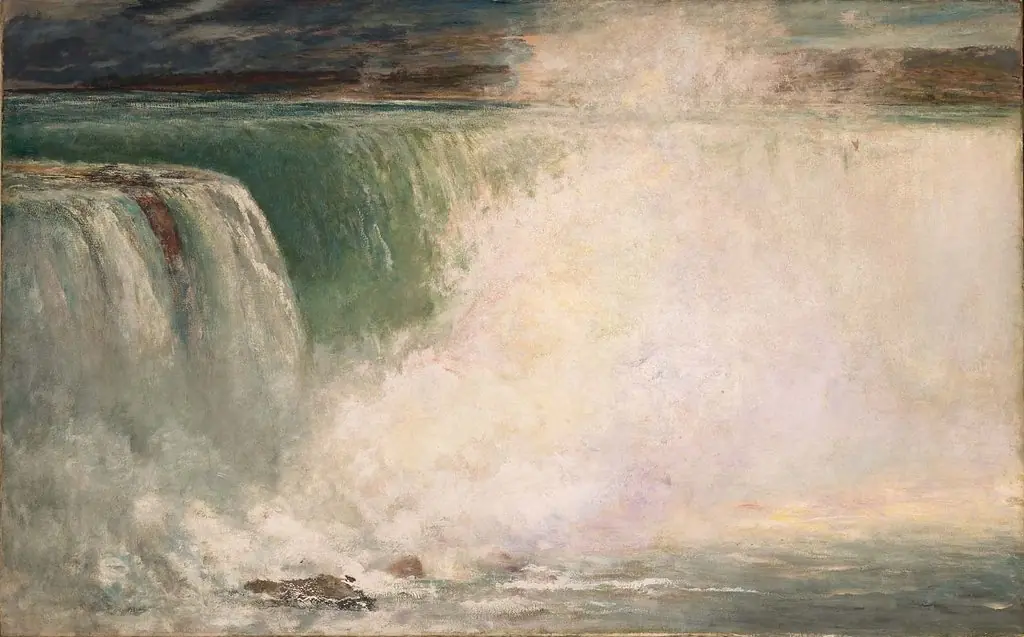
Niagara from the American Side is an unspecified painting by the Hudson River School artist Albert Bierstadt. It dates from 1869 and is held in the collection of the Museum of Fine Arts Boston.
About this work
Overview
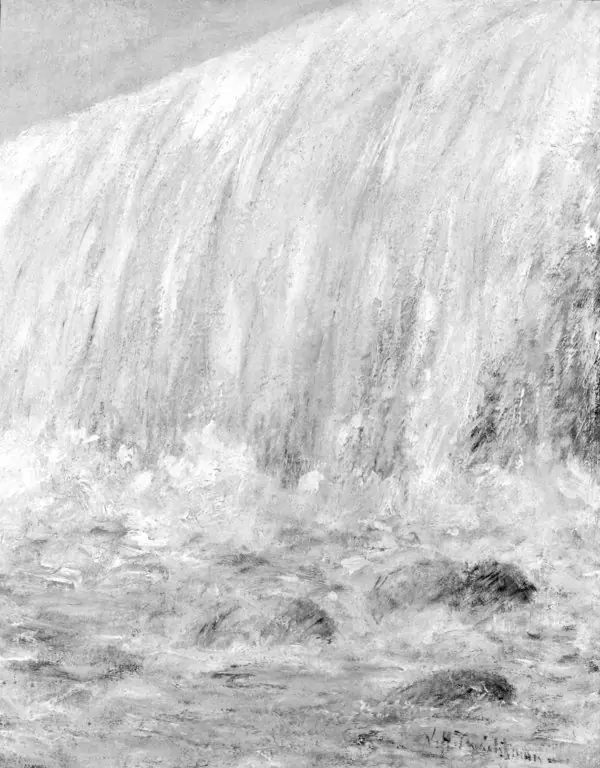
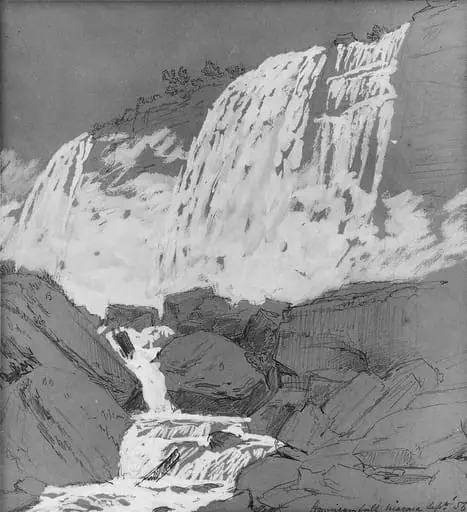
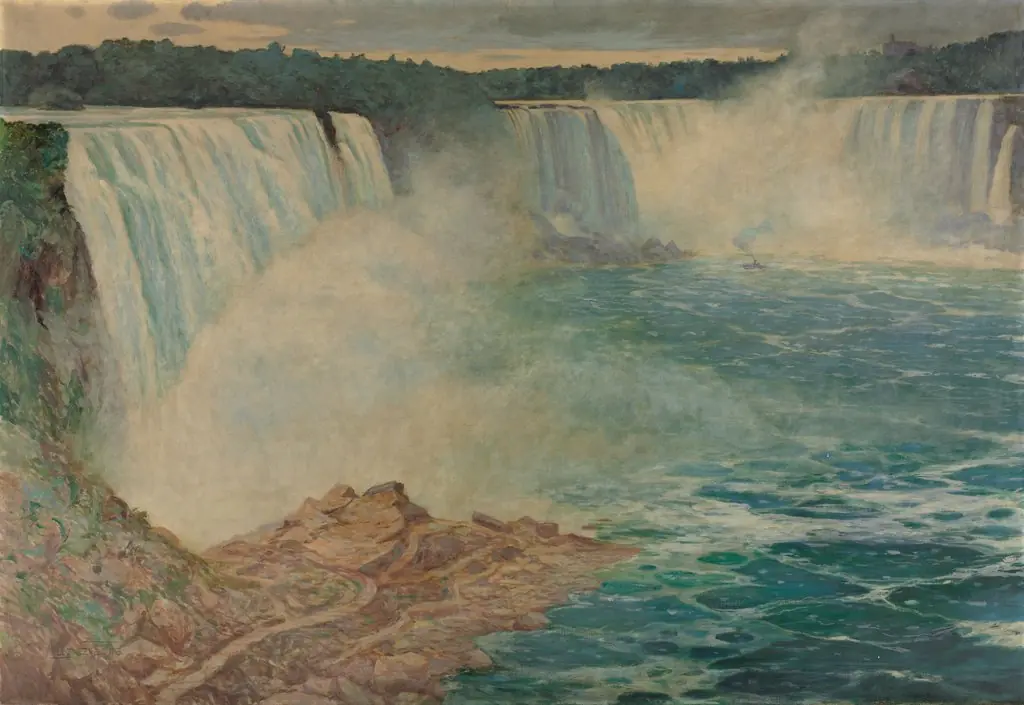
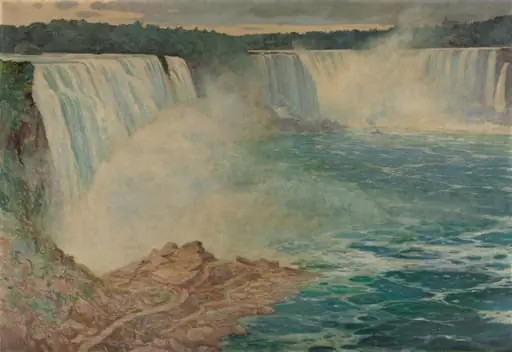
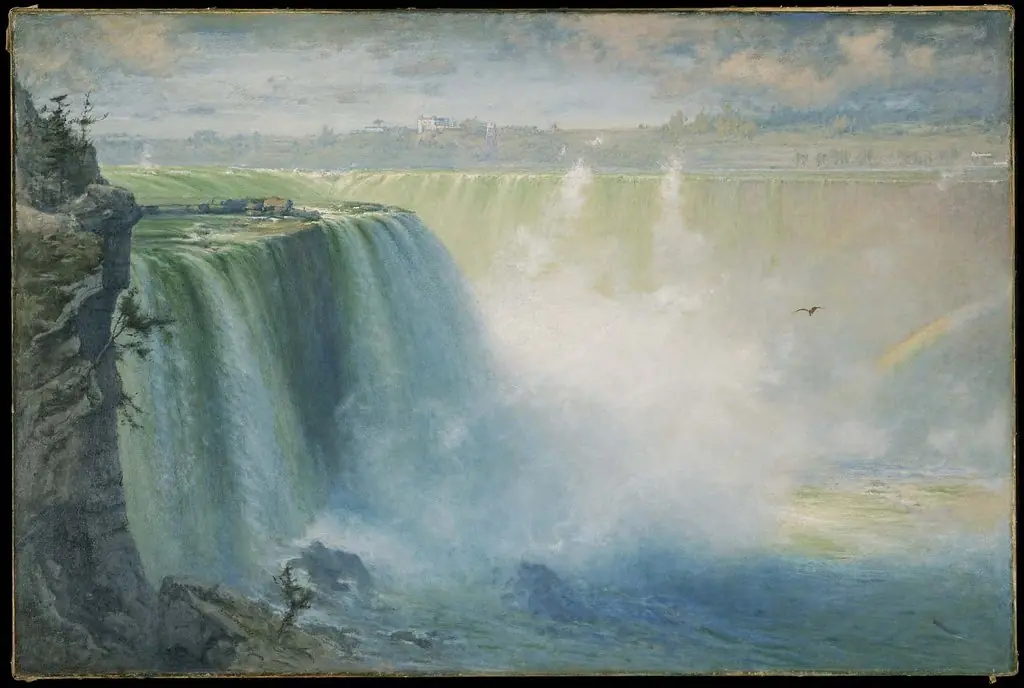
Albert Bierstadt’s 1869 canvas *Niagara from the American Side* presents a sweeping view of the famed waterfall as seen from the United States bank. The composition centers on the plunging water, rendered in luminous white mist against a dark, cool‑gray cliff, while verdant foliage clings to the rocky foreground. The painting belongs to the collection of the Museum of Fine Arts, Boston.
Subject & Meaning
The work captures Niagara Falls in its dramatic, untamed state, emphasizing the power of natural forces. By focusing on the sheer drop and the veil of spray, Bierstadt conveys a sense of awe toward the landscape, aligning with the 19th‑century American fascination with wilderness as a symbol of national identity and sublime beauty.
Technique & Style
Executed in oil, the painting displays Bierstadt’s characteristic handling of light and atmosphere. He contrasts the bright, almost ethereal mist with the deep, muted tones of the cliff, using delicate brushwork for the spray and broader strokes for the surrounding vegetation, a hallmark of the later Hudson River School’s romantic realism.
History & Provenance
Created during a period when Bierstadt, a German‑born artist who trained in Düsseldorf, was expanding his repertoire beyond the western frontier, the piece entered the Museum of Fine Arts, Boston’s holdings in the early 20th century. It remains a representative example of his eastern landscape output.
Context
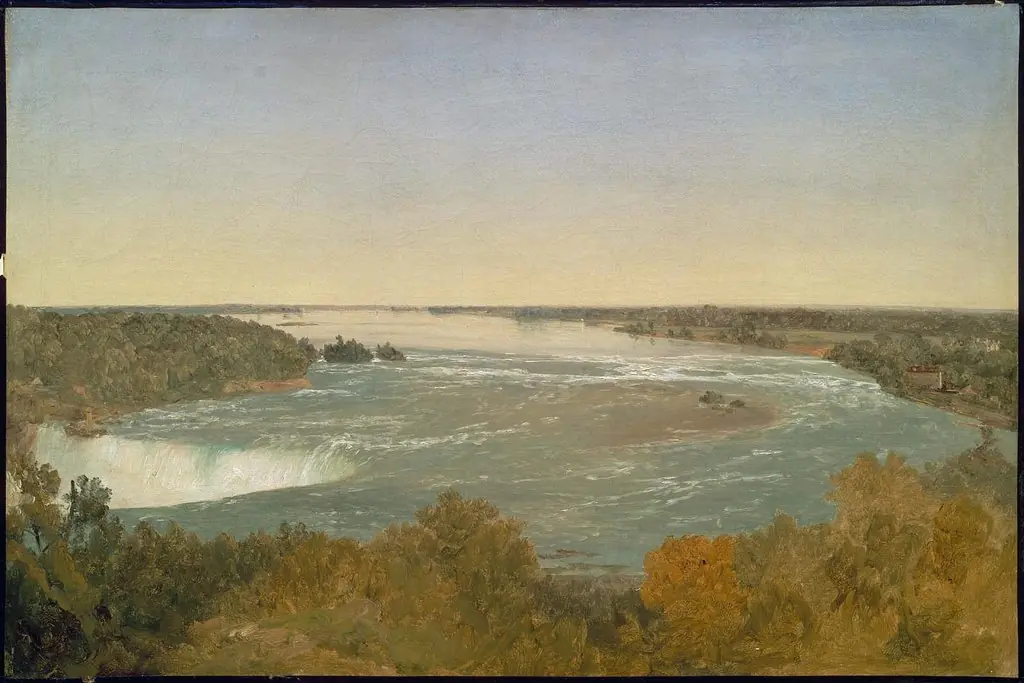
While Bierstadt is best known for grand western vistas, this painting reflects his broader interest in iconic American sites. The 1860s saw increased travel to Niagara, and artists frequently depicted the falls to satisfy public curiosity and to illustrate the nation’s natural grandeur.
Artist & collection