Artwork
Study of a Clump of Trees
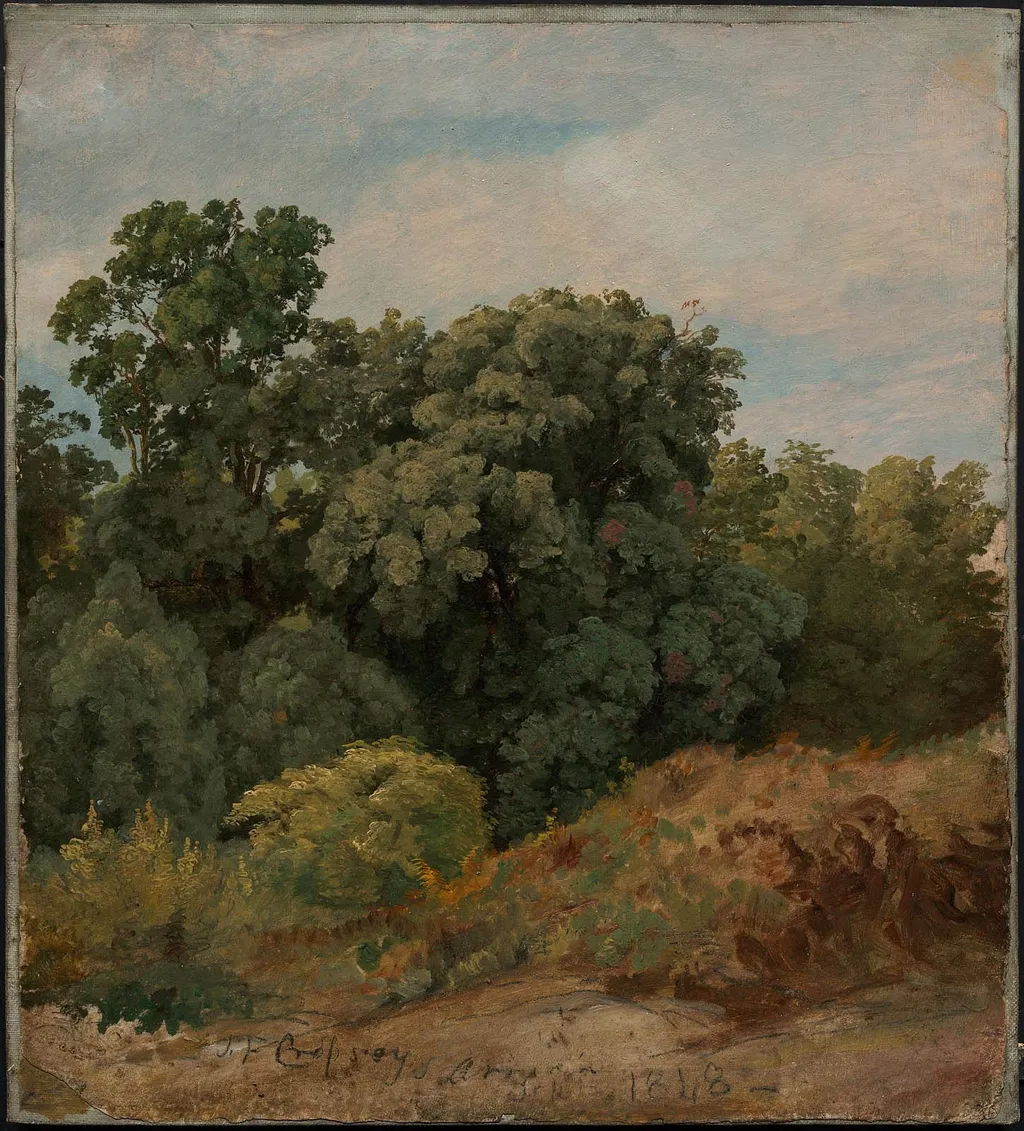
Study of a Clump of Trees is an unspecified painting by the Hudson River School artist Jasper Francis Cropsey. It dates from 1848 and is held in the collection of the Museum of Fine Arts Boston.
About this work
Overview
Executed in oil, it reflects the artist’s early engagement with natural forms and his commitment to direct observation.
Painted in 1848 by Jasper Francis Cropsey, this work is a focused landscape study centered on a cluster of trees. Executed in oil, it reflects the artist’s early engagement with natural forms and his commitment to direct observation. The painting resides in the collection of the Museum of Fine Arts, Boston, where it serves as an example of 19th-century American landscape practice grounded in close attention to botanical detail.
Subject & Meaning
The subject is a dense grouping of trees, rendered without human figures or architectural elements. By isolating this natural formation, Cropsey emphasizes the intrinsic presence of the forest, suggesting quiet endurance and organic harmony. The absence of narrative or symbolic context invites contemplation of the trees as subjects in their own right, valued for their form and vitality rather than their allegorical potential.
Technique & Style
Cropsey employed varied brushwork to convey the texture of foliage—smooth blends for shaded areas, thicker impasto for sunlit leaves. A restrained palette of greens, softened by muted background tones, directs focus to the trees’ structural complexity. The modulation of light across the canopy suggests atmospheric depth, achieved not through dramatic contrast but through subtle tonal shifts and tactile surface variation.
History & Provenance
Created during Cropsey’s formative years as a landscape painter, this study predates his more widely recognized Hudson River School compositions. It remained in private hands until acquired by the Museum of Fine Arts, Boston, where it has been held since the early 20th century. Its preservation reflects early institutional interest in American artists’ preparatory works as valuable records of artistic process.
Context
In the late 1840s, American artists increasingly turned to native scenery as a subject worthy of serious attention. Cropsey’s study aligns with this shift, reflecting a growing emphasis on empirical observation over idealized composition. While not part of a grand panorama, this intimate scene contributes to a broader movement seeking to define a distinct American visual language rooted in local nature.
Legacy
Though modest in scale, this painting exemplifies Cropsey’s dedication to capturing the nuanced character of vegetation. It influenced later generations of American landscape painters who valued direct study over romanticized interpretation. Today, it stands as a quiet testament to the artistic significance of the everyday natural world, valued for its honesty rather than its spectacle.
Artist & collection
Artist
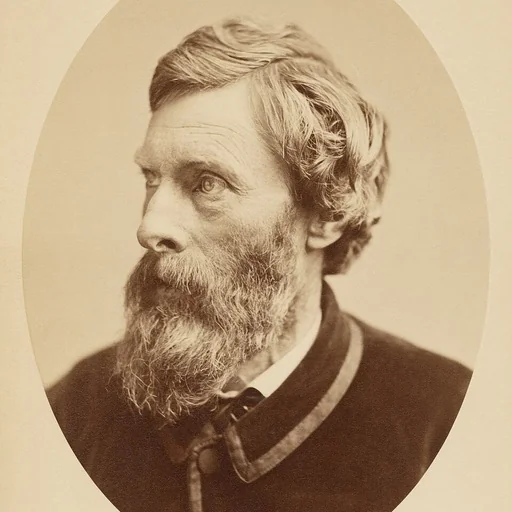
Jasper Francis Cropsey was an American architect and artist. He is best known for his Hudson River School landscape paintings.

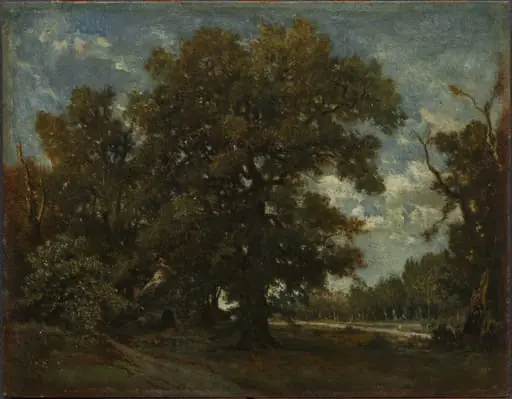 The Oak Tree
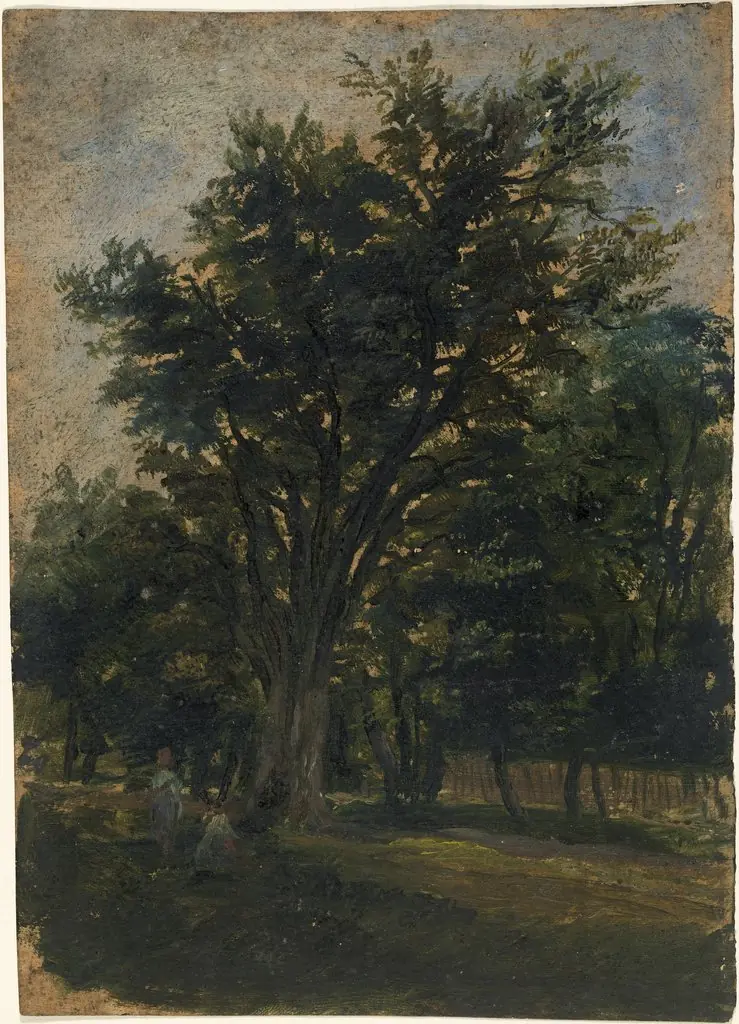 Figures against Trees
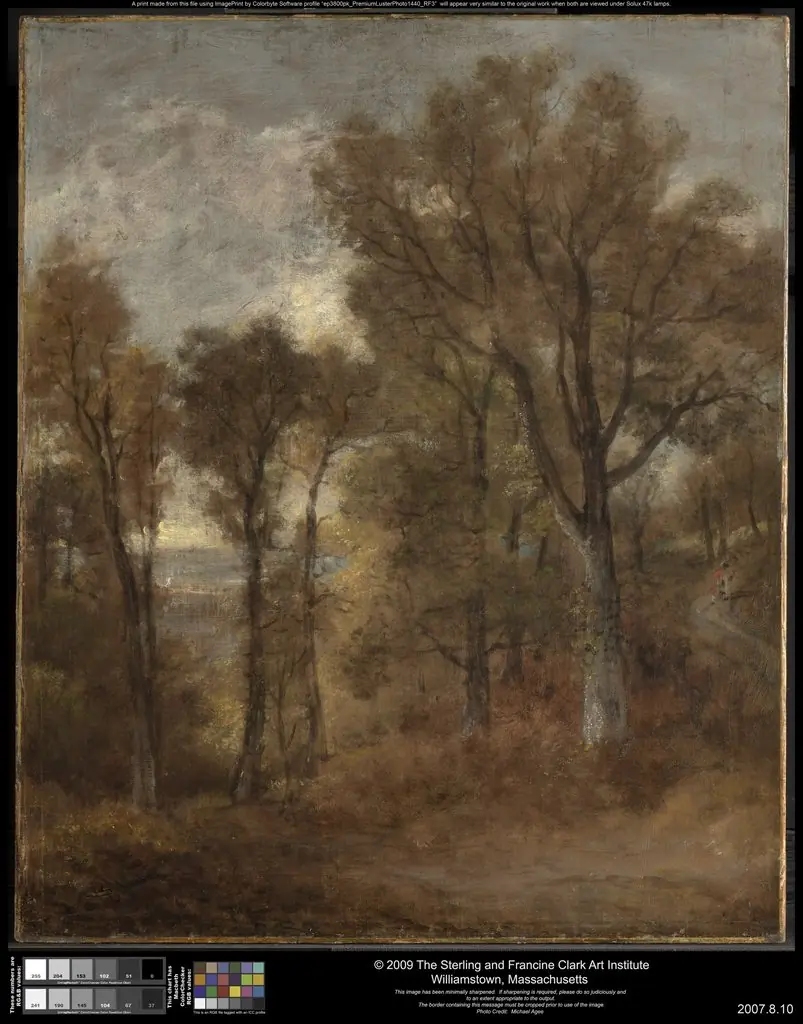 Woodland Scene Overlooking Dedham Vale
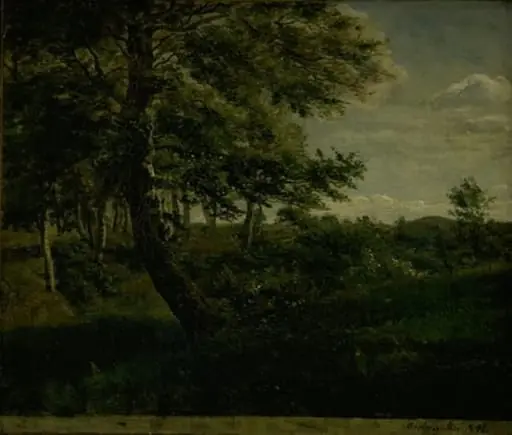 Ørsbjerg Forest at Aarup, Funen
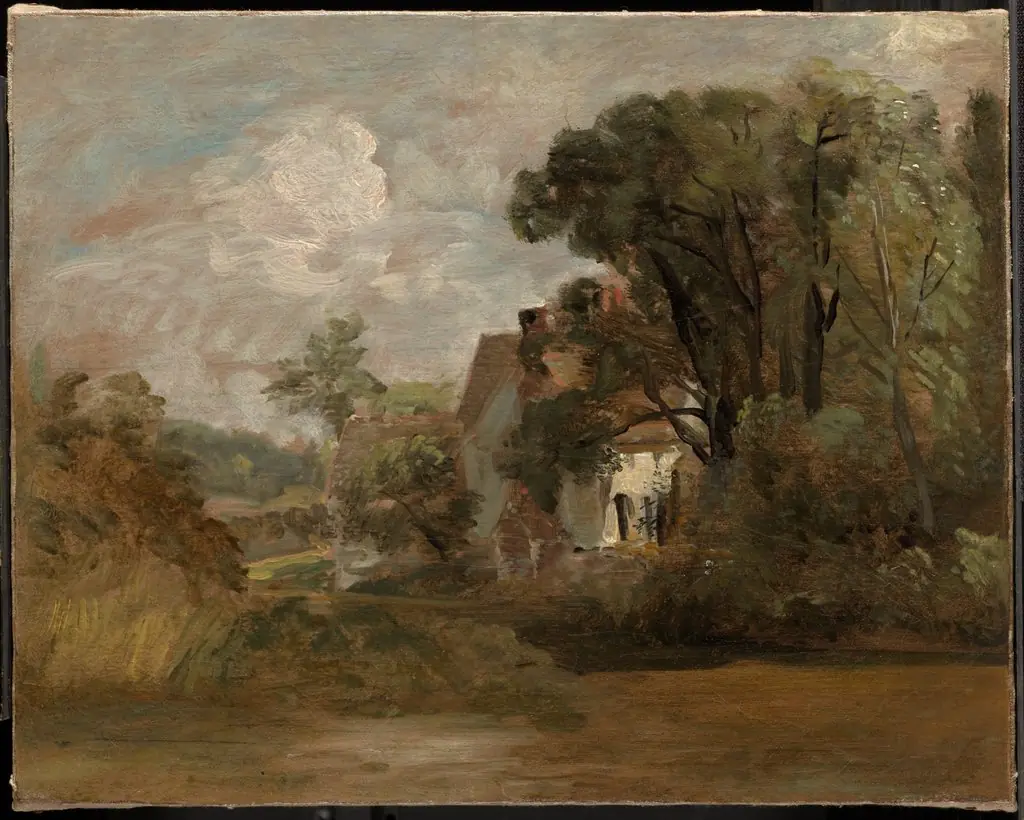 Willy Lott's House (recto); Landscape Sketches with Trees and Church Tower (verso)
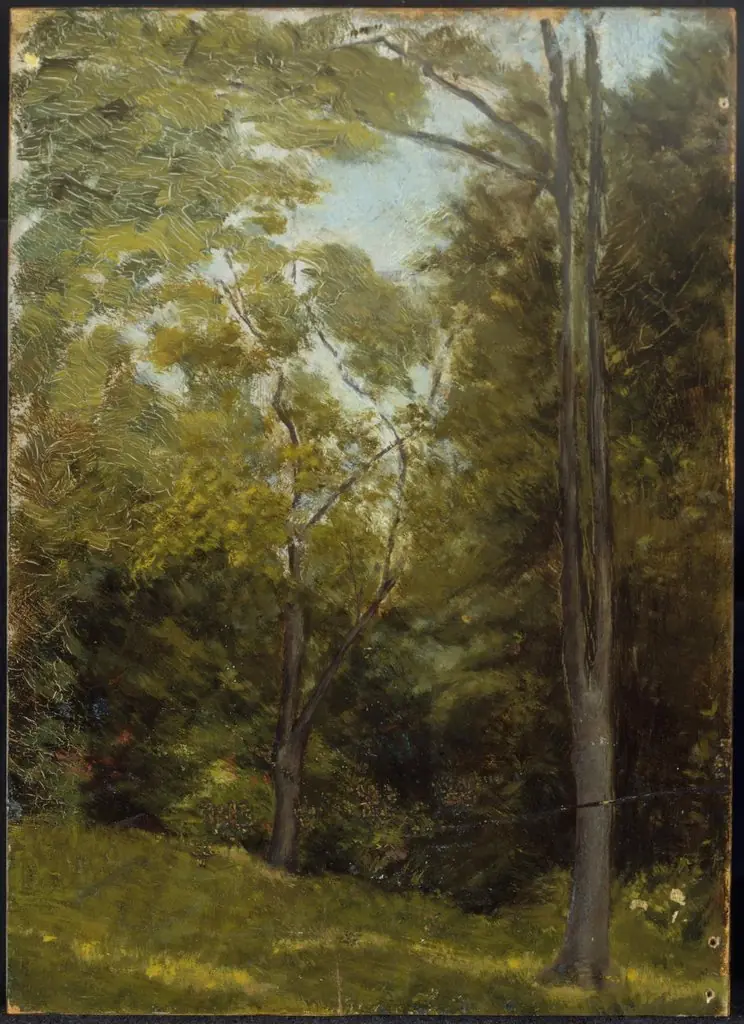 Landscape
 Three Trees: Italy
 Study of trees at Ballater, Aberdeenshire
 Three Trees: Italy
 Campagnalandschaft
 Pool in the Forest
 Old Beech Tree