Artwork
Peter IV the Ceremonious
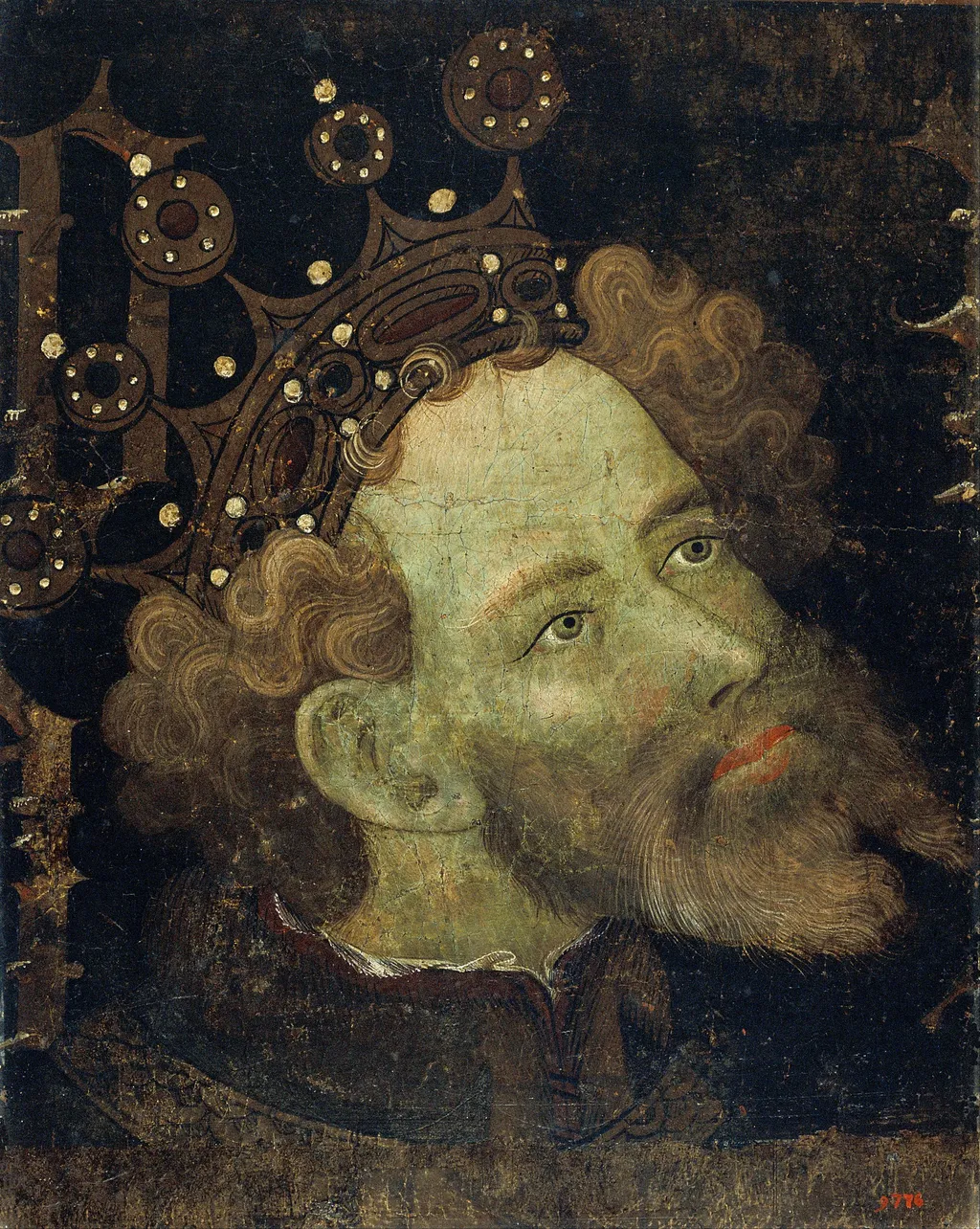
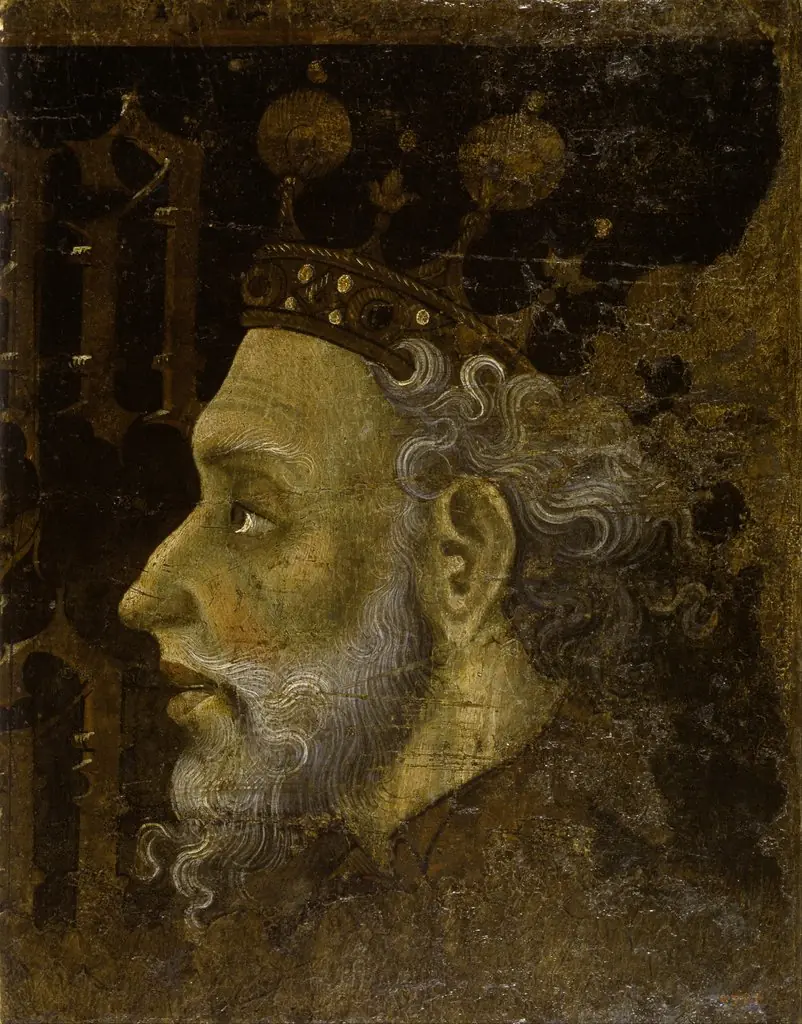
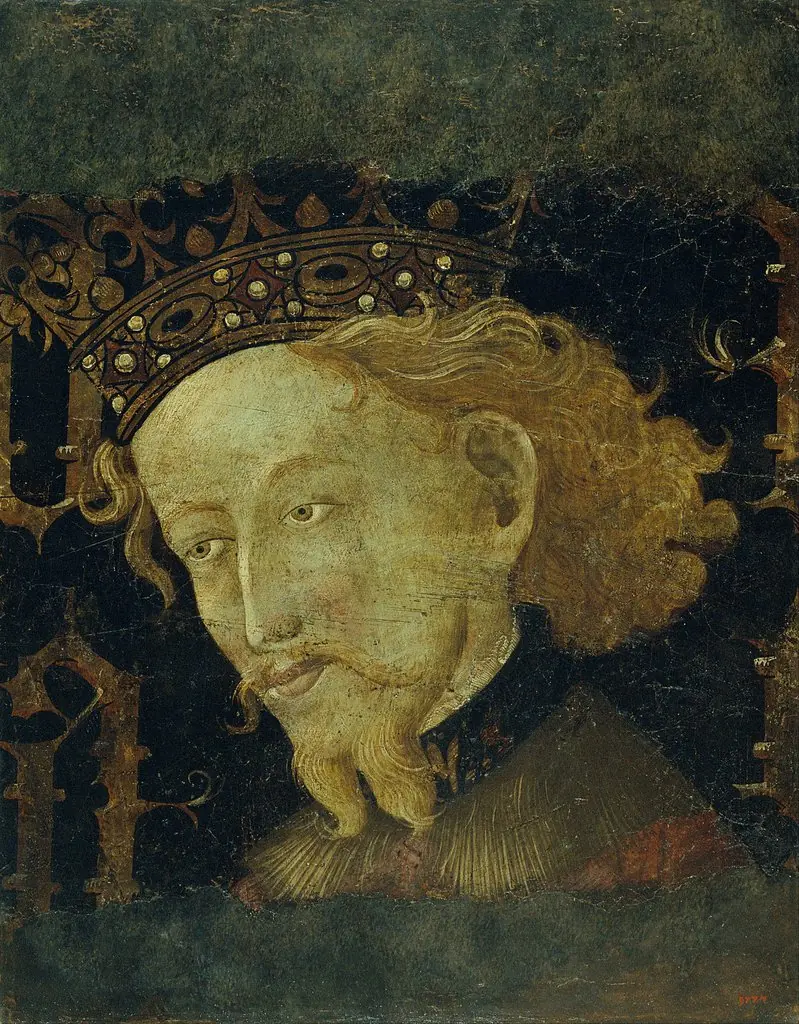
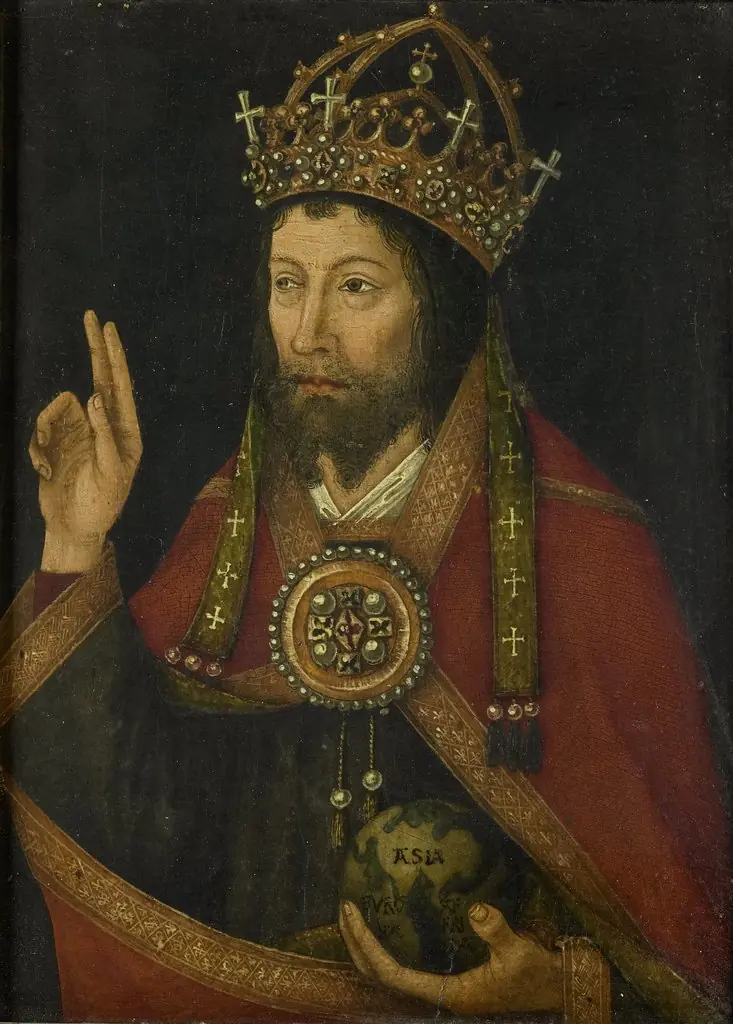
Peter IV the Ceremonious is a tempera painting by the Early Renaissance artist Jaume Mateu. It dates from 1427 and is held in the collection of the Museu Nacional d'Art de Catalunya.
About this work
Overview
Peter IV the Ceremonious is a 1427 tempera painting by Jaume Mateu, a Valencian artist active in the early 15th century. The work exemplifies the Gothic style of the early Renaissance period.
Subject & Meaning
The painting portrays a solemn, bearded man with curly hair, wearing an ornate, jeweled crown and dark attire. Despite the regal appearance, the subject's identity as 'Peter IV the Ceremonious' suggests a historical or noble figure, though the specific religious context or symbolism is not immediately clear from the depiction alone.
Technique & Style
Executed in tempera, the painting showcases the medium's characteristic texture and color palette, achieved through the use of egg yolks as a pigment binder. Mateu's style, influenced by his training under Pere Nicolau, adheres to Gothic conventions.
History & Provenance
Created in 1427, the painting is now part of the collection at the Museu Nacional d'Art de Catalunya, highlighting its recognized cultural significance within Catalan art heritage.
Context
As an early 15th-century work, *Peter IV the Ceremonious* reflects the transitional artistic values of its time, blending late Gothic elements with the emerging sensibilities of the Renaissance.
Legacy
While specific details on the painting's direct influence are not highlighted, its preservation in a national museum indicates its importance in the broader context of Valencian and Catalan early Renaissance art, contributing to the understanding of Jaume Mateu's contribution to the period's artistic landscape.
Artist & collection
Artist
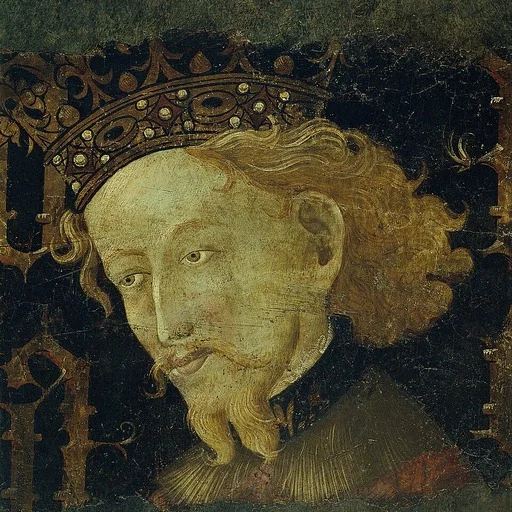
Jaume Mateu (1382–1452) was a Valencian painter of the Gothic style. The nephew and collaborator of Pere Nicolau, he is known to have worked in Valencia from 1402 to 1453. Works attributed to him include the Adoration…