Artwork
La promenade au Jardin Turc
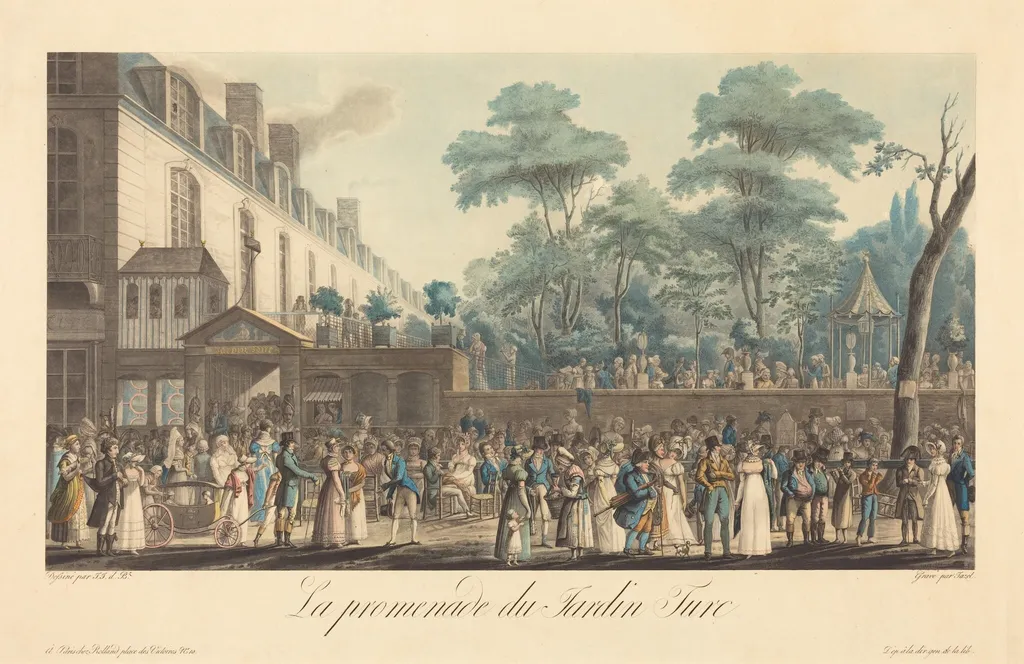
La promenade au Jardin Turc is an ink print by the Romanticist artist Jean-Pierre-Marie Jazet. It dates from 1830 and is held in the collection of the National Gallery of Art.
About this work
Overview
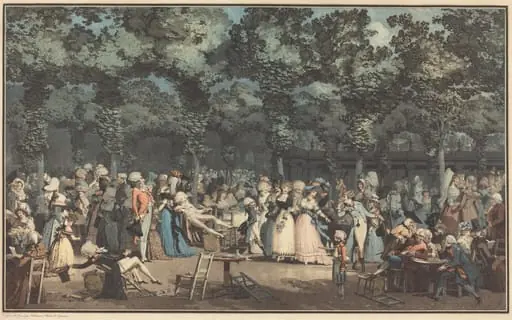
La promenade au Jardin Turc is a hand-colored aquatint produced by Jean-Pierre-Marie Jazet in 1830. As a print, it captures a public garden scene in Paris, reflecting the era’s fascination with leisure and urban sociability. The work combines etched lines with delicate color washes to evoke a moment of everyday life, rendered with precision and atmospheric nuance.
Subject & Meaning
The scene portrays a diverse group of Parisians strolling through a garden, dressed in contemporary formal wear—men in dark coats, women in light dresses.
The scene portrays a diverse group of Parisians strolling through a garden, dressed in contemporary formal wear—men in dark coats, women in light dresses. Their interactions suggest social ritual rather than narrative drama. The garden, possibly inspired by the real Jardin Turc, functions as a stage for public display, revealing how urban spaces became venues for performance and observation in early 19th-century France.
Technique & Style
Jazet employed aquatint to achieve subtle tonal gradations, enhanced by hand-applied watercolor to define fabrics and foliage. The composition uses layered depth: foreground figures are sharply detailed, while background elements soften into muted blues and grays. Light falls evenly, avoiding dramatic contrasts, lending the scene a calm, observational quality aligned with Romanticism’s interest in mood over heroism.
History & Provenance
Created in 1830, the print emerged during a period of rising print culture in France, when illustrated scenes of public life were widely circulated. Jazet, known for his topographical prints, likely produced this as part of a series documenting Parisian amusements. Its survival in museum collections suggests early institutional interest in documenting urban customs through print.
Context
The Jardin Turc, a real garden in Paris, was a fashionable spot for mixed-class gatherings after the Restoration. Jazet’s print reflects broader societal shifts: the public garden as a democratic space where social norms were performed, not broken. This aligns with contemporary interest in documenting the rituals of middle-class life, distinct from aristocratic or revolutionary themes.
Legacy
Though not widely exhibited today, the print remains a valuable record of early 19th-century Parisian social behavior. It exemplifies how printmakers contributed to visual ethnography, capturing fleeting moments of urban life with technical care. Jazet’s work, alongside contemporaries, helped shape a visual archive of bourgeois leisure during a time of rapid social change.
Artist & collection


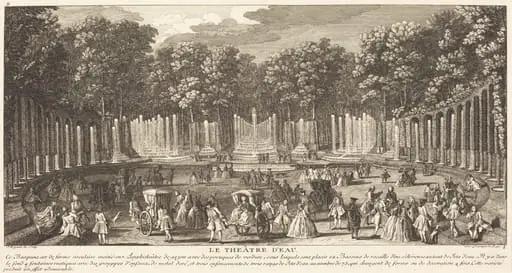 Le Théâtre d'Eau
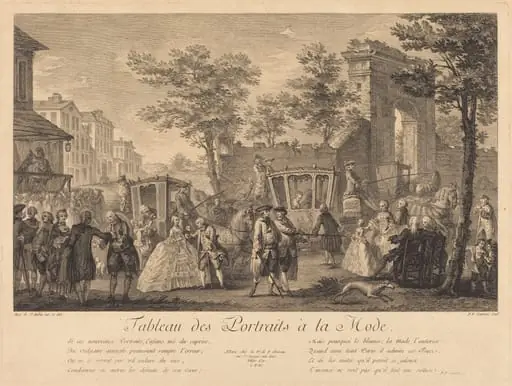 Tableau des portraits a la mode
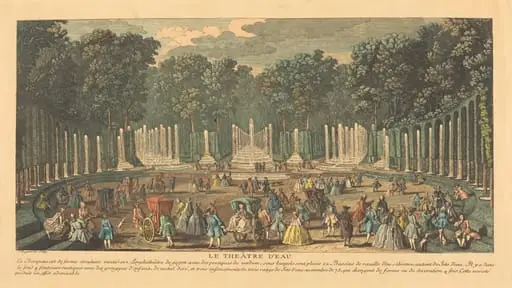 The Theatre of Water (Le Théâtre d'Eau)
 Bonaparte Reviewing the Consular Guard (La Revue du Quintidi)
 The Palais Royal--Garden's Walk
 Vue et perspective du Château de Versailles, de dedans l'anti-cour
 Dance in a Village Square
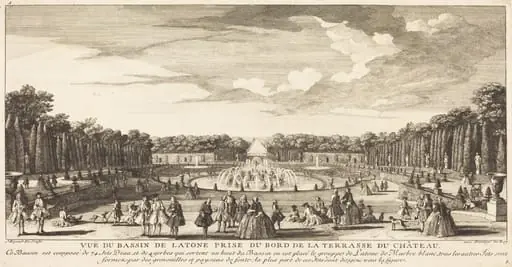 Vue du Bassin de Latone Prise du Bord de la Terrasse du Chateau