Artwork
Antiochus and Stratonice
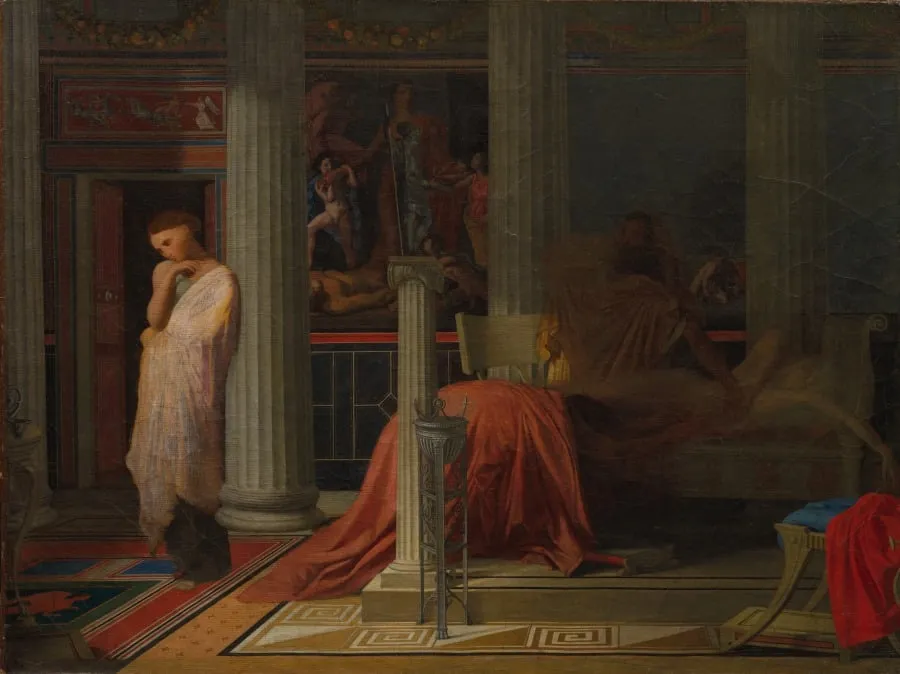
Antiochus and Stratonice is an unspecified painting by the Neoclassicist artist Jean Auguste Dominique Ingres. It dates from 1838 and is held in the collection of the Cleveland Museum of Art.
About this work
If you like this kind of storytelling in art, check out more works by Jean-Auguste-Dominique Ingres (French, 1780–1867).
A sick prince lies in bed while a doctor checks his pulse. His father and stepmother stand nearby, worried. The room is dark except for the figures, lit like actors on a stage.
This painting tells an old love story where a father gives up his young wife to save his dying son. Ingres painted it in the 1800s when people loved dramatic tales of sacrifice. Look closely—the doctor’s hand on the prince’s wrist is the only bright spot in the shadowy room.
If you like this kind of storytelling in art, check out more works by Jean-Auguste-Dominique Ingres (French, 1780–1867).
Overview
The canvas depicts the ancient tale of Prince Antiochus, stricken by a mysterious malady, lying in a dimly lit chamber while a physician monitors his pulse. At his side stand his father, King Seleucus, and the young queen, Stratonice, whose presence is suggested to be the source of the prince’s ailment. The composition captures a moment of revelation and impending sacrifice.
Subject & Meaning
According to the legend, the physician discerns that Antiochus’s condition stems from unrequited love for his stepmother, Stratonice. Upon learning this, the king chooses to relinquish his wife to his son, an act that intertwines parental devotion with the theme of self‑sacrificial love. The painting therefore operates as both a romantic tragedy and an illustration of filial duty.
Technique & Style
Executed with a chiaroscuro that isolates the figures against a near‑black background, the work emphasizes the drama through stark lighting, reminiscent of theatrical staging. The doctor’s hand, rendered in a brighter hue, draws the viewer’s eye to the pivotal diagnostic gesture. The brushwork is smooth and precise, reflecting the academic standards of early‑nineteenth‑century French painting.
Legacy
The subject proved popular in European art circles well into the nineteenth century, inspiring numerous renditions and engravings. Its emphasis on emotional intensity and moral resolve resonated with contemporary audiences, contributing to the enduring fascination with classical narratives of sacrifice and duty.
Artist & collection

Artist
Jean-Auguste-Dominique Ingres was a French Neoclassical painter. Ingres was profoundly influenced by past artistic traditions and aspired to become the guardian of academic orthodoxy against the ascendant Romantic…

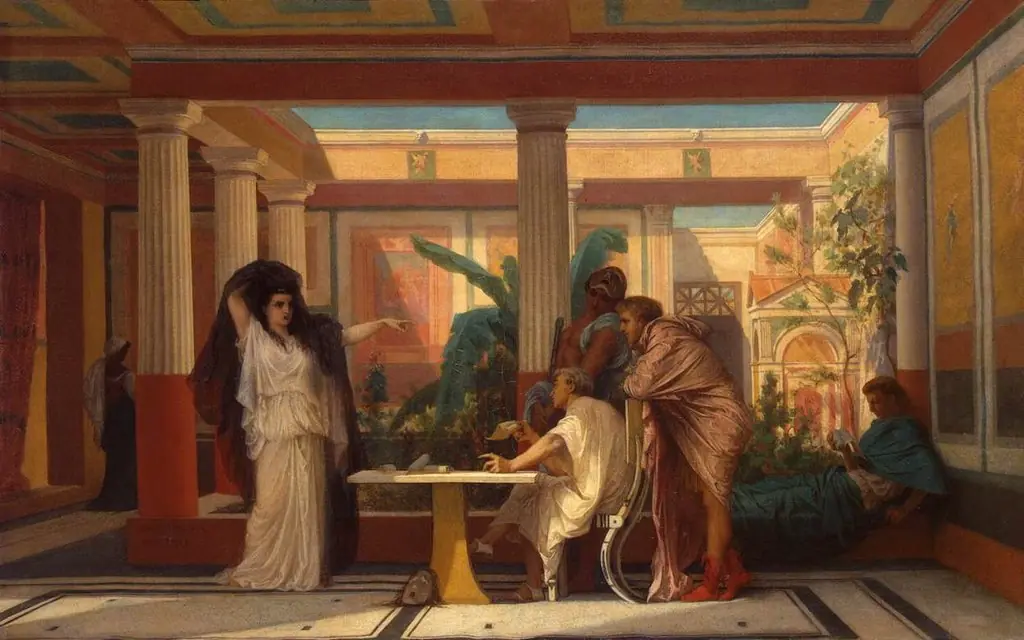 Theatrical Rehearsal in the House of an Ancient Rome Poet
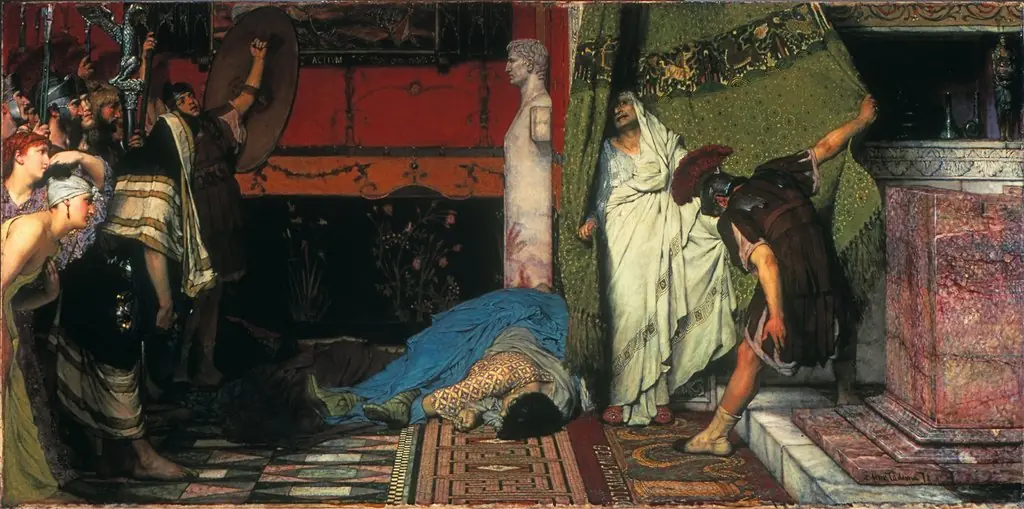 A Roman Emperor (Claudius)
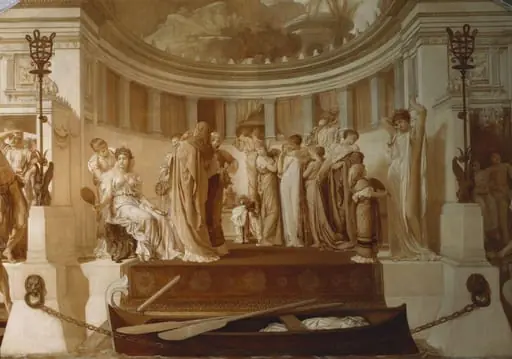 Half-size monochrome cartoon for the spirit fresco 'The Arts of Industry as Applied to Peace'
 După-amiaza unei patriciene romane
 Fulvia y Marco Antonio o La venganza de Fulvia
 Coriolanus Taking Leave of his Family
 Virgil Reading the "Aeneid" to Augustus, Octavia, and Livia