Artwork
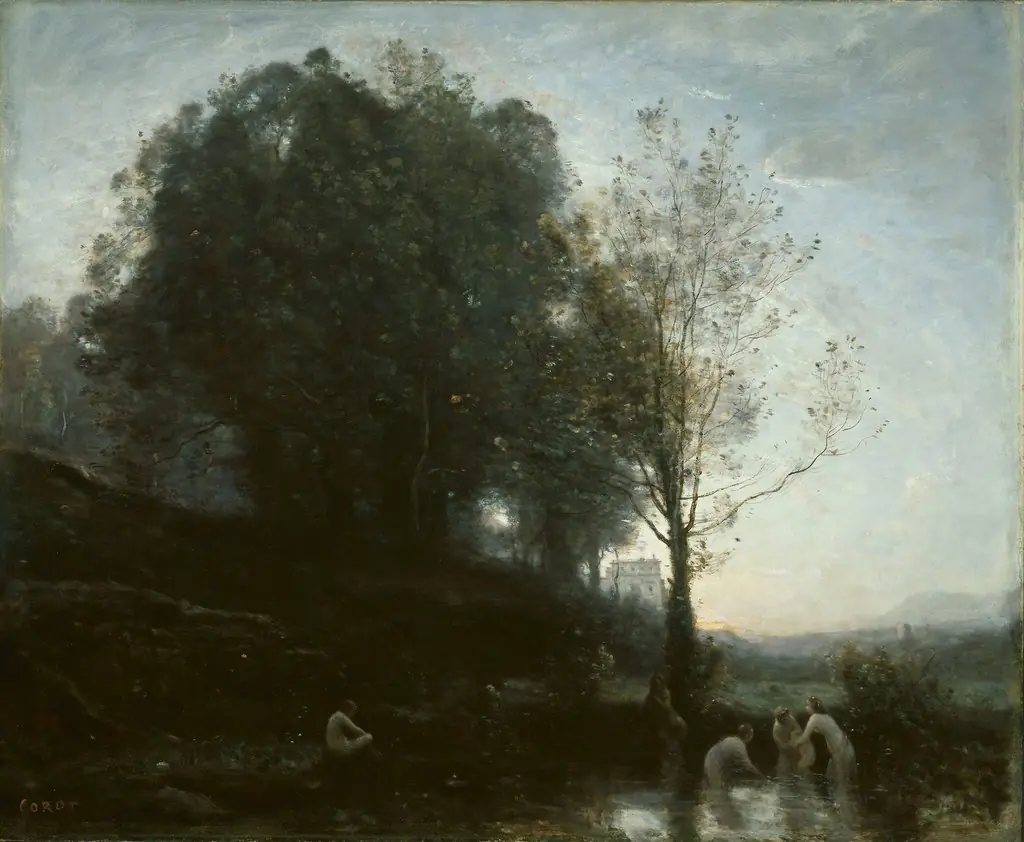
Bathing Nymphs and Child
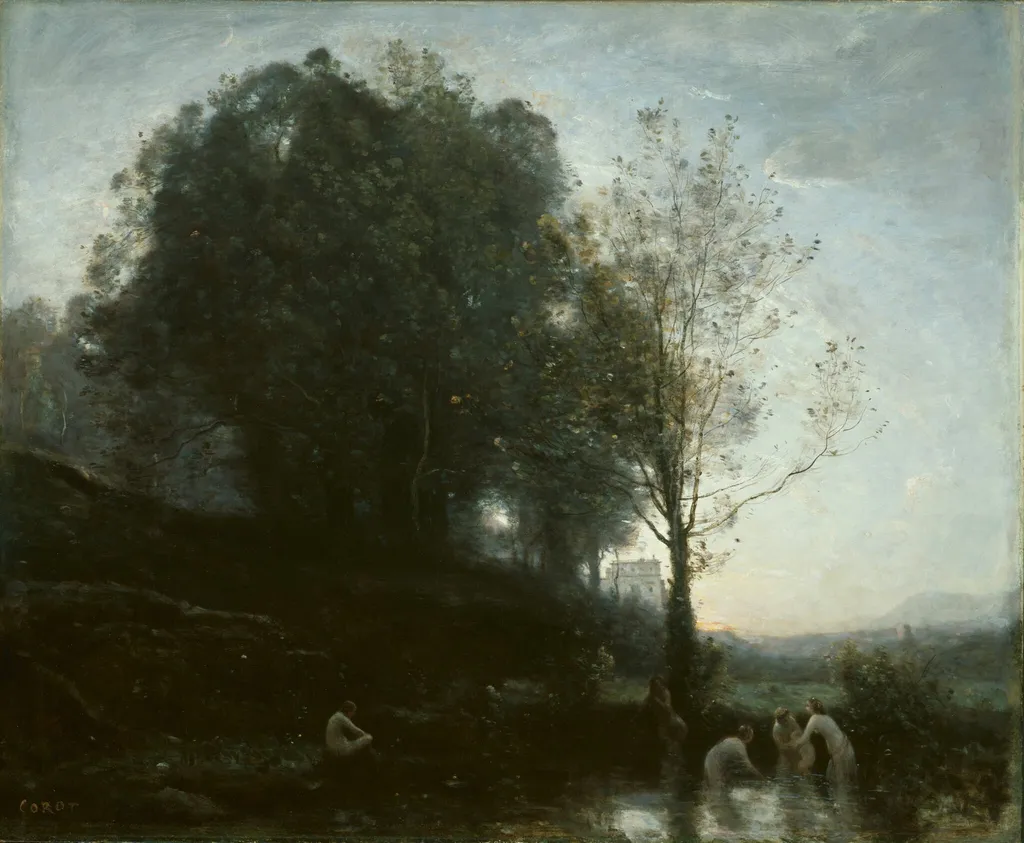
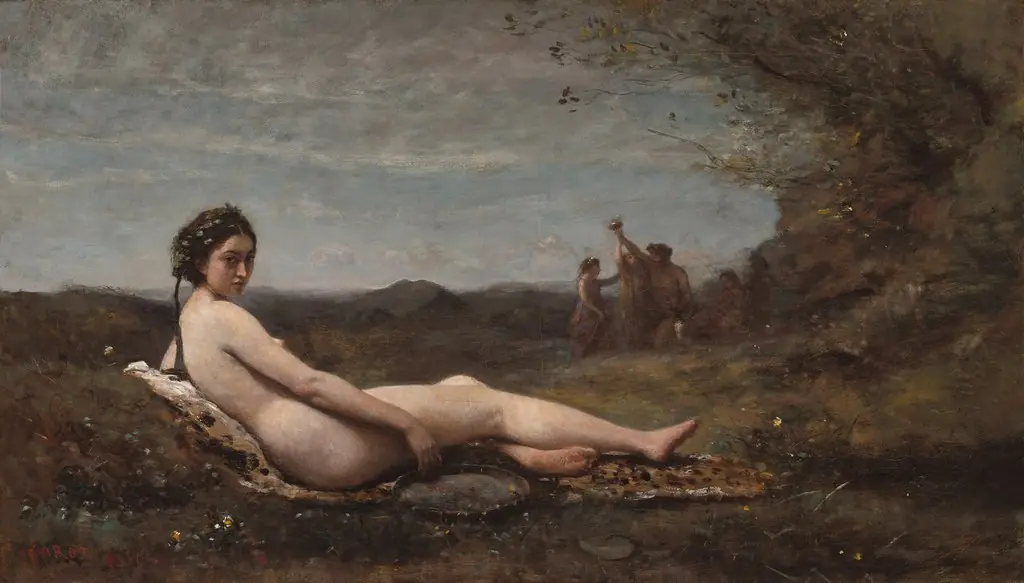
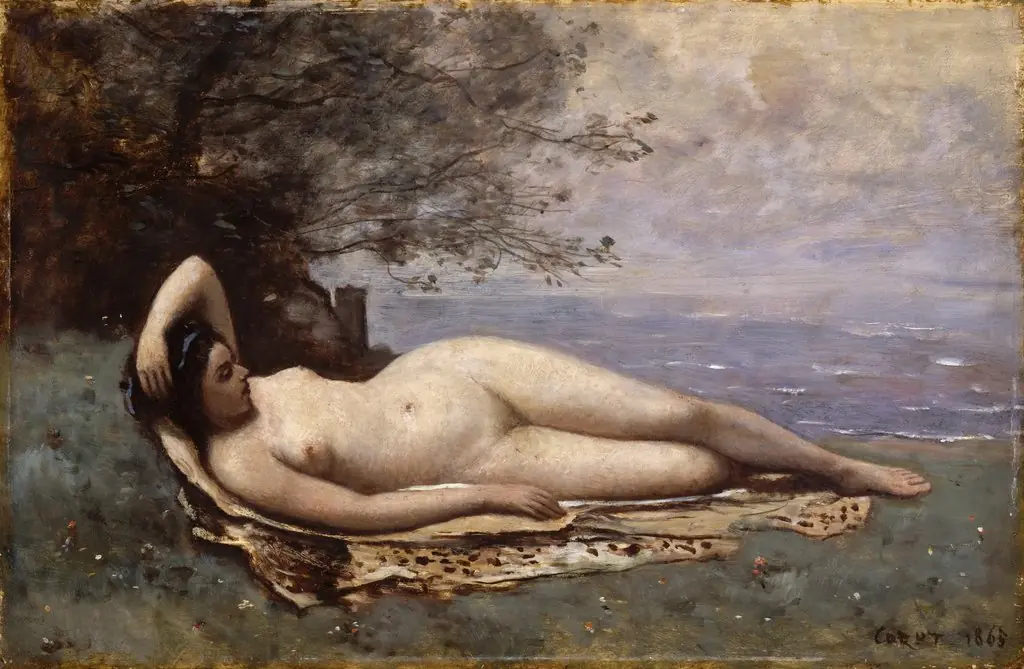
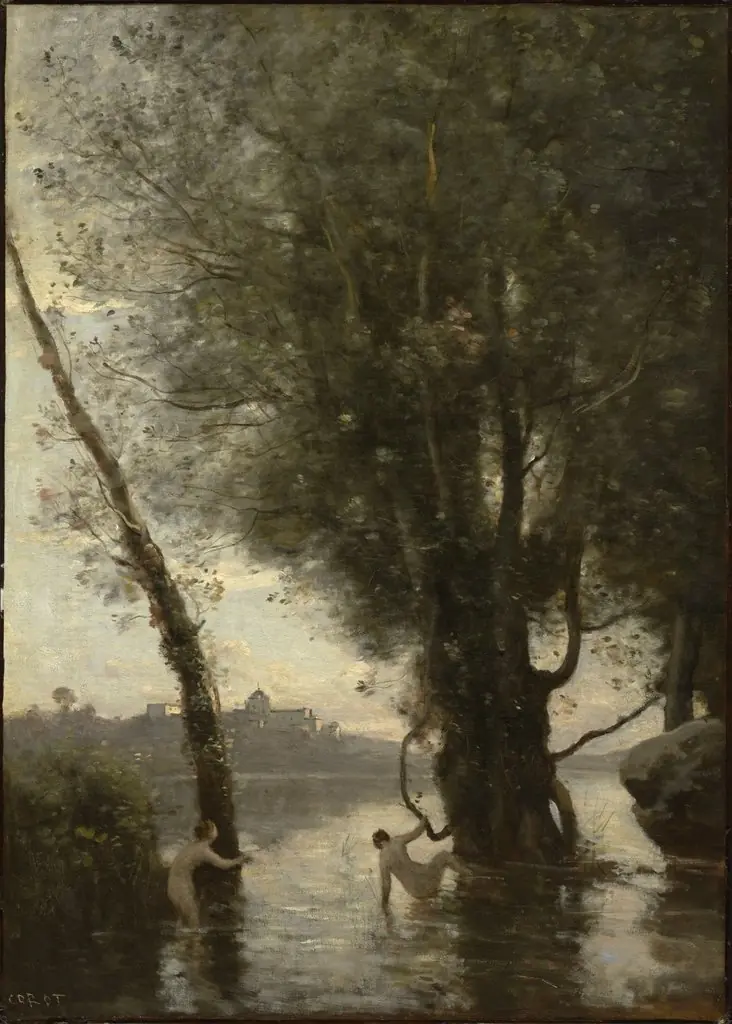
Bathing Nymphs and Child is an oil painting by the Impressionist artist Jean Baptiste Camille Corot. It dates from 1858 and is held in the collection of the Art Institute of Chicago.
About this work
Overview
Its classification as a nude places it within the broader Realist movement of mid-19th-century France, emphasizing observed reality over idealized myth.
Painted in 1858, *Bathing Nymphs and Child* is an oil on canvas by Jean-Baptiste-Camille Corot, a French artist recognized for his transitional role between academic traditions and emerging naturalism. Though primarily known for landscapes, this work centers on human figures in a wooded setting, marking a deliberate shift in focus. Its classification as a nude places it within the broader Realist movement of mid-19th-century France, emphasizing observed reality over idealized myth.
Subject & Meaning
The painting depicts a group of women and a young child engaged in a quiet moment of bathing within a secluded natural environment. Rather than invoking classical mythology with overt symbolism, Corot presents the figures with a sense of everyday intimacy. The absence of narrative drama or divine reference suggests a focus on the quiet dignity of the human form in harmony with nature, reflecting a shift toward secular, observational subject matter.
Technique & Style
Corot employs subtle chiaroscuro to model the figures against the dappled light of the forest, creating a soft, atmospheric depth. His brushwork is delicate yet deliberate, blending tonal transitions rather than sharp outlines. The treatment of light—diffused through foliage—echoes his landscape practice, while the figures are rendered with restrained realism, avoiding idealization. This synthesis of figure and environment reveals his evolving approach to naturalism.
History & Provenance
Completed in 1858, the painting entered the collection of the Art Institute of Chicago in the early 20th century, where it remains today. Its acquisition reflects growing American interest in French Realist and Barbizon School works during that period. While not widely exhibited in Corot’s lifetime, it has since become a representative example of his figure studies, offering insight into his broader artistic concerns beyond pure landscape.
Context
In the 1850s, French art was navigating tensions between academic idealism and the rising tide of Realism. Corot, though trained in classical methods, increasingly favored direct observation. *Bathing Nymphs and Child* aligns with contemporaneous efforts by artists like Courbet and the Barbizon painters to depict ordinary life and nature without romantic embellishment. The work reflects a broader cultural turn toward authenticity in subject and technique.
Legacy
Though less celebrated than Corot’s landscapes, this painting illustrates his quiet influence on the development of modern figure painting. His integration of naturalistic light and unidealized forms prefigured approaches later adopted by Impressionists. The work stands as a bridge between academic tradition and the emerging emphasis on sensory experience, contributing to a broader redefinition of what constituted worthy subject matter in 19th-century art.
Own this work as a print
Artist & collection
Artist
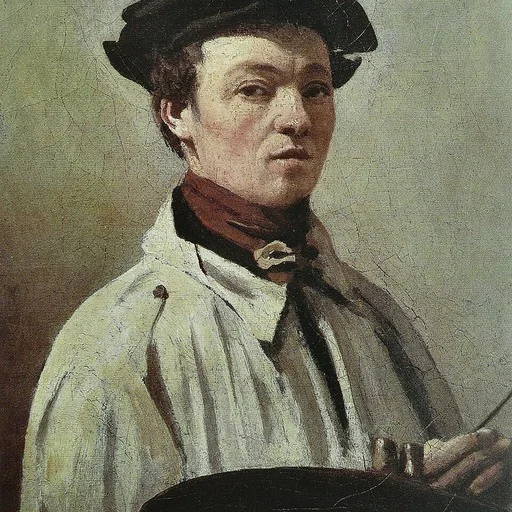
Jean-Baptiste-Camille Corot (UK: KORR-oh, US: kə-ROH, kor-OH; French: ; 16 July 1796 – 22 February 1875), or simply Camille Corot, was a French landscape and portrait painter as well as a printmaker in etching.