Artwork
Fields of Saint-Ouen
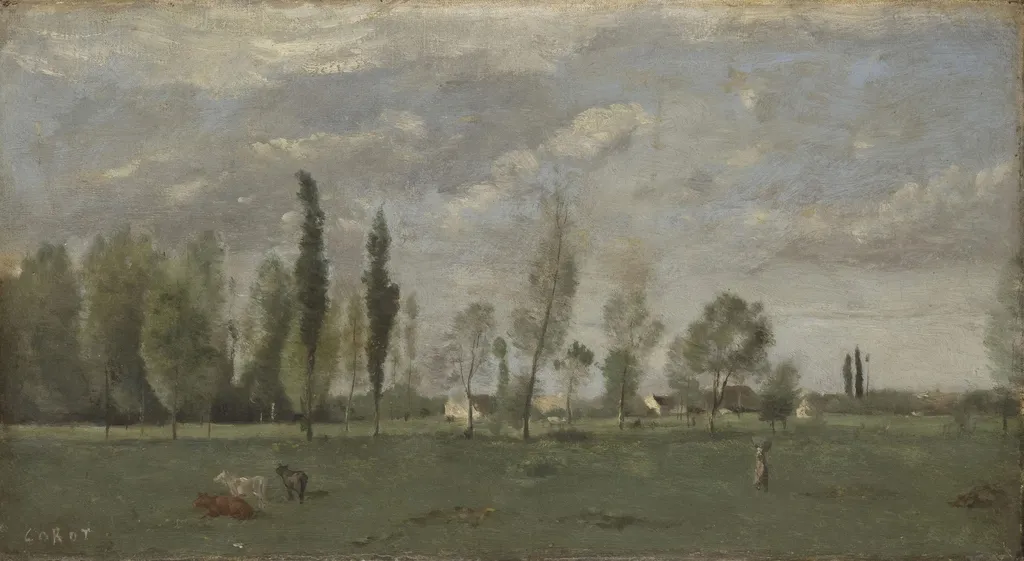
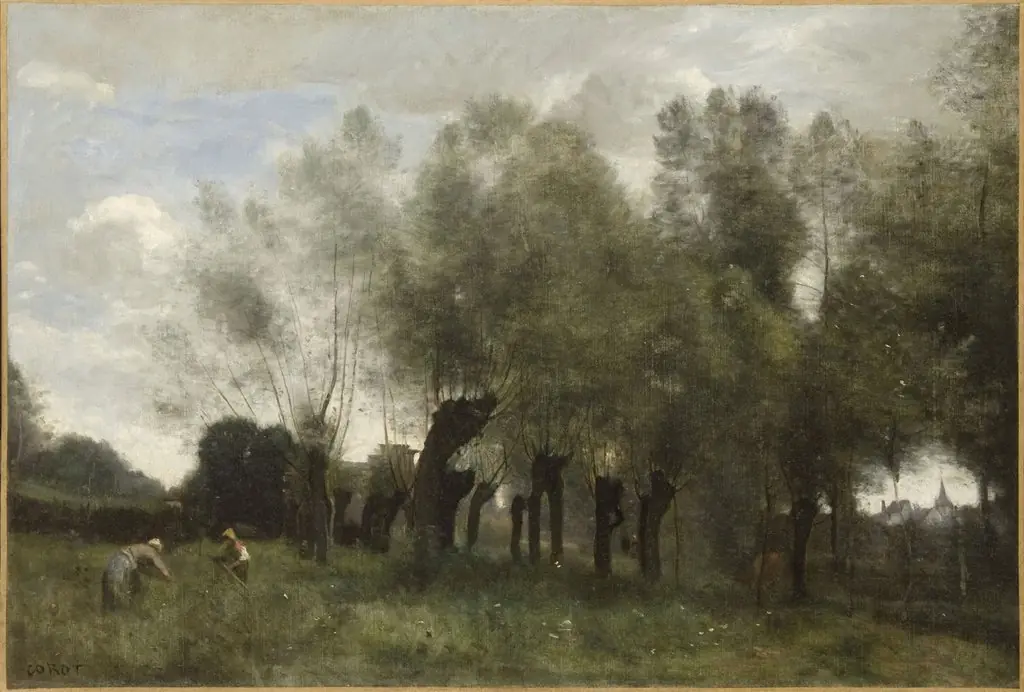
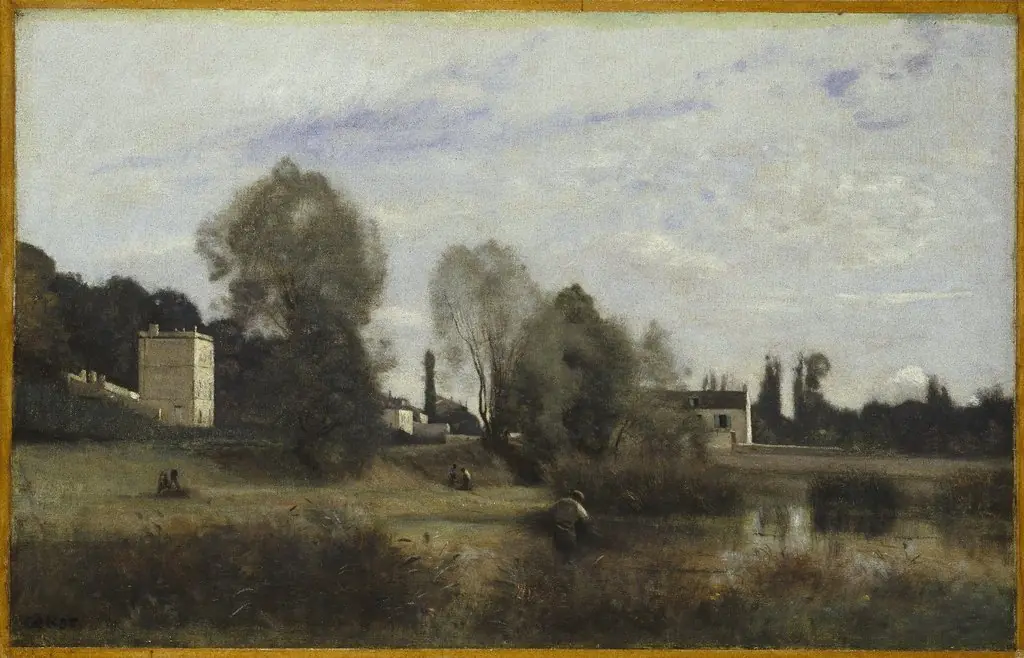
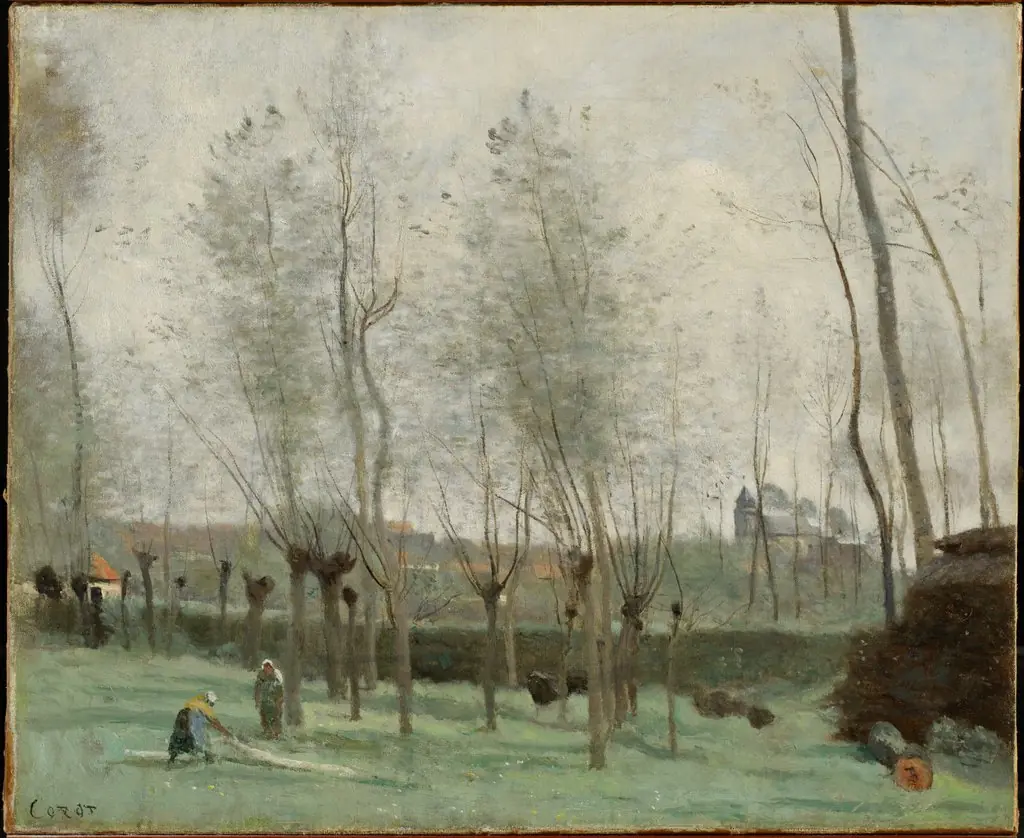
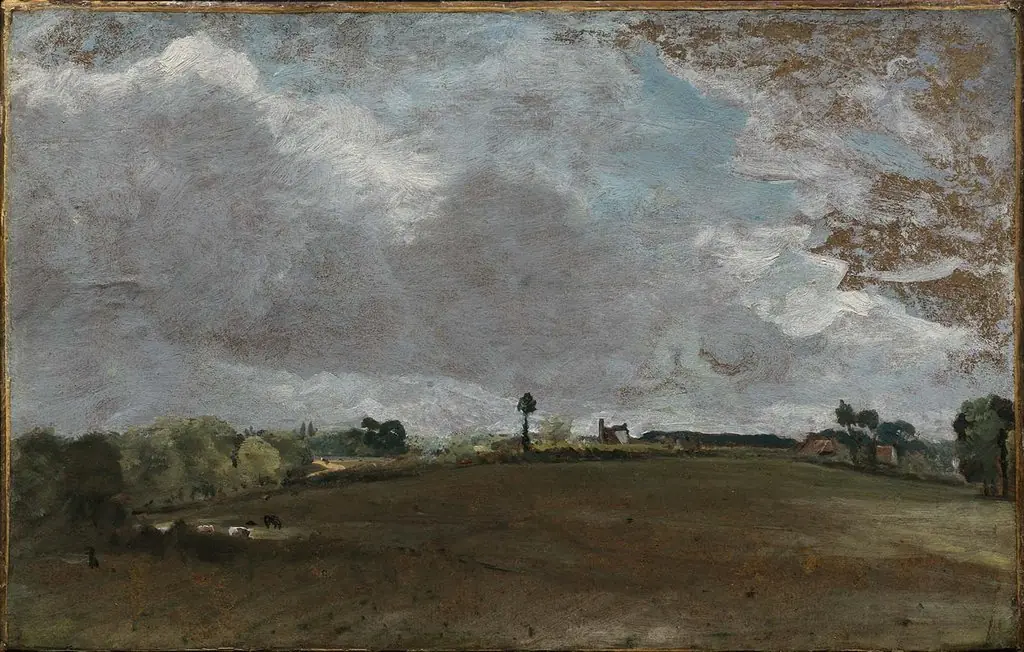
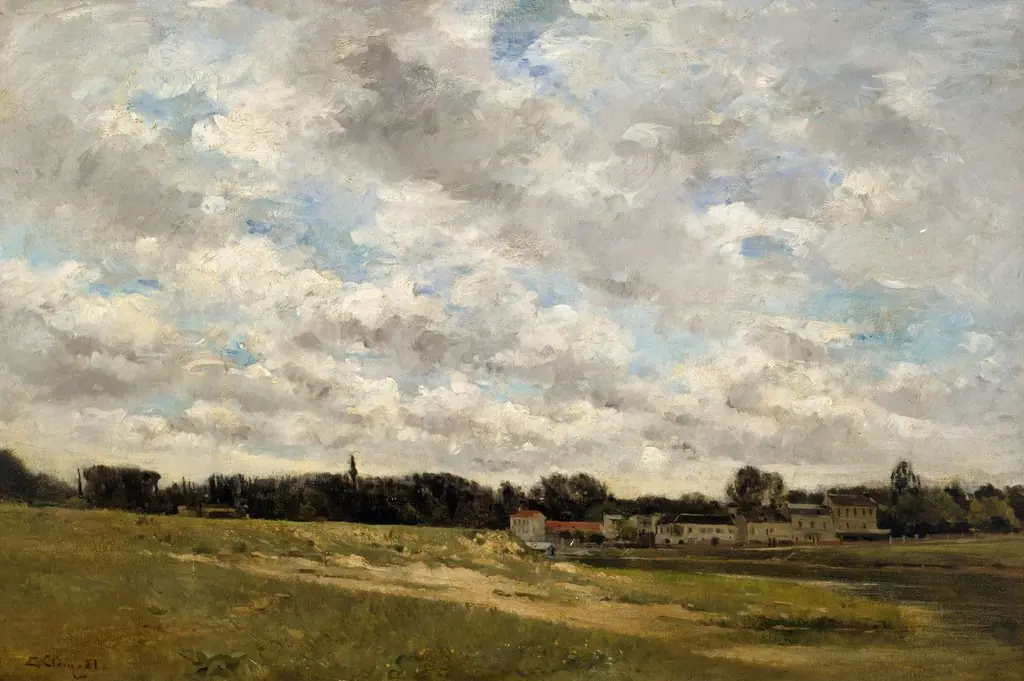
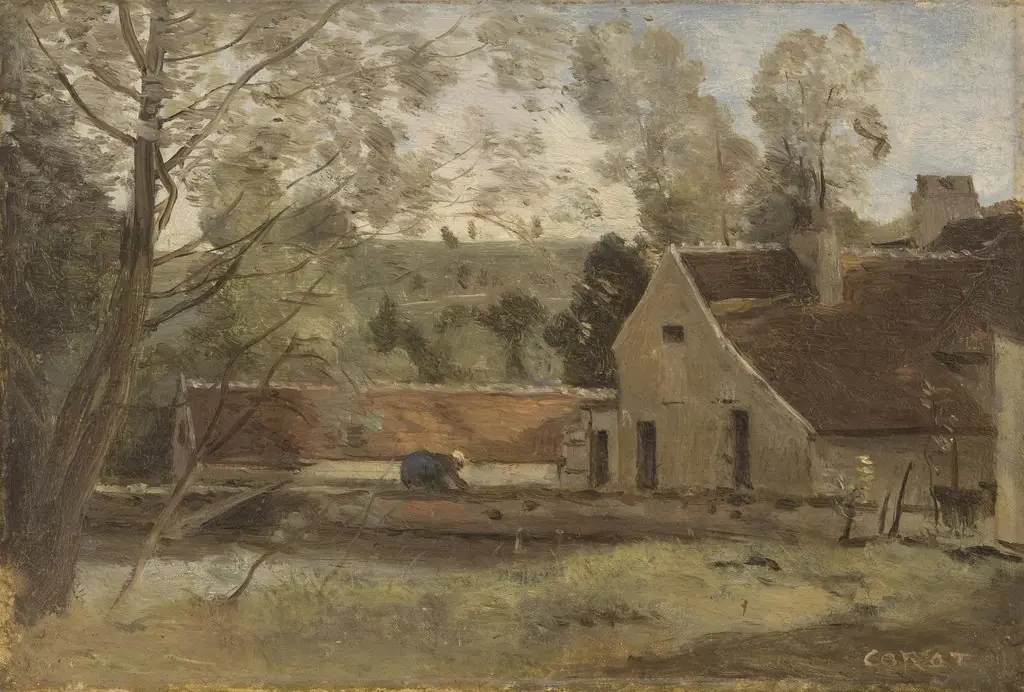
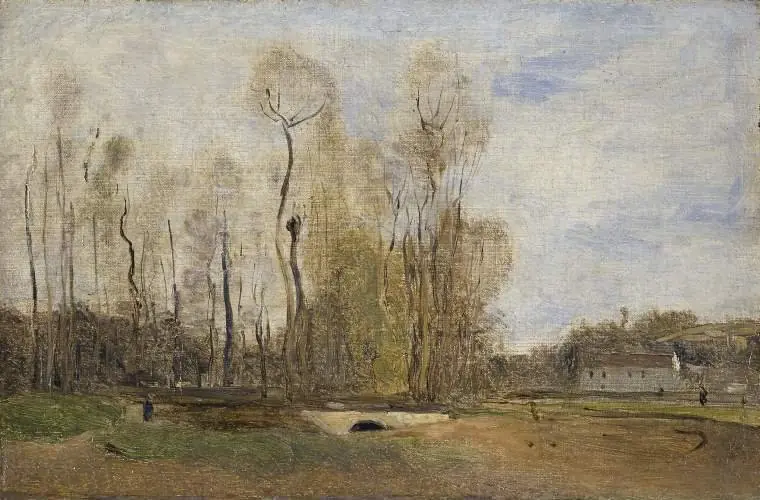
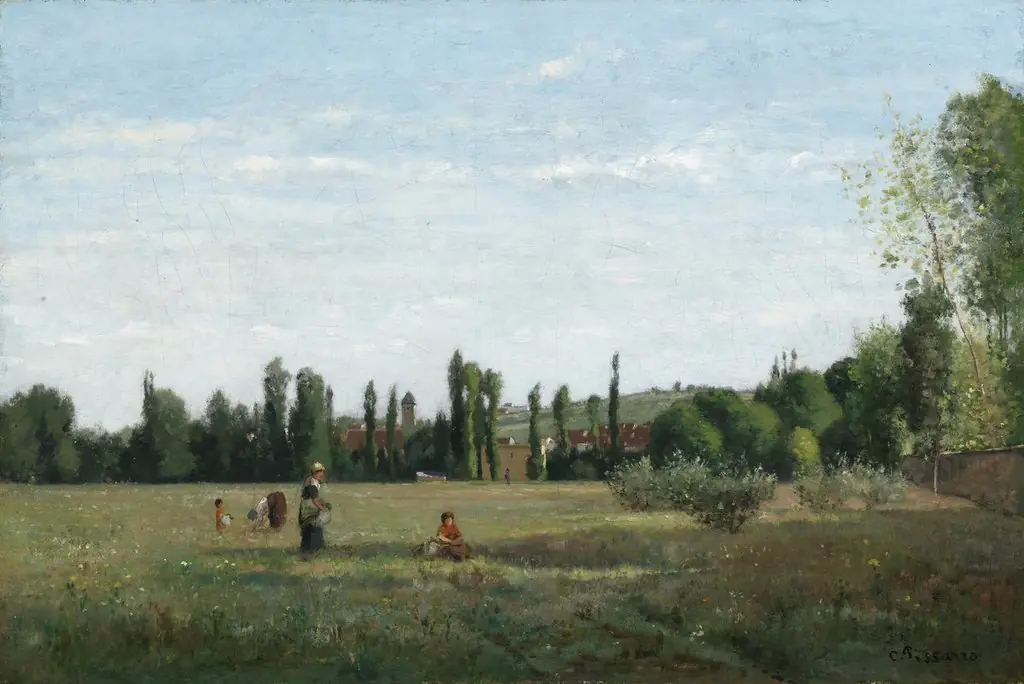
Fields of Saint-Ouen is an oil painting by the Realist artist Jean Baptiste Camille Corot. It dates from 1850 and is held in the collection of the Philadelphia Museum of Art.
About this work
Overview
The work is part of a broader body of landscapes that helped redefine 19th-century French painting, emphasizing atmosphere over narrative.
Painted around 1850, *Fields of Saint-Ouen* is an oil on canvas landscape by Jean-Baptiste-Camille Corot, capturing a quiet stretch of countryside near Saint-Ouen-sur-Seine. It reflects his transition from formal academic training toward direct observation of nature. The work is part of a broader body of landscapes that helped redefine 19th-century French painting, emphasizing atmosphere over narrative. It resides today in the Philadelphia Museum of Art.
Subject & Meaning
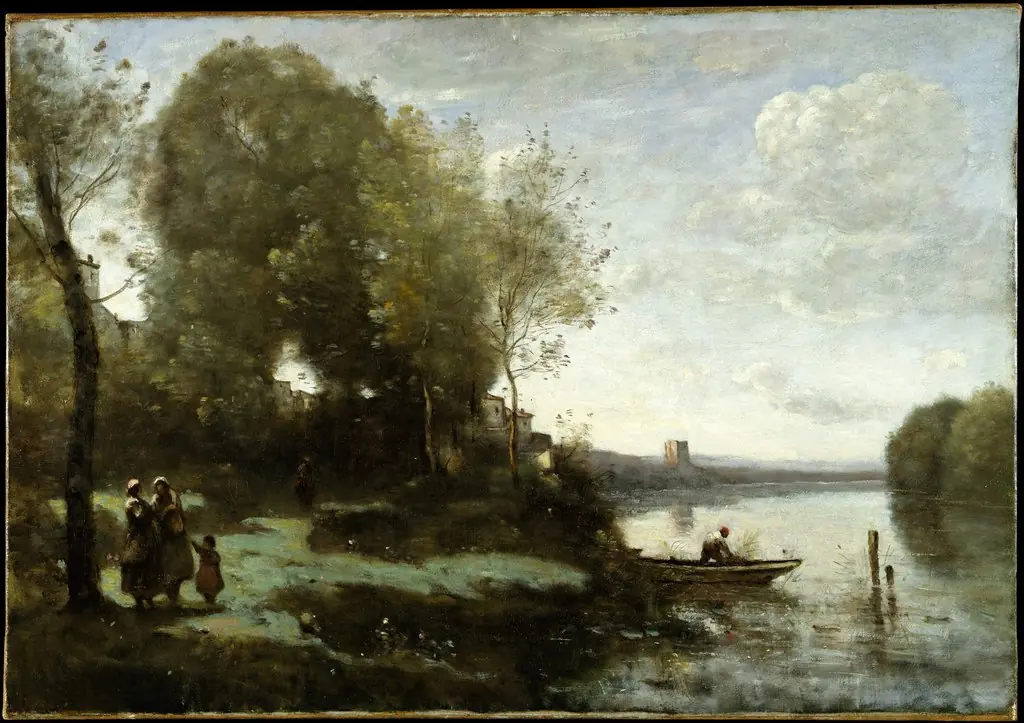
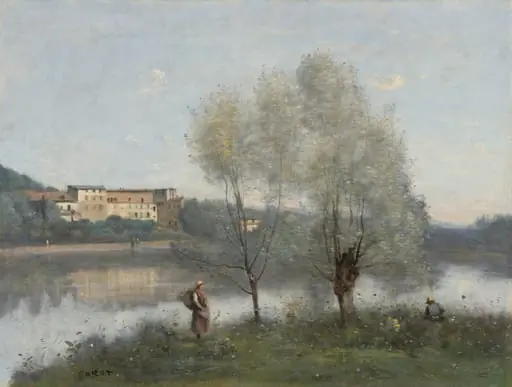
The scene portrays a modest rural setting: two cows graze in a low, open field, while a solitary figure stands near the edge, barely distinct from the land. Tall, slender trees frame the left side, suggesting the boundary between cultivated land and wilder space. There is no dramatic event—only the stillness of daily life. The painting invites contemplation of quiet, unremarkable moments, aligning with Realist values that honored ordinary existence.
Technique & Style
Corot employed loose, fluid brushwork to suggest form rather than define it, avoiding sharp outlines in favor of soft transitions. The palette is restrained—muted greens, gray-blues, and pale ochres—enhancing the hazy, early-light quality of the scene. Subtle warmth near the horizon hints at sunrise without overt illumination. The paint is applied thinly, with minimal impasto, contributing to the work’s ethereal, almost atmospheric quality.
History & Provenance
Created during Corot’s mature period, the painting emerged from his frequent excursions into the countryside north of Paris. He often returned to sites like Saint-Ouen, refining compositions over time. The work entered the Philadelphia Museum of Art’s collection in the early 20th century, likely through a private acquisition or bequest. Its presence there reflects growing American interest in French Realist landscapes during that era.
Context
In the mid-19th century, French artists increasingly turned away from historical and mythological subjects toward everyday landscapes. Corot’s approach, blending classical composition with direct observation, influenced both Realists and later Impressionists. While not as radical as his successors, his emphasis on light and transient effects laid groundwork for plein-air painting, challenging the dominance of studio-based academic art.
Legacy
Corot’s *Fields of Saint-Ouen* exemplifies a quiet revolution in landscape painting: the elevation of the mundane into a subject worthy of sustained attention. His technique, favoring mood over detail, resonated with artists seeking to capture the immediacy of nature. Though less celebrated than later movements, his influence endured in the shift toward observational painting that defined modern landscape art.
Artist & collection
Artist
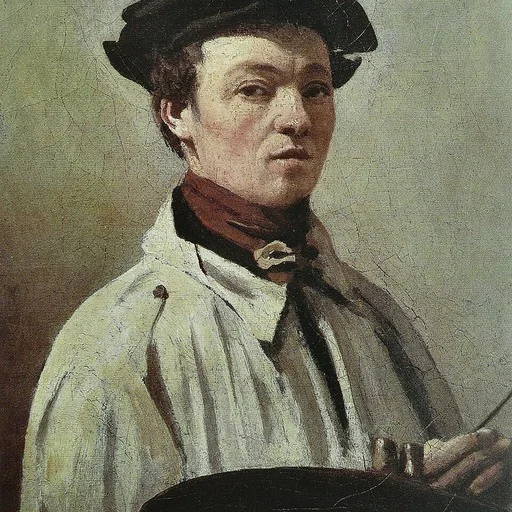
Jean-Baptiste-Camille Corot (UK: KORR-oh, US: kə-ROH, kor-OH; French: ; 16 July 1796 – 22 February 1875), or simply Camille Corot, was a French landscape and portrait painter as well as a printmaker in etching.