Artwork
Island of San Bartolomeo, Rome
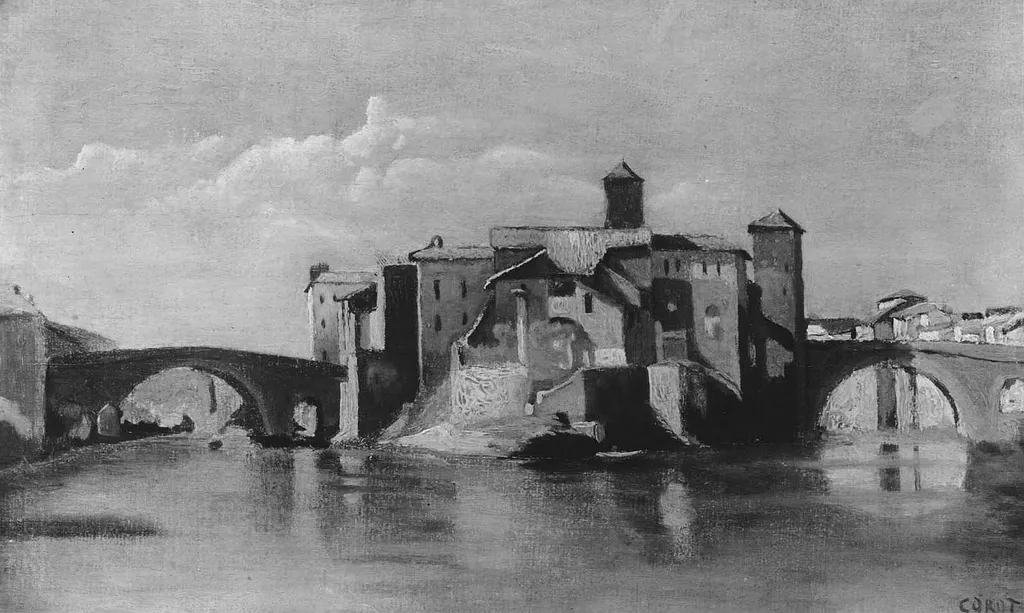
Island of San Bartolomeo, Rome is an unspecified painting by the Barbizon school artist Jean Baptiste Camille Corot. It dates from 1845 and is held in the collection of the Museum of Fine Arts Boston.
About this work
Overview
Island of San Bartolomeo, Rome, a landscape painting by Jean-Baptiste-Camille Corot, dates to circa 1845. It exemplifies the artist's transitional style, blending Neo-Classical structure with the naturalism of plein-air painting.
Subject & Meaning
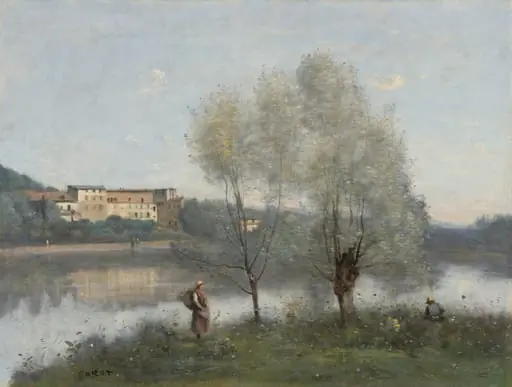
The painting depicts Tiber Island in Rome, focusing on its serene riverside setting. An ancient building, with a tall tower and adjacent structures, occupies the island, connected to the mainland by a bridge. The composition conveys a sense of tranquility.
Technique & Style
Corot's characteristic approach is evident in the structured composition and the emphasis on atmospheric light and shadow, which create depth. The muted palette, dominated by browns and greens, enhances the calm, contemplative mood.
History & Provenance
The work is part of the Museum of Fine Arts, Boston's collection, reflecting Corot's influence by the Barbizon School's naturalistic landscape traditions.
Context
Created during Corot's engagement with plein-air techniques, the painting bridges traditional Neo-Classical landscape painting with emerging naturalistic approaches, characteristic of the mid-19th-century European art scene.
Legacy
While specific lasting impacts of *Island of San Bartolomeo, Rome* on the broader art historical canon are not prominently documented, it remains a notable example of Corot's transitional style, influencing later landscape painters in capturing light and atmosphere.
Artist & collection

Artist
Jean-Baptiste-Camille Corot (UK: KORR-oh, US: kə-ROH, kor-OH; French: ; 16 July 1796 – 22 February 1875), or simply Camille Corot, was a French landscape and portrait painter as well as a printmaker in etching.





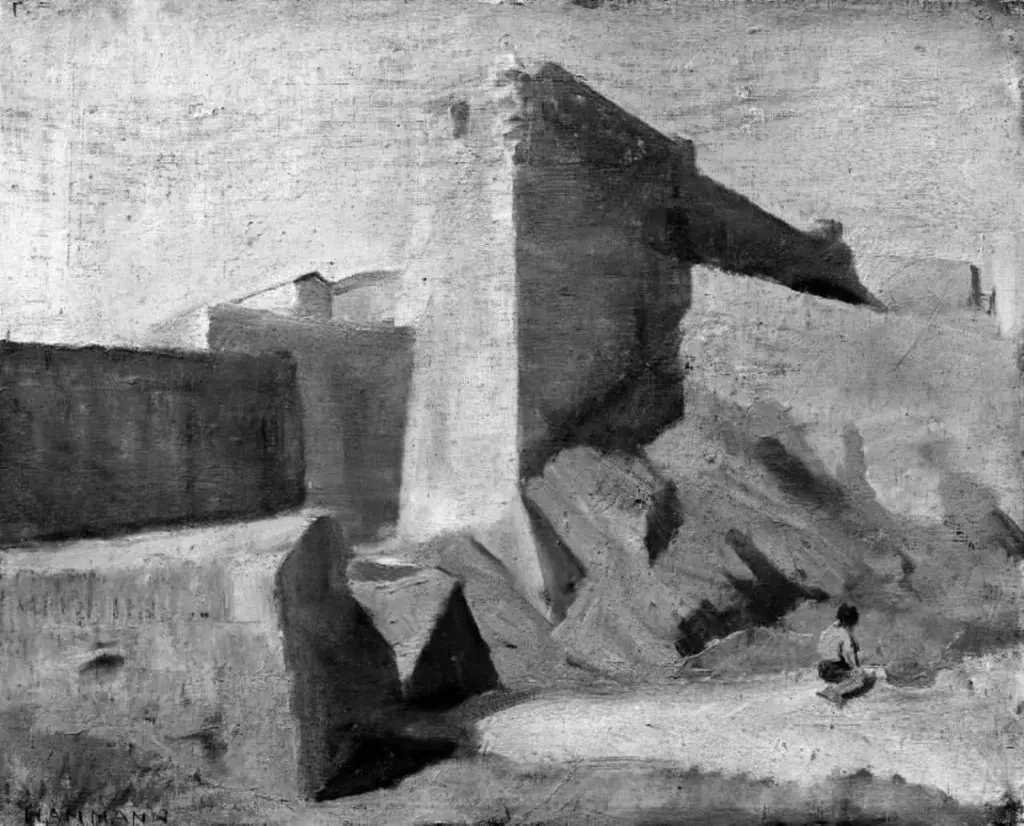 The Fortress in Collioure
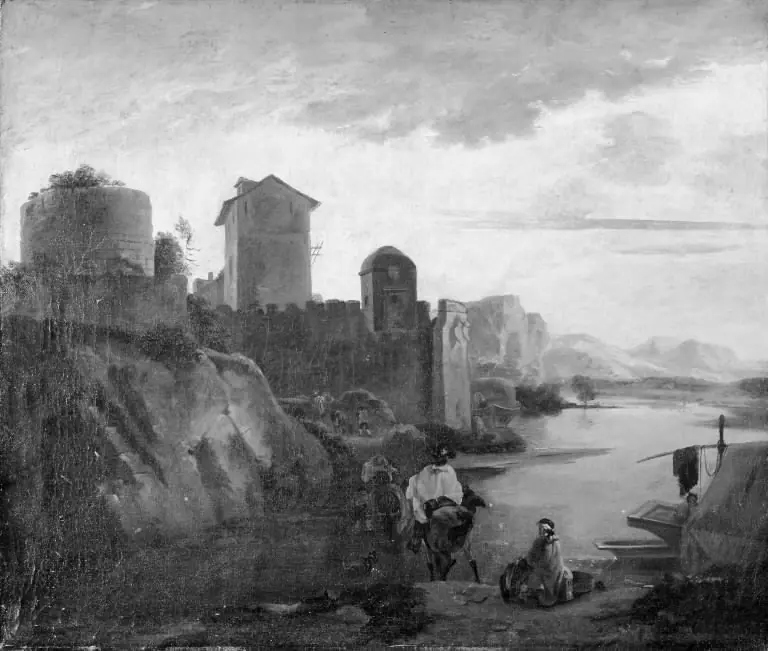 Landscape with Travellers
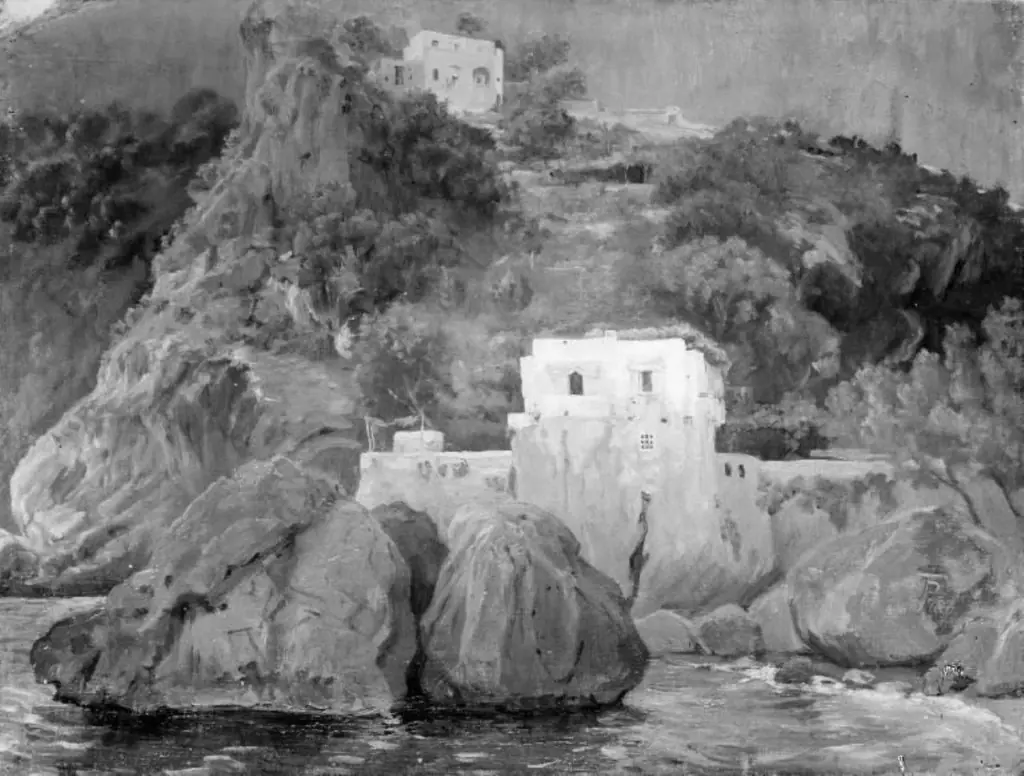 A coastline. Amalfi, Italy
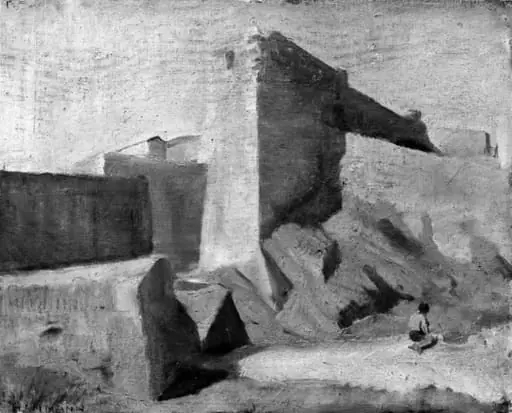 The Fortress in Collioure
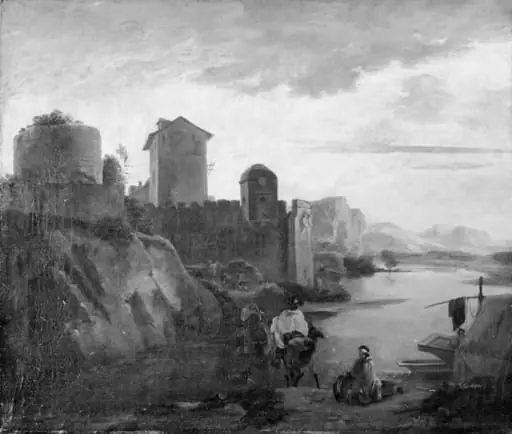 Landscape with Travellers
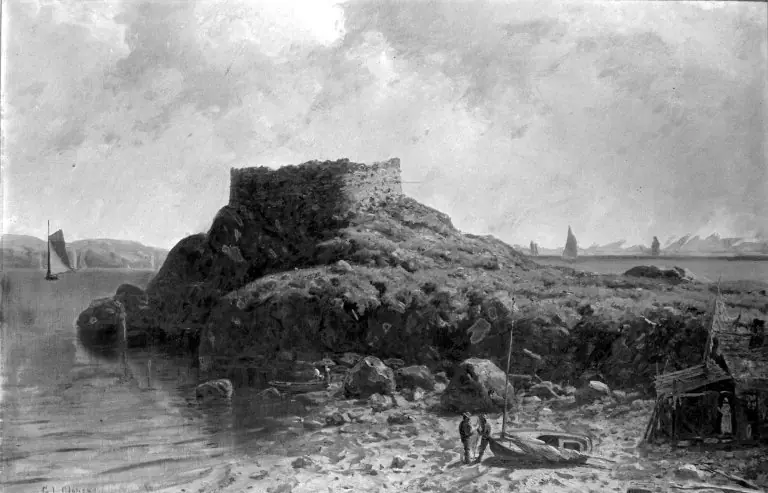 Fort Dumpling, Rhode Island
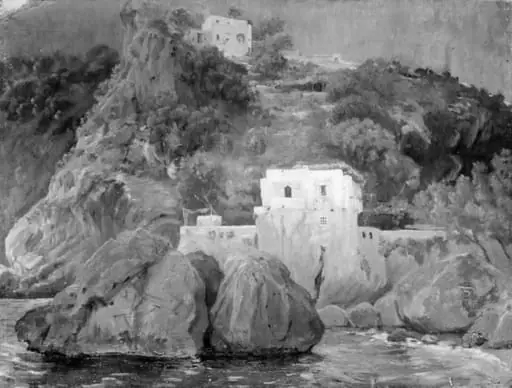 A coastline. Amalfi, Italy
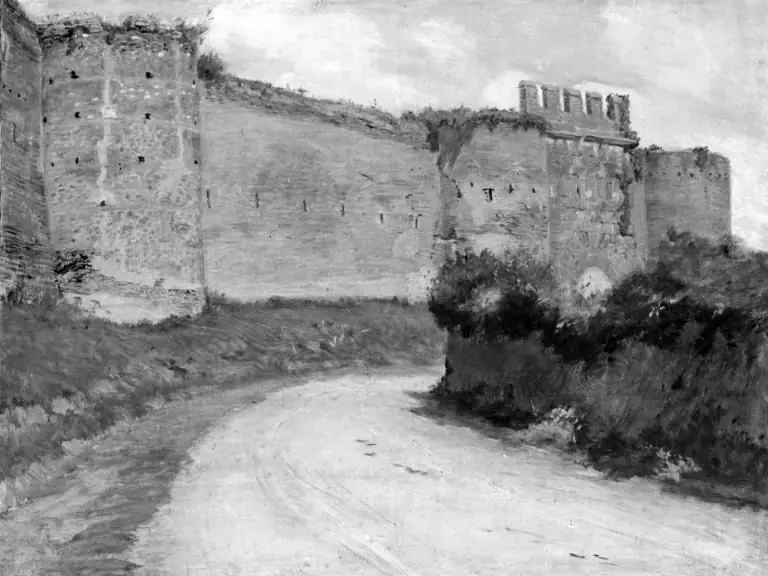 Muren om Rom ved Porta Latina
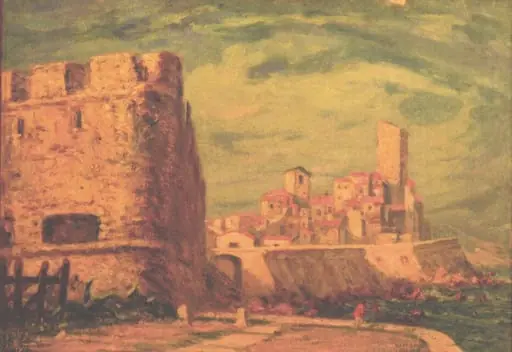 Antibes
 Muren om Rom ved Porta Latina
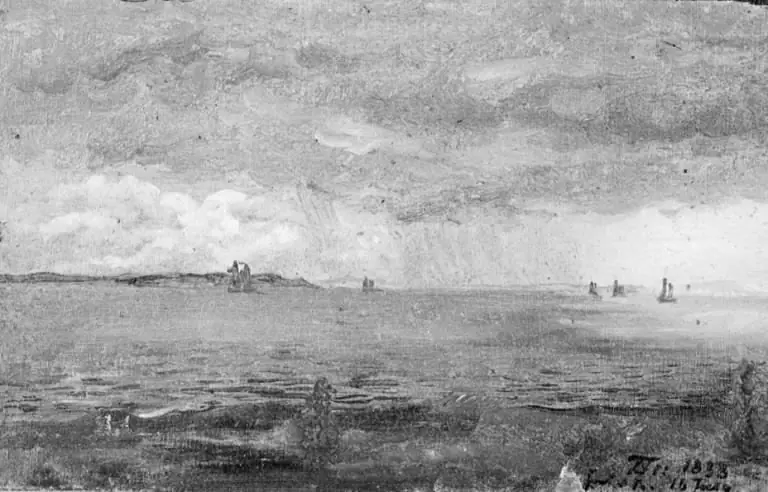 The Sound with Rain Clouds and Ships in the Background
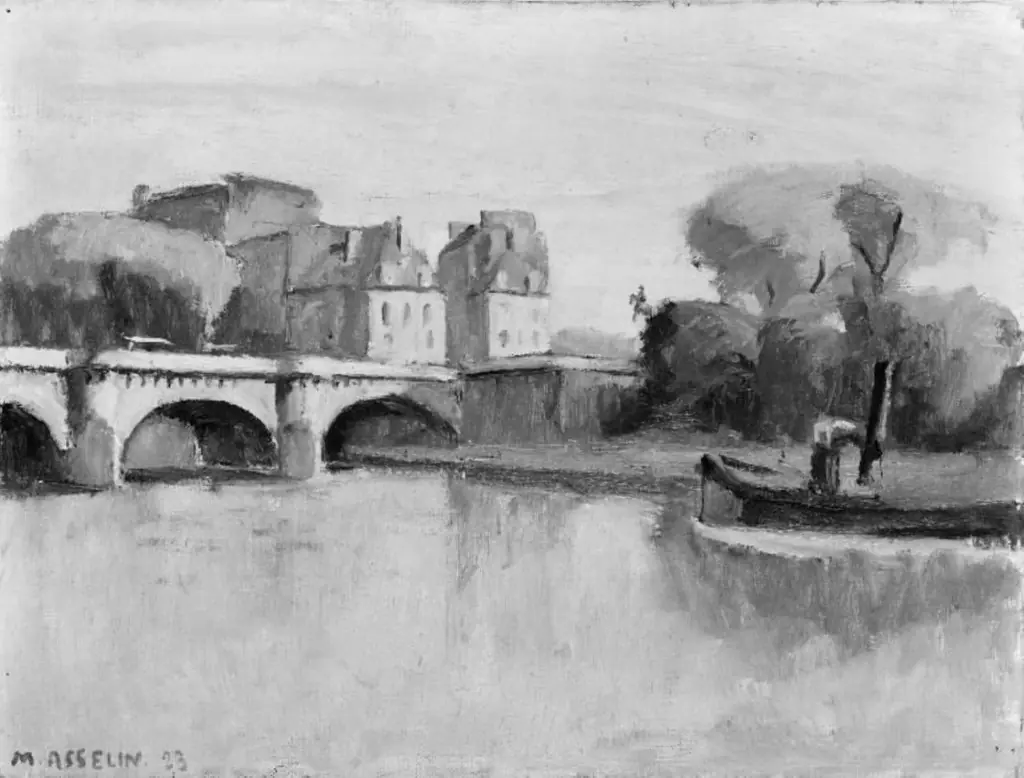 Pont Neuf, Paris