Artwork
The Watering Place
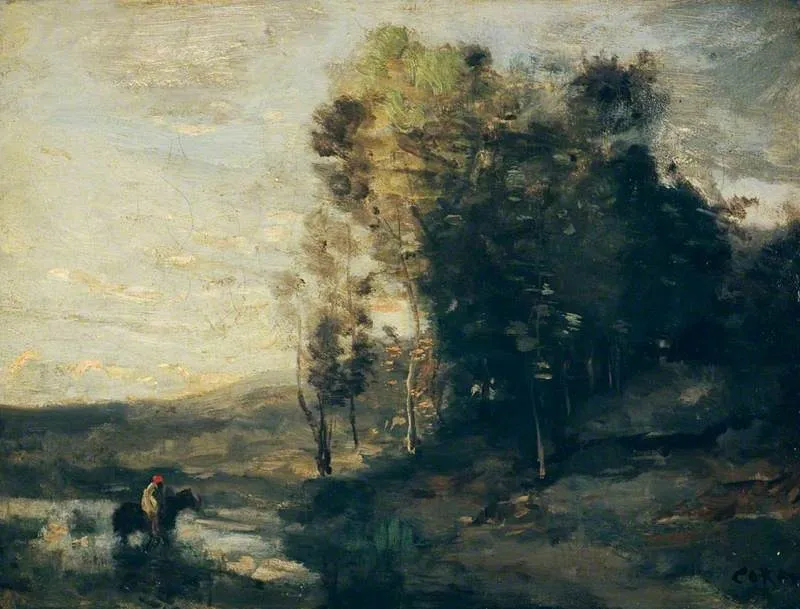
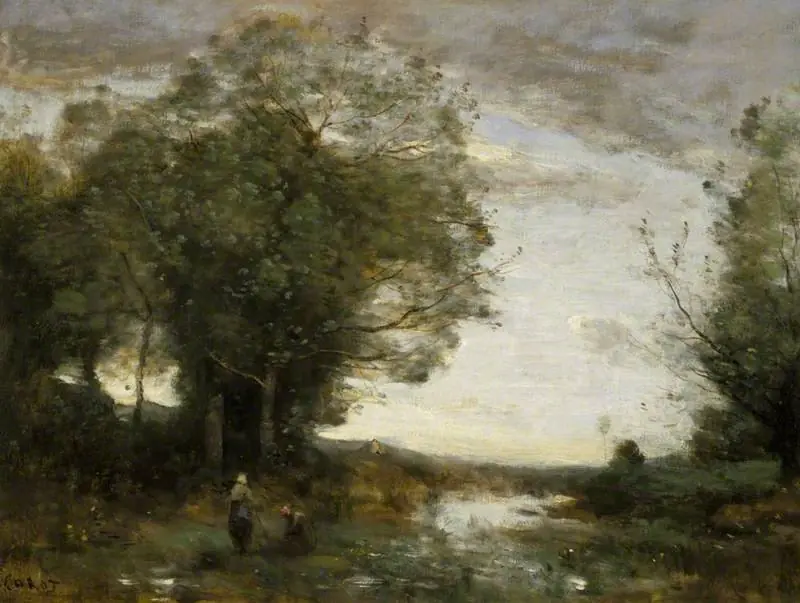
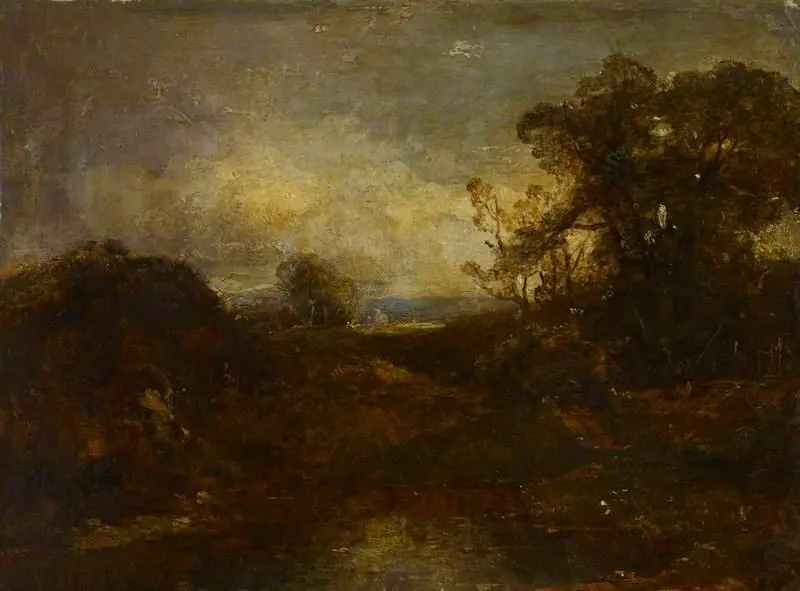
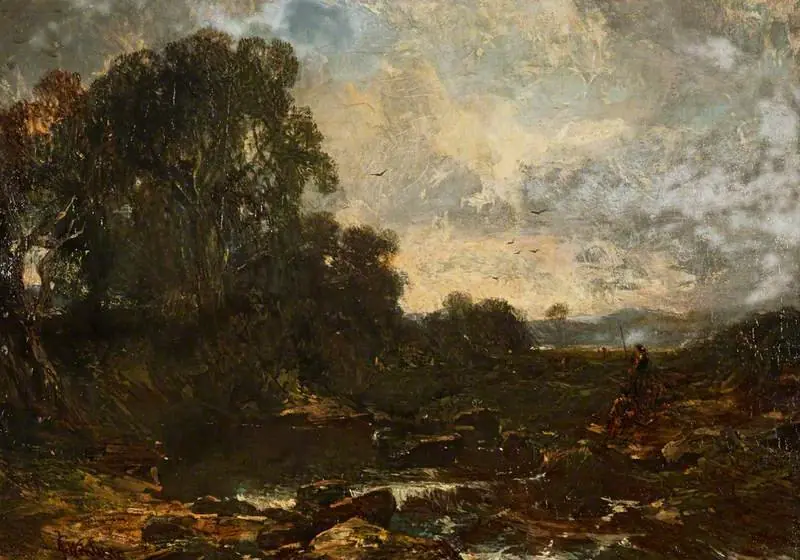
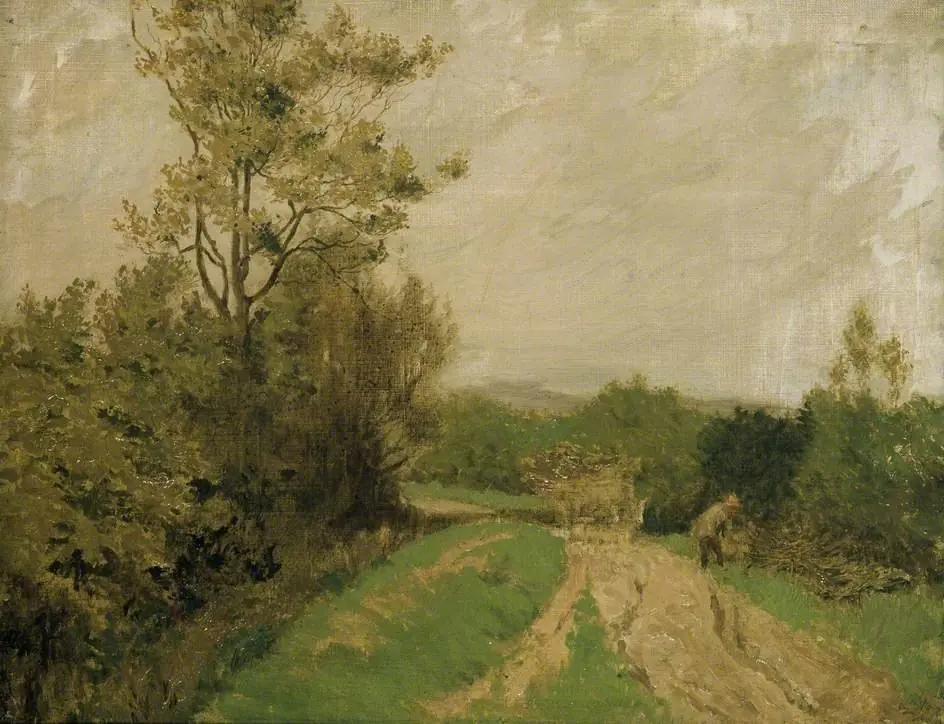
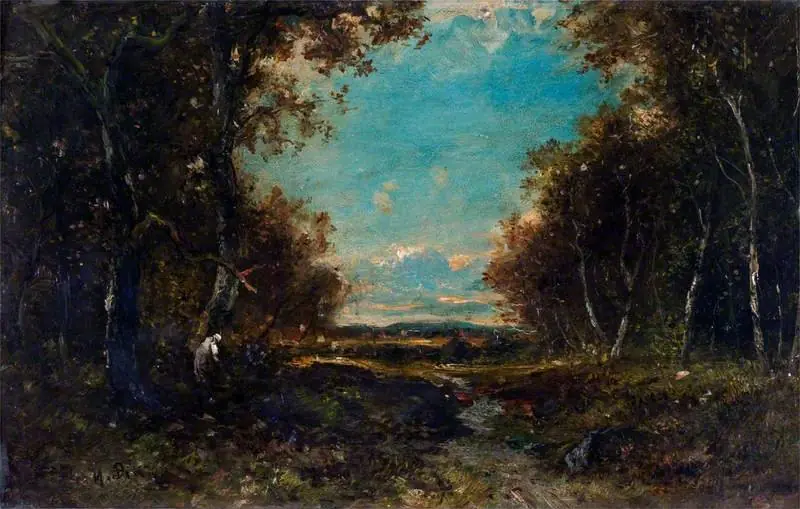
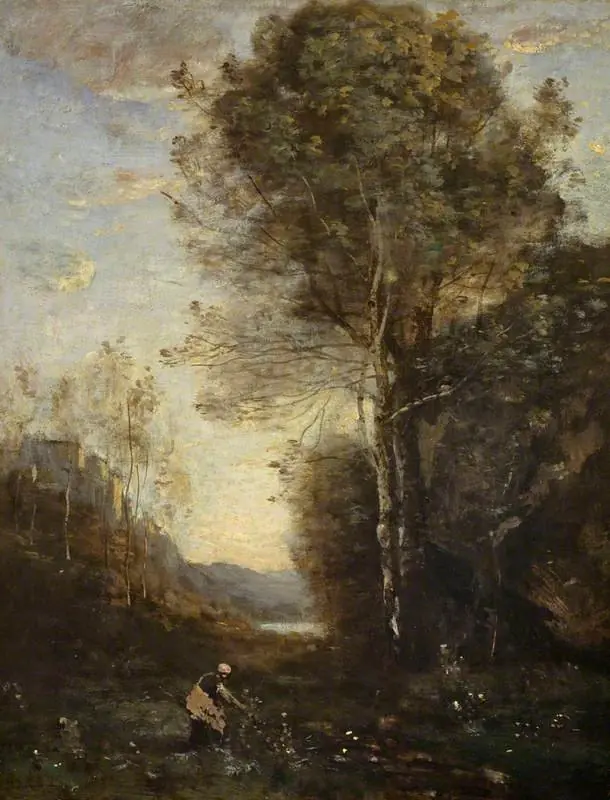
The Watering Place is an oil painting by the Realist artist Jean Baptiste Camille Corot. It dates from 1835 and is held in the collection of the National Galleries Scotland.
About this work
Overview
It resides in the Scottish National Gallery, where it contributes to the institution’s collection of 19th-century European landscapes.
Painted in 1835, *The Watering Place* is an oil on canvas landscape by Jean-Baptiste-Camille Corot, a French artist whose work navigated the transition from academic traditions to direct observation of nature. The piece reflects early Realist tendencies through its unidealized depiction of a rural scene. It resides in the Scottish National Gallery, where it contributes to the institution’s collection of 19th-century European landscapes.
Subject & Meaning
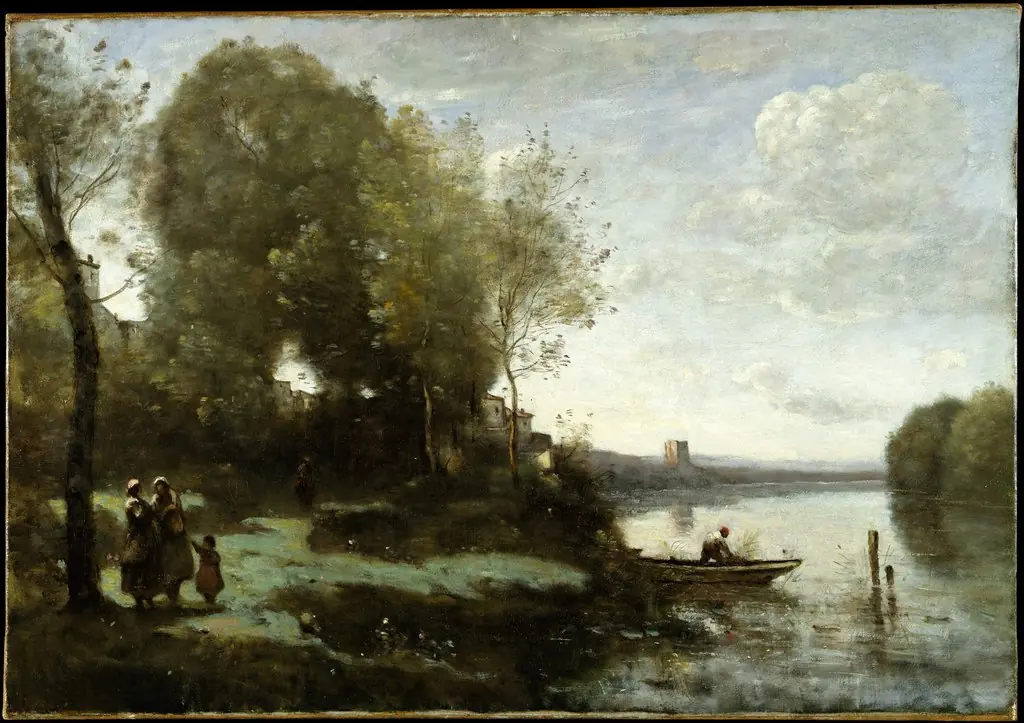
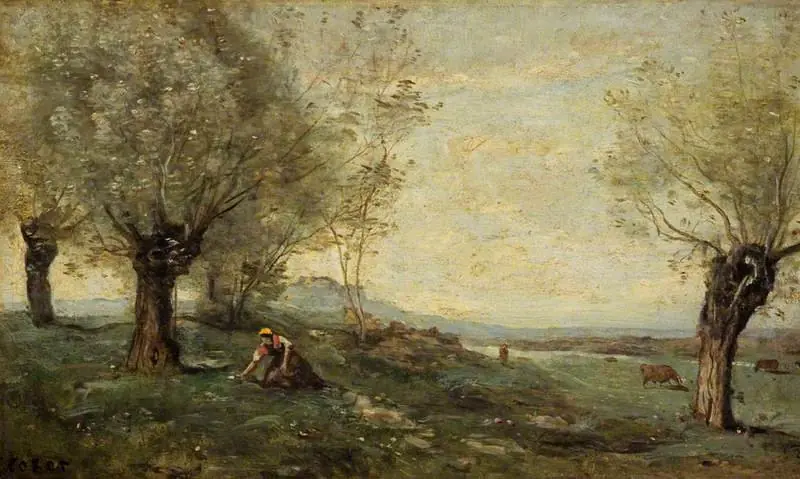
The painting portrays a quiet moment at a rural watering spot, with a solitary figure near a body of water, likely a herder or traveler pausing to drink or tend animals. The central tree anchors the composition, suggesting stability amid the subtle rhythms of nature. There is no narrative drama; instead, the scene conveys stillness and quiet labor, aligning with the era’s growing interest in everyday rural life.
Technique & Style
Corot employed loose, fluid brushwork to suggest foliage and atmospheric depth, avoiding rigid detail in favor of tonal harmony. Muted greens, browns, and grays dominate, creating a subdued, earthy palette. Chiaroscuro is used subtly to model forms and guide the viewer’s gaze toward the water’s edge, enhancing spatial recession without dramatic contrast. The technique reflects a move away from studio conventions toward observed light and texture.
History & Provenance
Created during Corot’s formative years, *The Watering Place* emerged from his early travels through the French countryside, where he sketched directly from nature. It entered the Scottish National Gallery’s collection in the late 19th century, likely through a private acquisition or bequest. Its presence in Scotland underscores the international appreciation for French landscape painting during the Victorian era.
Context
In the 1830s, French art was shifting from idealized historical scenes toward depictions of ordinary life and landscape. Corot’s work, though still rooted in academic training, anticipated the Barbizon School’s focus on naturalism. *The Watering Place* reflects this transition, capturing rural solitude at a time when industrialization was reshaping perceptions of the countryside.
Legacy
Though not among Corot’s most famous works, *The Watering Place* exemplifies his evolving approach to landscape painting—emphasizing atmosphere over narrative, observation over convention. It influenced later generations of painters who sought to capture light and mood directly from nature, helping to pave the way for Impressionism’s emphasis on transient effects.
Artist & collection
Artist
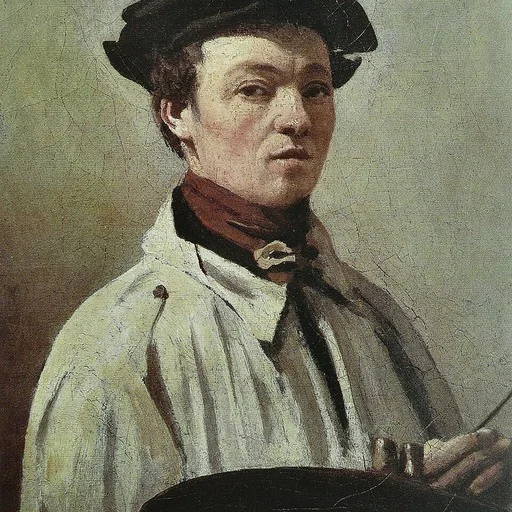
Jean-Baptiste-Camille Corot (UK: KORR-oh, US: kə-ROH, kor-OH; French: ; 16 July 1796 – 22 February 1875), or simply Camille Corot, was a French landscape and portrait painter as well as a printmaker in etching.