Artwork
View in Holland
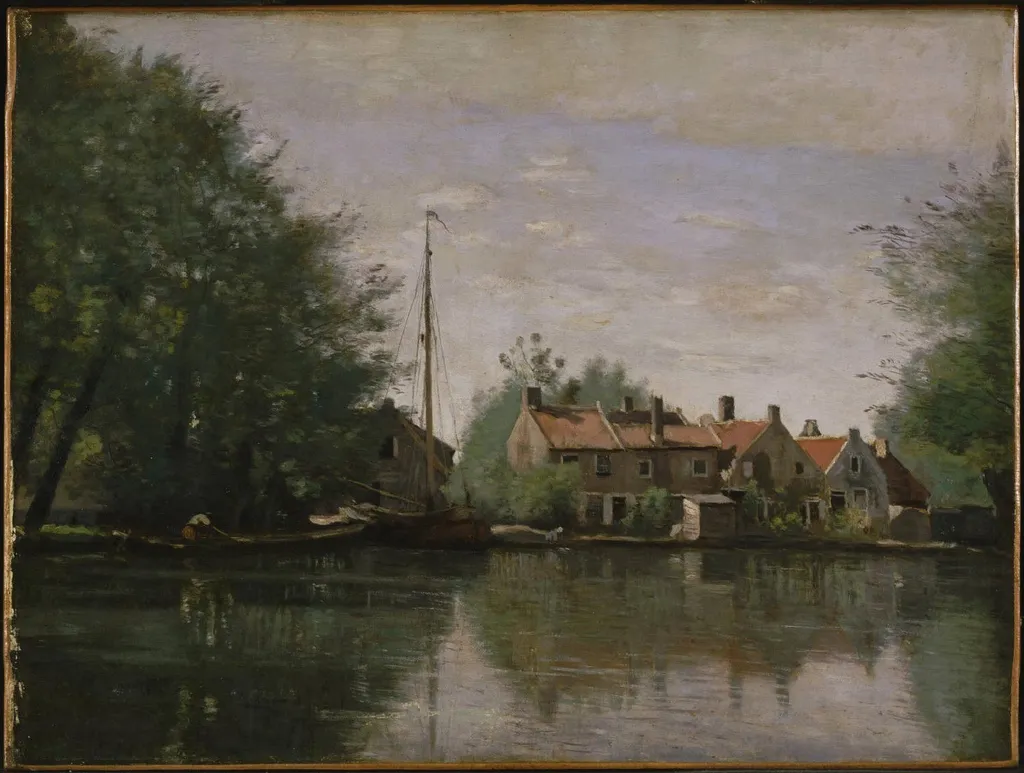
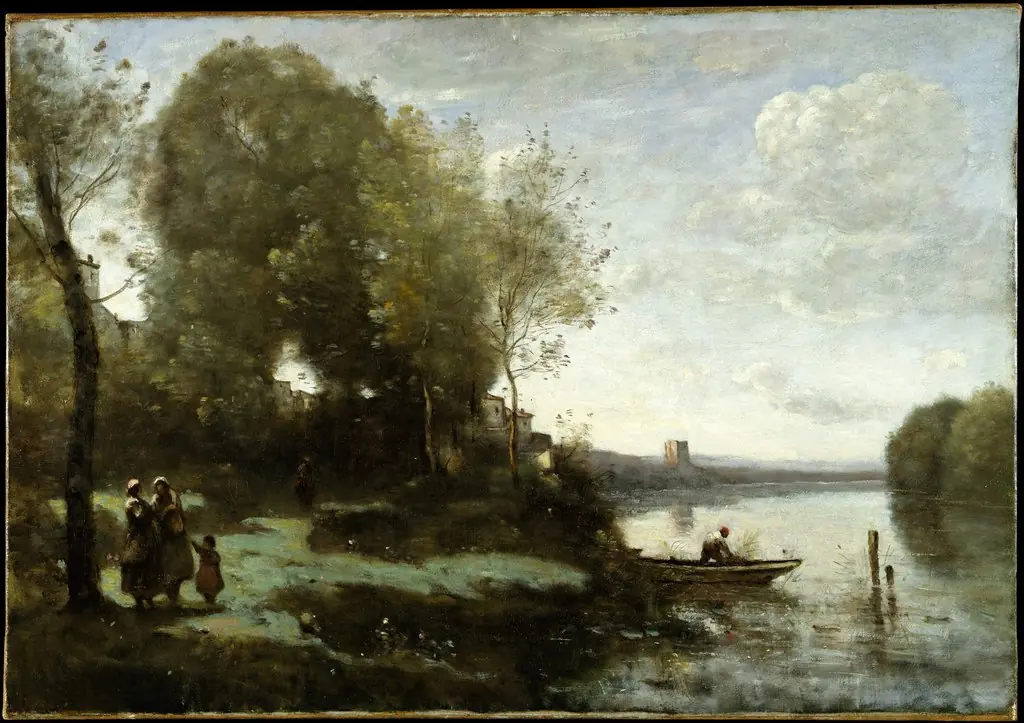
View in Holland is an oil painting by the Barbizon school artist Jean Baptiste Camille Corot. It dates from 1854 and is held in the collection of the Philadelphia Museum of Art.
About this work
Overview
It captures a quiet rural scene along a Dutch waterway, reflecting his interest in atmospheric effects and subdued tonal harmonies.
Painted in 1854, *View in Holland* is an oil on canvas landscape by the French artist Jean-Baptiste-Camille Corot. It captures a quiet rural scene along a Dutch waterway, reflecting his interest in atmospheric effects and subdued tonal harmonies. The work aligns with the Barbizon School’s focus on direct observation of nature, though Corot’s approach retains a lyrical restraint uncommon among his contemporaries.
Subject & Meaning
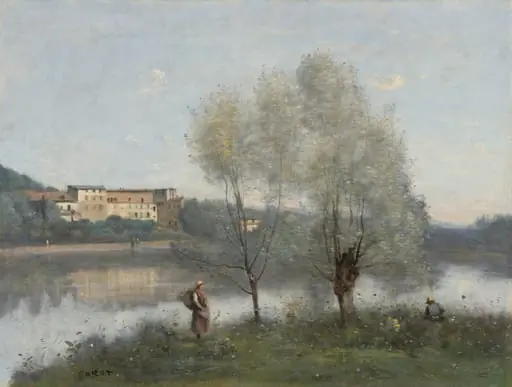
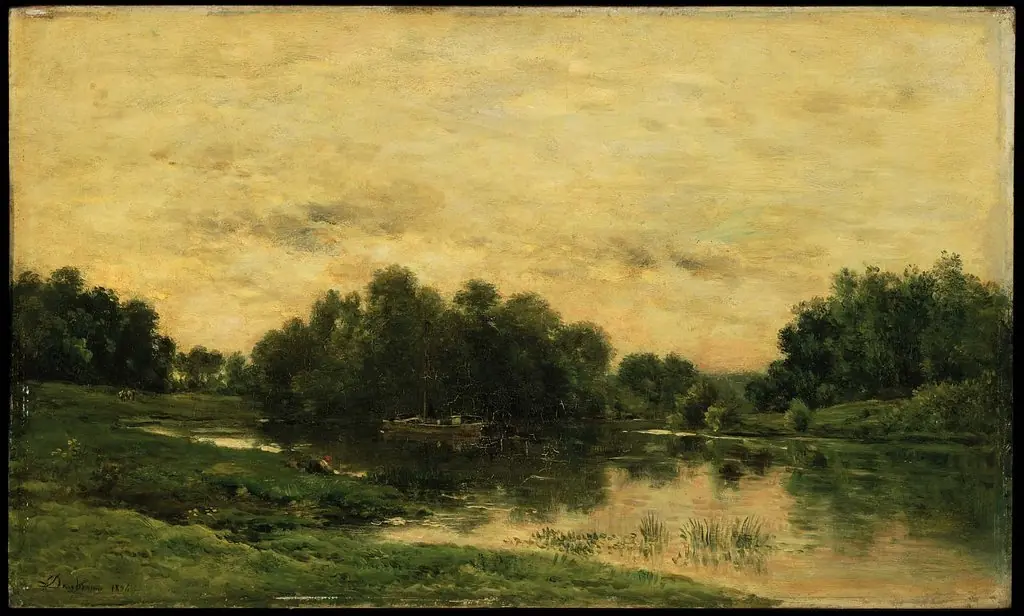
The painting presents a tranquil Dutch countryside: calm water mirrors the sky and trees, while modest red-roofed dwellings line the shore. A single boat, gently tethered, reinforces stillness. There is no narrative or human activity—only the quiet rhythm of land, water, and sky. The scene evokes contemplation rather than drama, emphasizing harmony between human habitation and the natural world.
Technique & Style
Corot employed soft brushwork and a muted palette of blues, grays, and earth tones to suggest diffuse light and atmospheric depth. The reflections on the water are rendered with delicate, fluid strokes, avoiding sharp definition. His technique blends careful observation with a poetic sensibility, smoothing transitions between elements to create a sense of quiet unity, a hallmark of his mature style.
History & Provenance
Created during Corot’s travels in the Netherlands, the painting entered the collection of the Philadelphia Museum of Art in the early 20th century. It has remained there since, part of a broader effort by the museum to acquire works that illustrate the evolution of 19th-century European landscape painting. Its provenance reflects its recognition as a significant example of Corot’s later output.
Context
In the mid-19th century, Corot stood between academic traditions and emerging naturalism. While the Barbizon painters worked directly outdoors, Corot often completed compositions in the studio from sketches. *View in Holland* reflects this hybrid approach—grounded in observed reality yet shaped by a personal, meditative vision that anticipated the tonal experiments of later Impressionists.
Legacy
The painting contributes to Corot’s reputation as a bridge between 18th-century landscape conventions and modern approaches to light and atmosphere. Though less overtly radical than his younger contemporaries, his restrained compositions and sensitivity to light influenced artists who sought emotional resonance over dramatic effect, leaving a quiet but enduring mark on the trajectory of landscape painting.
Artist & collection
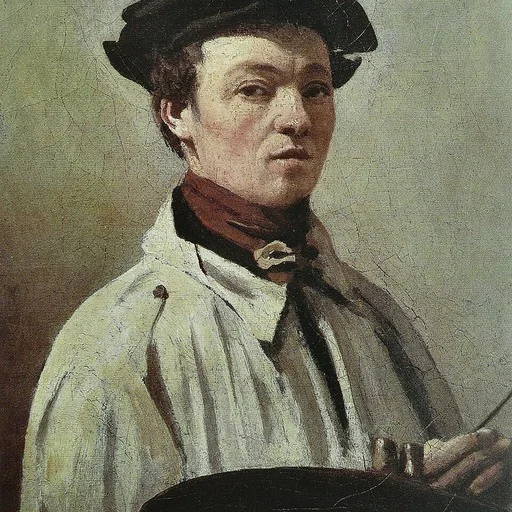
Artist
Jean-Baptiste-Camille Corot (UK: KORR-oh, US: kə-ROH, kor-OH; French: ; 16 July 1796 – 22 February 1875), or simply Camille Corot, was a French landscape and portrait painter as well as a printmaker in etching.

 The House of M. Lucas
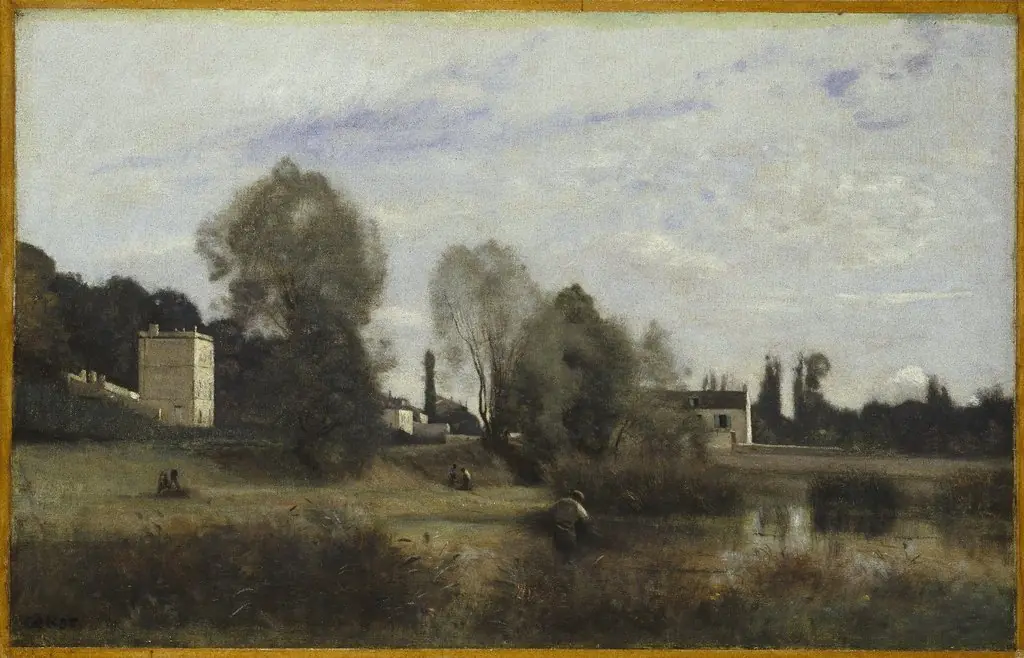 Ville d'Avray
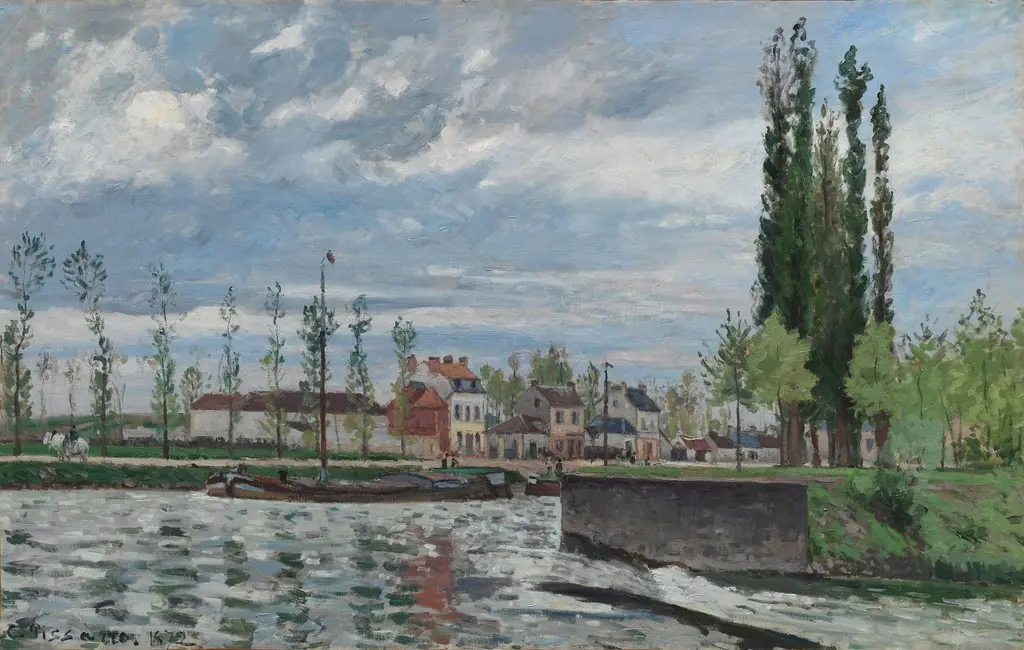 The Lock at Pontoise
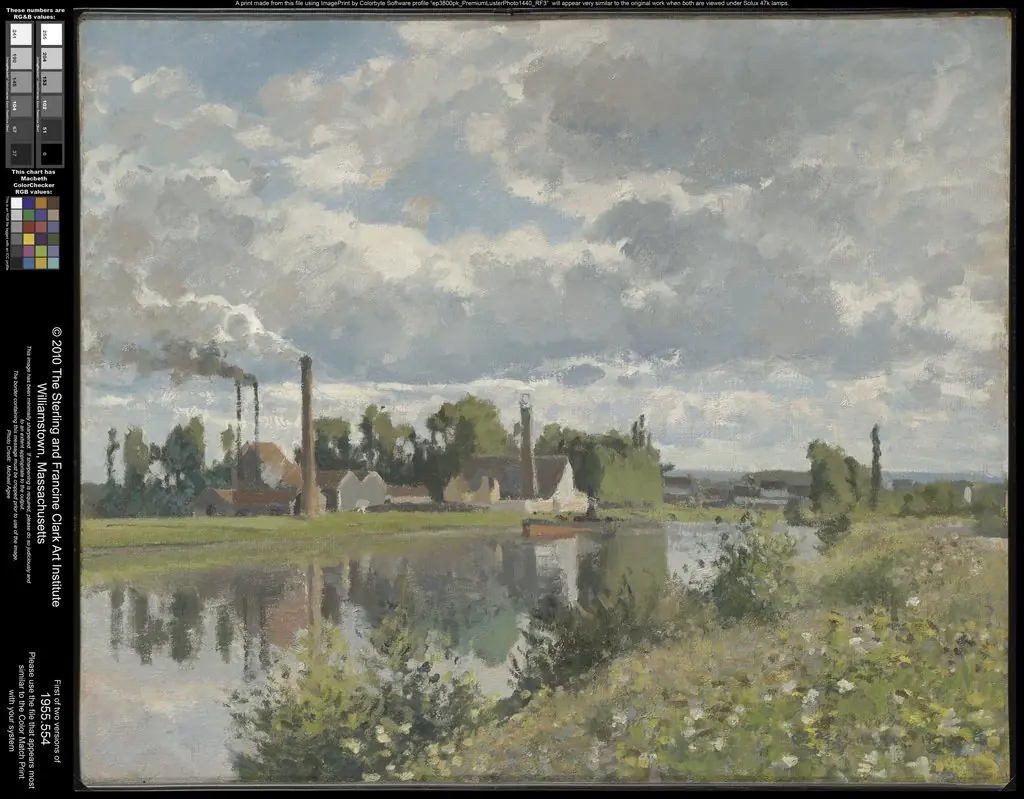 The River Oise near Pontoise
 The Lock at Pontoise
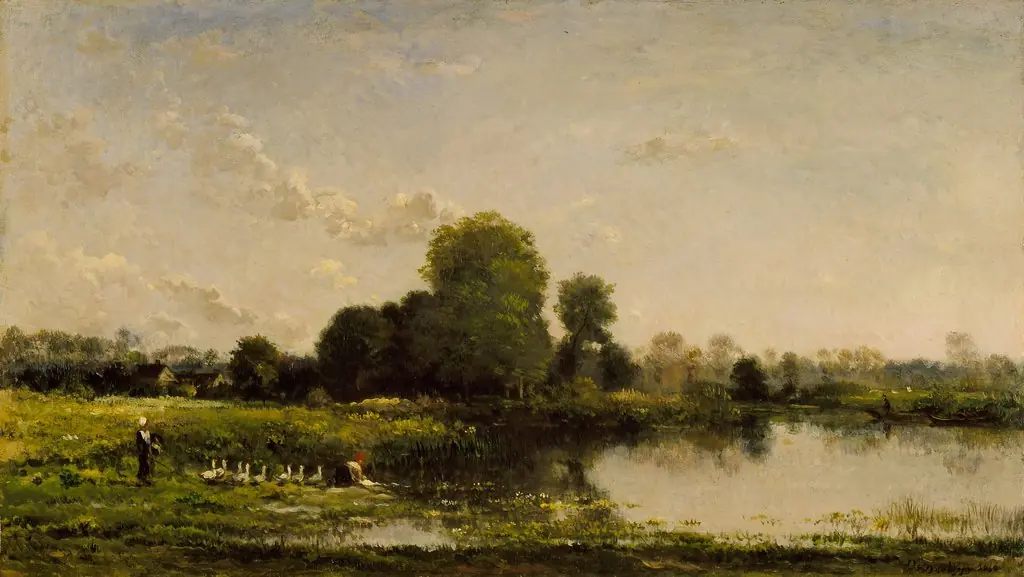 Riverbank with Fowl
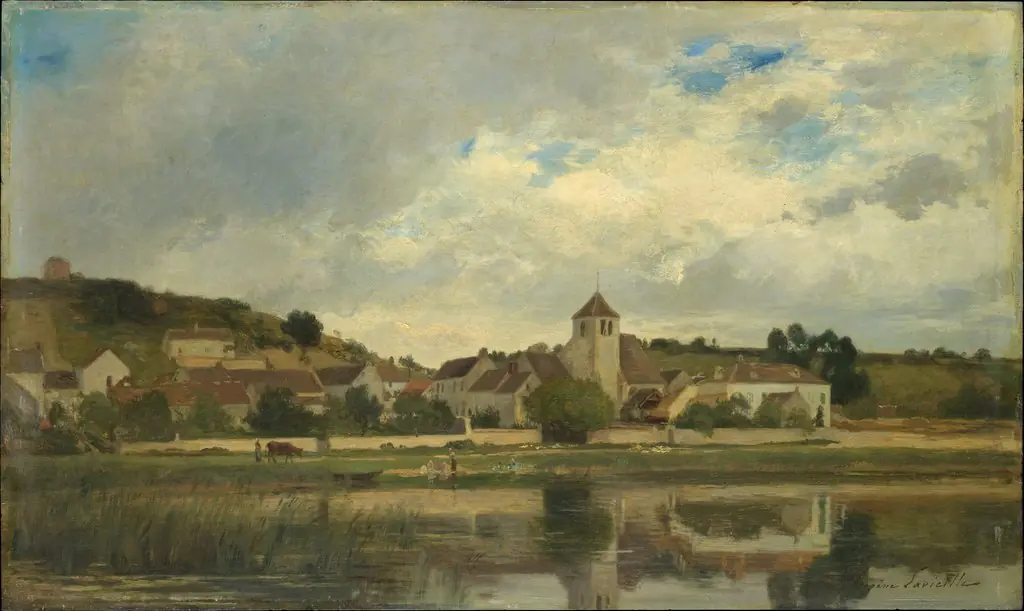 The Village of La Celle-sous-Moret
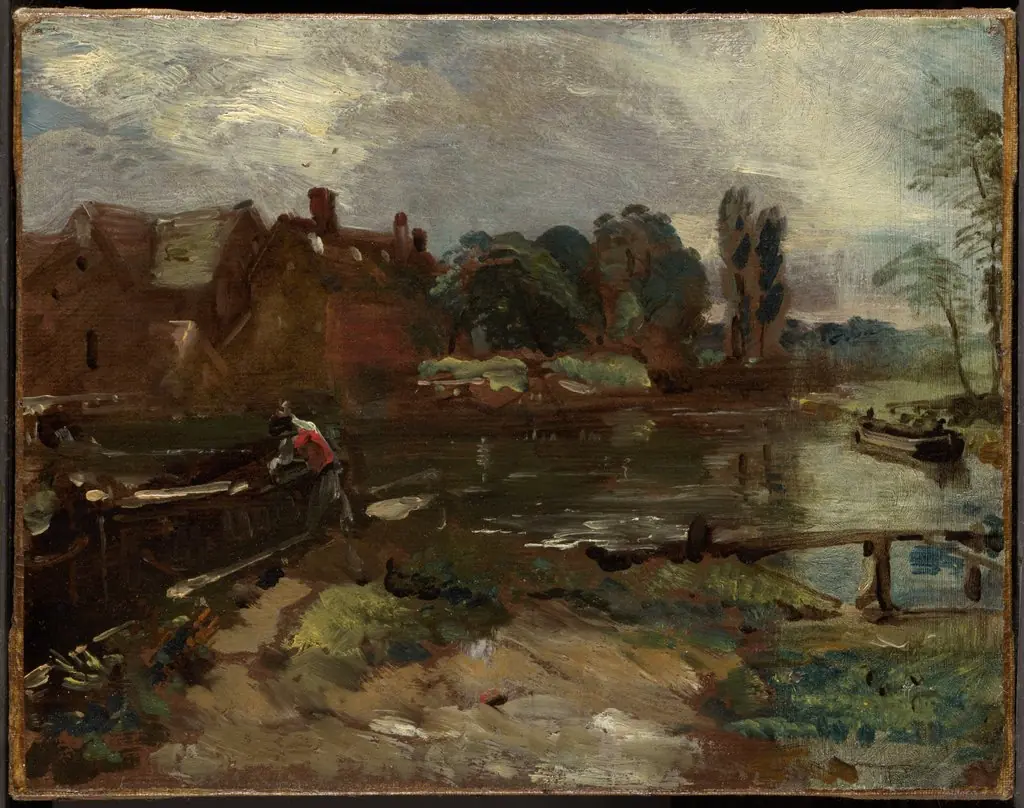 Flatford Mill from the Lock
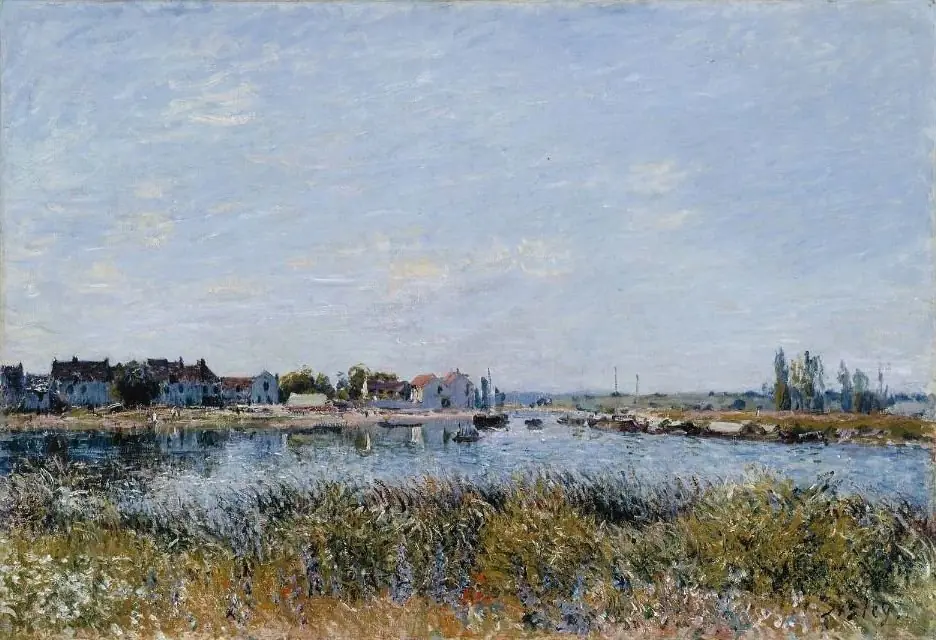 Saint-Mammès, Morning
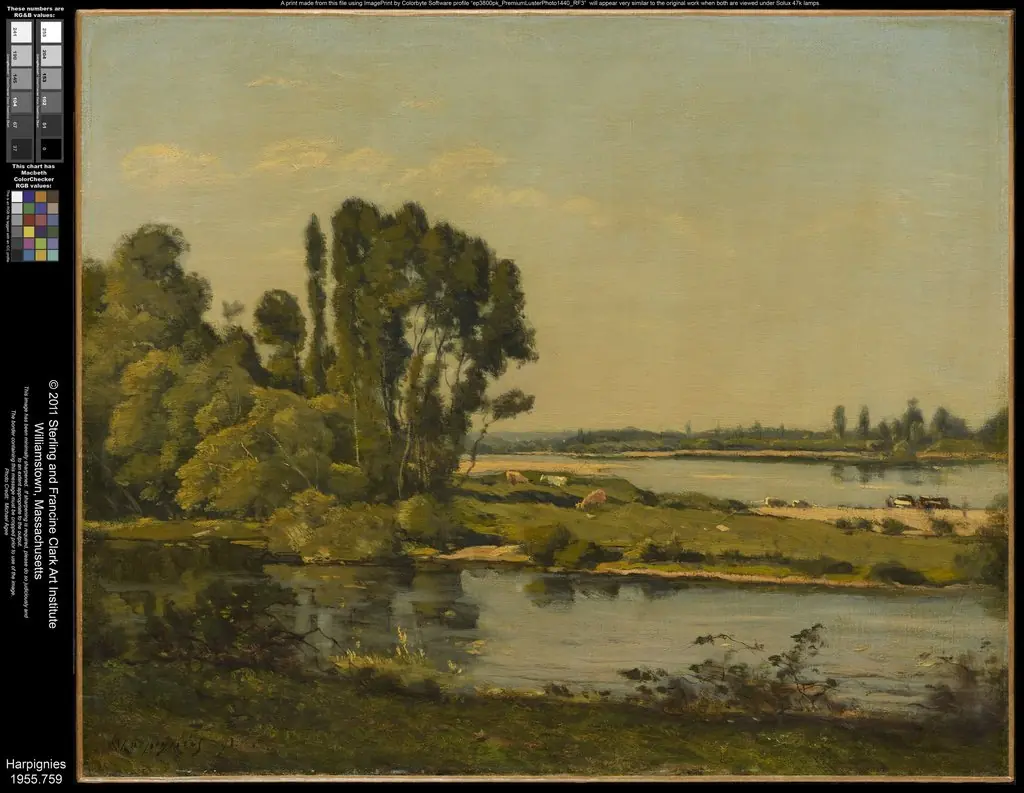 Landscape with a River
 Ile-de-Vaux on the Oise near Auvers
 Autumn landscape with a cottage at waterside