Artwork
Napoléon harangue les troupes bavaroises et wurtembourgeoises à Abensberg, 20 avril 1809
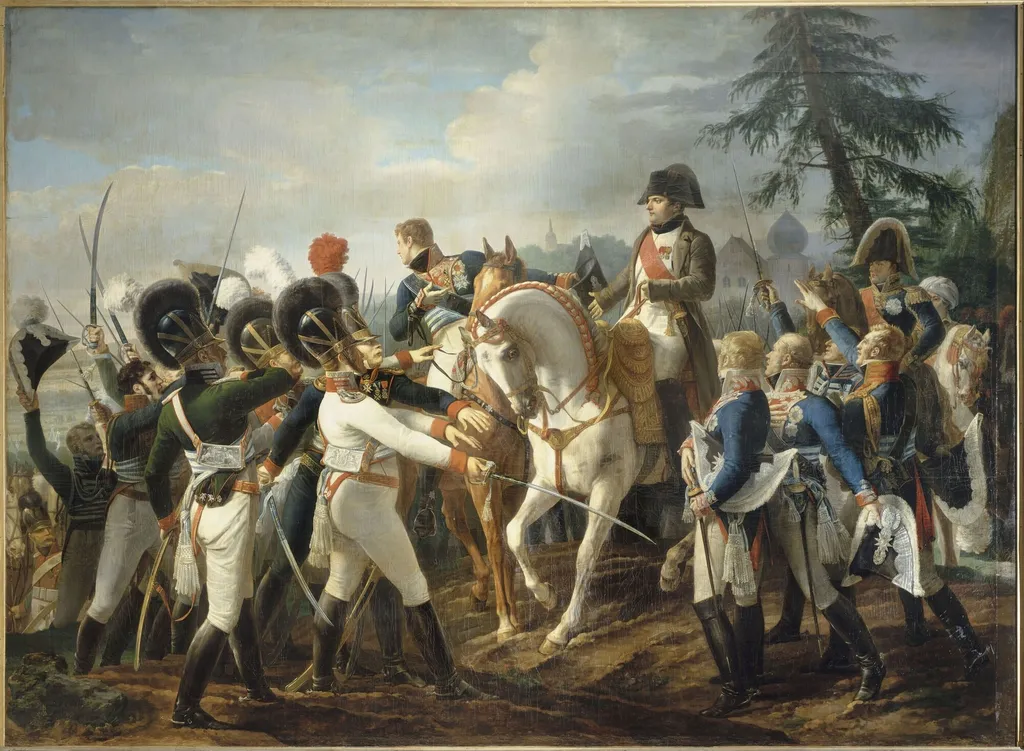
Napoléon harangue les troupes bavaroises et wurtembourgeoises à Abensberg, 20 avril 1809 is an oil painting by Jean-Baptiste Debret. It dates from 1810 and is held in the collection of the Palace of Versailles.
About this work
Overview
It resides today in the Palace of Versailles, where it contributes to the historical narrative of Napoleonic leadership and alliance-building.
Painted in 1810 by Jean-Baptiste Debret, this oil on canvas depicts Napoleon Bonaparte addressing allied German contingents during the War of the Fifth Coalition. Commissioned to commemorate a tactical moment in the campaign, the work is part of a broader effort to document imperial military campaigns. It resides today in the Palace of Versailles, where it contributes to the historical narrative of Napoleonic leadership and alliance-building.
Subject & Meaning
The scene captures Napoleon on horseback, sword raised, addressing Bavarian and Württemberg troops near Abensberg on April 20, 1809. His gesture conveys command and unity, emphasizing his role as leader of a multinational force. The gathering reflects the political reality of the Confederation of the Rhine, where German states were bound to France through military obligation rather than voluntary alliance. The painting frames this moment as one of cohesion under imperial authority.
Technique & Style
Debret employs a classical composition with Napoleon centered on a white horse, contrasting with the darker tones of surrounding uniforms and the muted landscape. The figures are rendered with attention to uniform detail, distinguishing French, Bavarian, and Württemberg attire. The background features a soft, atmospheric sky and distant architecture, grounding the scene in a plausible battlefield setting. The style aligns with academic history painting, prioritizing clarity and symbolic order over dramatic intensity.
History & Provenance
Commissioned shortly after the events of 1809, the painting was completed in 1810 and entered the royal collection under Louis XVIII. It was later transferred to the Palace of Versailles, where it became part of the museum’s curated narrative of Napoleonic France. Its preservation reflects the 19th-century French state’s interest in legitimizing imperial history through visual documentation, even after the emperor’s fall.
Context
The War of the Fifth Coalition saw Napoleon confronting Austria and its allies, relying on German states bound by treaty to supply troops. Abensberg was a minor but strategically significant engagement, allowing French forces to split the Austrian army. Debret’s painting, created during the height of imperial propaganda efforts, served to reinforce the image of Napoleon as a unifier of Europe under French leadership, despite the coercive nature of these alliances.
Legacy
Though not widely exhibited outside Versailles, the painting remains a documented example of how state-sponsored art shaped perceptions of military leadership. It illustrates the use of visual culture to legitimize political alliances and imperial authority. Debret’s work, while less celebrated than those of David or Gérard, contributes to the visual archive of Napoleonic-era diplomacy and the complex interplay of national identity within the French Empire.
Artist & collection
Artist
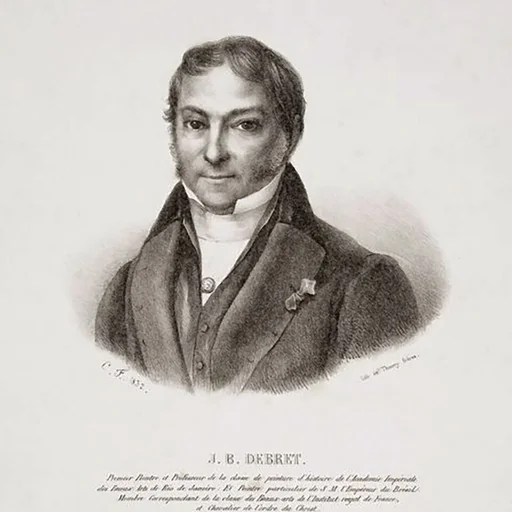
Jean-Baptiste Debret (French pronunciation: ; 18 April 1768 – 28 June 1848) was a French painter, who produced many valuable lithographs depicting the people of Brazil. Debret won the second prize at the 1798 Salon des Beaux Arts.

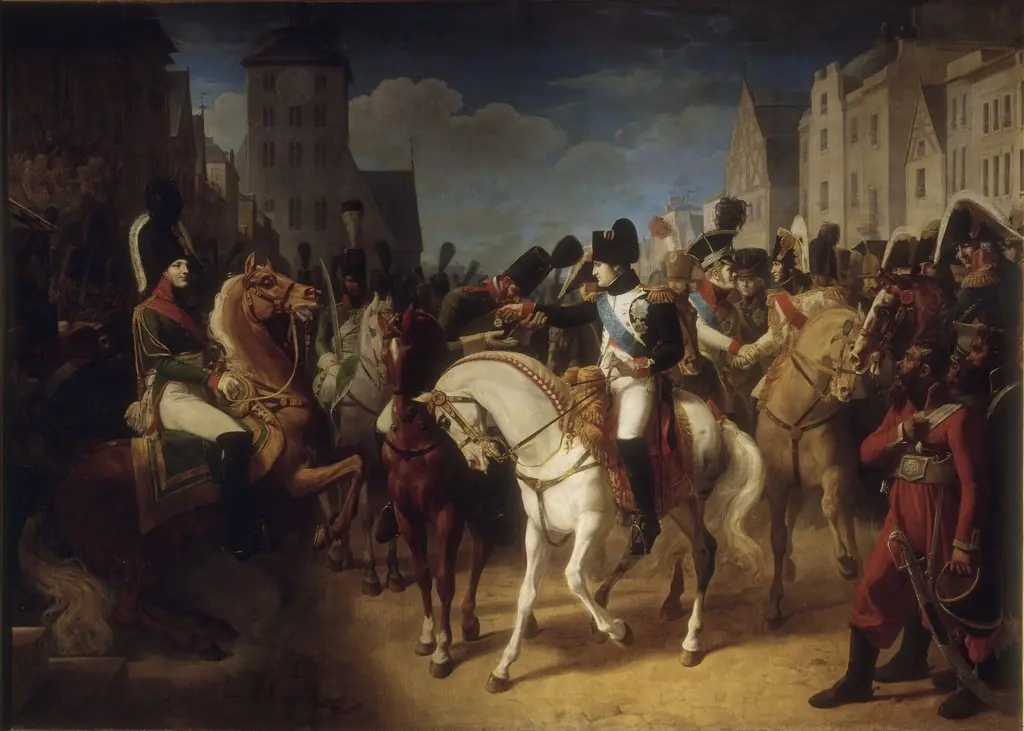 Napoleon I decorated a soldier of the Russian army in Tilsitt with the cross of the Legion of Honor
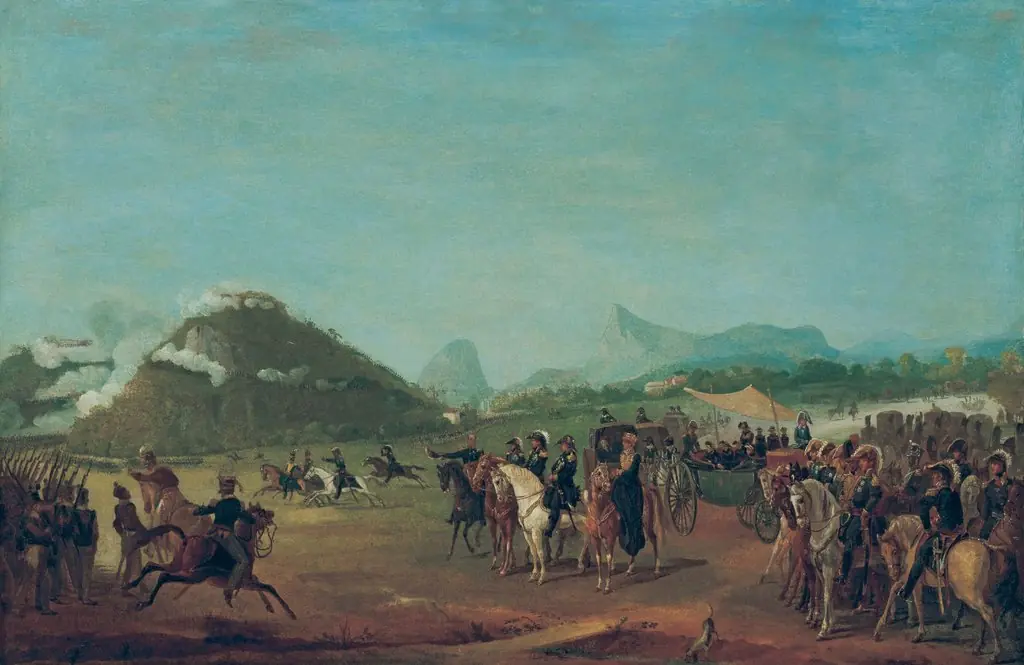 Revista das tropas destinadas a Montevidéu, na Praia Grande
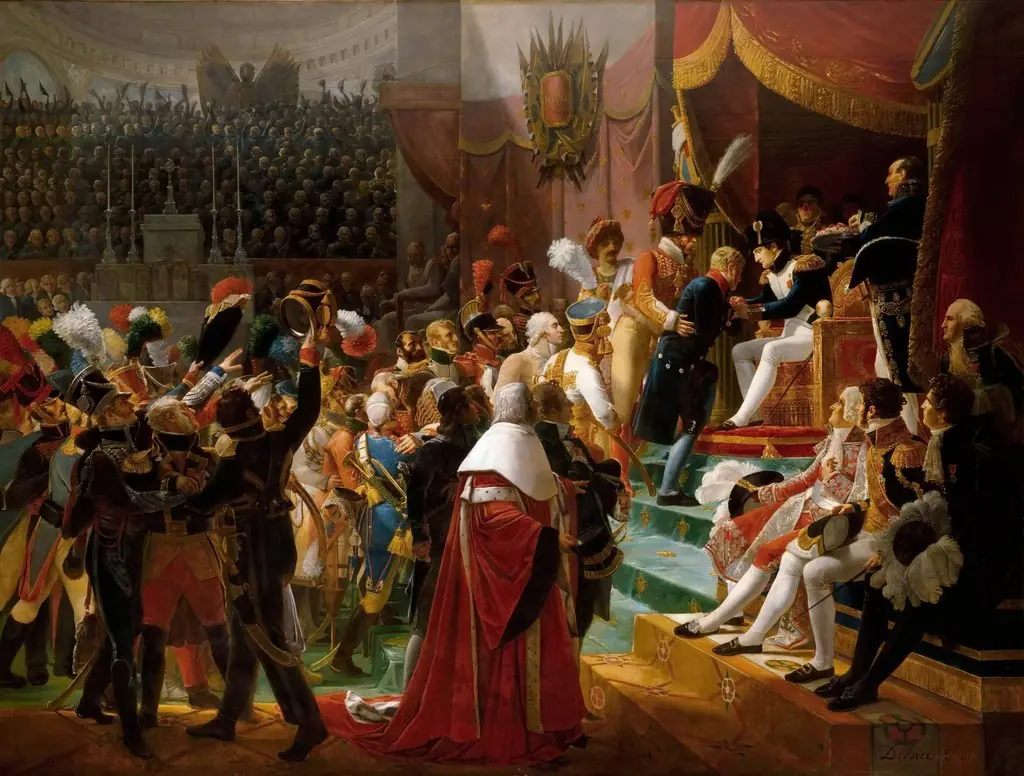 First distribution of the decorations of the Legion of Honor, made by Bonaparte, in the church of the imperial hotel of Invalides, July 14, 1804
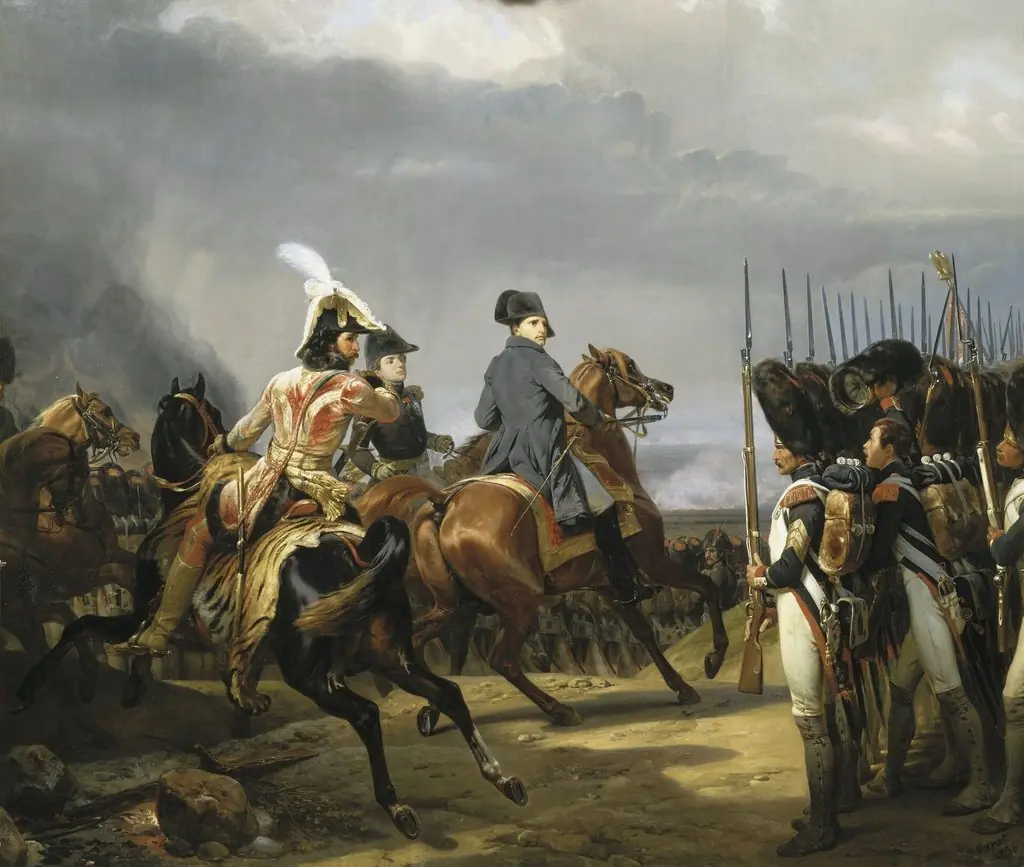 The battle of Jena, October 14, 1806
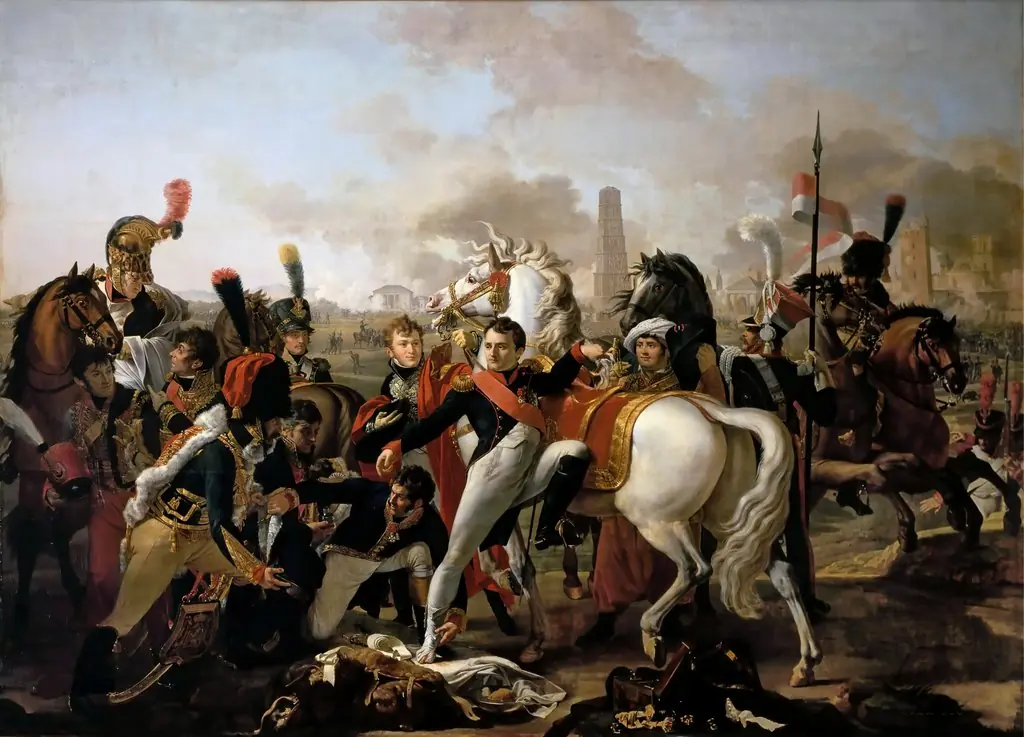 Napoleon dismounting with an injured foot at Regensburg, aided by the Surgeon, Yvan, April 23, 1809
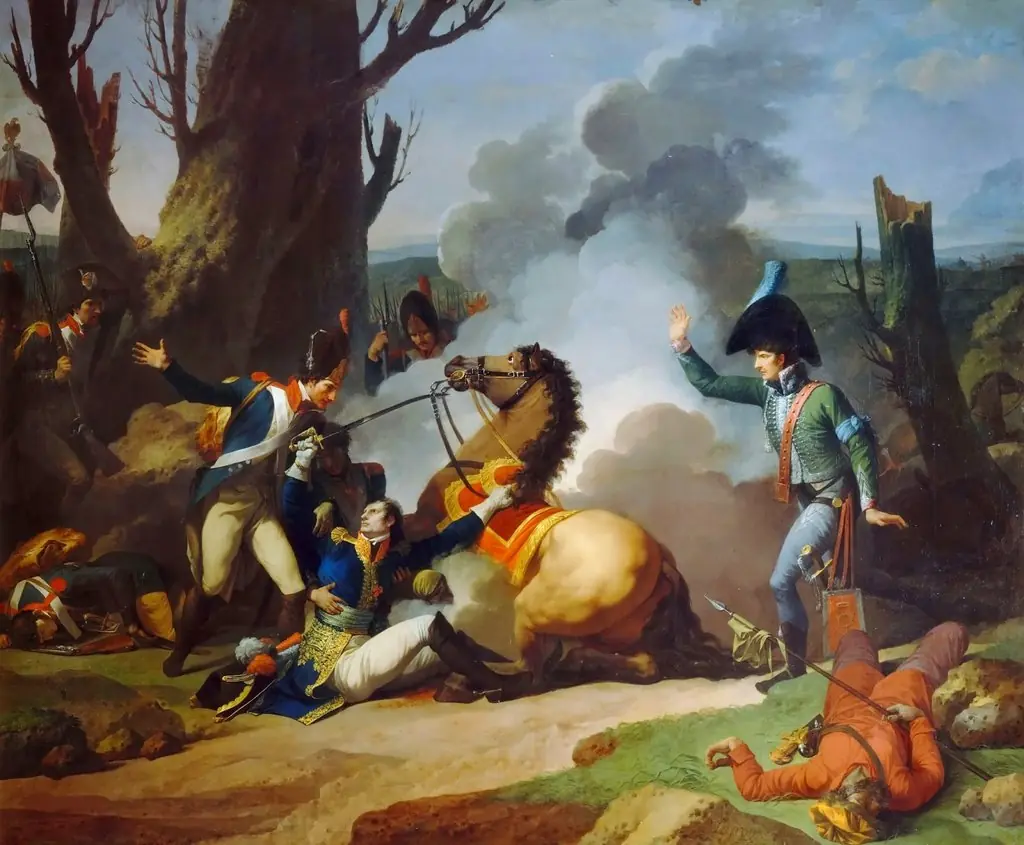 Death of General Valhubert, December 2, 1805
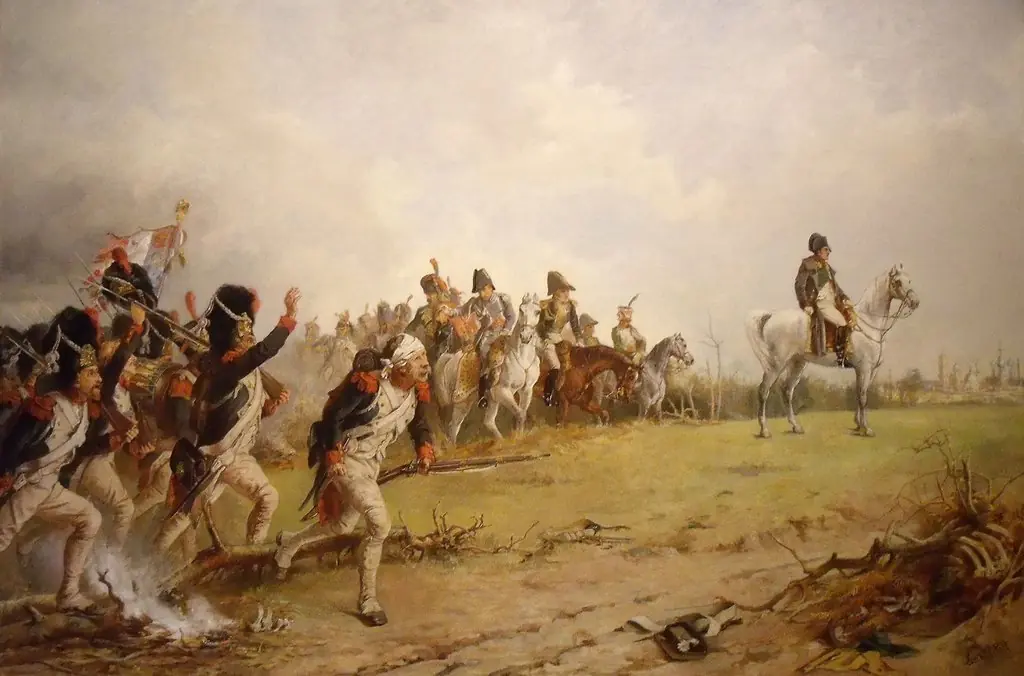 The First Sight of Moscow
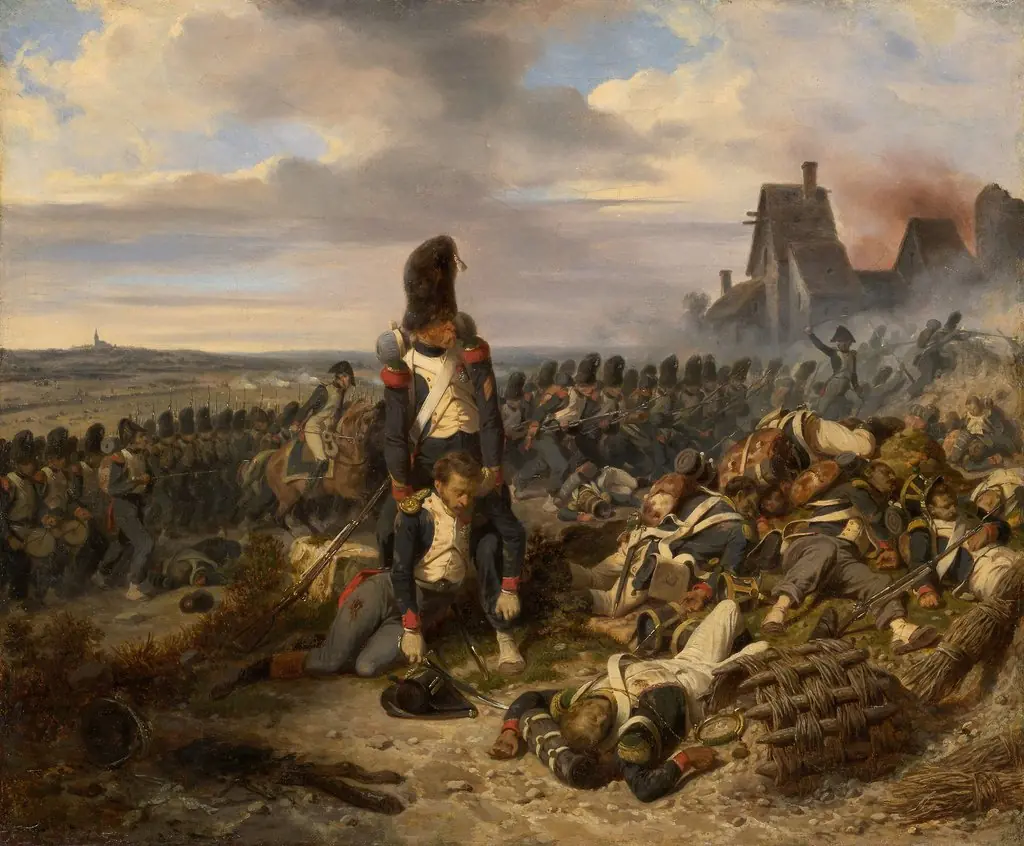 Battle Scene
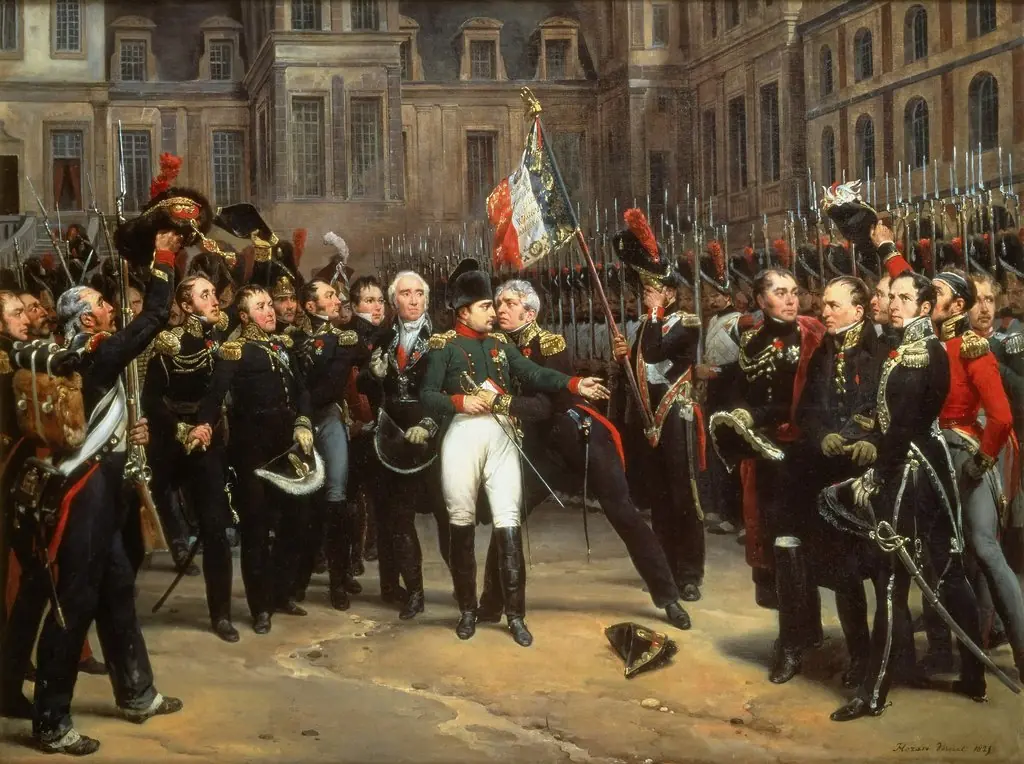 Napoleon bids farewell to his Guard at Fontainebleau on 20 April 1814
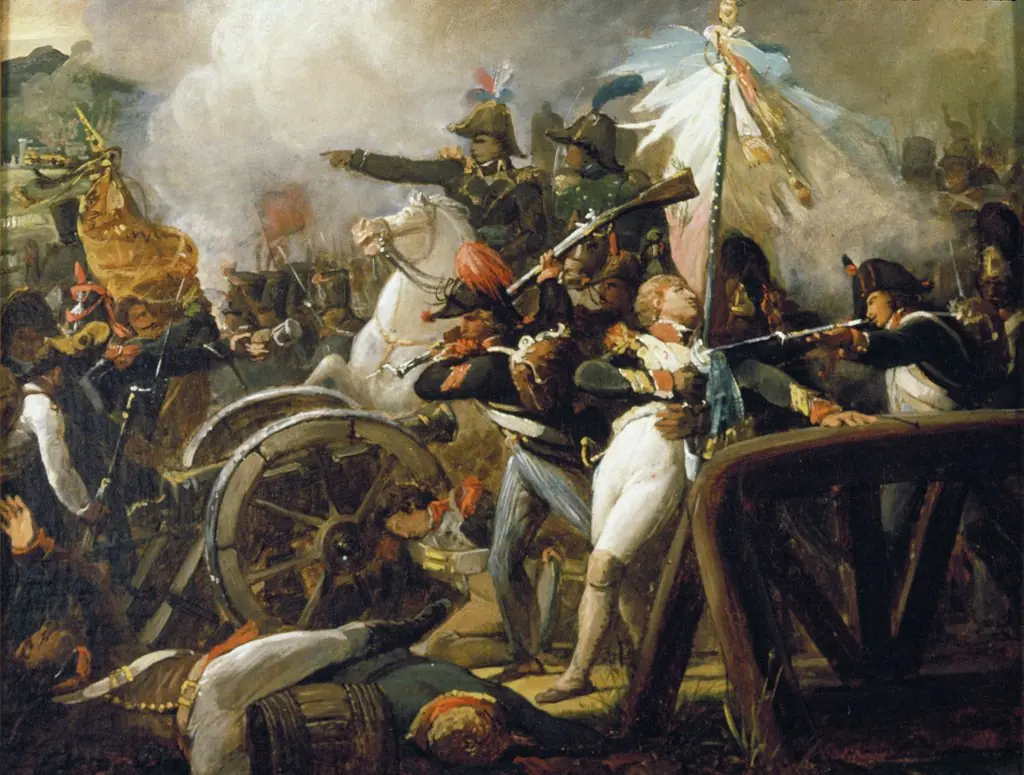 Battle on a Bridge
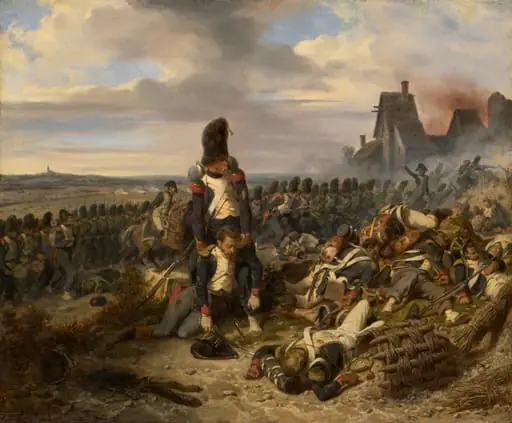 Battle Scene
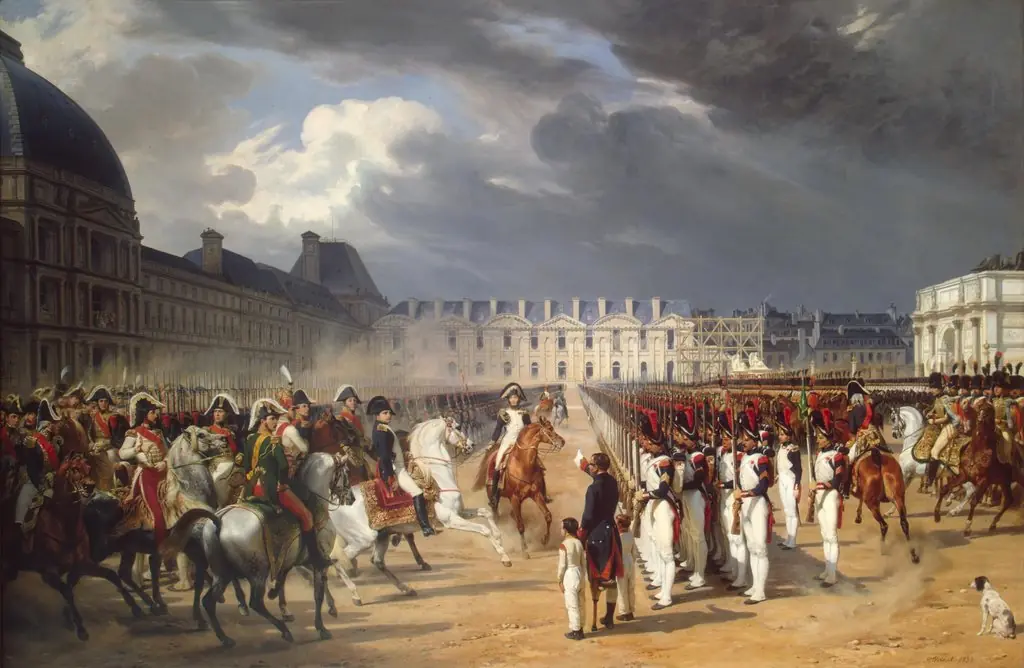 Invalid handing a petition to Napoleon at the parade in the court of the Tuileries Palace
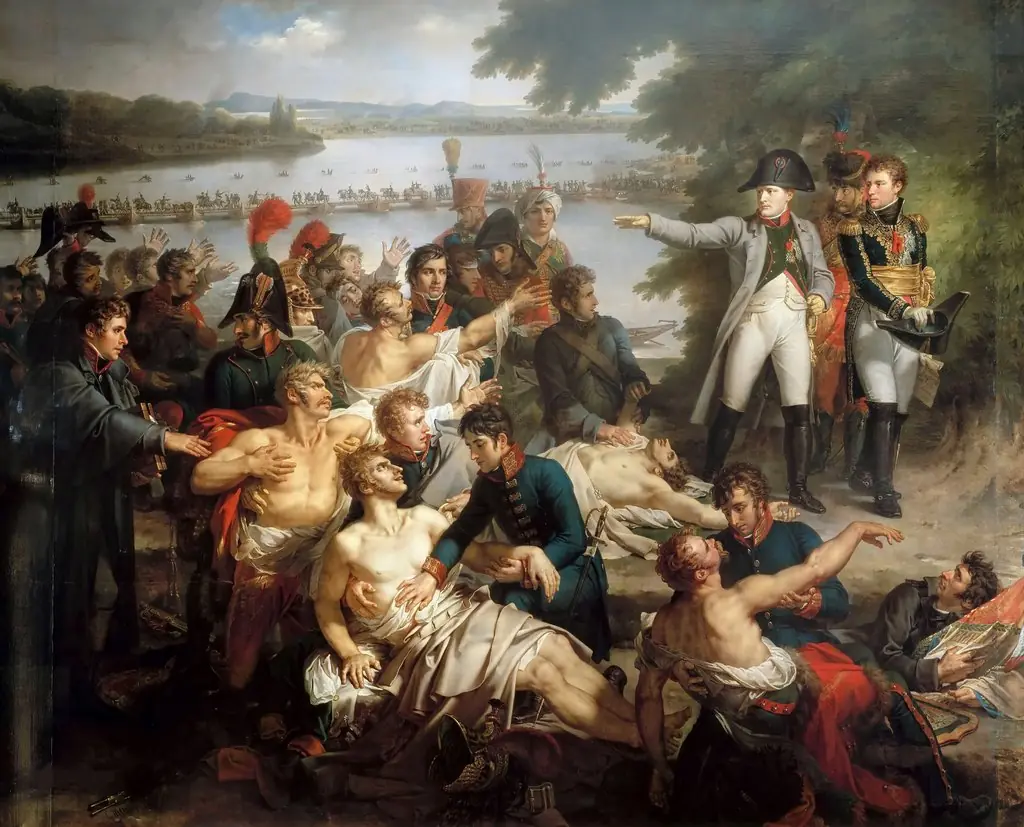 Napoleon's Return to the Island of Lobau After the Battle of Essling
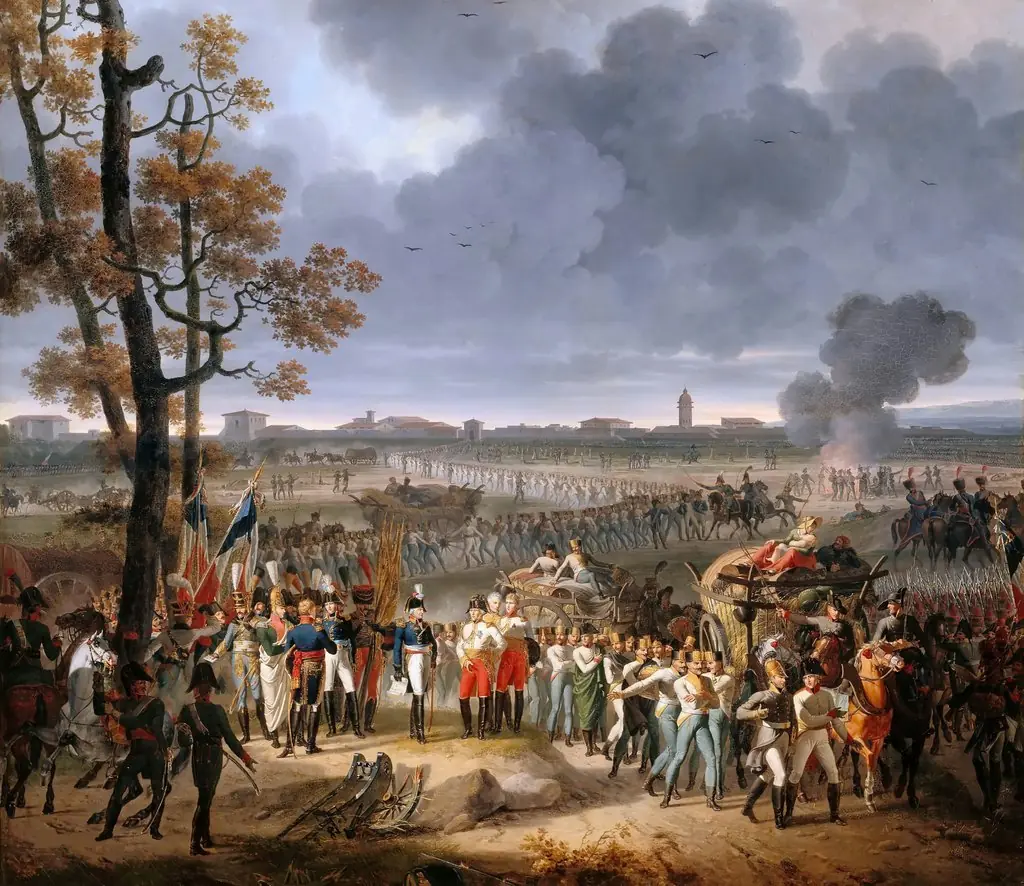 Surrender of Mantua, February 2, 1797