Artwork
Head of a Young Woman
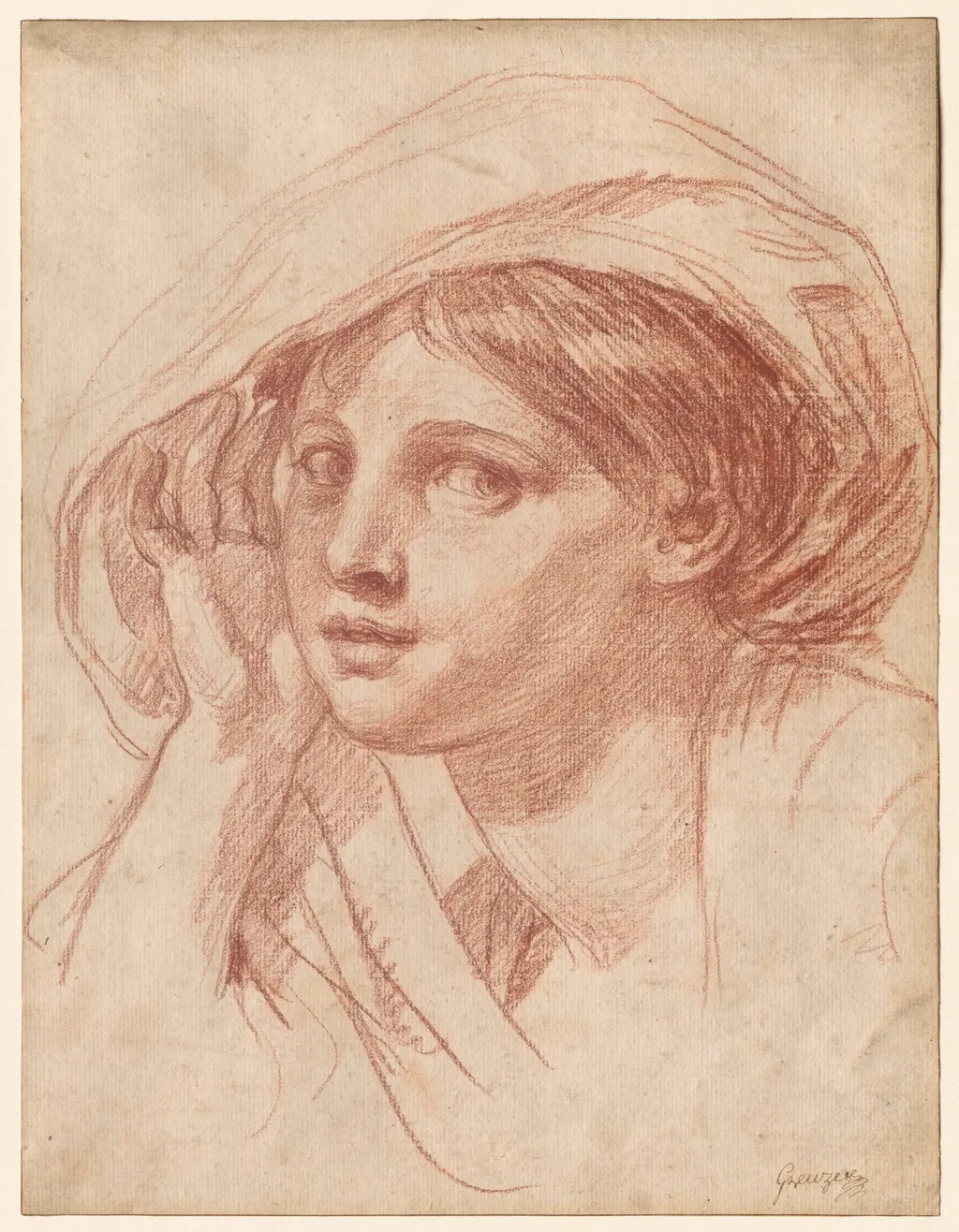
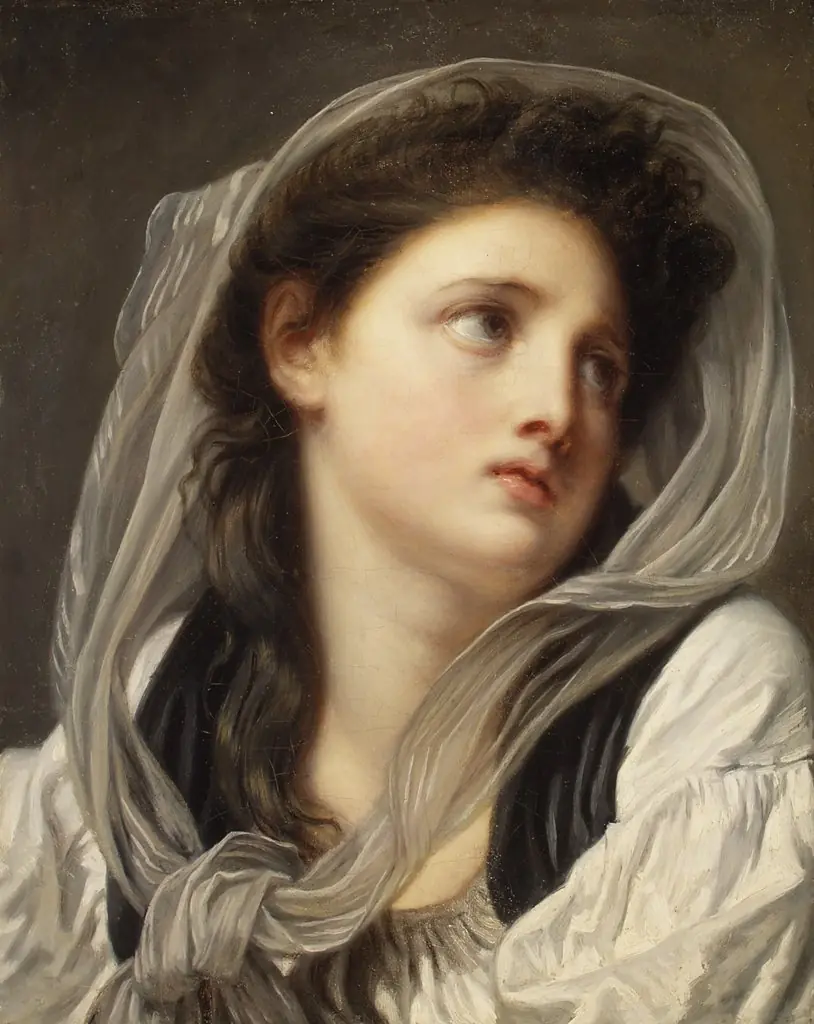
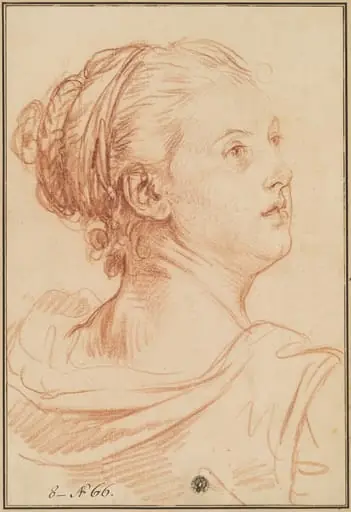
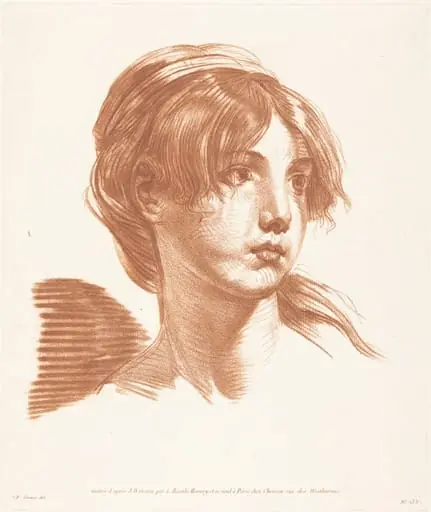
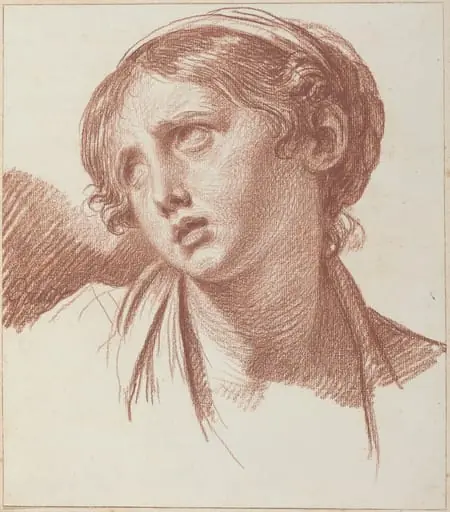
Head of a Young Woman is a drawing by the Romanticist artist Jean-Baptiste Greuze. It dates from 1785 and is held in the collection of the Cleveland Museum of Art.
About this work
Overview
This red chalk drawing captures the head of a young woman, likely studied as a preparatory piece for a larger narrative work.
This red chalk drawing captures the head of a young woman, likely studied as a preparatory piece for a larger narrative work. Created by Jean-Baptiste Greuze, it functions independently as a finished drawing, reflecting the 18th-century French practice of elevating expressive studies to the status of autonomous artworks. Its intimate scale and focused detail distinguish it from full compositions, emphasizing emotional nuance over storytelling.
Subject & Meaning
The figure represents the wife in Greuze’s painting The Reconciliation, a scene of domestic reconciliation after conflict. Her gaze, softly directed, conveys quiet resignation and tender emotion rather than overt drama. The drawing isolates her expression to highlight inner feeling, a hallmark of Greuze’s interest in moral sentiment and psychological depth within familial relationships.
Technique & Style
Greuze employed red chalk with delicate hatching and subtle tonal gradations to model the contours of the face and suggest the softness of skin. The absence of background focuses attention entirely on the features—eyes, lips, and brow—enhancing the emotional resonance. His technique balances precision with spontaneity, capturing fleeting expression without theatrical exaggeration.
History & Provenance
The drawing was produced in the mid-18th century as part of Greuze’s practice of creating independent studies for his narrative paintings. Such works were collected by patrons who valued their emotional intensity and technical finesse. It entered the Cleveland Museum of Art’s collection through documented acquisitions, aligning with its broader holdings of French graphic art from the period.
Context
Greuze’s expressive heads were part of a broader French tradition that elevated facial studies as vehicles for moral and emotional inquiry. Contemporaries like Coypel and Degas similarly explored this mode, though Greuze’s focus on domestic virtue distinguished his approach. These drawings responded to Enlightenment ideals that prized sincerity and inner life over idealized form.
Legacy
By treating preparatory sketches as finished works, Greuze expanded the boundaries of drawing as an art form. His emphasis on individual emotion influenced later artists interested in psychological realism. The survival and display of such studies today underscore their role in understanding how 18th-century artists cultivated intimacy and moral resonance through the human face.
Own this work as a print
Artist & collection
Artist
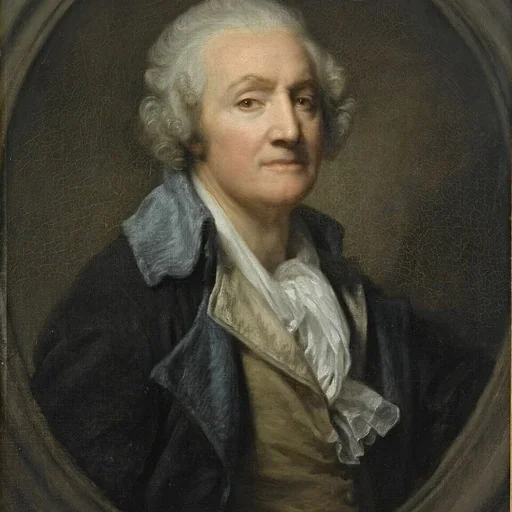
Jean-Baptiste Greuze (French pronunciation: , 21 August 1725 – 4 March 1805) was a French painter of portraits, genre scenes, and history painting.