Artwork
Portrait of Louis XVIII
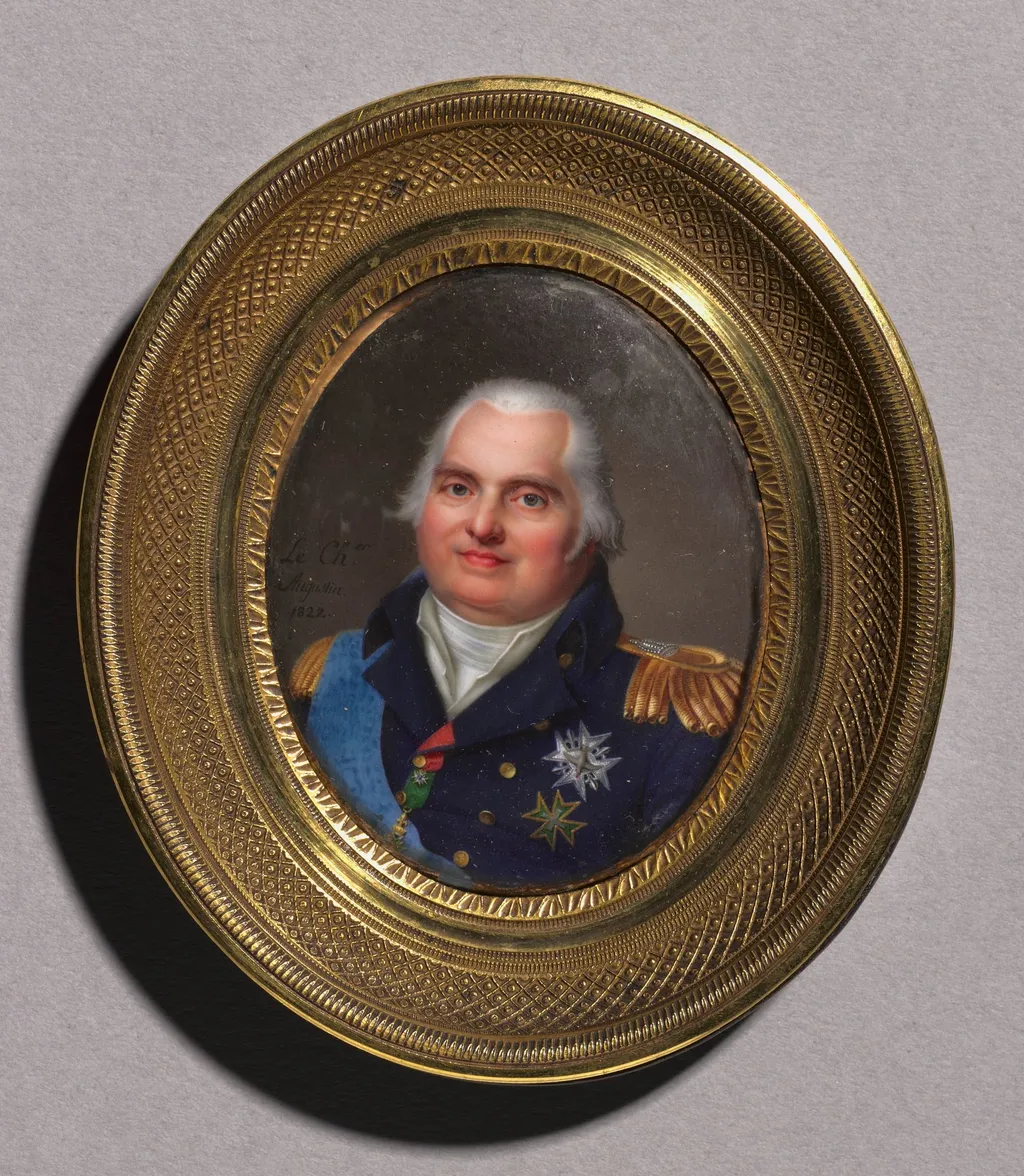
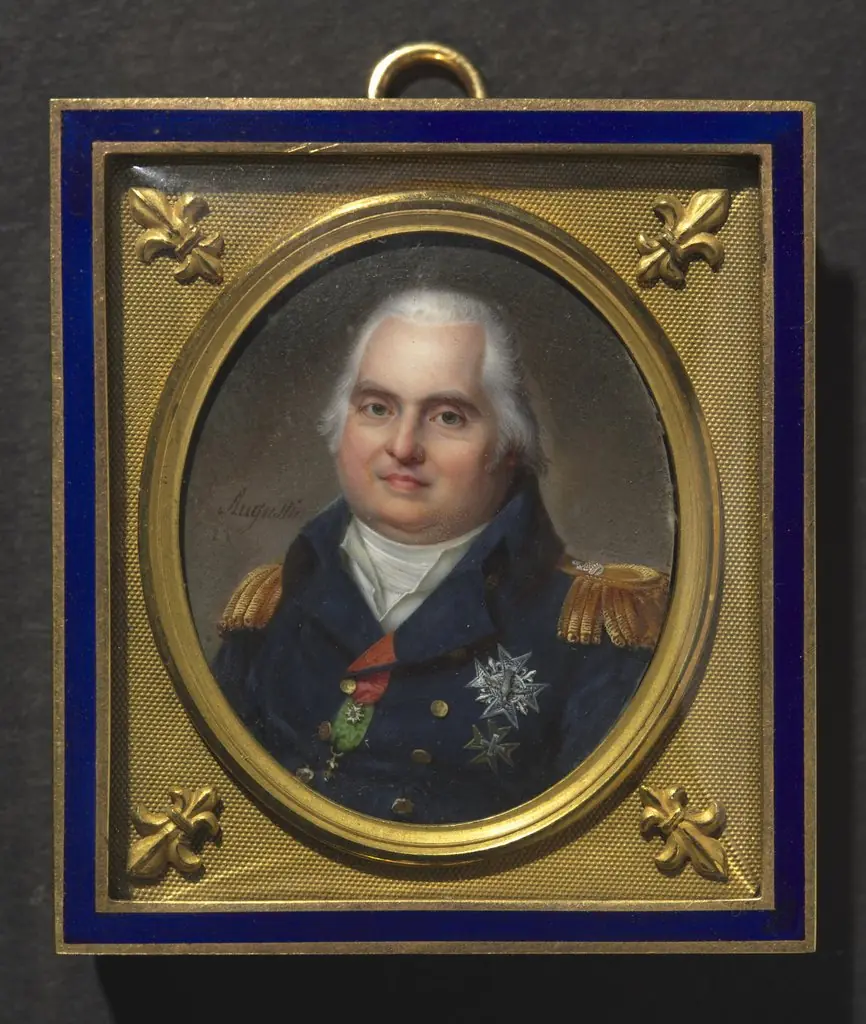
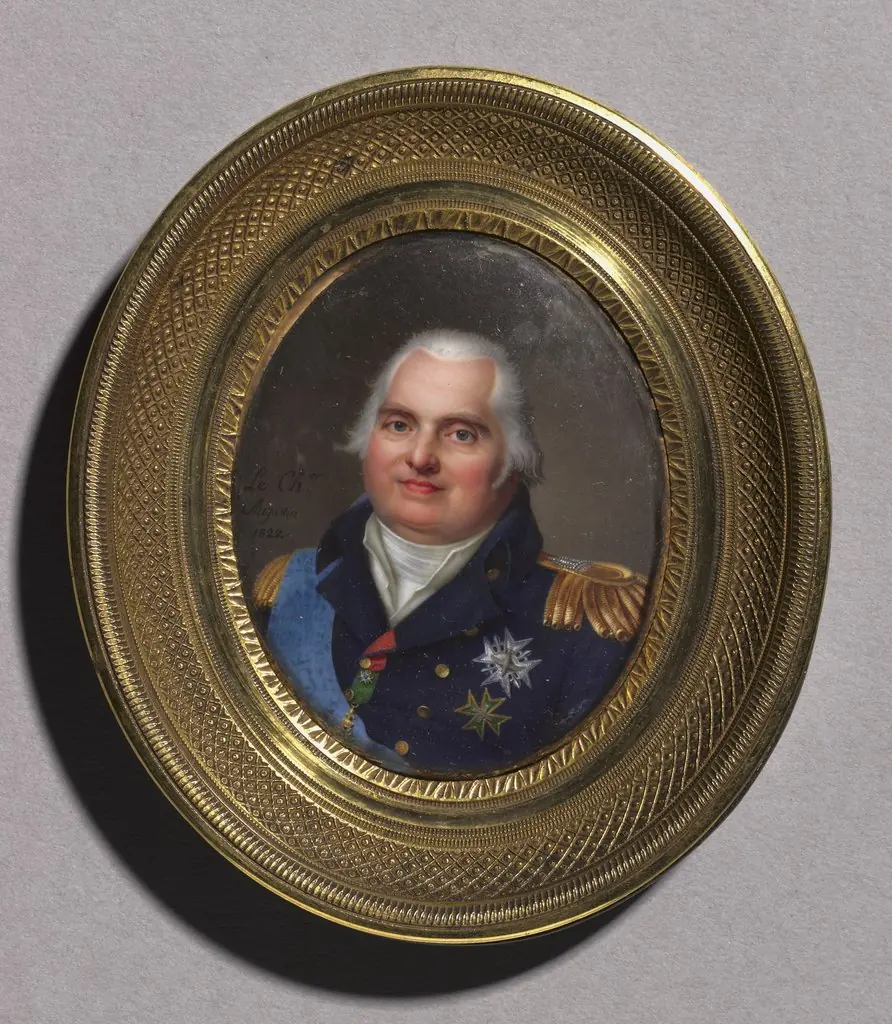
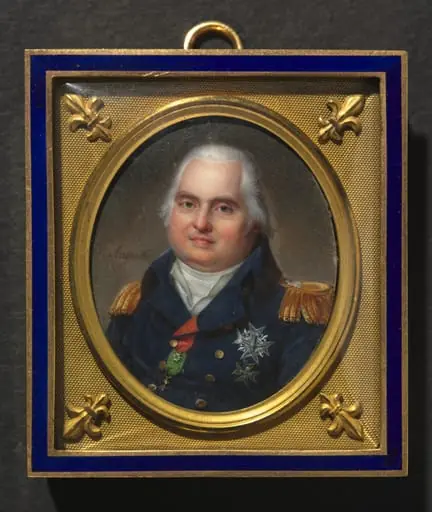
Portrait of Louis XVIII is an unspecified portrait miniature by the Romanticist artist Jean-Baptiste Jacques Augustin. It dates from 1822 and is held in the collection of the Cleveland Museum of Art. This enamel portrait miniature depicts Louis XVIII, King of France from 1814 to 1824, rendered in fine detail on a small, portable surface.
About this work
Overview
This enamel portrait miniature depicts Louis XVIII, King of France from 1814 to 1824, rendered in fine detail on a small, portable surface.
This enamel portrait miniature depicts Louis XVIII, King of France from 1814 to 1824, rendered in fine detail on a small, portable surface. Created by Jean-Baptiste Jacques Augustin, the court’s designated miniaturist, the work exemplifies the use of enamel as a durable medium for official royal imagery. Its compact size allowed it to function as a personal and diplomatic object, circulated among elites to affirm political presence and legitimacy during a turbulent era of restored monarchy.
Subject & Meaning
Louis XVIII is portrayed in military attire, adorned with the insignia of three French royal orders: the Holy Ghost, Saint Louis, and Our Lady of Mount Carmel and Saint Lazarus. These symbols reinforce his legitimacy as the restored Bourbon monarch following the Napoleonic interlude. The calm, weary expression suggests the weight of his position, while the formal regalia serves as a visual assertion of continuity with pre-revolutionary authority, positioning him as both sovereign and survivor of political upheaval.
Technique & Style
Enamel painting on metal required multiple firings of colored glass powders at precise temperatures, a technically demanding process prone to cracking or color distortion. Augustin’s skill allowed for delicate rendering of facial features, lace, and metallic embroidery within a space no larger than a palm. The result is a luminous, enduring image with sharp detail and a polished surface, contrasting with the softer tones of watercolor on ivory—another medium he mastered, but less suited to long-term preservation.
History & Provenance
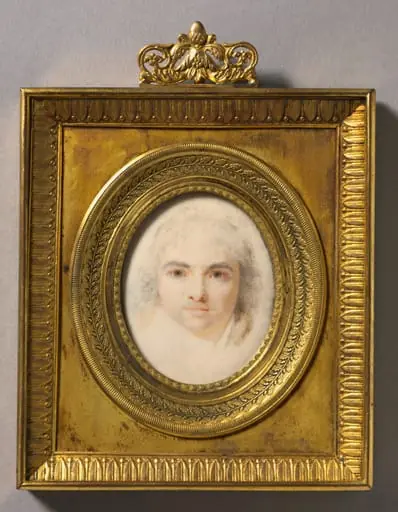
The portrait was likely commissioned during the early years of Louis XVIII’s second restoration, around 1822, shortly before his death. Multiple versions exist, indicating a deliberate effort to distribute his likeness widely. This particular enamel version resides in a major museum collection alongside a watercolor variant, suggesting institutional recognition of its significance. Its survival reflects both the value placed on royal portraiture and the durability of the enamel technique, which resisted the degradation common in other media.
Context
In the post-Napoleonic era, royal authority needed visual reinforcement. Miniatures served as intimate, portable tokens of loyalty and recognition, exchanged among diplomats, courtiers, and foreign dignitaries. Augustin’s role as court artist made him central to this visual diplomacy. The proliferation of such portraits mirrored the monarchy’s attempt to reestablish its image through controlled representation, turning art into a tool of political memory and continuity in a nation still healing from revolution and war.
Legacy
Augustin’s enamel miniatures stand as rare examples of technical mastery in a medium few could execute with such precision. His dual expertise in enamel and ivory placed him among the last generation of artists who bridged the traditions of court portraiture and emerging industrial techniques. These small works, once carried in waistcoats and jewel boxes, now serve as quiet testaments to the enduring power of image-making in the service of statecraft during a fragile political transition.
Artist & collection
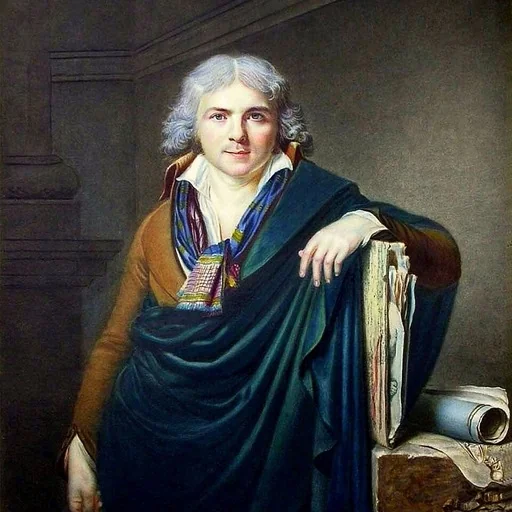
Artist
Jean-Baptiste Jacques Augustin
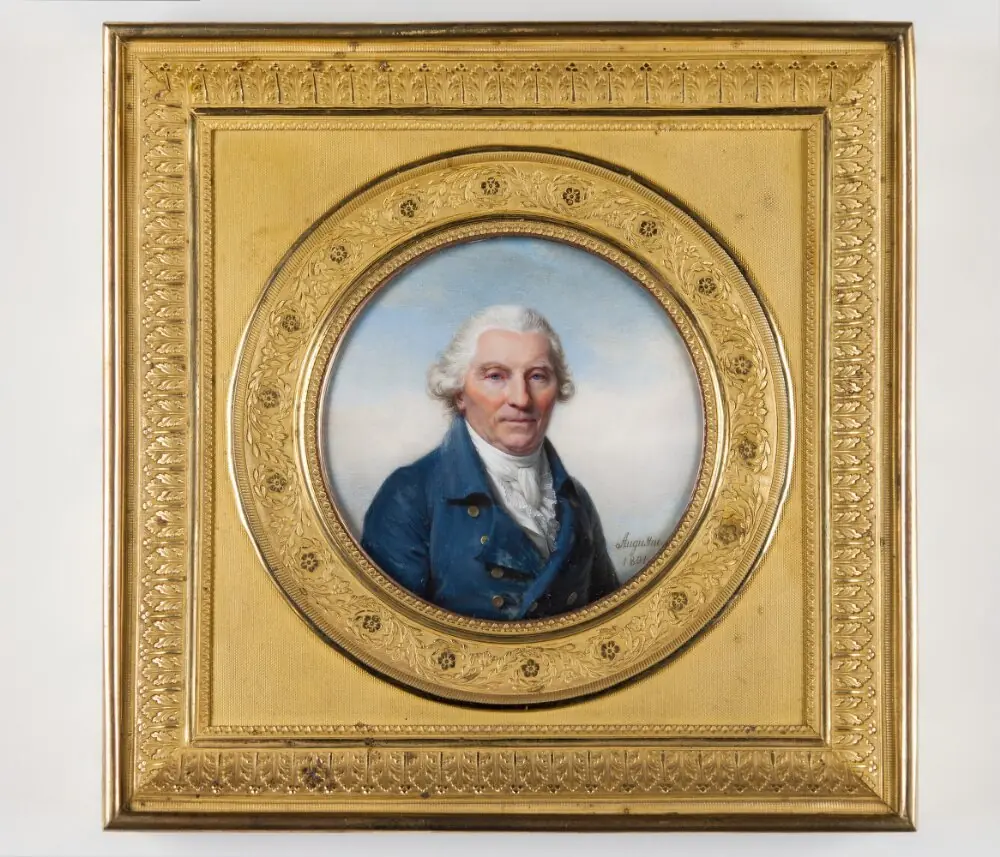
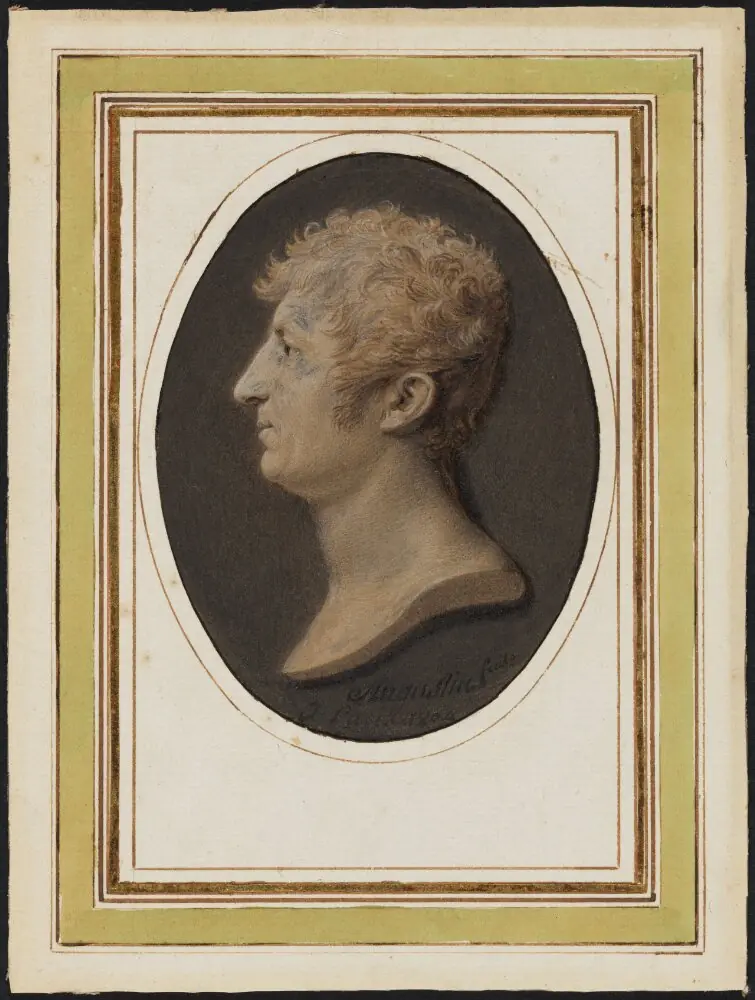
Jean-Baptiste Jacques Augustin (1759–1832) was a French artist, born in Saint-Dié-des-Vosges.