Artwork
The Russian Cradle
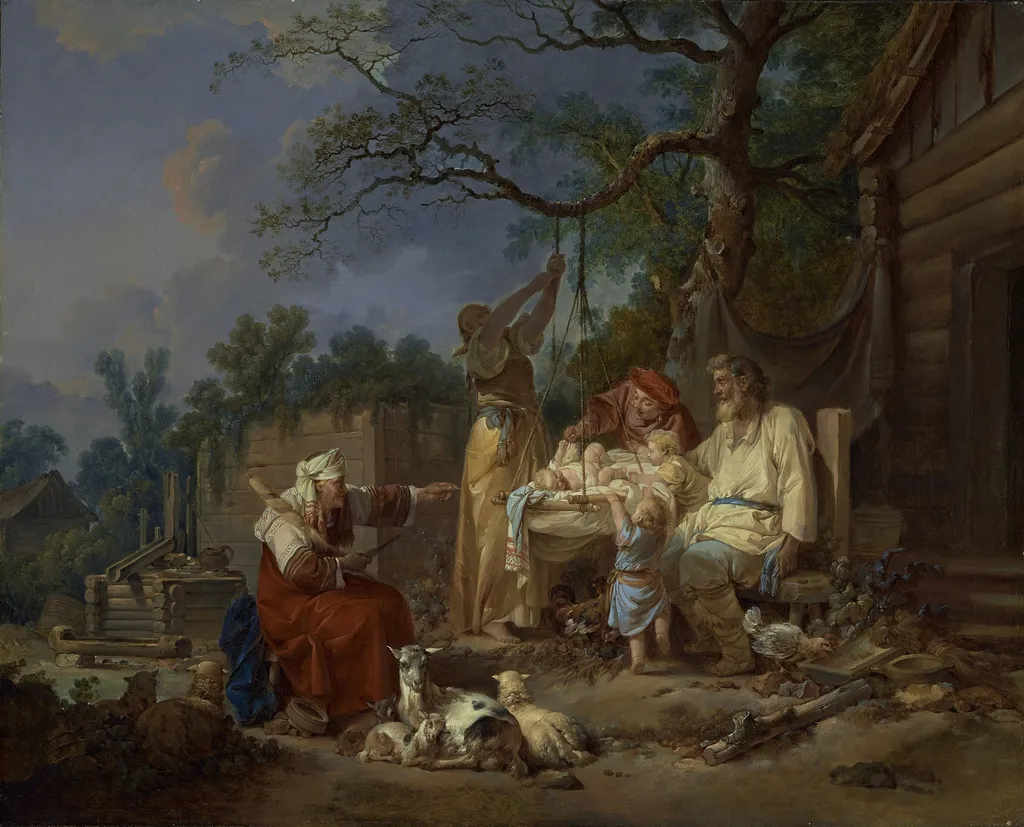
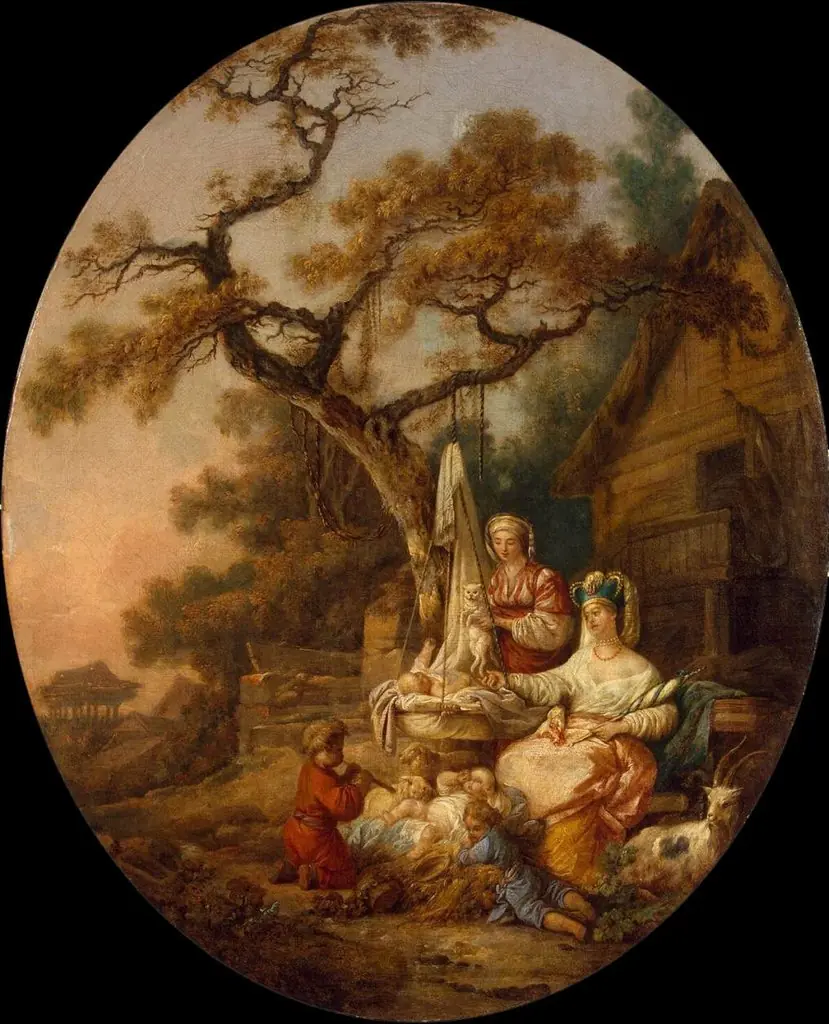
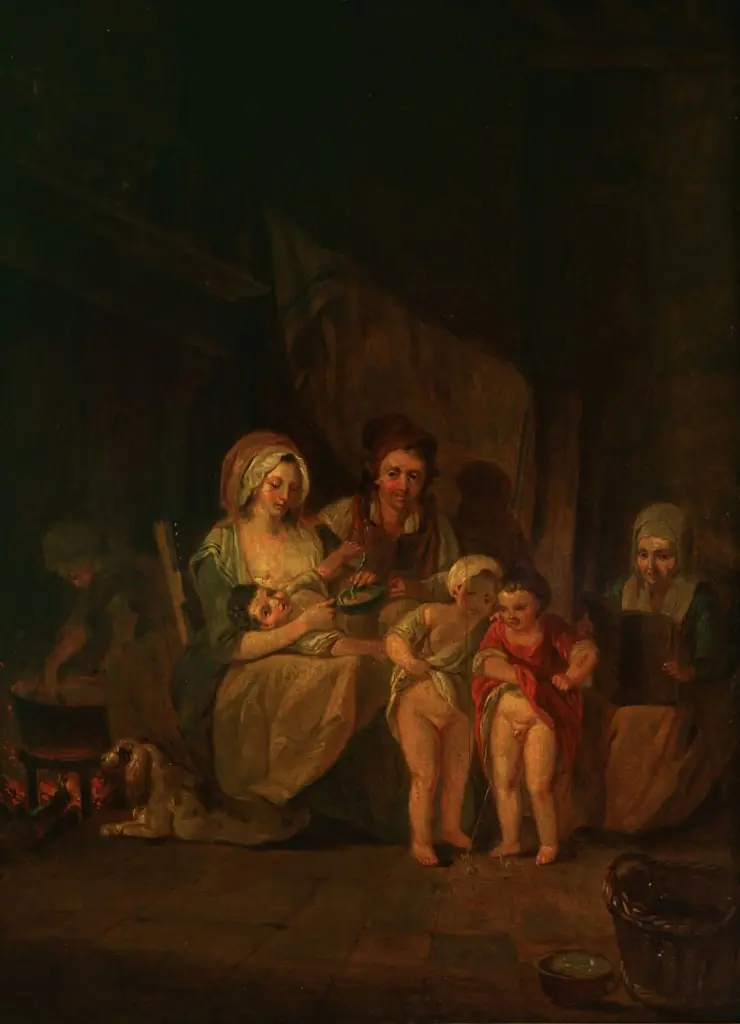
The Russian Cradle is an oil painting by the Rococo painting artist Jean-Baptiste Le Prince. It dates from 1764 and is held in the collection of the J. Paul Getty Museum.
About this work
Overview
A French artist trained in the Rococo tradition, he traveled to Russia in 1758 as part of a diplomatic and artistic mission under Catherine the Great.
Jean-Baptiste Le Prince painted *The Russian Cradle* in 1764 during a period of heightened European interest in Russian culture. A French artist trained in the Rococo tradition, he traveled to Russia in 1758 as part of a diplomatic and artistic mission under Catherine the Great. The work is a genre scene, capturing an intimate domestic moment rather than a grand historical or mythological subject. It now resides in the J. Paul Getty Museum’s collection.
Subject & Meaning
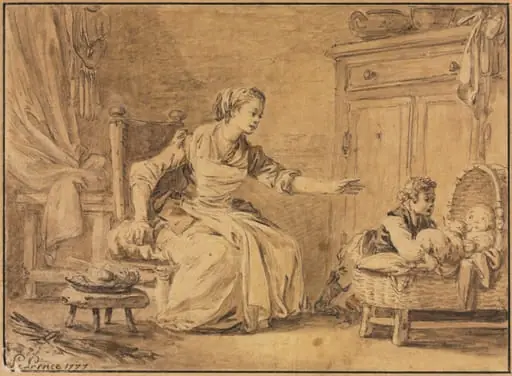
The painting portrays a quiet gathering around a cradle in an outdoor setting, likely a rural Russian household. Figures in traditional attire observe the infant with calm attention, suggesting communal care and familial bonds. The absence of overt drama or symbolism points to an emphasis on everyday life, reflecting Enlightenment-era fascination with authentic cultural practices. The scene conveys serenity rather than narrative tension.
Technique & Style
Le Prince employed oil paint with careful attention to texture and light, using chiaroscuro to model forms and create spatial depth. The clothing, foliage, and architectural elements are rendered with precise detail, revealing his skill as both a painter and etcher. His palette is subdued yet nuanced, avoiding the pastel excesses of pure Rococo in favor of naturalistic tones. The composition balances figures and landscape with restrained harmony.
History & Provenance
Le Prince visited Russia in 1758 to produce topographical and ethnographic drawings for Catherine the Great’s court. *The Russian Cradle* emerged from this experience, likely completed in France after his return. It was not commissioned by the Russian court but rather a personal interpretation of his observations. The painting entered the Getty collection through established provenance, preserving its attribution and historical context.
Context
In the mid-18th century, European elites were captivated by Russia’s perceived exoticism, especially under Catherine the Great’s modernizing reign. Artists like Le Prince contributed to this fascination by documenting customs and dress. While not ethnographically accurate, his work reflects a broader trend of cultural curiosity, blending observation with artistic convention to satisfy domestic audiences eager for foreign imagery.
Legacy
Le Prince’s *The Russian Cradle* stands as a quiet example of cross-cultural artistic exchange in the Enlightenment. Though not widely influential in shaping Russian art, it remains a significant record of how Western artists interpreted Eastern European life. The painting contributes to the study of genre painting beyond French courtly themes, offering insight into the global reach of 18th-century artistic networks.
Own this work as a print
Artist & collection
Artist
Jean-Baptiste Nicolas Le Prince (September 17, 1734 – September 30, 1781) was an important French etcher and painter.