Artwork
Still Life with Herrings
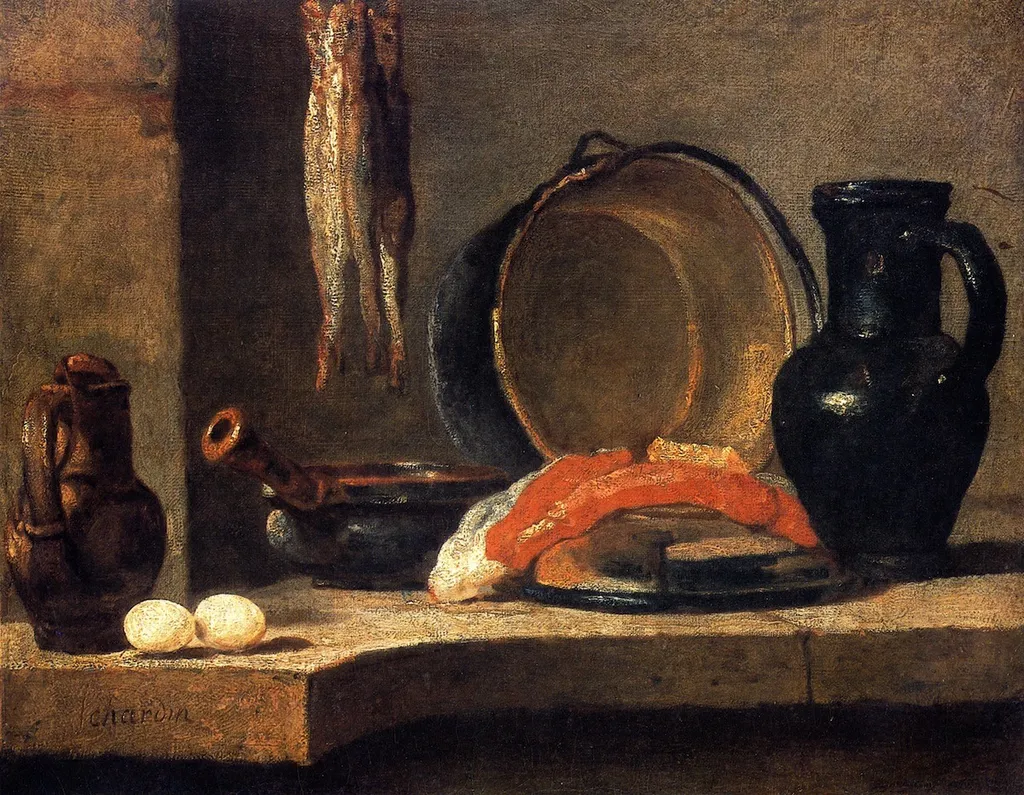
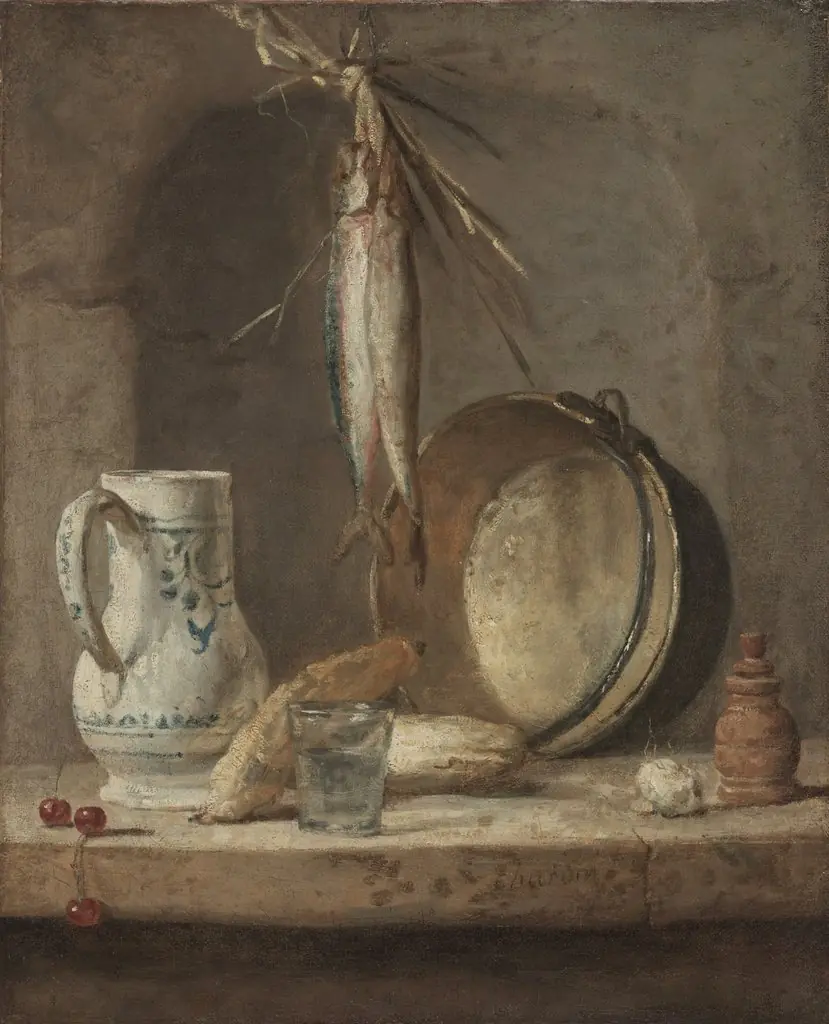
Still Life with Herrings is an unspecified painting by the Rococo painting artist Jean-Baptiste-Siméon Chardin. It dates from 1731 and is held in the collection of the Ashmolean Museum.
About this work
Overview
Rendered with restrained tones and gentle illumination, the composition avoids theatricality, focusing instead on the quiet dignity of ordinary items.
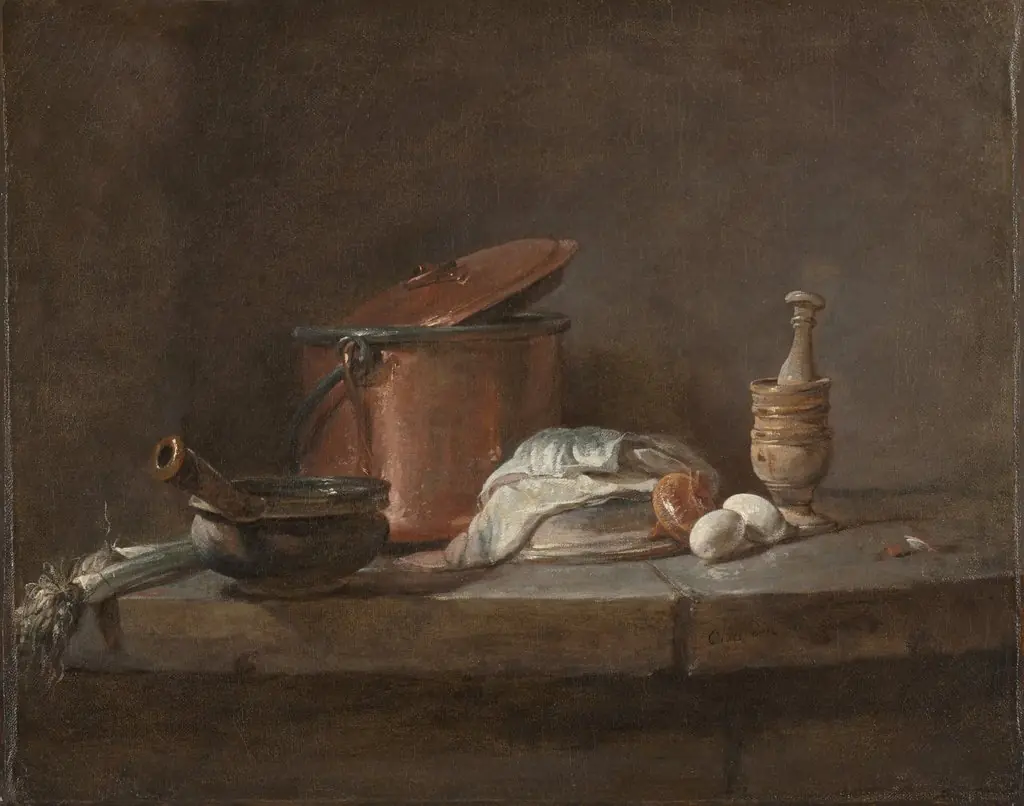
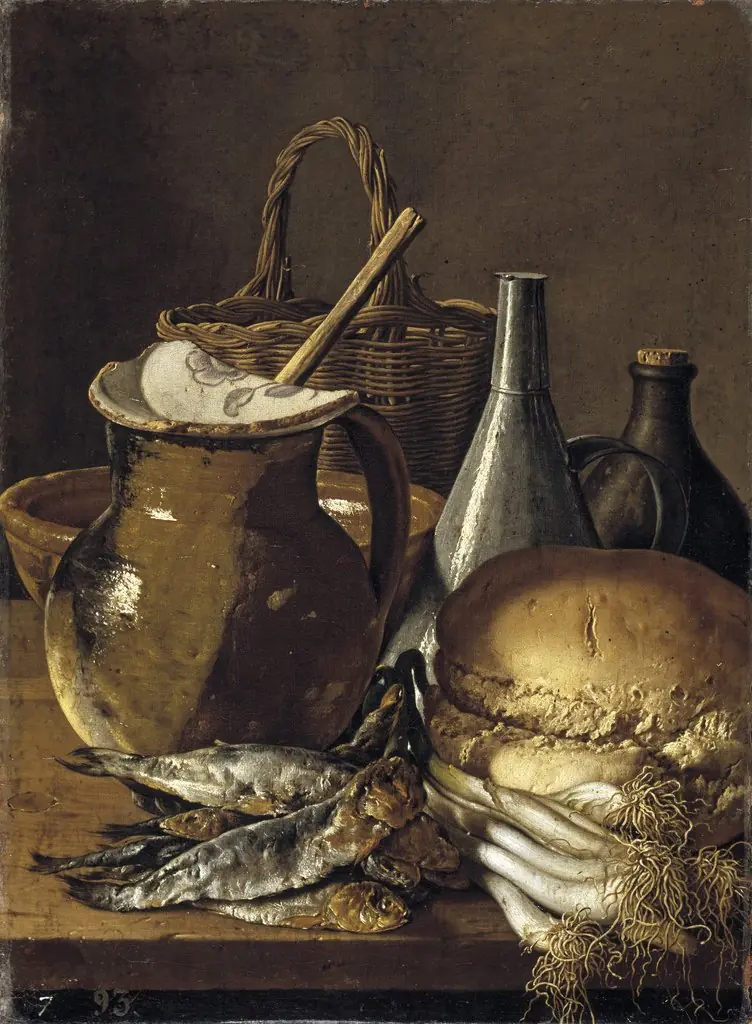
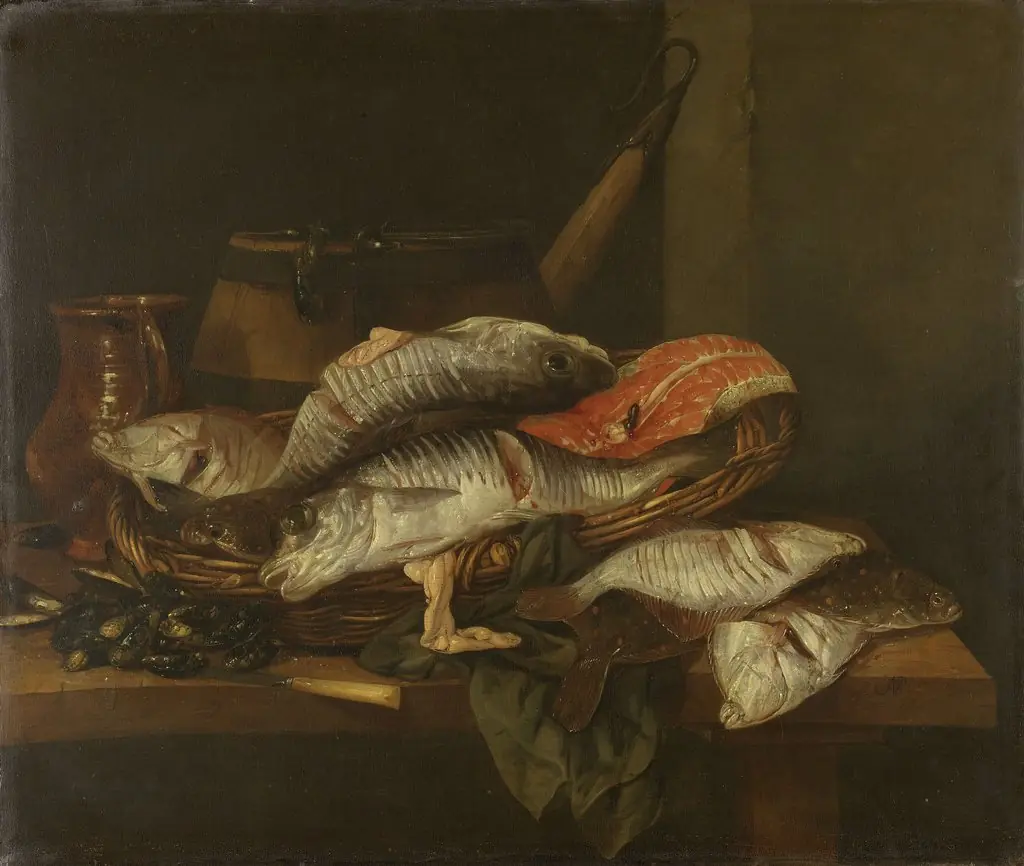
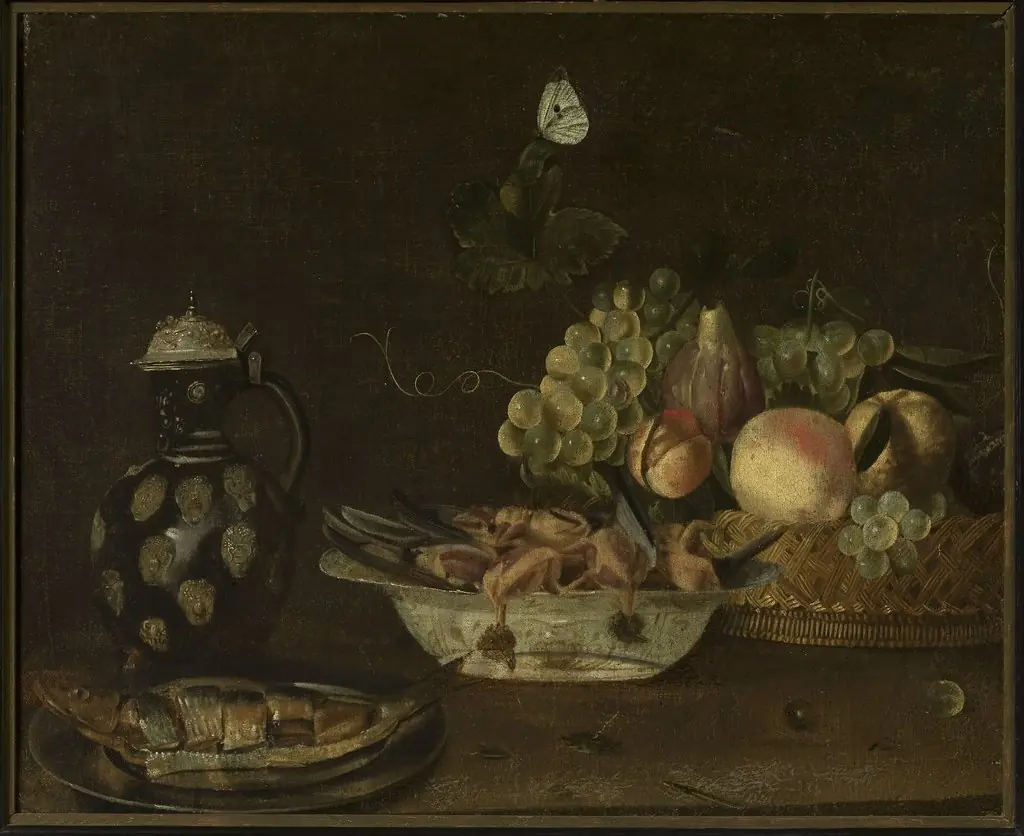
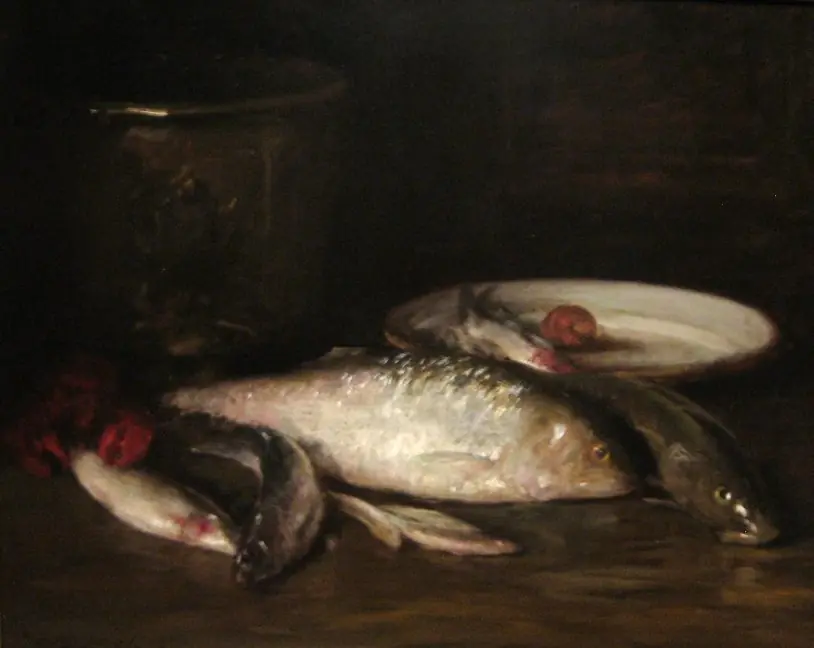
Painted in 1731 by Jean Siméon Chardin, this still life presents a quiet arrangement of domestic objects: a copper kettle, a black ceramic jug, a plate draped in red fabric, two eggs, and two herring suspended on a wall. Rendered with restrained tones and gentle illumination, the composition avoids theatricality, focusing instead on the quiet dignity of ordinary items. The work reflects Chardin’s commitment to observing the material world with precision and calm.
Subject & Meaning
The subject is unadorned: humble kitchen goods and preserved fish suggest the routines of middle-class life. The herring, hung to dry, and the eggs, placed as if recently laid, imply transience and sustenance. The red cloth, the only vivid element, draws attention without disrupting the scene’s sobriety. There is no narrative, only presence — an invitation to consider the quiet value in everyday things, free from symbolism or moralizing.
Technique & Style
Chardin employed a muted palette and soft, directional light to emphasize texture over drama. The copper kettle catches a faint gleam; the wood grain of the table is rendered with deliberate, tactile strokes. Eggs appear smooth and cool, while the herring’s scales suggest a dry, silvery sheen. Brushwork is controlled yet alive, avoiding the ornamental flourish of Rococo in favor of quiet realism grounded in observation rather than idealization.
History & Provenance
Created in 1731, the painting entered the Ashmolean Museum’s collection in the 19th century, likely through the bequest or purchase of a private collector. It has remained in public hands since, with no record of significant alteration or relocation. Its survival in good condition reflects its modest scale and the care taken by successive owners, though it was never widely exhibited during Chardin’s lifetime.
Context
In early 18th-century France, still life was often dismissed as a lesser genre. Chardin elevated it through meticulous attention to ordinary objects, aligning with a growing interest in domestic virtue and empirical observation. While contemporaries favored grandeur, he found gravity in simplicity — a quiet counterpoint to Rococo’s elegance, rooted in the values of the emerging bourgeoisie rather than aristocratic display.
Legacy
Chardin’s approach influenced later realist and modernist painters who valued quiet observation over spectacle. His treatment of light, texture, and humble subjects became a touchstone for artists seeking authenticity in still life. Though not widely celebrated in his time, his work gained recognition in the 19th century as a precursor to modern sensibilities in painting, emphasizing presence over narrative.
Artist & collection
Artist
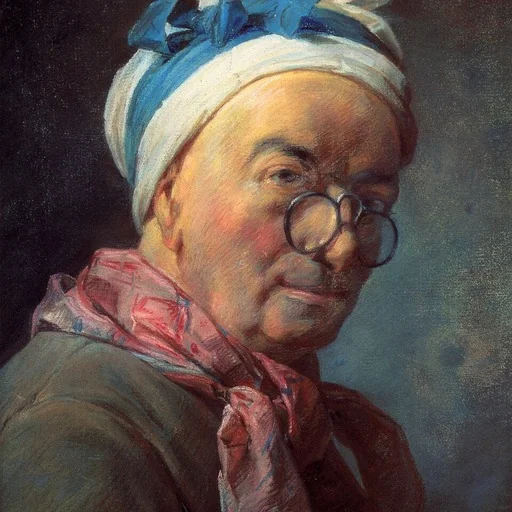
Jean Siméon Chardin (French: ; November 2, 1699 – December 6, 1779) was an 18th-century French painter.