Artwork
Still Life with Peaches, a Silver Goblet, Grapes, and Walnuts
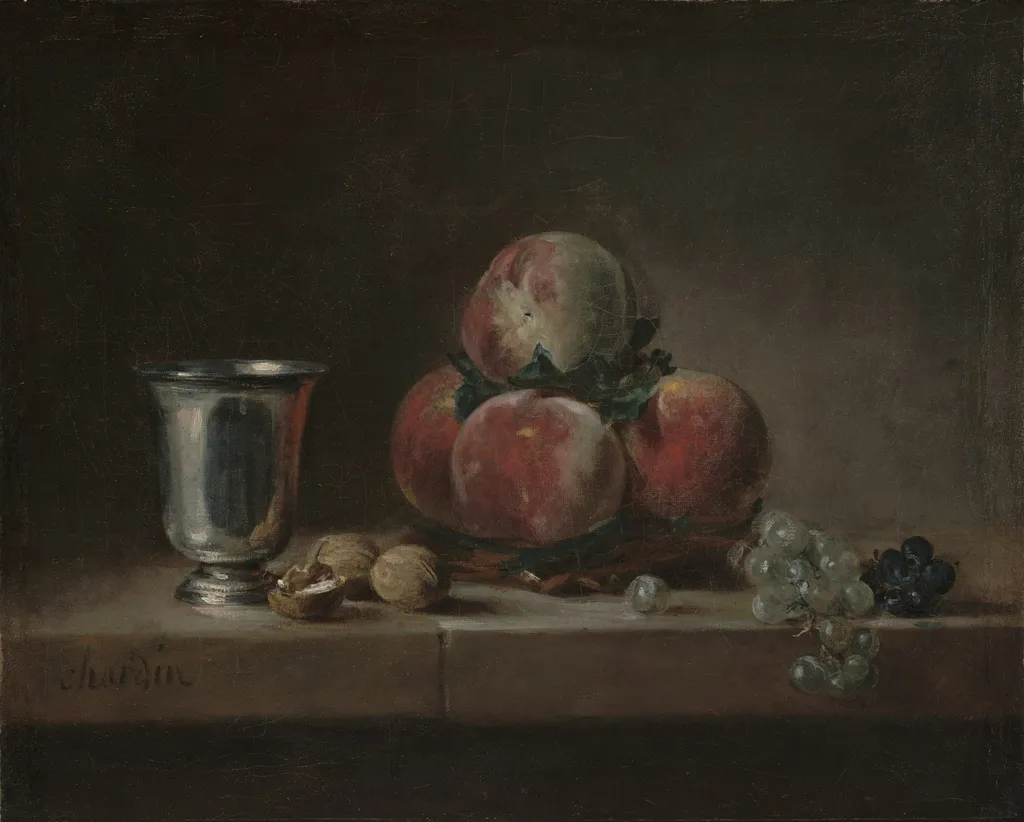
Still Life with Peaches, a Silver Goblet, Grapes, and Walnuts is an oil painting by the Rococo painting artist Jean-Baptiste-Siméon Chardin. It dates from 1759 and is held in the collection of the J. Paul Getty Museum.
About this work
Overview
Still Life with Peaches, a Silver Goblet, Grapes, and Walnuts is an 18th-century oil painting created by Jean-Baptiste-Siméon Chardin in 1759. It exemplifies the rococo style through its delicate composition and soft, nuanced lighting.
Subject & Meaning
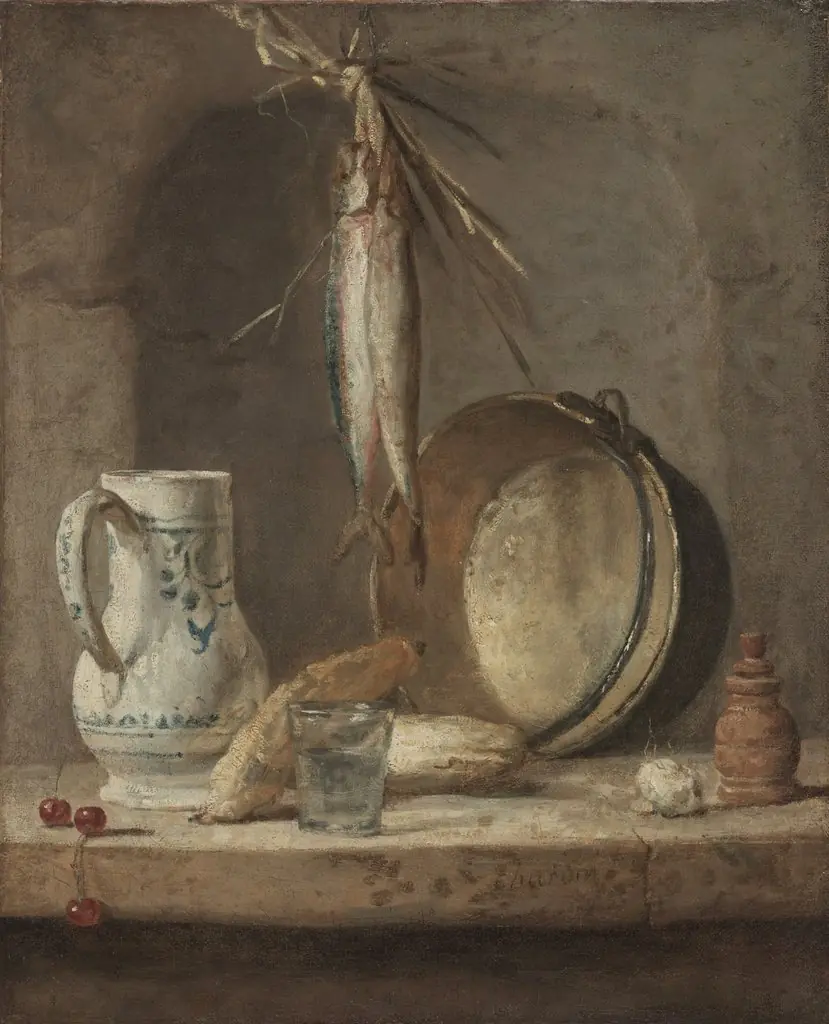
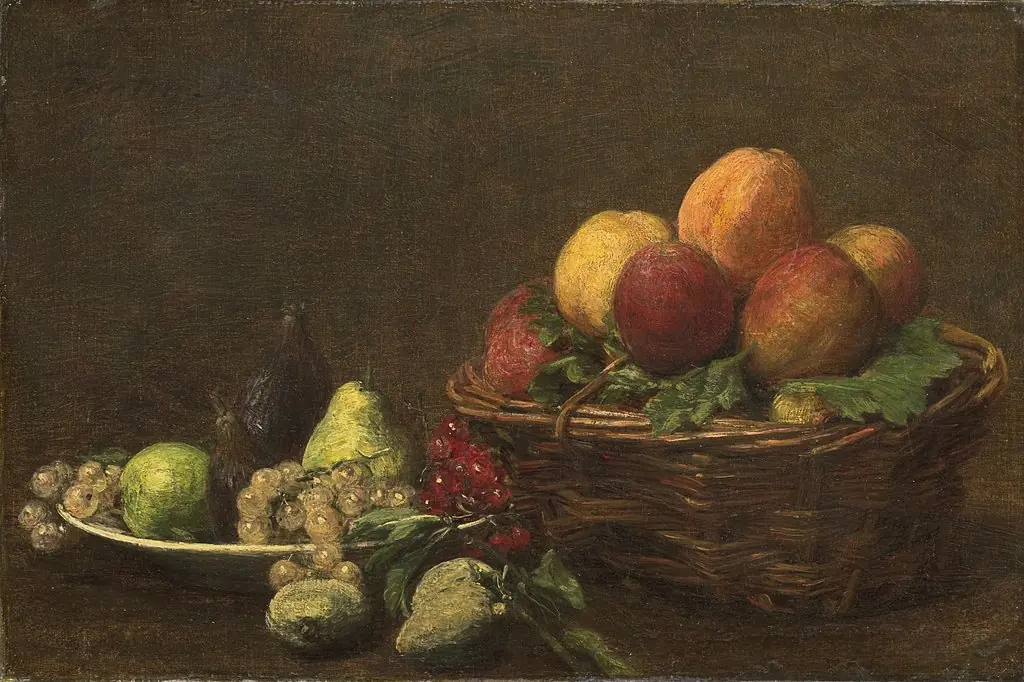
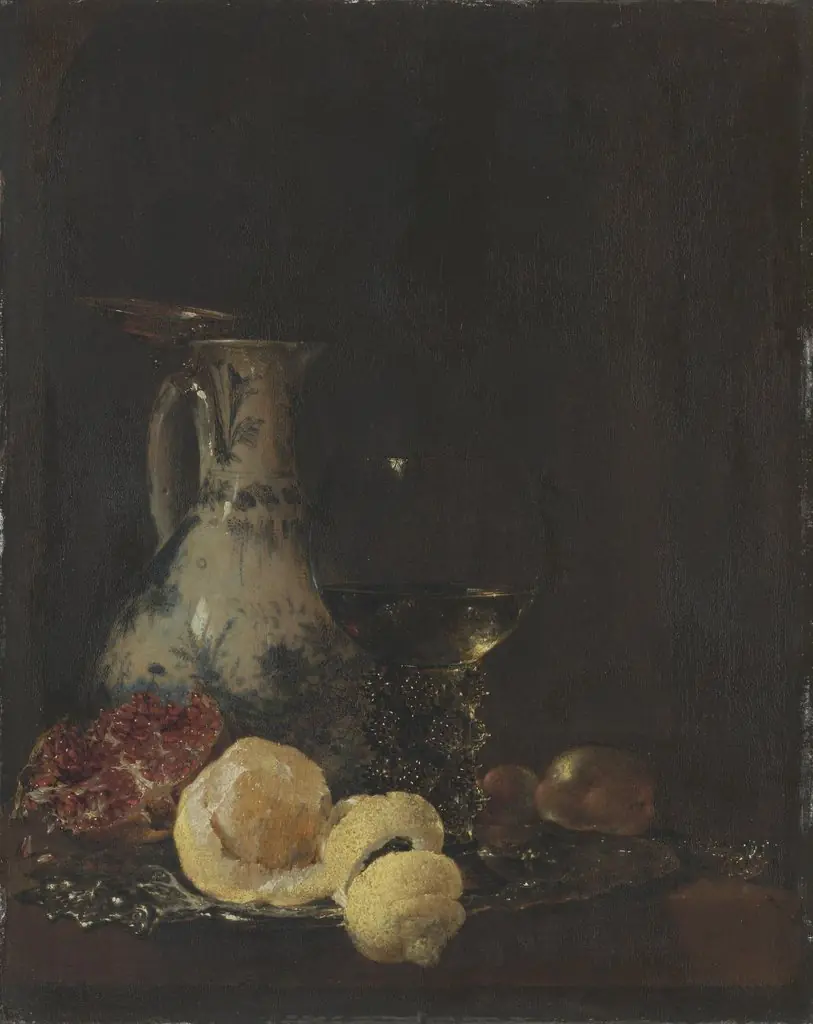
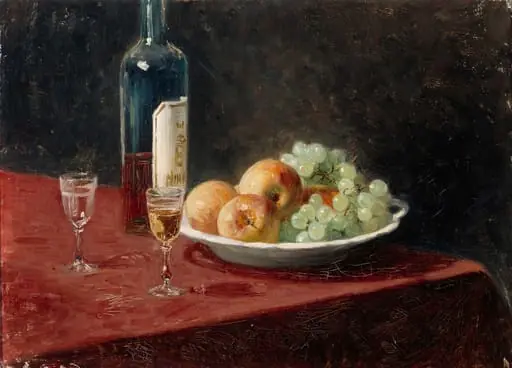
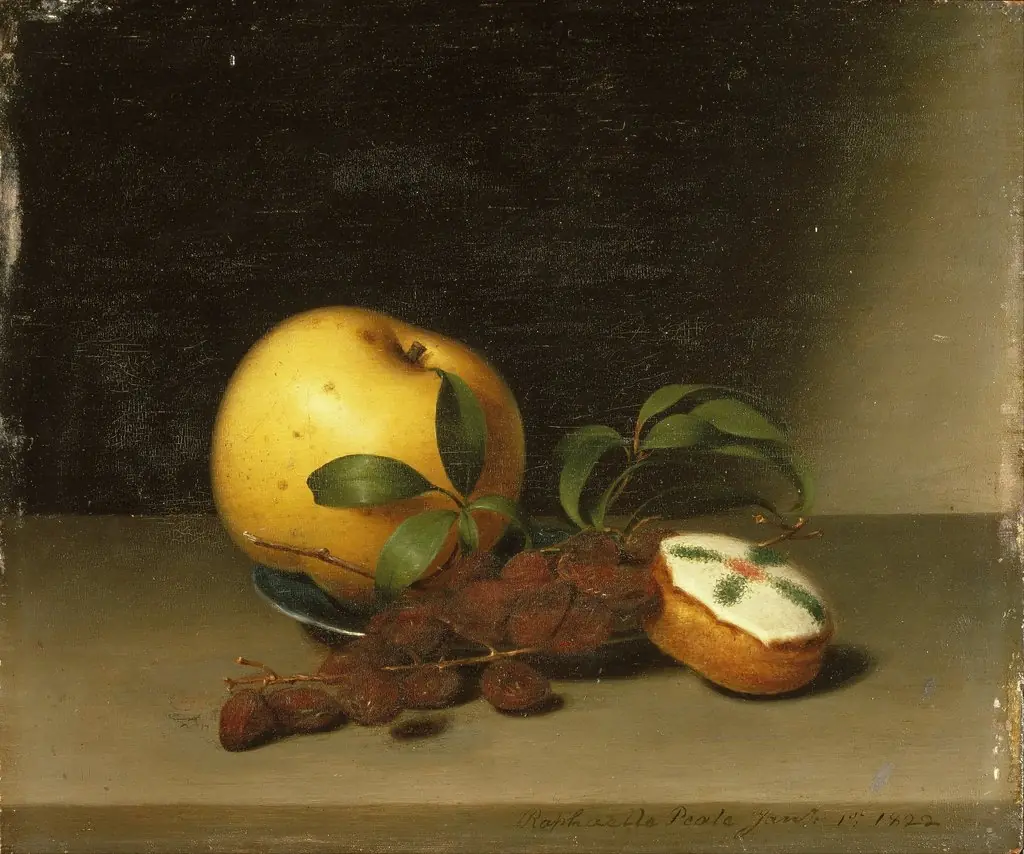
The painting depicts a carefully arranged still life on a table, featuring a silver goblet, peaches, grapes, and walnuts. The composition conveys a sense of quiet contemplation, emphasizing the beauty in everyday, mundane objects.
Technique & Style
Chardin employed chiaroscuro to achieve depth and dimension, skillfully rendering diverse textures (metal, fruit, nuts) through subtle gradations of light and shadow, enhancing the overall mood.
History & Provenance
Created in 1759, the painting is a product of the rococo movement. Specific provenance details are not provided in the available information.
Context
As a rococo still life, it reflects the period's aesthetic preferences for delicacy and soft lighting, while also showcasing Chardin's unique ability to imbue ordinary subjects with depth and contemplative atmosphere.
Legacy
This work contributes to Chardin's reputation for excellence in still-life painting, influencing the perception of his skill in capturing light, texture, and mood within the rococo framework.
Own this work as a print
Artist & collection
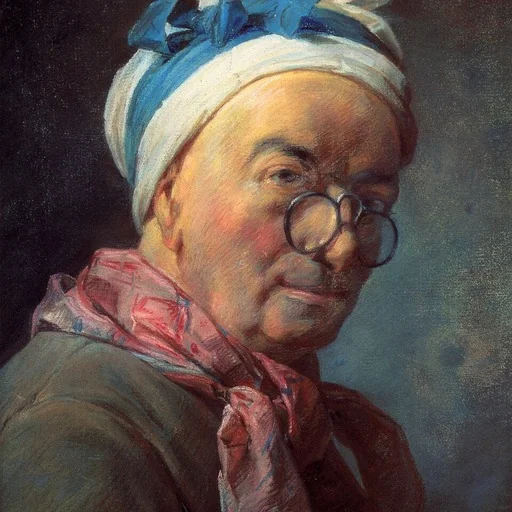
Artist
Jean Siméon Chardin (French: ; November 2, 1699 – December 6, 1779) was an 18th-century French painter.