Artwork
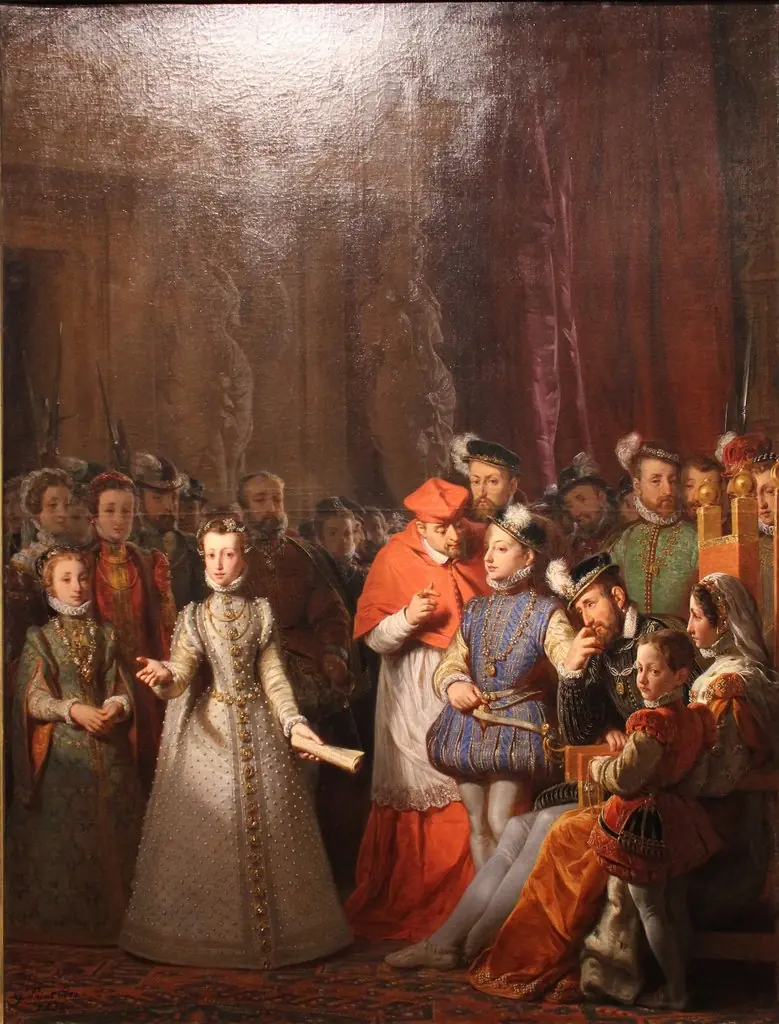
Marie Stuart, reine d'Écosse, recevant sa sentence de mort que vient de ratifier le Parlement by Jean-Baptiste Vermay
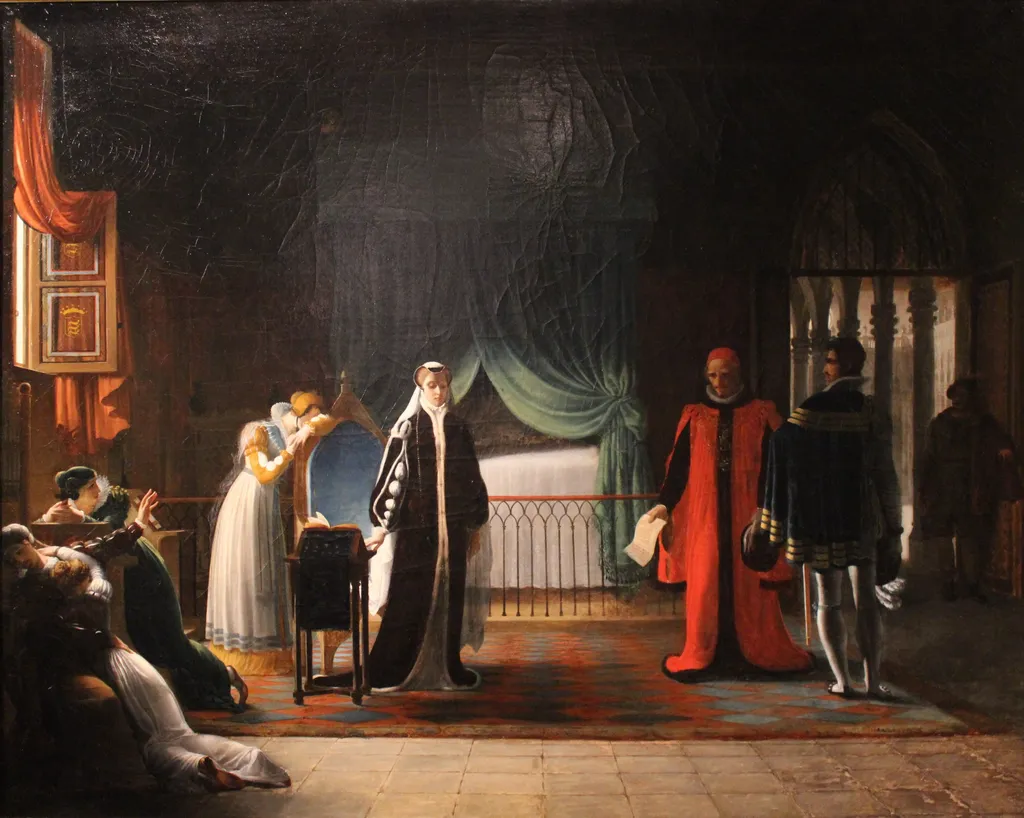
Marie Stuart, reine d'Écosse, recevant sa sentence de mort que vient de ratifier le Parlement by Jean-Baptiste Vermay is an oil painting by the Neoclassicist artist Jean Baptiste Vermay. It dates from 1809 and is held in the collection of the Musée national de Malmaison et Bois-Préau.
About this work
Overview
Jean‑Baptiste Vermay’s oil painting, executed in 1809, portrays Mary, Queen of Scots at the moment her death sentence is confirmed by the Scottish Parliament. Rendered in a restrained neoclassical manner, the work captures a solemn courtroom scene, emphasizing the gravity of the monarch’s fate.
Subject & Meaning
The surrounding onlookers, including a woman in white and a gentleman in brown, reinforce the public nature of the judgment.
The composition centers on the queen, clad in a black gown and veiled headpiece, embodying dignity amid tragedy. To her right, a figure in a red robe presents the official document, while a man in a black‑and‑gold uniform stands opposite, underscoring the formal authority delivering the verdict. The surrounding onlookers, including a woman in white and a gentleman in brown, reinforce the public nature of the judgment.
Technique & Style
Vermay employs a muted palette and careful chiaroscuro to model the figures against a dimly lit interior. The green drapery, red rug, and a distant window provide subtle color accents that guide the eye toward the central interaction. The precise drawing and smooth brushwork reflect the neoclassical emphasis on clarity and controlled emotion.
History & Provenance
After its completion, the painting entered the collection of the Château de Malmaison, the historic residence of Empress Joséphine. Vermay, a French‑born artist who later settled in Cuba, later founded the Academia Nacional de Bellas Artes San Alejandro, but this early work remained in Europe, linked to the Napoleonic‑era aristocratic patronage of the Malmaison estate.
Context
Created during the early 19th‑century revival of historical subjects, the piece aligns with contemporary interest in dramatic episodes from European history. Mary’s execution, a politically charged event, offered a moral narrative resonant with post‑revolutionary audiences attuned to themes of authority, justice, and the downfall of royalty.
Own this work as a print
Artist & collection
Artist
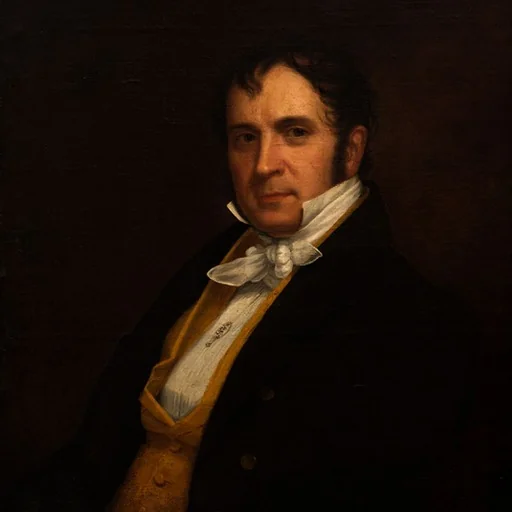
Jean-Baptiste Vermay (1786–1833) was a French-born Cuban painter, sculptor, caricaturist, educator, musician, and architect. He was the founding director of the Academia Nacional de Bellas Artes San Alejandro.
Museum
Musée national de Malmaison et Bois-Préau
Continue through works from the same source collection.
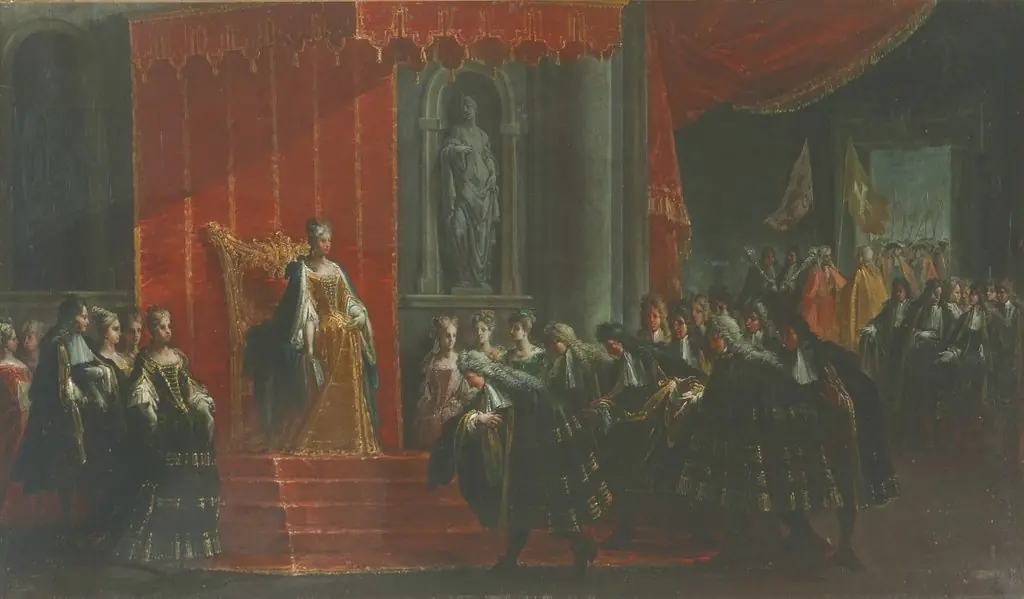 Handkiss by the communities of Parma and Piacenza
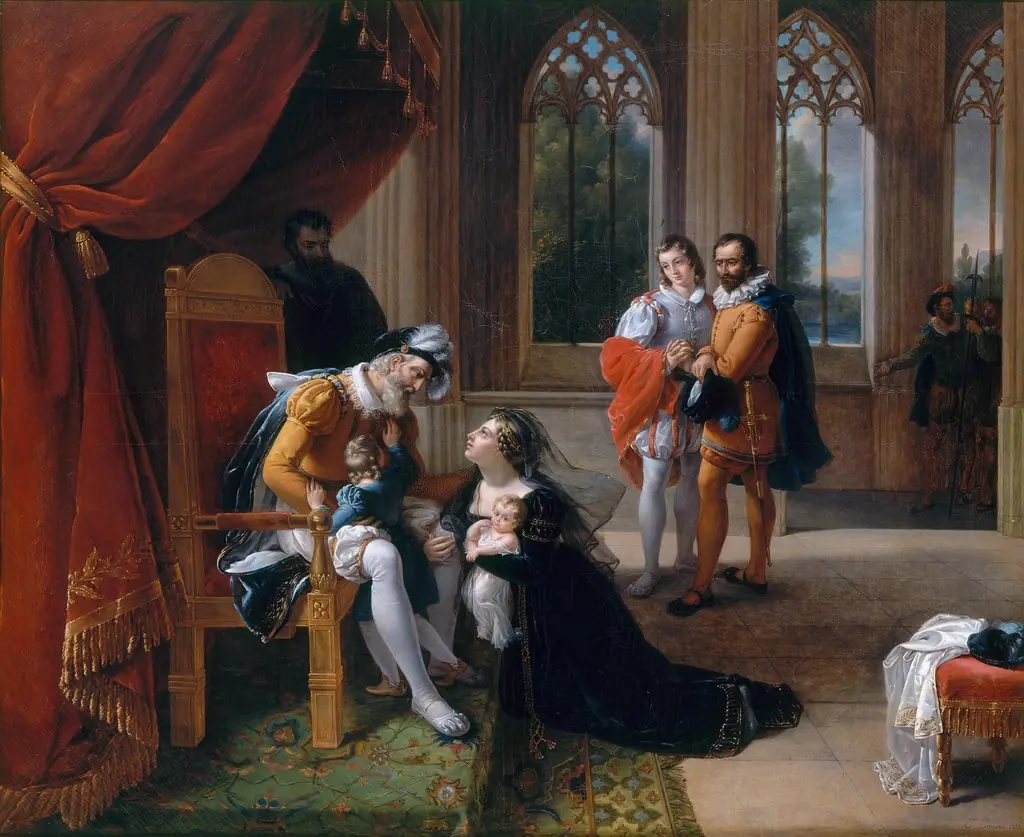 Inès de Castro and Her Children Throwing Themselves at the Feet of King Alphonso IV of Portugal
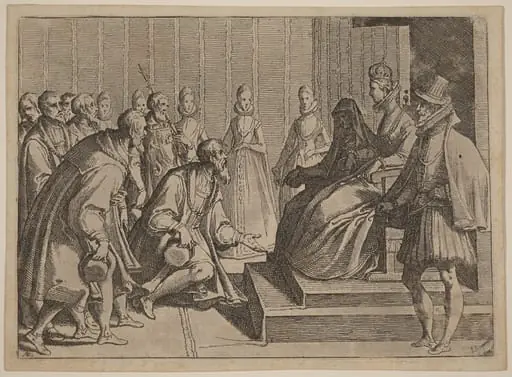 Margaret of Austria Giving Audience to a Nobleman
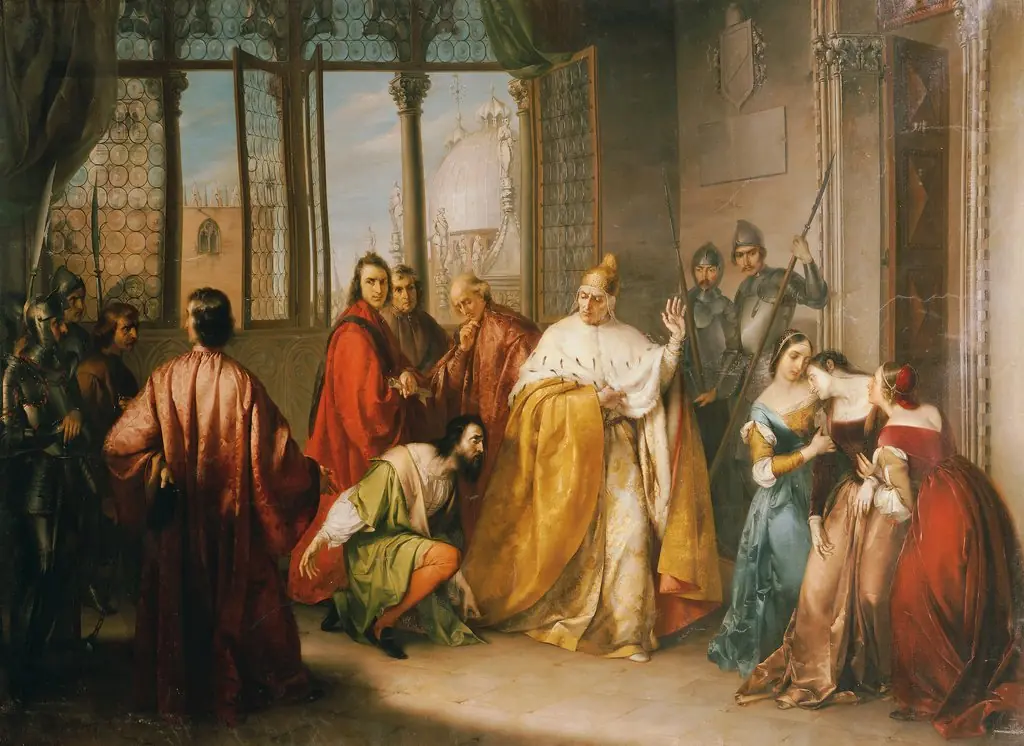 Der Doge Francesco Foscari schickt seinen Sohn Giacomo in die Verbannung ("I due Foscari")
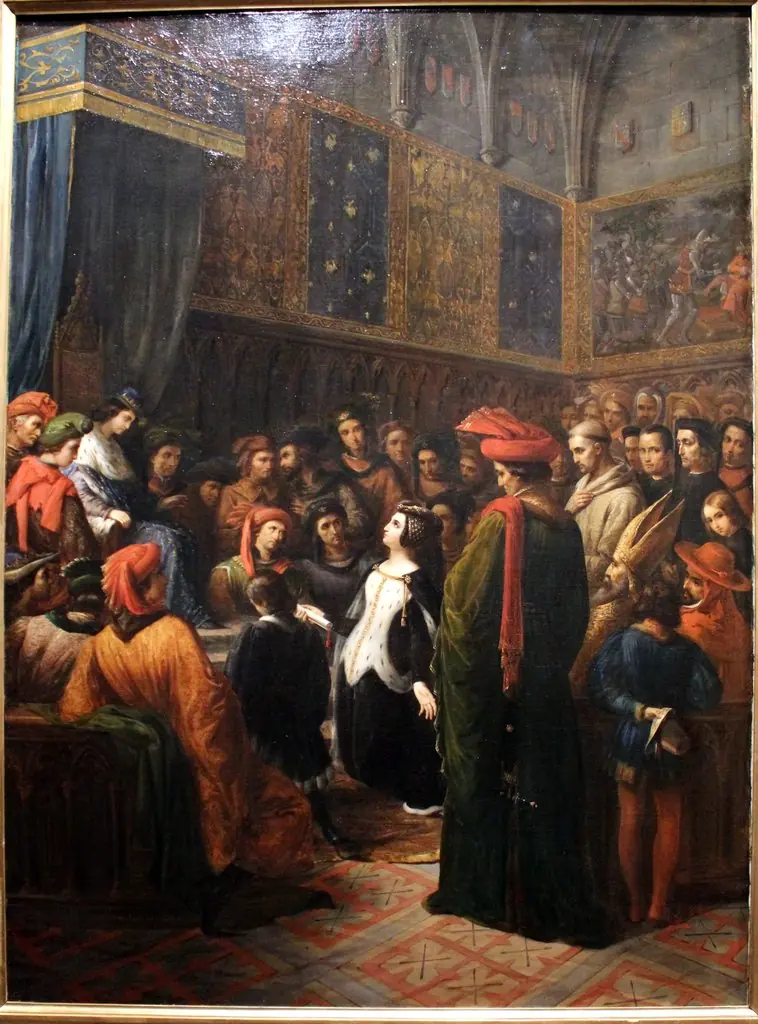 Valentine de Milan implore la justice du roi Charles VI pour l'assassinat du duc d'Orléans by Alexandre Colin
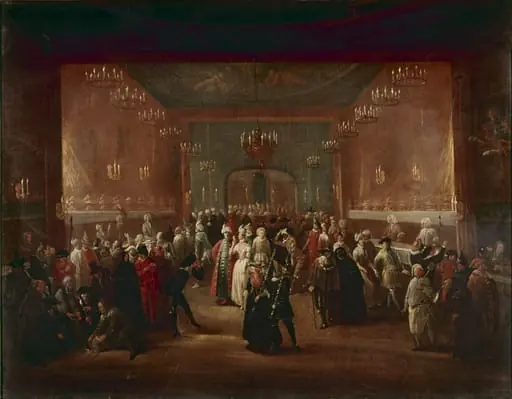 A Masquerade at the King's Theatre, Haymarket
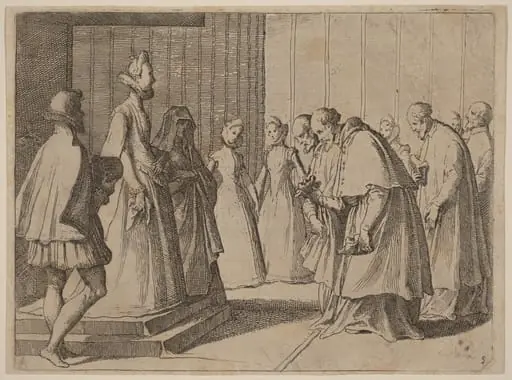 Margaret of Austria Receiving the Homage of Cardinals and Prelates
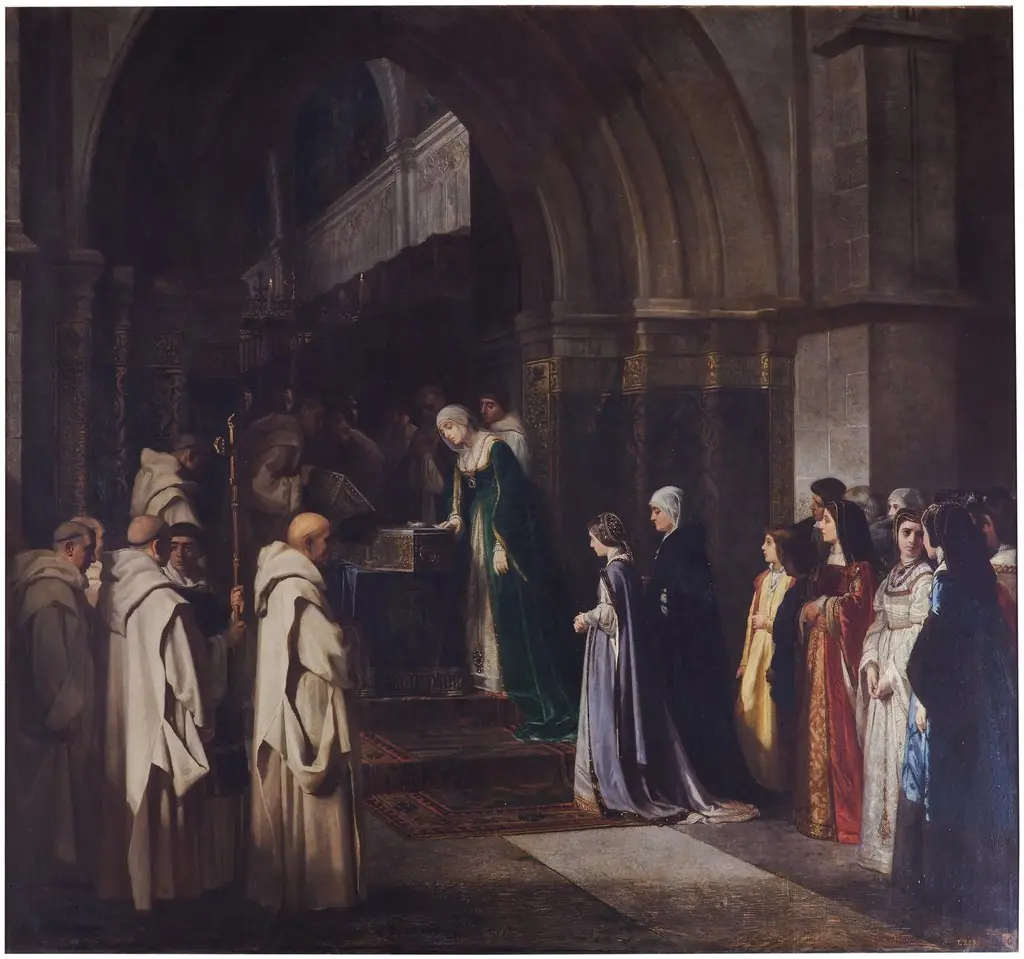 Doña Isabel la Católica en la cartuja de Miraflores
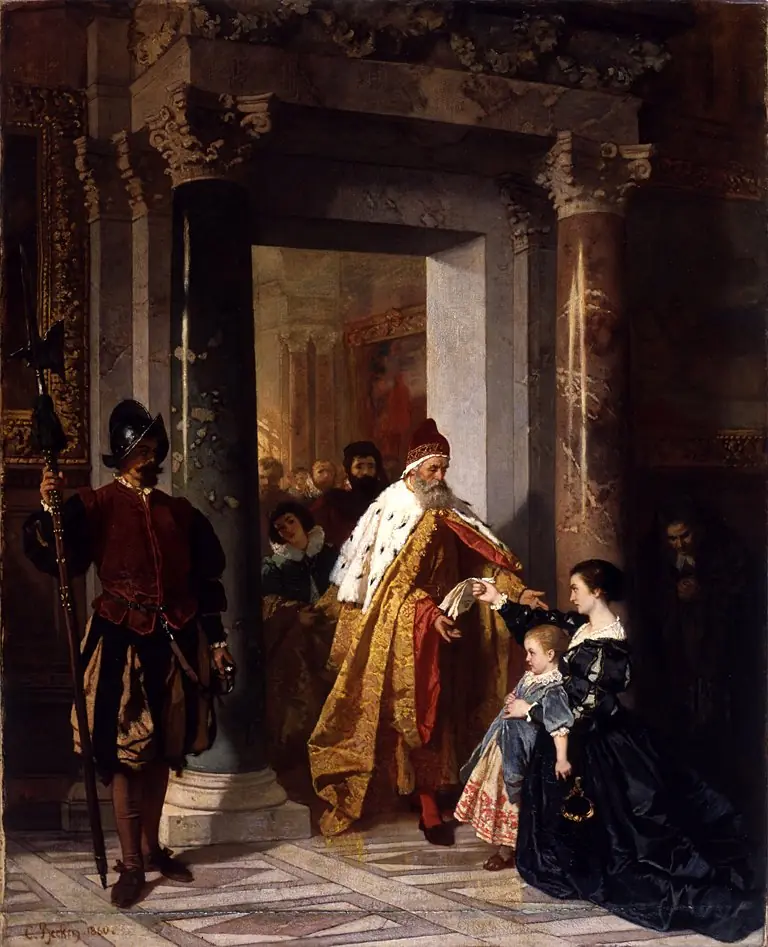 The Petition to the Doge
![Margaret of Austria Giving Audience to a Nobleman [verso], by Raffaello Schiaminossi](https://artifactworldgallery.com/img/raffaello-schiaminossi--margaret-of-austria-giving-audience-to-a-nobleman-verso--86ac2347af277f00-w320.webp) Margaret of Austria Giving Audience to a Nobleman [verso]
Margaret of Austria Giving Audience to a Nobleman [verso]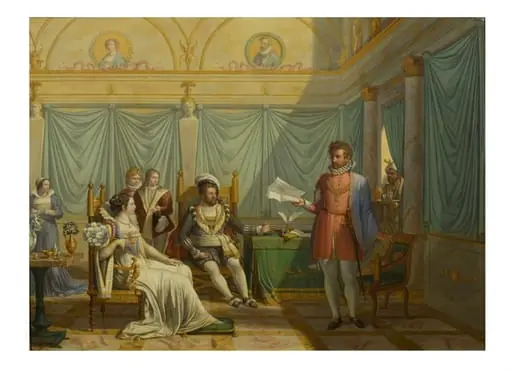 Tasso Reading Before the Duke of Ferrara
 L’Éducation de Marie Stuart à la cour de François II by Gillot Saint-Evre