Artwork
Doña Isabel la Católica en la cartuja de Miraflores
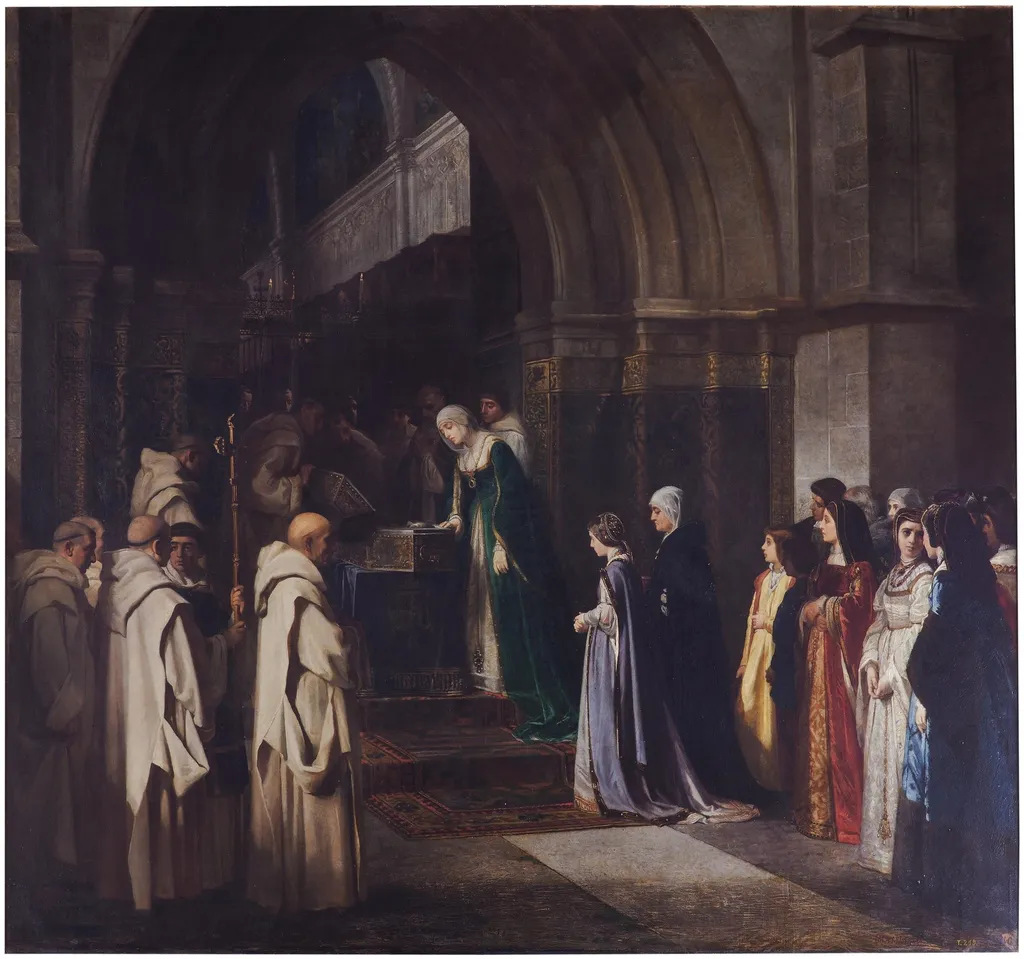
Doña Isabel la Católica en la cartuja de Miraflores is an oil painting by Luis Álvarez Catalá. It dates from 1866 and is held in the collection of the Museo del Prado.
About this work
Overview
Catalá, known for his historical subjects, rendered the scene with attention to architectural detail and atmospheric lighting.
Painted in 1866 by Spanish artist Luis Álvarez Catalá, this oil on canvas depicts Queen Isabella I of Castile within the cloistered space of the Carthusian monastery of Miraflores. Catalá, known for his historical subjects, rendered the scene with attention to architectural detail and atmospheric lighting. The work is part of the Museo del Prado’s collection, where it has remained since its creation, reflecting 19th-century Spain’s interest in reimagining its royal past through academic painting.
Subject & Meaning
The painting portrays Queen Isabella I standing on a raised dais, holding a small reliquary box, surrounded by monks and courtiers in somber attire. Her elevated position and distinctive green garment distinguish her as the central figure, suggesting both spiritual authority and royal presence. The setting implies a moment of private devotion or ceremonial offering, aligning Isabella with the piety associated with her patronage of the monastery and her role in shaping Spain’s religious identity.
Technique & Style
Catalá employed chiaroscuro to model forms with dramatic contrasts of light and shadow, enhancing the sculptural quality of the figures and the stone architecture. The crowd’s varied postures and expressions convey subtle narrative tension, while the queen’s vivid green dress creates visual emphasis against muted tones. Brushwork is precise, favoring clarity over texture, consistent with academic traditions of the mid-19th century that prioritized historical accuracy and compositional order.
History & Provenance
Completed in 1866, the painting entered the Museo del Prado’s collection shortly after its creation. Catalá, who later became director of the museum in 1898, maintained a long association with the institution. The work was likely commissioned or acquired as part of a broader 19th-century effort to consolidate national identity through visual representations of Spain’s Catholic monarchs, reinforcing the monarchy’s historical legitimacy during a period of political instability.
Context
In mid-19th-century Spain, historical painting flourished as a means of constructing a coherent national narrative. Isabella I, as a unifying figure of the Reconquista and patron of the Carthusians, was a frequent subject. Catalá’s depiction aligns with contemporary trends that idealized medieval royalty, blending documented history with symbolic staging to evoke moral and spiritual authority, particularly in institutions like the Prado, which sought to define Spain’s cultural heritage.
Legacy
Though not widely reproduced today, the painting remains a representative example of academic historical painting in Spain during the late 19th century. It reflects the institutional priorities of the Museo del Prado under Catalá’s leadership, emphasizing continuity between Spain’s past and its modern cultural institutions. Its preservation underscores the enduring role of royal imagery in shaping national memory, even as artistic movements evolved beyond its style.
Own this work as a print
Artist & collection
Artist
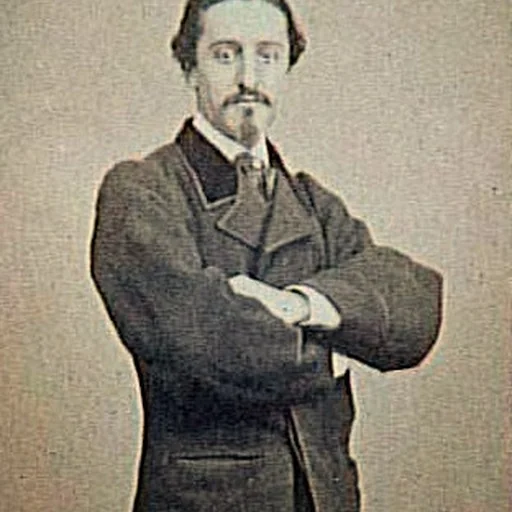
Luis Álvarez Catalá (22 January 1836 – 4 October 1901) was a Spanish painter of historical scenes and Director of the Museo del Prado from 1898 to 1901.

 Vittore Pisani receives Holy Communion before taking command of an expedition against the Genoese
 The Wedding of Jacoba of Bavaria, Countess of Holland, and Jan IV, Duke of Brabant, 10 March 1418
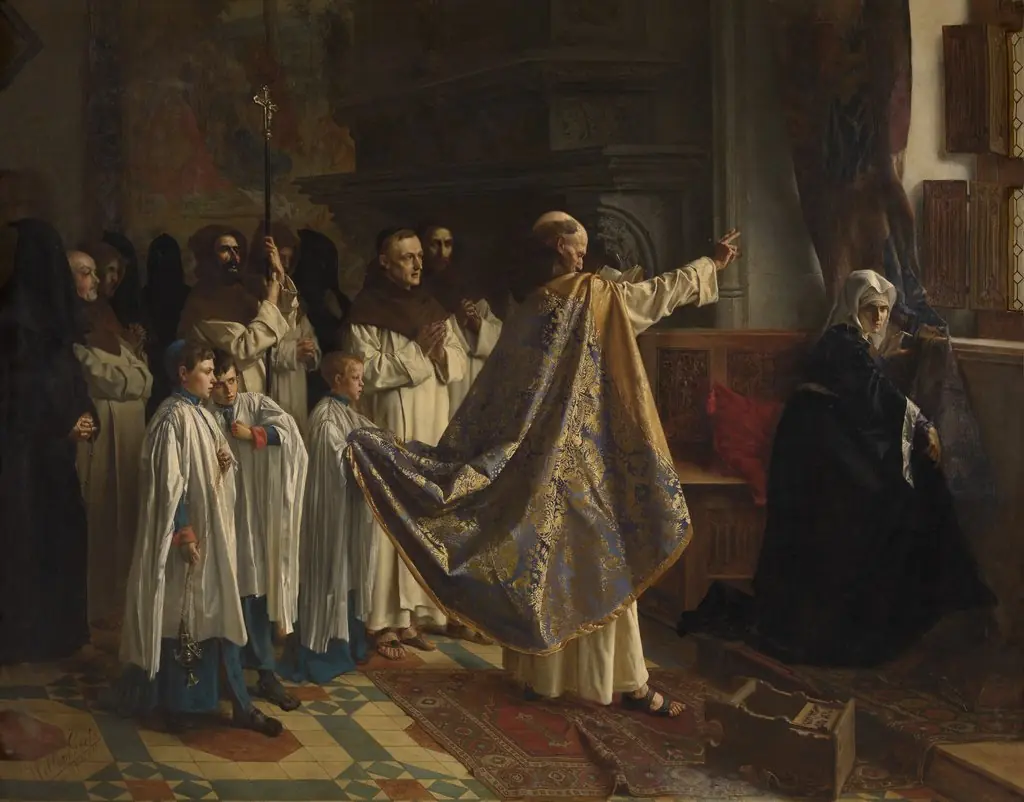 Exorcism of Joanna of Castile
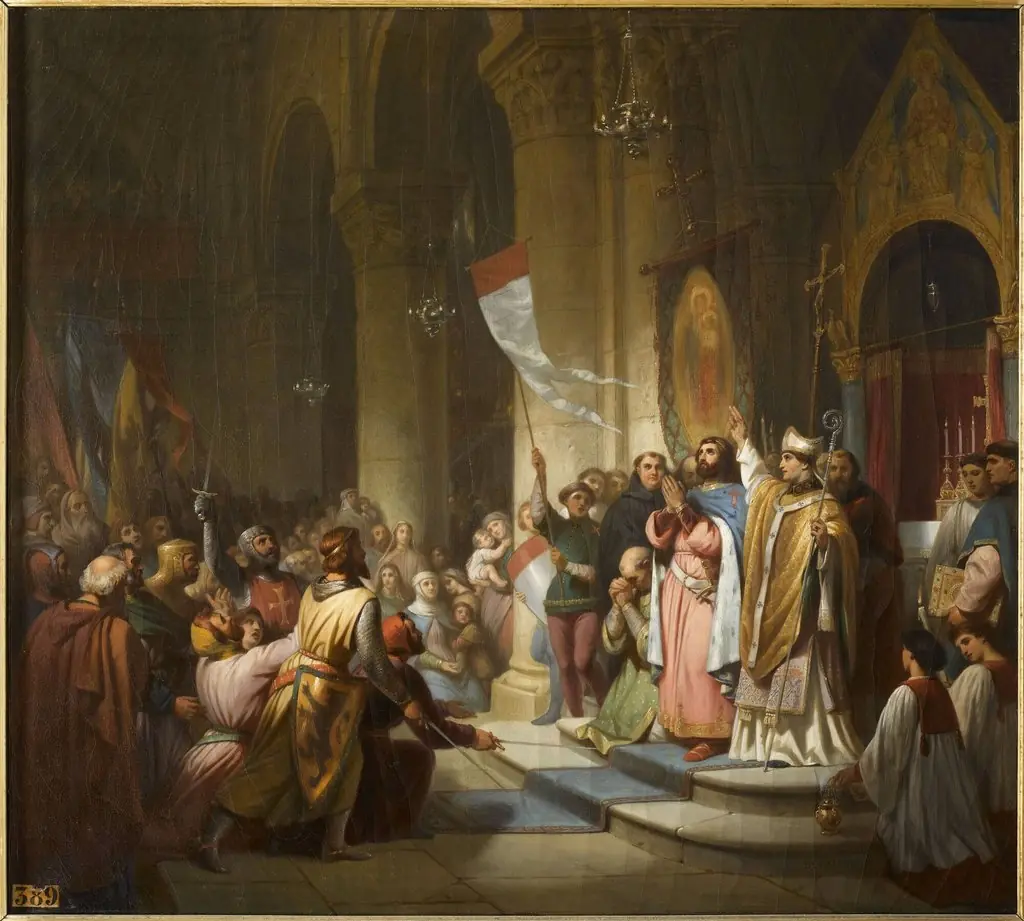 Election of Boniface of Montferrat as leader of the Fourth Crusade.
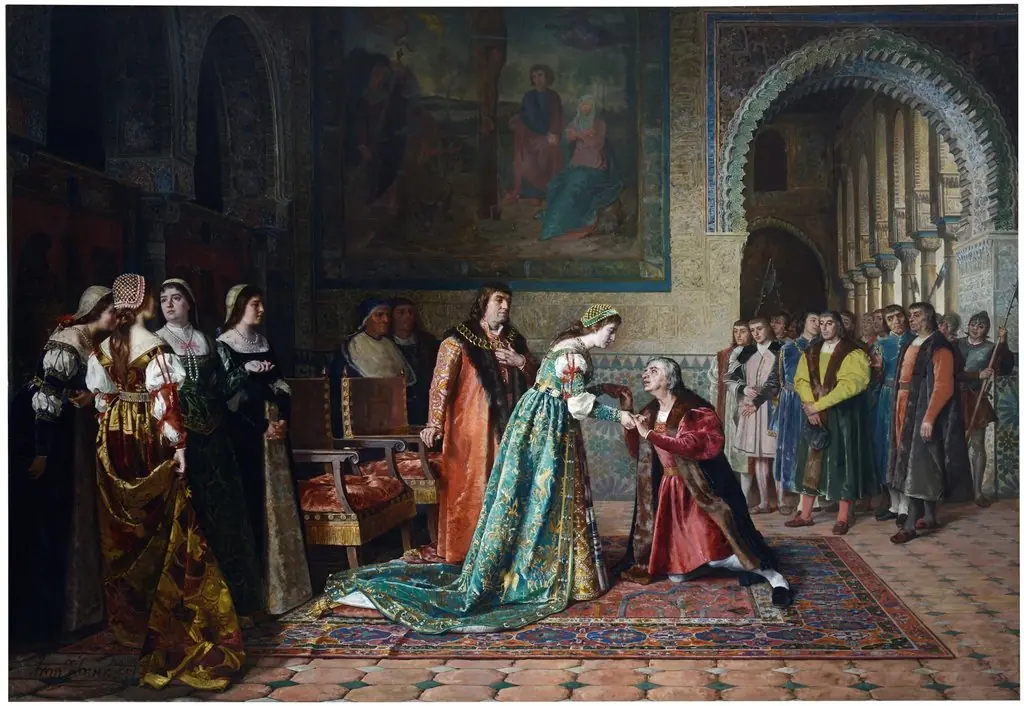 Reposición de Colón
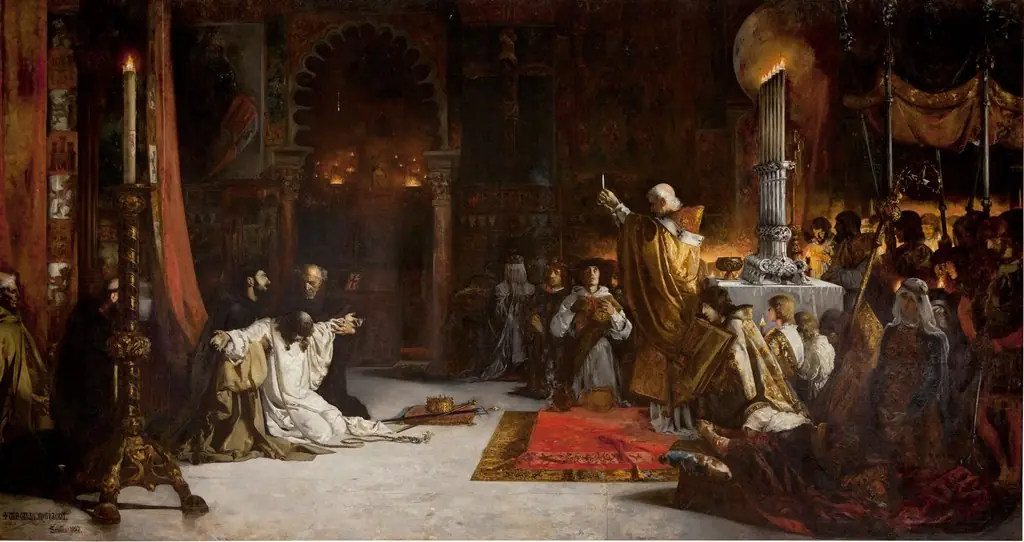 Las postrimerías de Fernando III el Santo
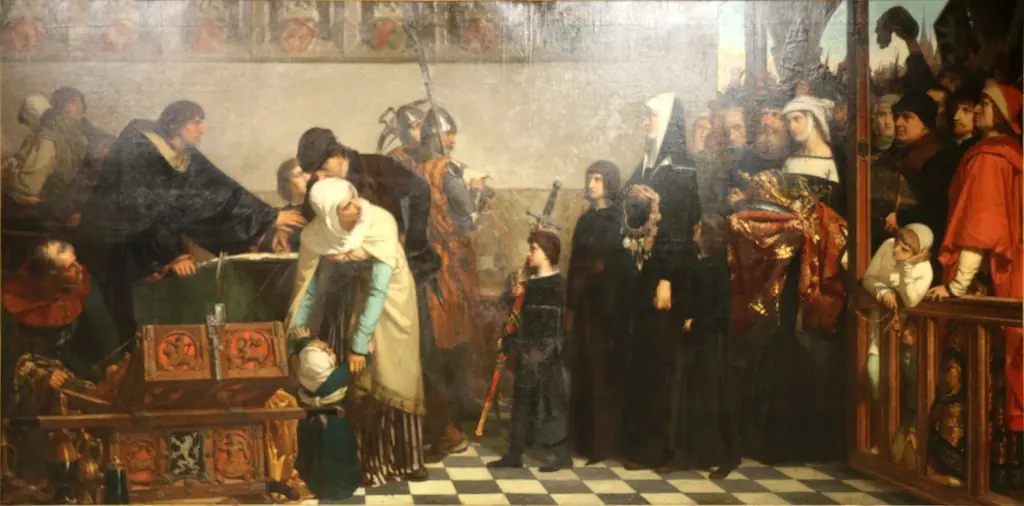 Offering to the fatherland by the Widow of Jacob van Artevelde
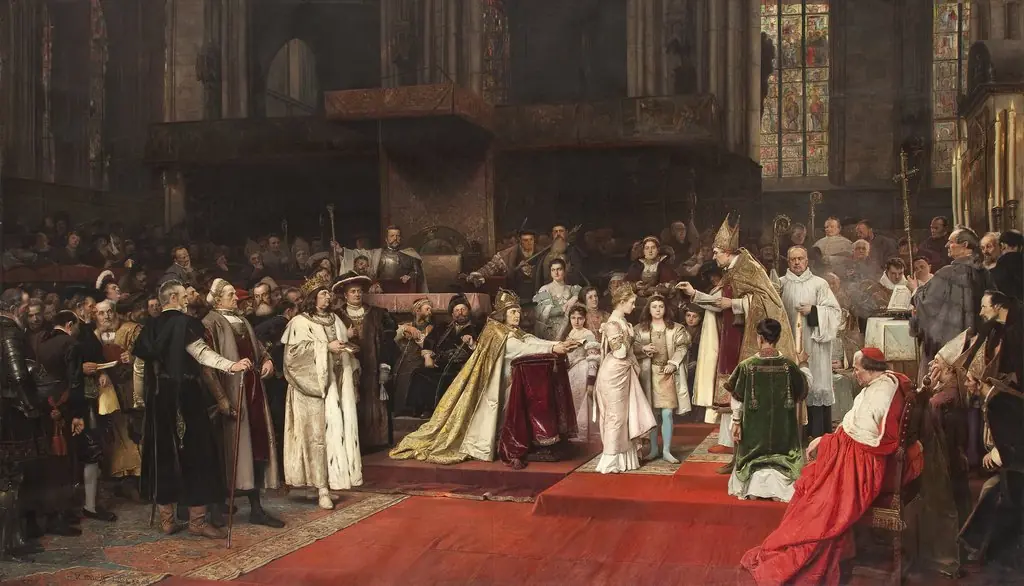 Tu felix Austria nube
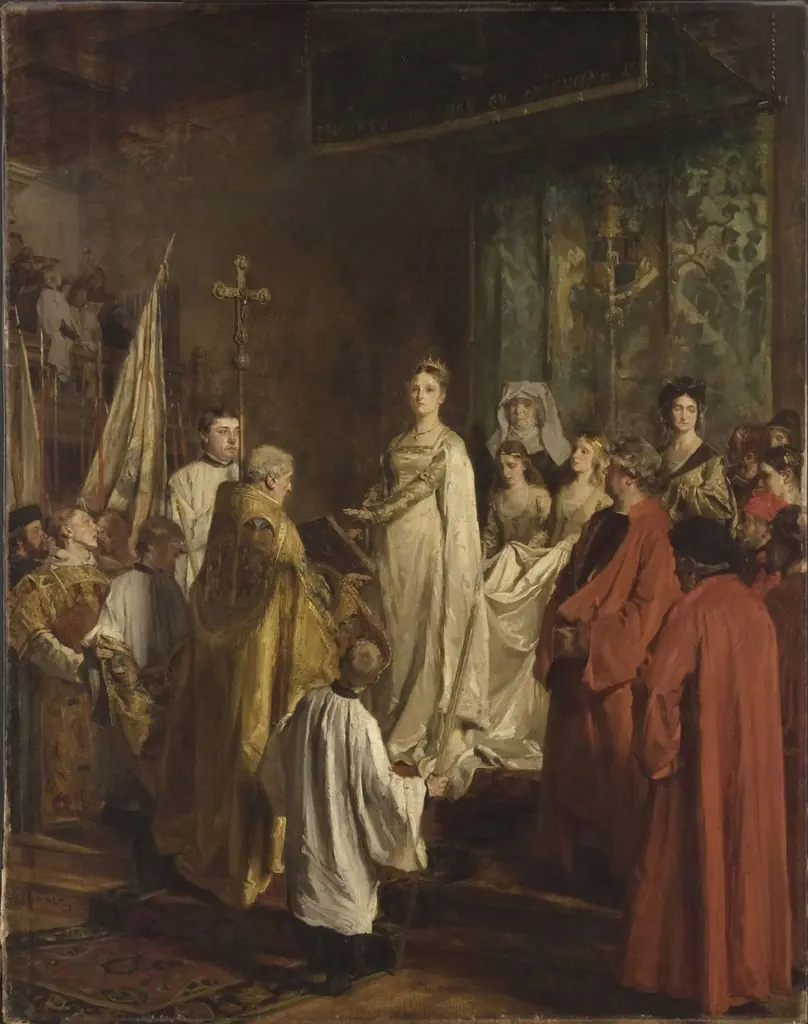 Mary of Burgundy Granting the Great Privilege
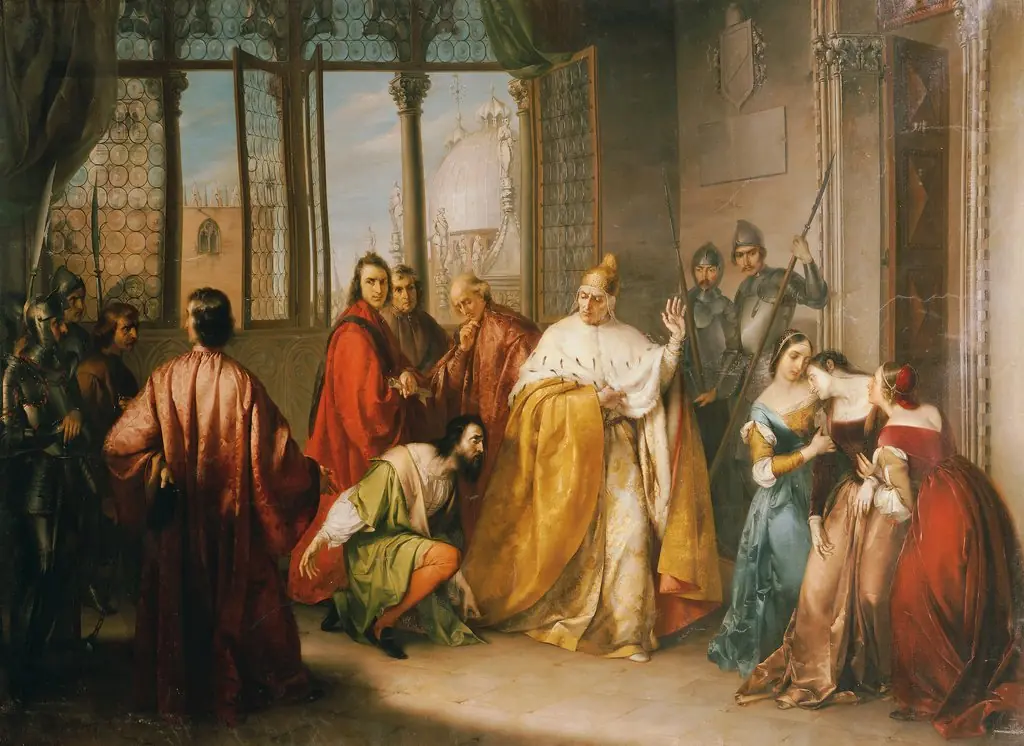 Der Doge Francesco Foscari schickt seinen Sohn Giacomo in die Verbannung ("I due Foscari")
 The Distribution of Rosaries
 Christus and the woman in adultery