Artwork
Napoleon I receives the Queen of Prussia in Tilsitt
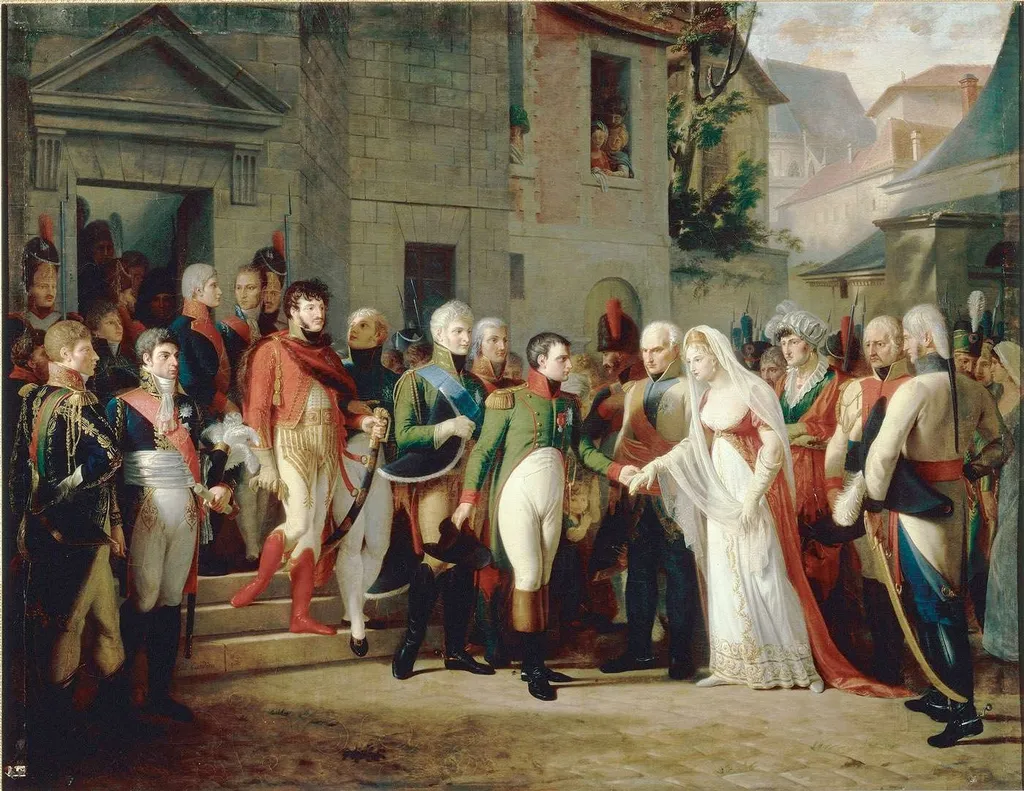
Napoleon I receives the Queen of Prussia in Tilsitt is an oil painting by Jean-Charles Tardieu. It dates from 1808 and is held in the collection of the Museum of the History of France.
About this work
Overview
Jean‑Charles Tardieu’s 1808 oil painting, *Napoleon I receives the Queen of Prussia in Tilsitt*, records a diplomatic meeting between Emperor Napoleon and Queen Louise of Mecklenburg‑Strelitz. Executed as a history canvas for the royal collection at Versailles, the work presents a crowded outdoor tableau set in the town of Tilsit (now Sovetsk, Russia), where the two figures are surrounded by uniformed officers.
Subject & Meaning
The central focus is the queen, dressed in a plain white gown and holding a fan, standing opposite Napoleon’s entourage of French officers. Their contrasting attire—her modest dress against the bright, medal‑adorned uniforms—highlights the political significance of the encounter, emphasizing the balance of power and the ceremonial nature of the alliance.
Technique & Style
Tardieu employs a clear chiaroscuro to separate the figures from a neutral stone wall, allowing the bright reds and whites of the uniforms to emerge vividly. The composition is organized in a shallow depth, with a modest architectural backdrop and a few trees, directing attention to the interaction at the painting’s centre.
History & Provenance
Commissioned during the Napoleonic era, the canvas entered the Palace of Versailles’ collection shortly after its completion. It remained in the French royal holdings through the Bourbon Restoration, reflecting the period’s interest in documenting state ceremonies as works of national narrative.
Artist & collection
Artist
Jean-Charles Tardieu, also called "Tardieu-Cochin" (3 September 1765 – 3 April 1830) was a successful French painter during the ages of Napoleon and of the Bourbon Restoration.

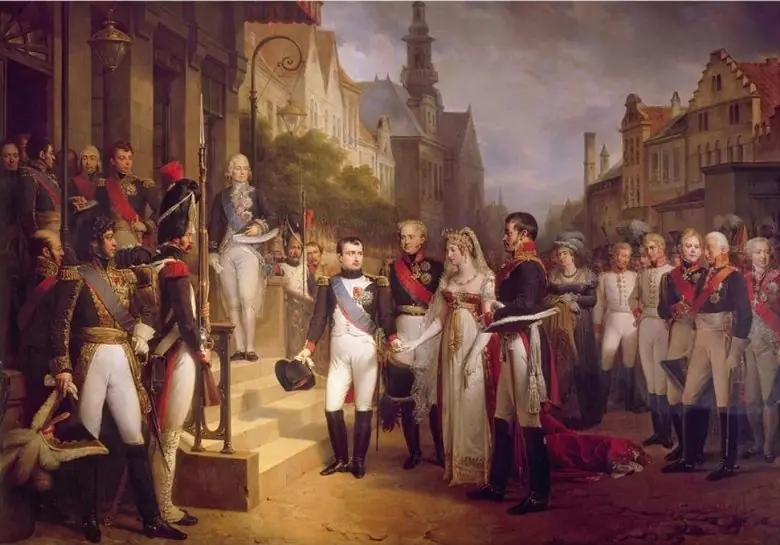 Napoleon Receiving the Queen of Prussia at Tilsit
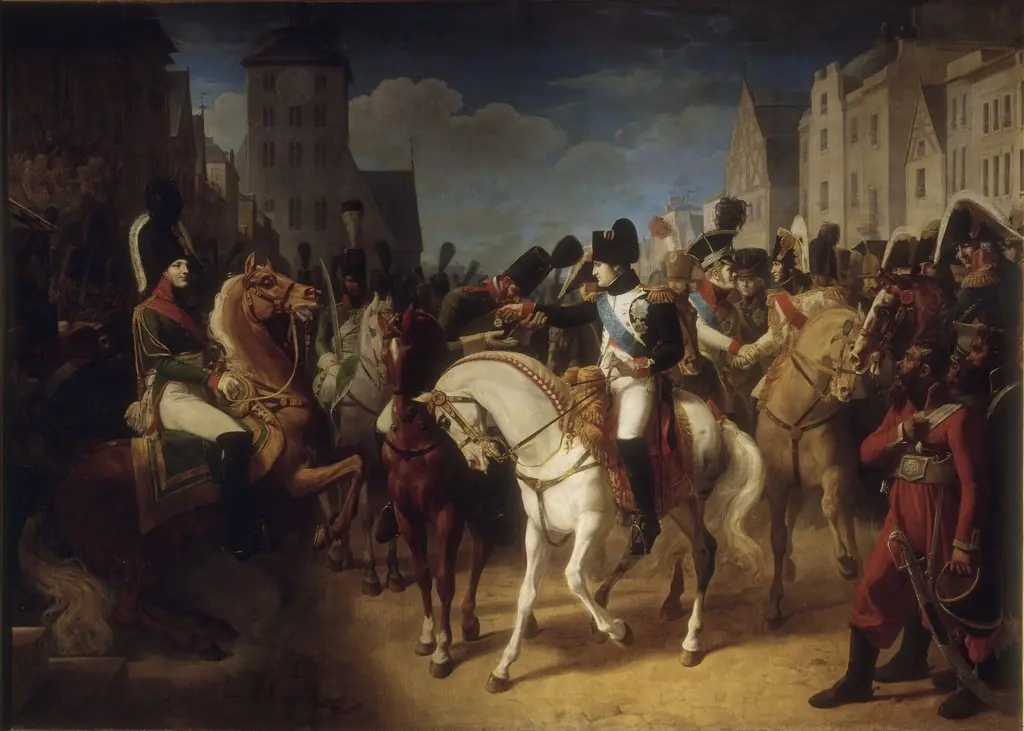 Napoleon I decorated a soldier of the Russian army in Tilsitt with the cross of the Legion of Honor
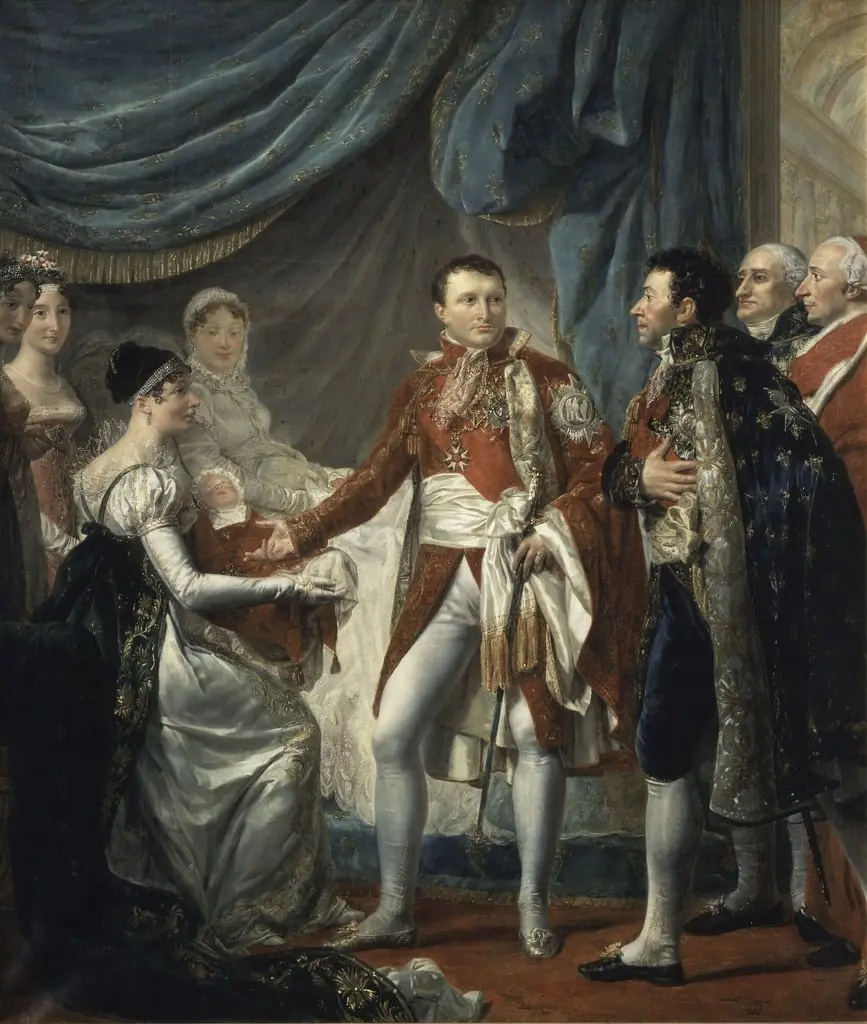 Napoleon I presents the King of Rome to the dignitaries of the Empire, March 20, 1811
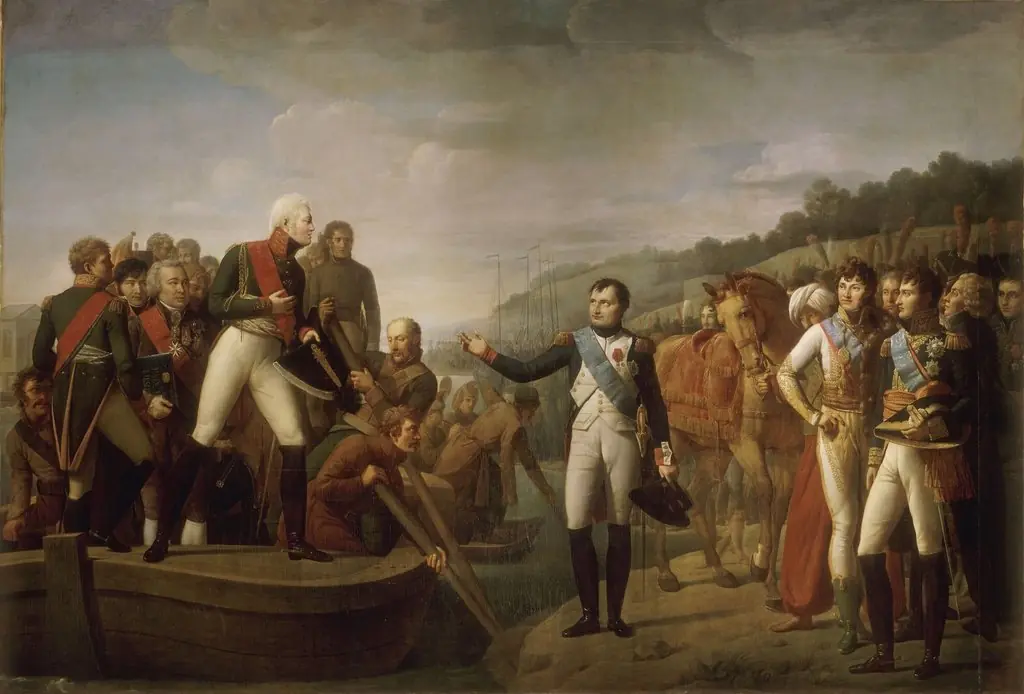 Farewell of Napoleon I and Alexander after the peace of Tilsitt, July 9, 1807
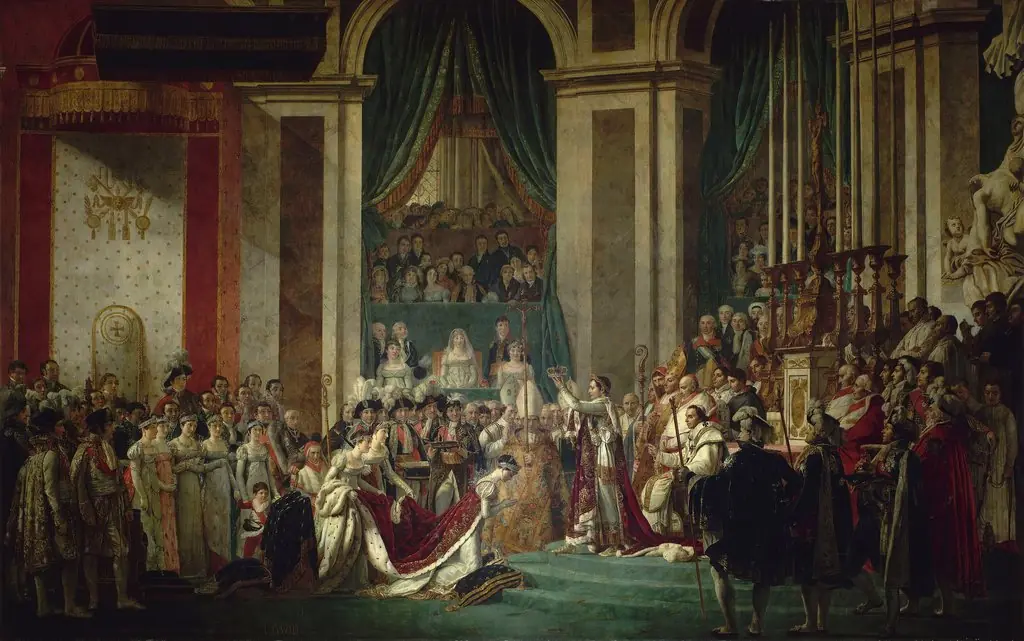 Coronation of Emperor Napoleon I and Coronation of the Empress Josephine
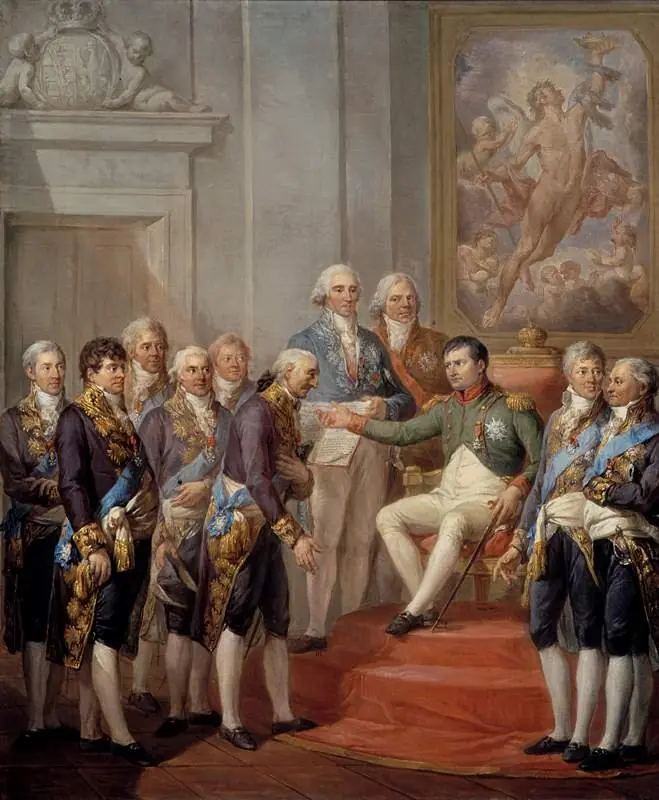 Granting of the Constitution of the Duchy of Warsaw by Napoleon
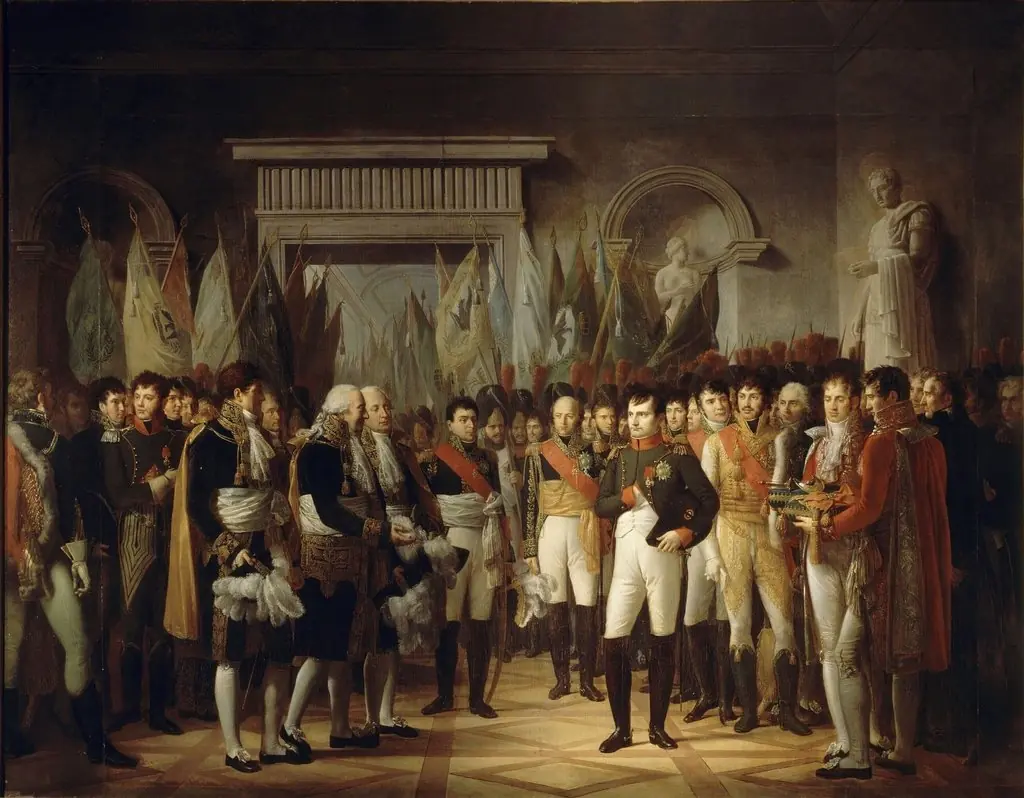 The Emperor receiving the deputies of the Conservative Senate in Berlin at the royal palace, 19 November 1806
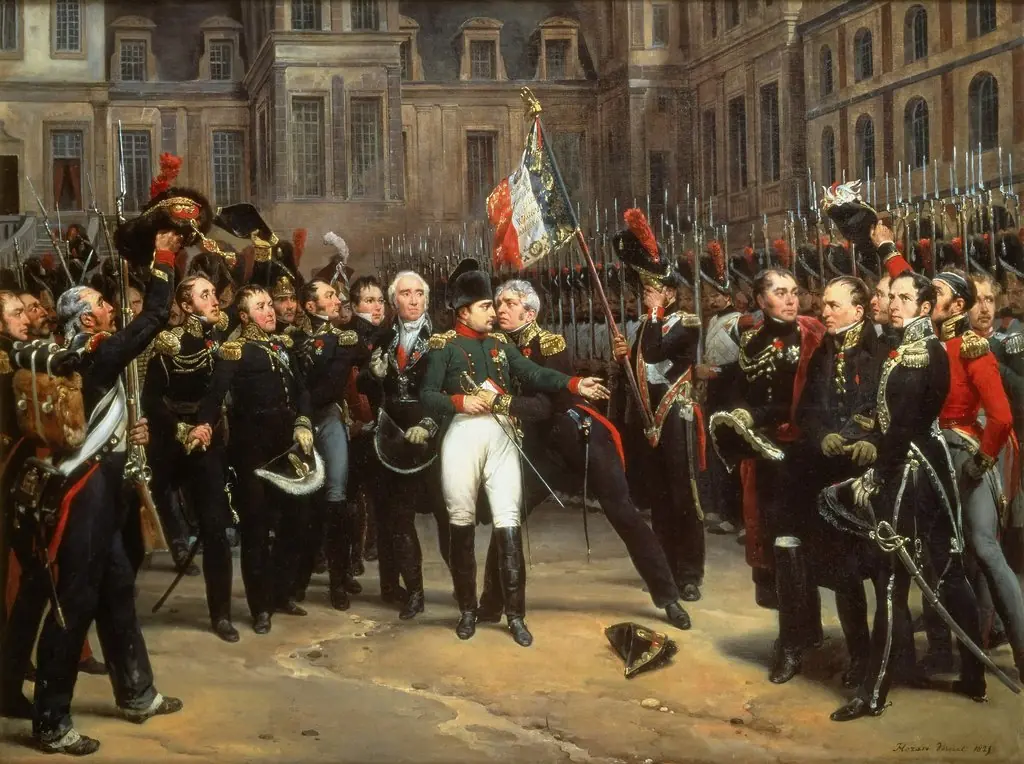 Napoleon bids farewell to his Guard at Fontainebleau on 20 April 1814
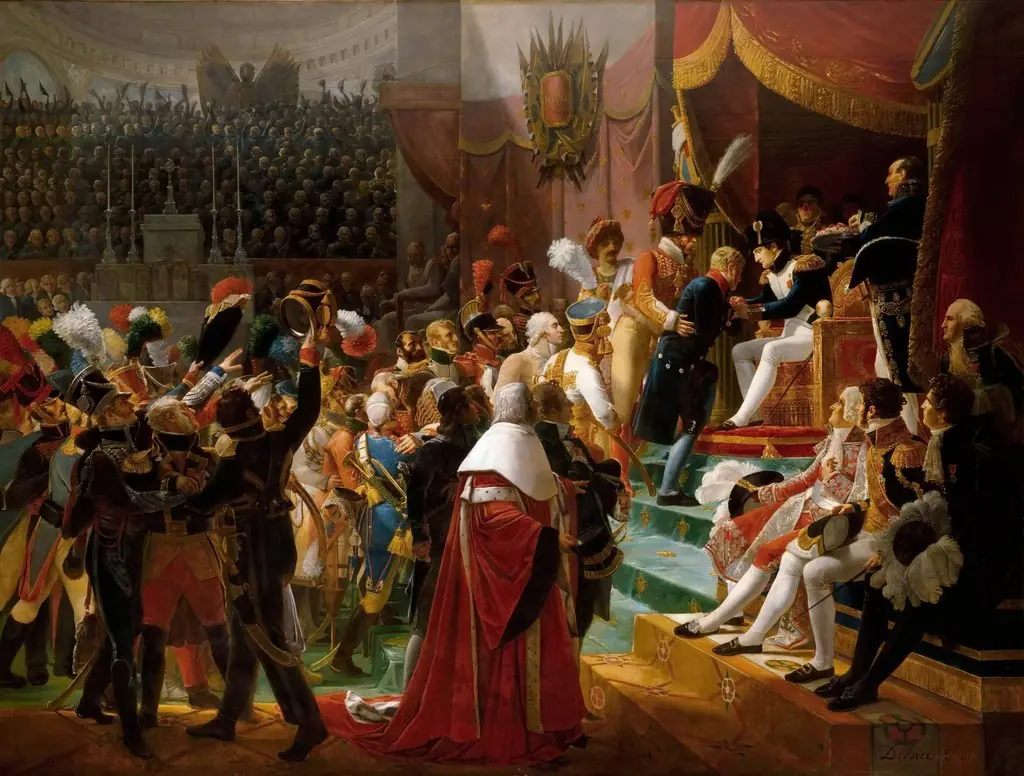 First distribution of the decorations of the Legion of Honor, made by Bonaparte, in the church of the imperial hotel of Invalides, July 14, 1804
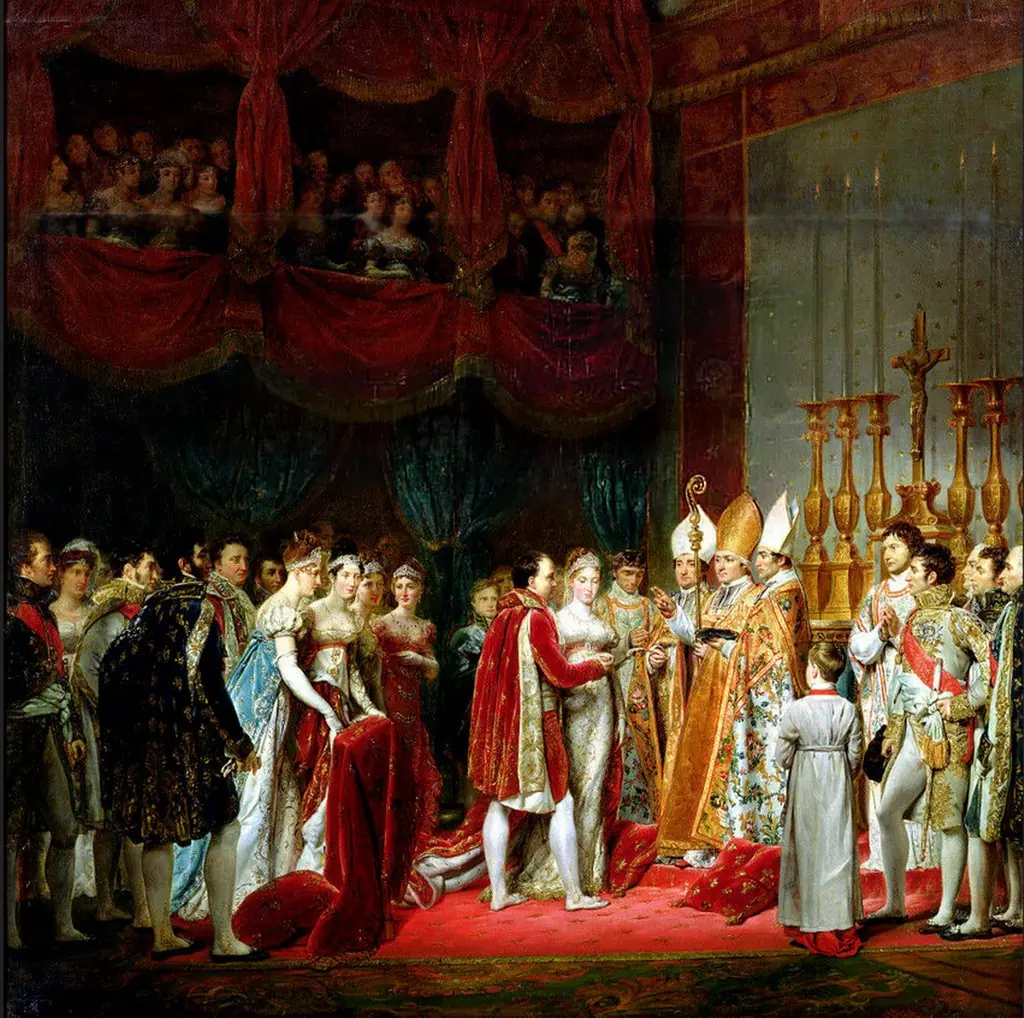 Marriage of Napoleon I and Marie Louise, 2 April 1810
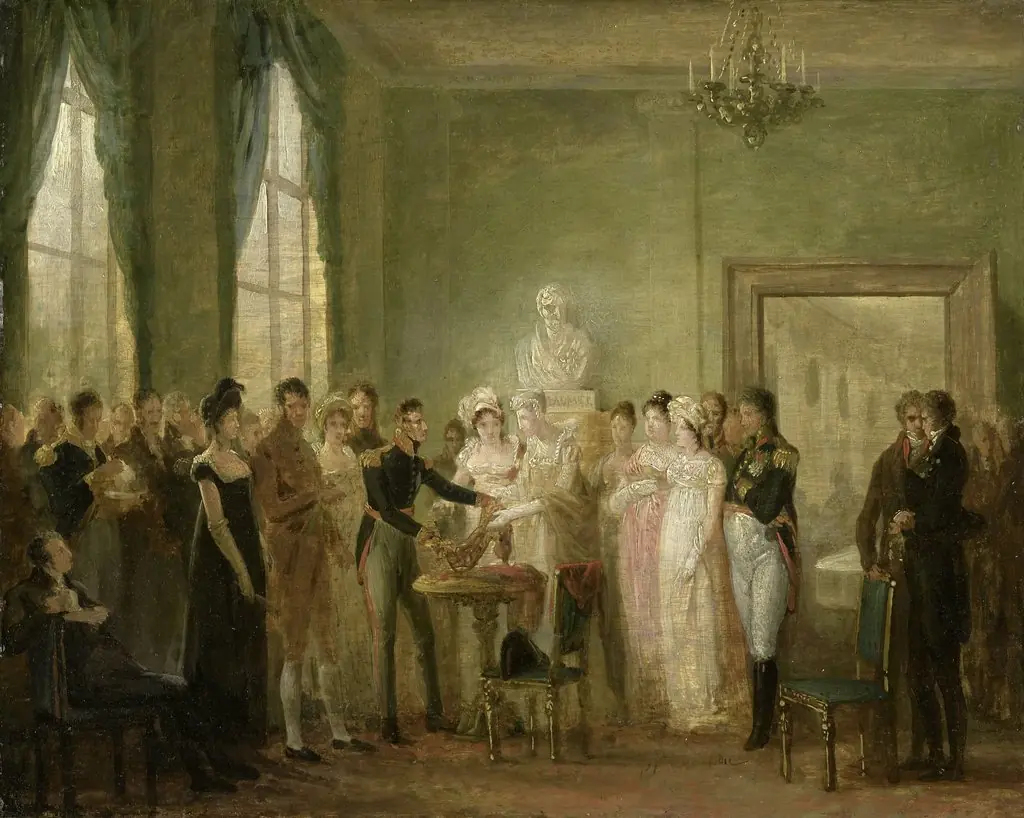 An Unidentified Historical Subject
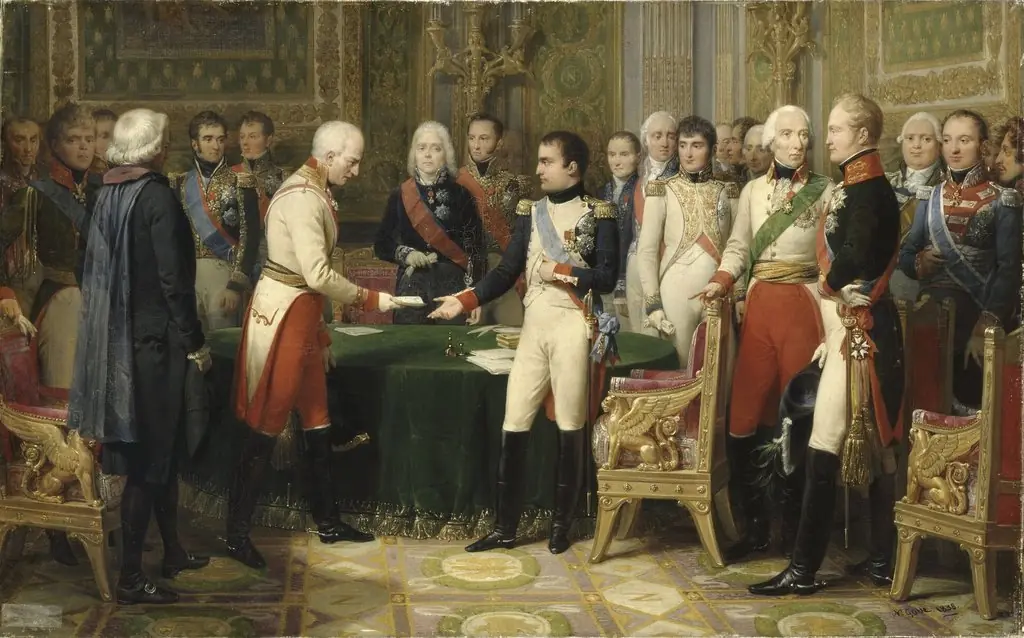 Napoleon I receiving Baron Vincent, the Austrian Ambassador, at Erfurt, 1808