Artwork
Untitled
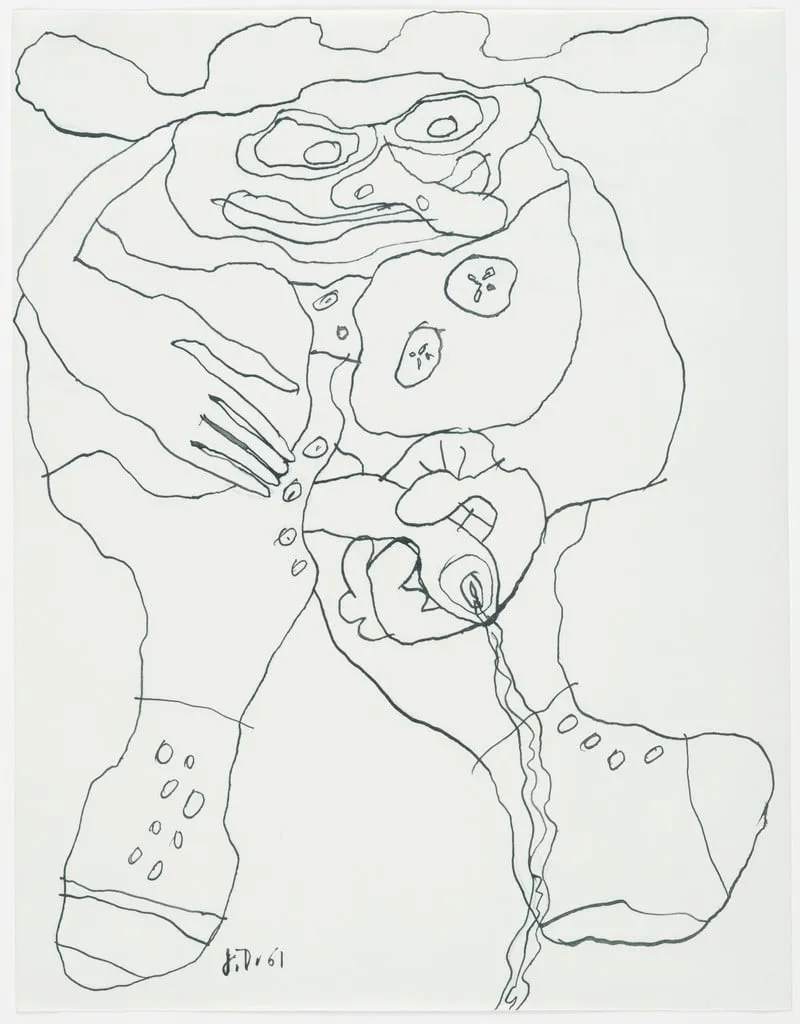
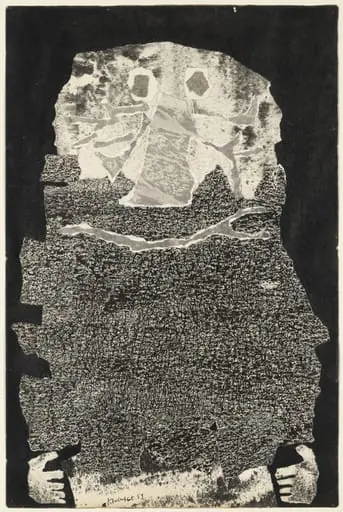
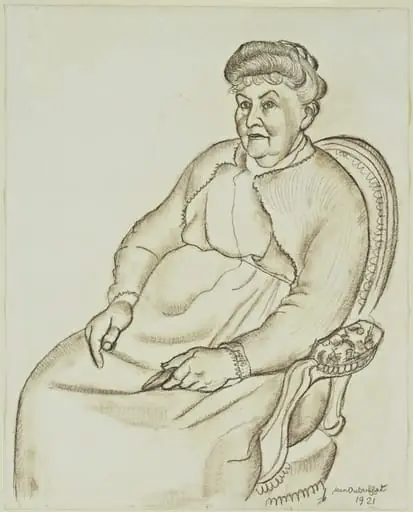
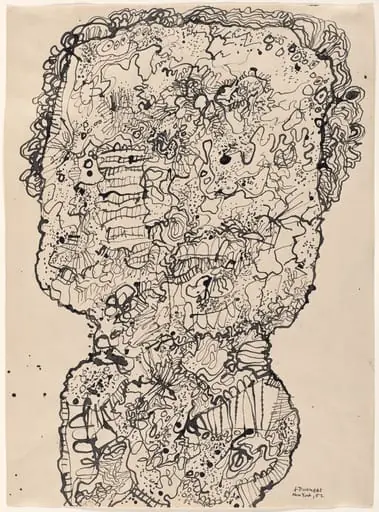
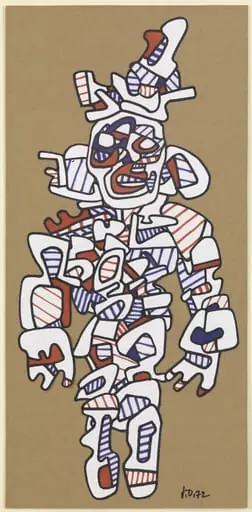
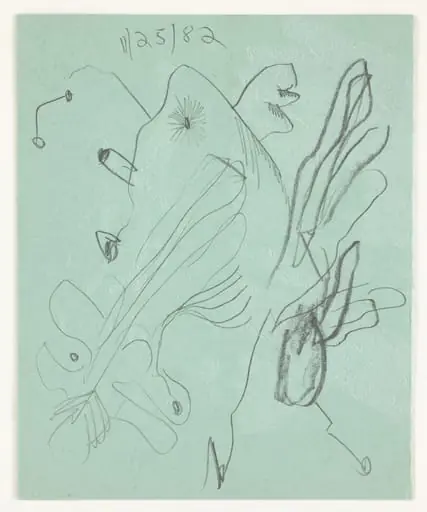
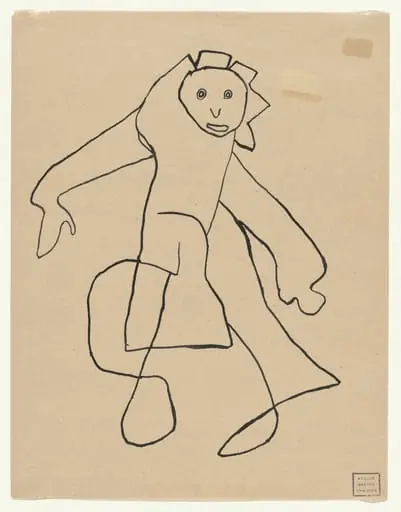
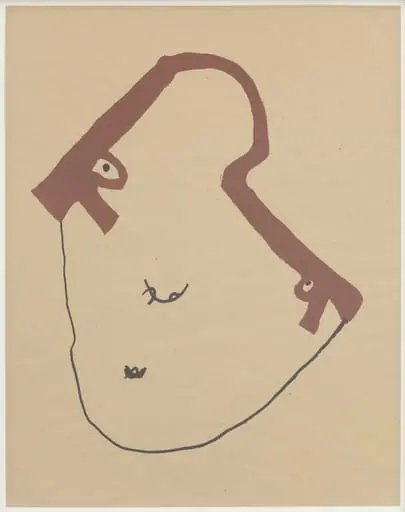
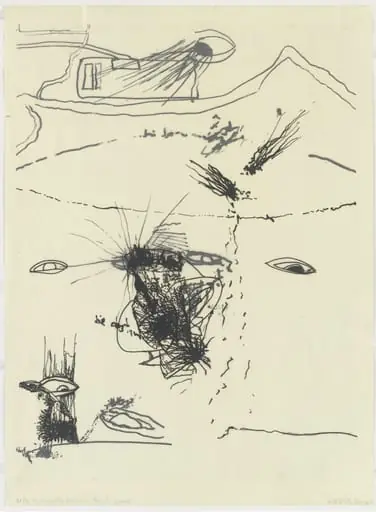
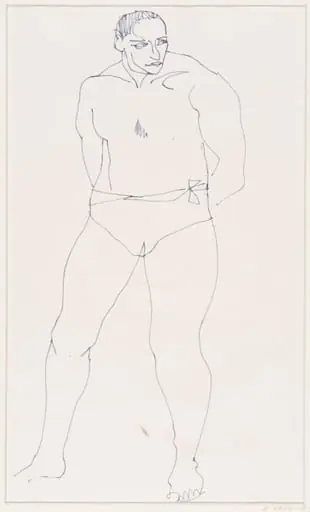
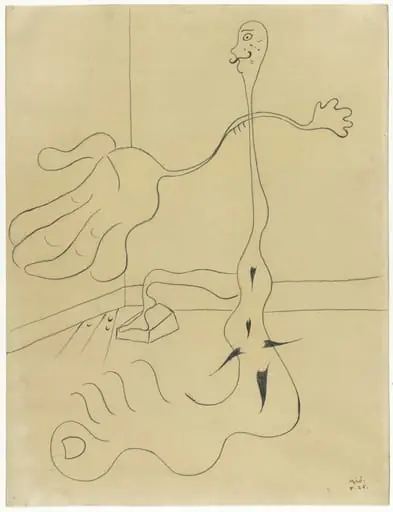
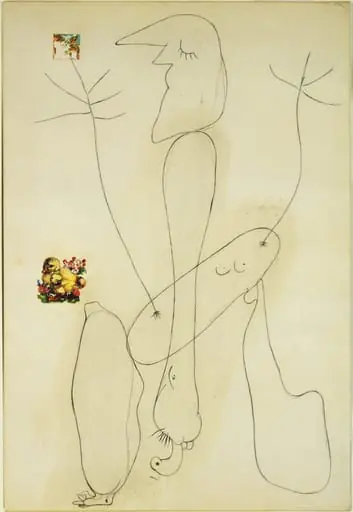
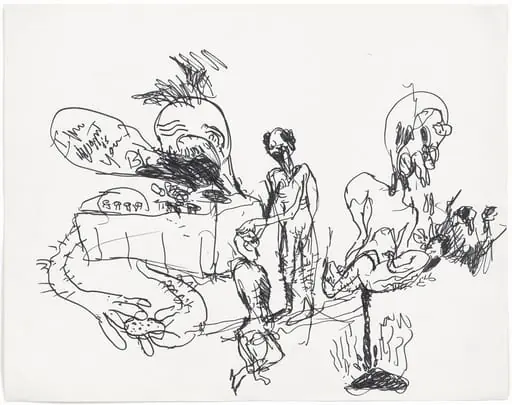
Untitled is an ink drawing by Jean Dubuffet. It dates from 1961 and is held in the collection of the Museum of Modern Art.
About this work
Overview
Created in 1961, this ink drawing on paper is one of many works by Jean Dubuffet that challenge traditional notions of artistic skill.
Created in 1961, this ink drawing on paper is one of many works by Jean Dubuffet that challenge traditional notions of artistic skill. Executed with fluid, unstructured lines, it embodies his commitment to raw, unmediated expression. Dubuffet sought to bypass academic training and instead capture the immediacy of spontaneous mark-making, aligning this piece with his broader rejection of polished aesthetics in favor of visceral authenticity.
Subject & Meaning
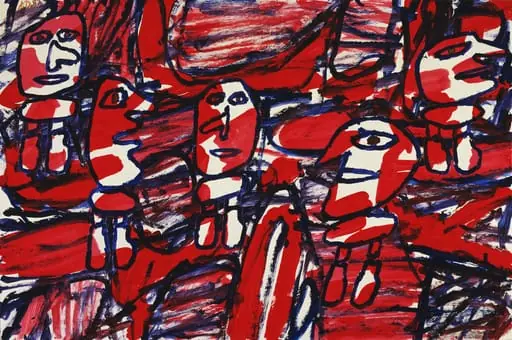
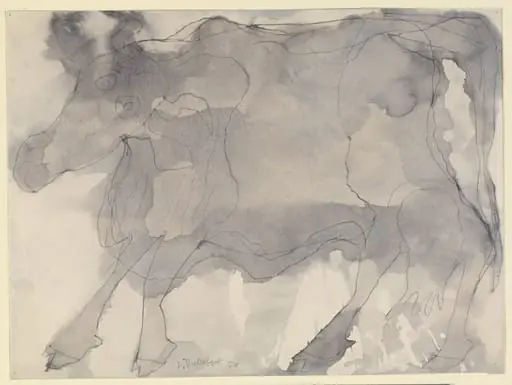
The figure depicted is simplified yet psychologically charged: a single-limbed form with an oversized head, wide eyes, and an open mouth suggests a primal or instinctual presence. The lack of conventional anatomy and the asymmetrical posture imply inner tension rather than narrative clarity. Dubuffet often used such figures to evoke the unfiltered psyche, drawing inspiration from children’s art, psychiatric patient drawings, and outsider expressions.
Technique & Style
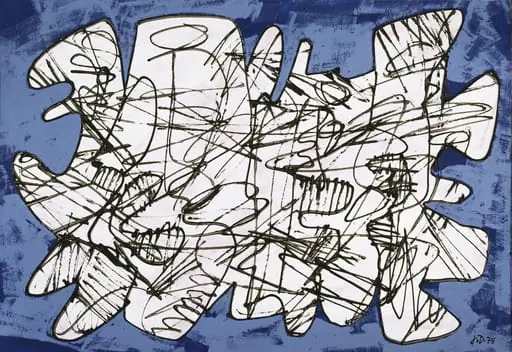
Dubuffet applied ink with a loose, gestural hand, allowing the brush to move freely across the paper without correction. The lines vary in thickness and pressure, creating rhythm and urgency. The stark contrast between black ink and white paper heightens the drawing’s immediacy. His deliberate avoidance of shading or detail emphasizes form through contour alone, reinforcing a sense of raw, unmediated creation.
History & Provenance
This work belongs to a prolific period in Dubuffet’s career following the formalization of his art brut philosophy in the 1940s. Though undated in its creation context, it aligns with his 1960s output, when he increasingly focused on drawing as a primary medium. The piece entered institutional collections after his death, preserved as part of his legacy in redefining modern art’s boundaries beyond Western conventions.
Context
Dubuffet’s work emerged in postwar Europe amid a broader cultural reckoning with authenticity and trauma. Rejecting the dominance of abstraction and classical technique, he turned to marginalized visual languages—children’s drawings, graffiti, and psychiatric art—as sources of truth. This drawing reflects that ethos, positioning the artist as a collector of untrained expression rather than a producer of refined imagery.
Legacy
Dubuffet’s influence extended beyond painting into the recognition of outsider art as a legitimate field of study. His emphasis on spontaneity and emotional honesty reshaped how institutions approached non-traditional art. This drawing, like others in his oeuvre, continues to be referenced in discussions about the value of untrained creativity and the limits of artistic convention in modern visual culture.
Artist & collection
Artist
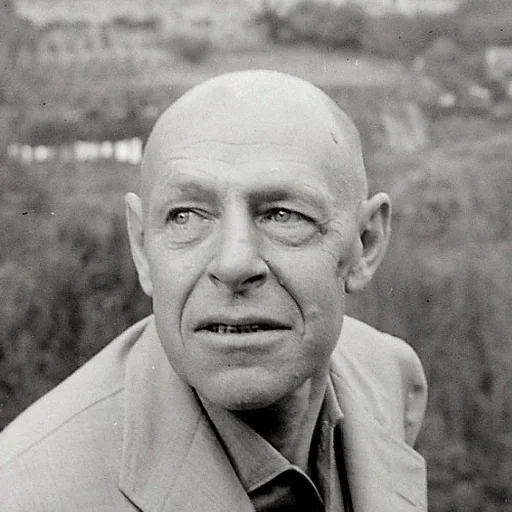
Jean Philippe Arthur Dubuffet (French pronunciation: ; 31 July 1901 – 12 May 1985) was a French painter and sculptor of the École de Paris (School of Paris).