Artwork
Untitled
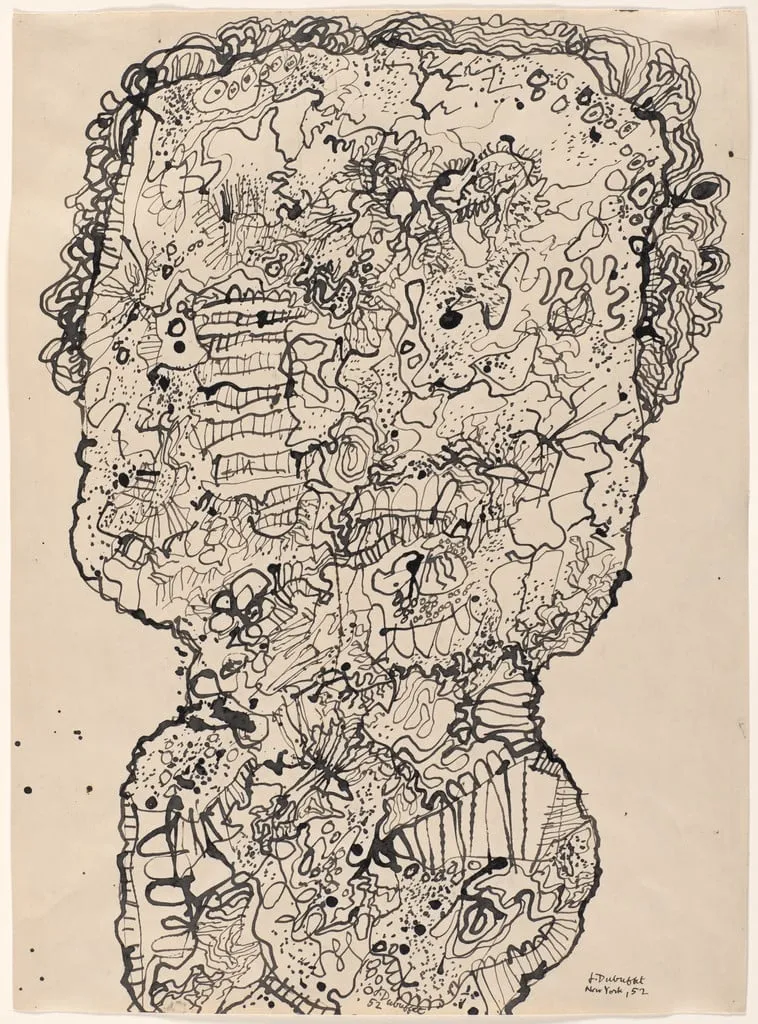
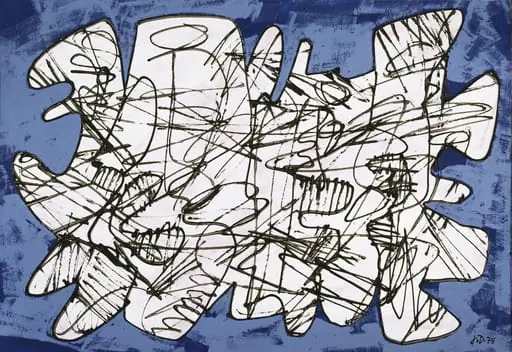
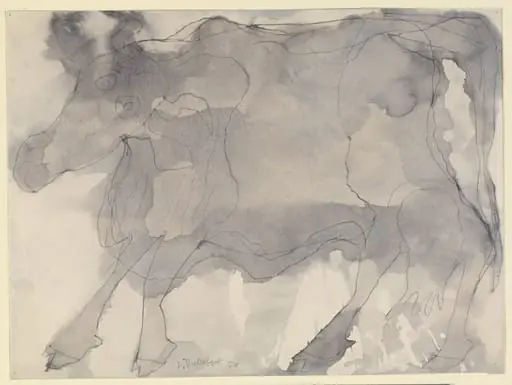
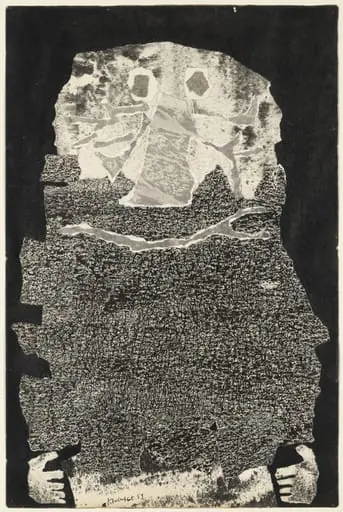
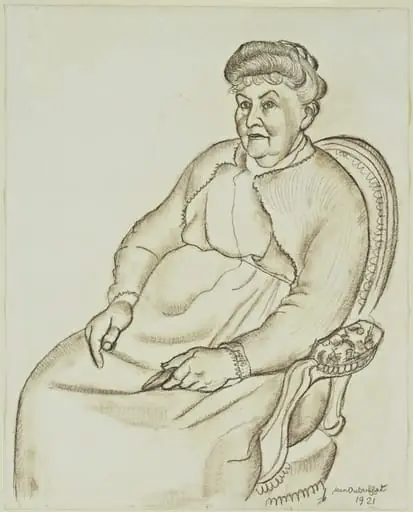
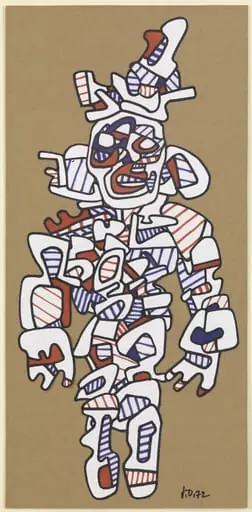
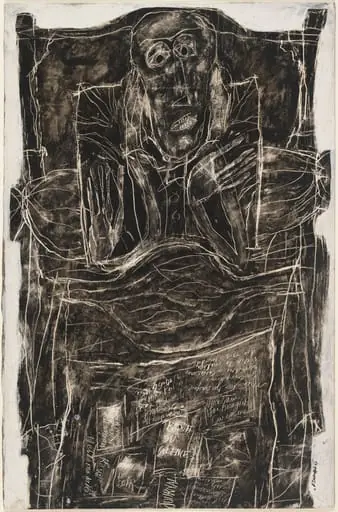
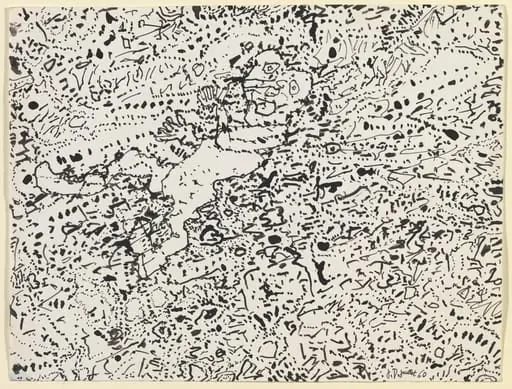
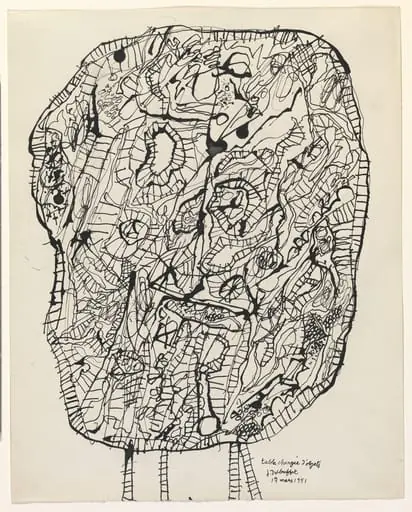
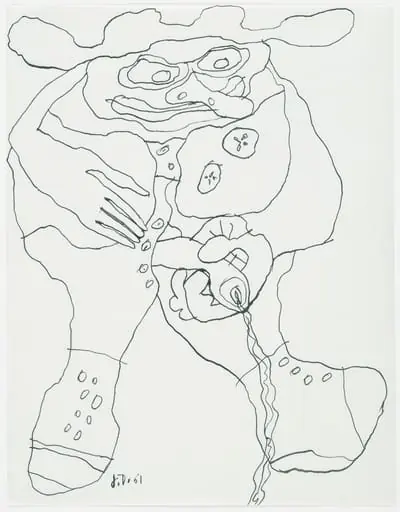
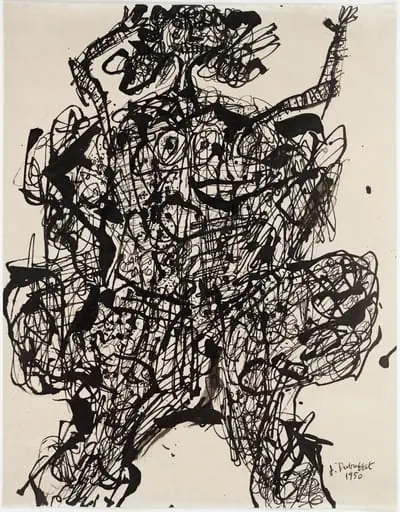
Untitled is an ink drawing by Jean Dubuffet. It dates from 1952 and is held in the collection of the Museum of Modern Art.
About this work
Overview
Executed on paper with loose, gestural strokes, the work resists formal composition and traditional draftsmanship.
Created in 1952, this ink drawing by Jean Dubuffet exemplifies his commitment to unrefined visual expression. Executed on paper with loose, gestural strokes, the work resists formal composition and traditional draftsmanship. Its chaotic energy and deliberate lack of polish align with Dubuffet’s broader rejection of academic art norms, favoring instead the immediacy and unpredictability of spontaneous mark-making.
Subject & Meaning
The drawing offers no recognizable subject, instead presenting an abstract network of lines, smudges, and dots that evoke organic or urban topographies without defining them. Dubuffet sought to bypass symbolic representation, aiming to capture the raw logic of thought or perception. The work functions less as a depiction and more as a physical trace of the artist’s hand, embodying an unfiltered inner state.
Technique & Style
Dubuffet applied ink with urgency, allowing it to bleed and pool unpredictably across the paper’s surface. Thick, overlapping strokes create dense textures, while irregular edges suggest the paper was torn or handled roughly. The signature, faint and obscured, reinforces the work’s anti-heroic stance—details are not meant to be polished or preserved, but to exist as transient, unembellished evidence of action.
History & Provenance
This piece emerged during a period when Dubuffet was deeply engaged with art brut, collecting works by untrained creators and advocating for their aesthetic legitimacy. Though unsigned in a conventional sense, its attribution to Dubuffet is well-documented through his archives and exhibition history. It was likely produced in his Paris studio, among numerous similar experiments in ink and charcoal from the early 1950s.
Context
In postwar Europe, Dubuffet positioned himself against the dominance of Surrealism and formal abstraction, seeking alternatives rooted in primal expression. His interest in psychiatric art, children’s drawings, and graffiti informed this work’s disregard for perspective and proportion. The drawing reflects a broader cultural shift toward valuing authenticity over technical mastery, challenging institutional definitions of art.
Legacy
This drawing contributed to the legitimization of non-traditional mark-making in modern art. Its influence extended to later movements such as Neo-Expressionism and Process Art, where materiality and spontaneity took precedence over finish. Though not widely exhibited, it remains a key example of Dubuffet’s enduring challenge to artistic conventions and his redefinition of what constitutes meaningful visual language.
Artist & collection
Artist
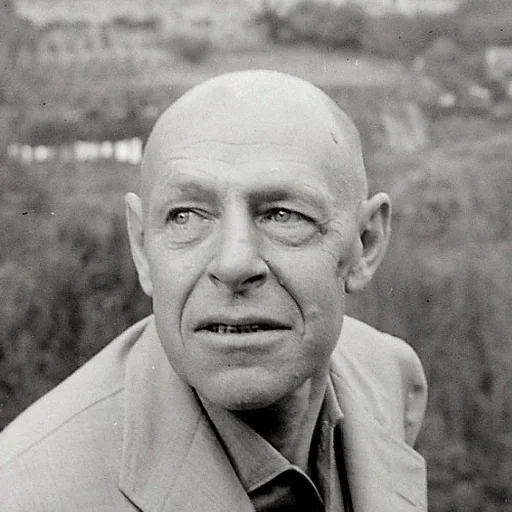
Jean Philippe Arthur Dubuffet (French pronunciation: ; 31 July 1901 – 12 May 1985) was a French painter and sculptor of the École de Paris (School of Paris).