Artwork
Untitled
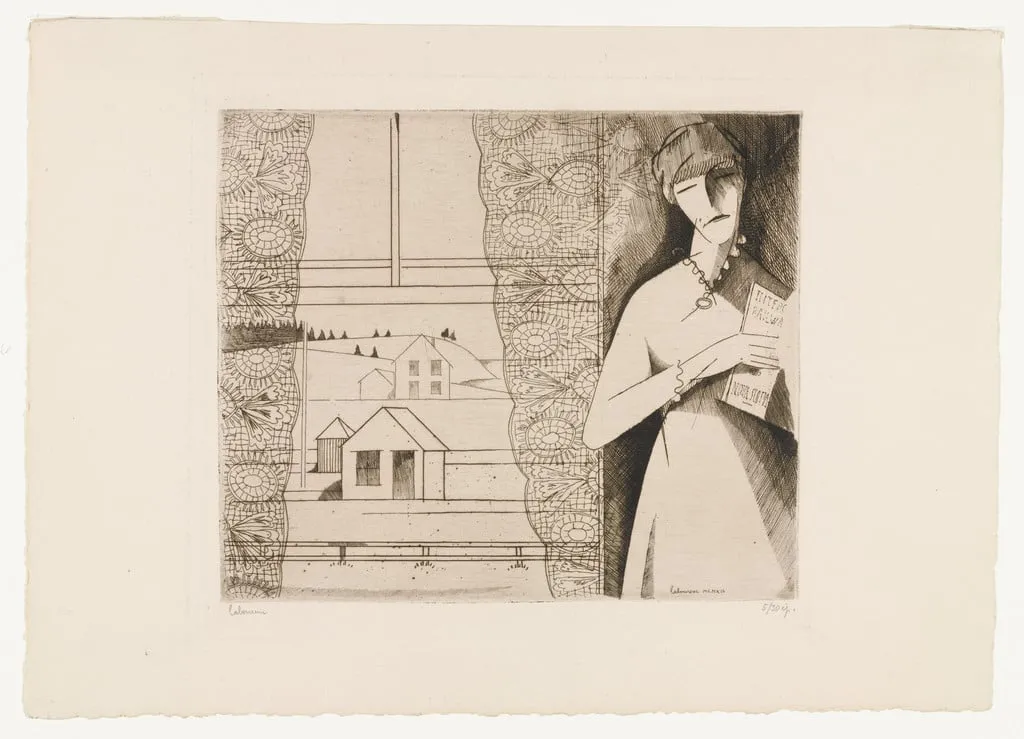
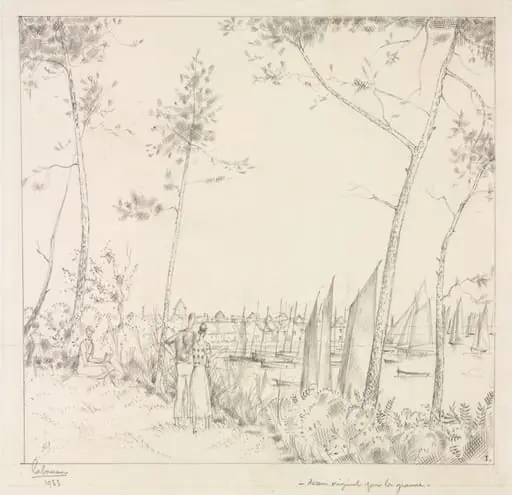
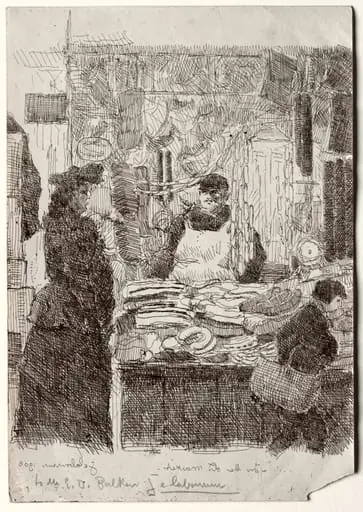
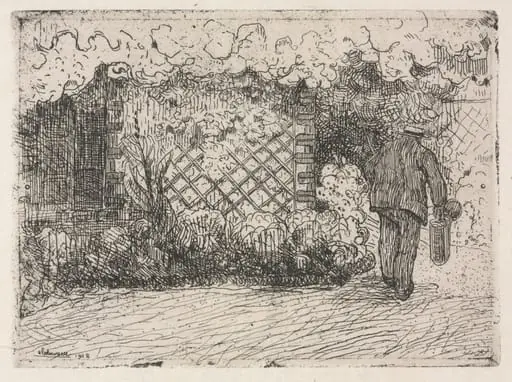
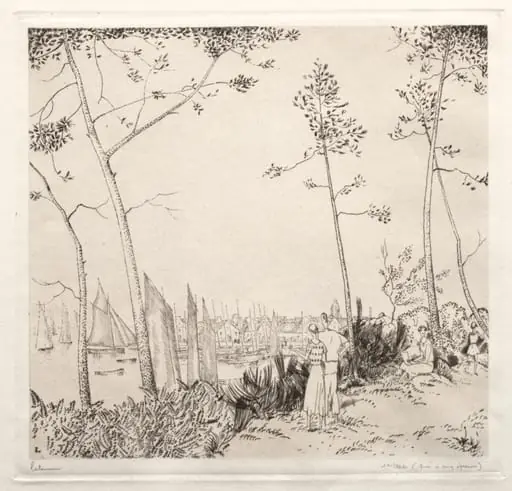
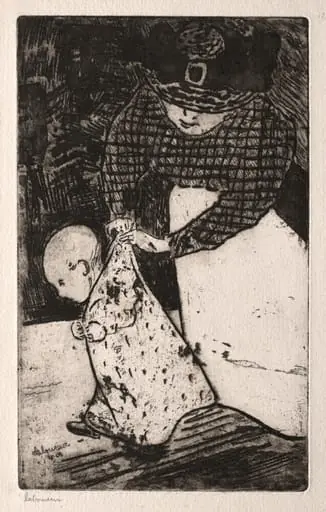
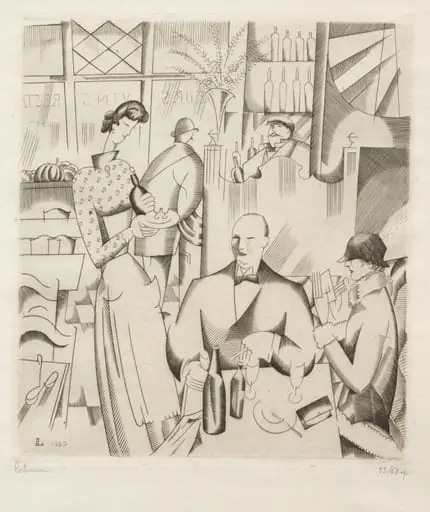
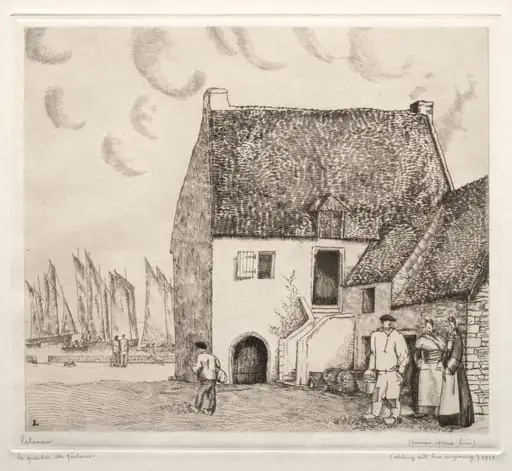
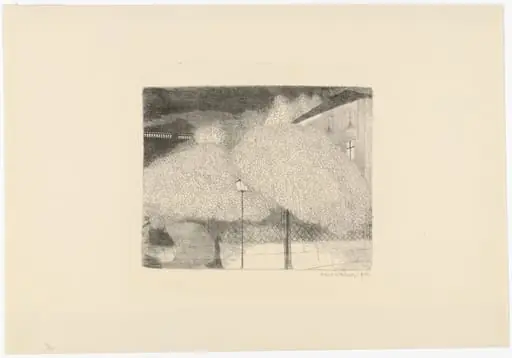
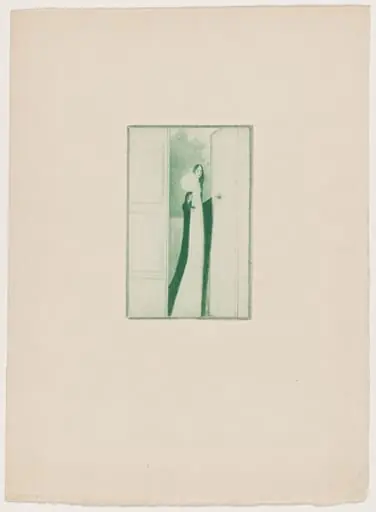
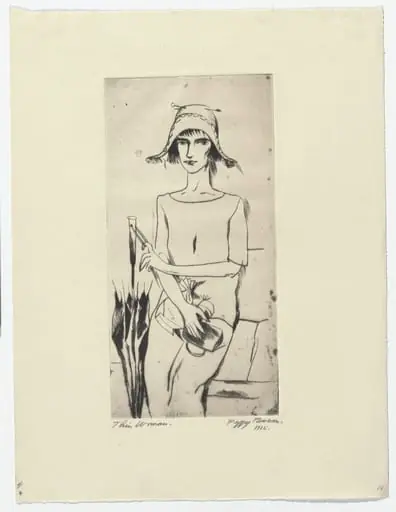
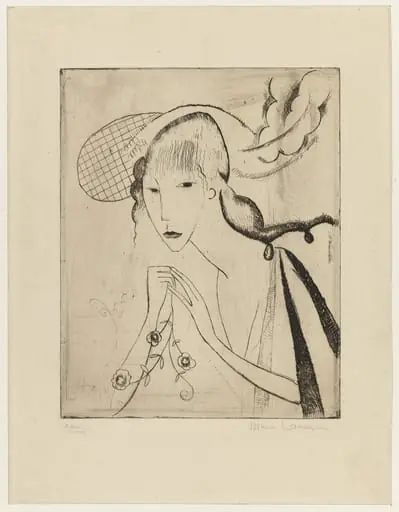
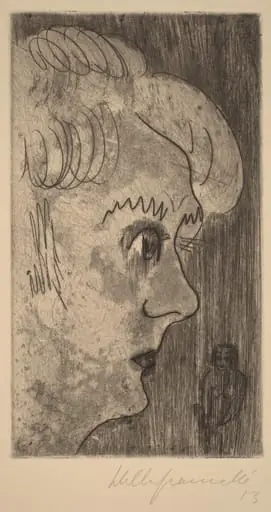
Untitled is an ink print by Jean-Émile Laboureur. It dates from 1914 and is held in the collection of the Museum of Modern Art. Jean Émile Laboureur produced this 1914 etching during a phase of intense printmaking activity.
About this work
Overview
Though primarily known as a painter and designer, he engaged deeply with intaglio techniques, using etching to explore quiet domestic scenes.
Jean Émile Laboureur produced this 1914 etching during a phase of intense printmaking activity. Though primarily known as a painter and designer, he engaged deeply with intaglio techniques, using etching to explore quiet domestic scenes. The work is part of The Museum of Modern Art’s collection, reflecting its significance within early 20th-century French graphic art. Its modest scale and intimate subject align with Laboureur’s broader interest in everyday life rendered with subtle precision.
Subject & Meaning
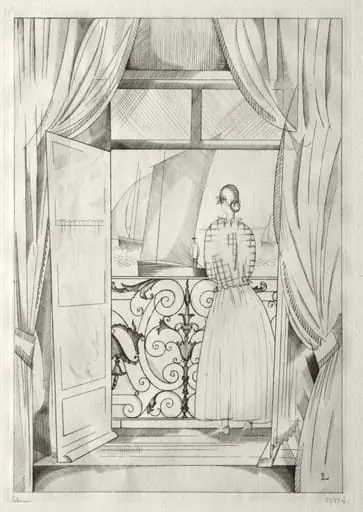
A woman in a long dress stands near a window, holding a small sheet of paper or book, her gaze lowered in quiet contemplation. Behind her, a simple house with a flat roof and sparse trees appears through the frame, suggesting a domestic interior opening onto a restrained exterior. The absence of narrative detail invites interpretation rather than storytelling, emphasizing solitude and introspection. The stillness of the figure and the muted environment convey a sense of private, unspoken moments.
Technique & Style
Laboureur employed etching to achieve fine, controlled lines scratched into a metal plate, then inked and printed. The walls and curtains are rendered with delicate crisscross patterns, evoking woven textures without literal representation. The lines are sharp yet fluid, creating a sense of lightness and ambiguity. This method allows for both precision and atmospheric softness, blending realism with a dreamlike quality that softens the boundaries between interior and exterior space.
History & Provenance
Created in 1914, the etching emerged from Laboureur’s prolific period in printmaking, when he was experimenting across mediums including lithography and watercolor. It entered The Museum of Modern Art’s collection in the 20th century, likely through acquisition or donation, as part of efforts to document European graphic art of the era. Its preservation reflects institutional recognition of his contributions to printmaking beyond his better-known paintings.
Context
Laboureur worked in France during a time when printmaking was being revitalized by artists seeking alternatives to academic painting. His focus on domestic interiors and quiet figures aligns with broader trends in early modernist graphic art, where intimacy and technique replaced grand narratives. Etching, once associated with reproduction, was reimagined as a medium for personal expression, and Laboureur’s work exemplifies this shift through its restrained elegance and attention to texture.
Legacy
Though not widely celebrated in mainstream art history, Laboureur’s etchings, including this one, remain important for their quiet technical mastery and emotional restraint. His integration of fine line work with domestic themes influenced later generations of printmakers interested in subtlety over spectacle. The work continues to be studied for its balance between realism and suggestion, offering a model of understated narrative in graphic art.
Artist & collection
Artist
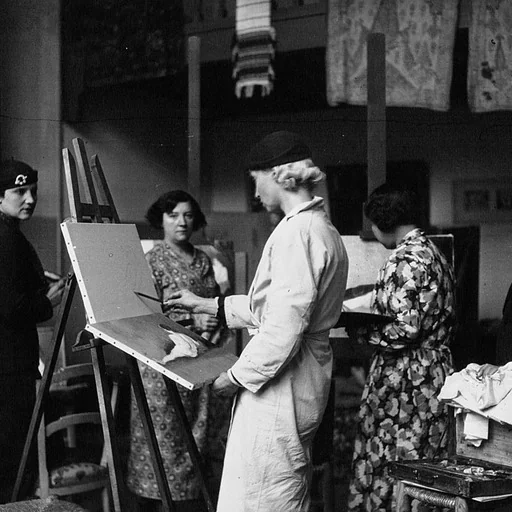
Émile Laboureur, known as Jean Émile (16 August 1877, Nantes – 16 June 1943, near Pénestin) was a French painter, designer, engraver, watercolorist, lithographer, and illustrator.