Artwork
In the Vineyard
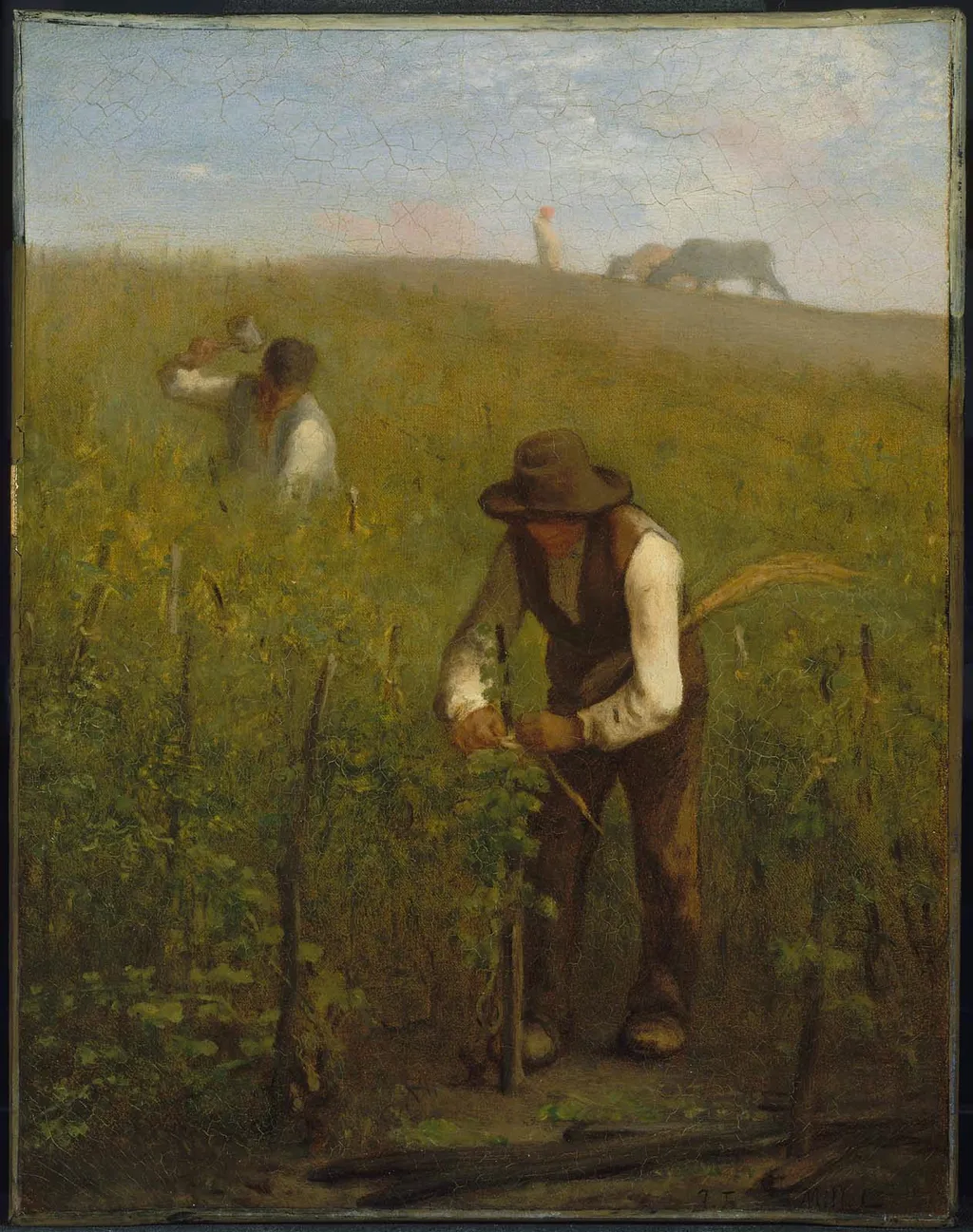
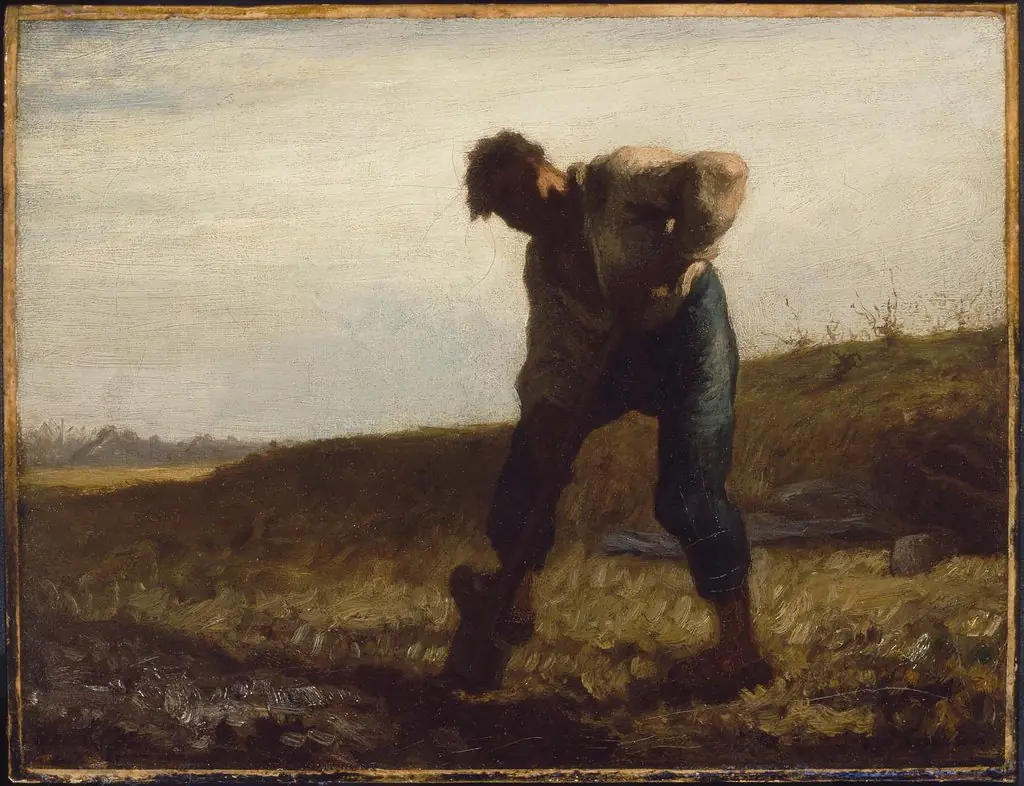
In the Vineyard is an oil painting by the Realist artist Jean François Millet. It dates from 1852 and is held in the collection of the Museum of Fine Arts Boston.
About this work
Overview
The painting captures rural labor with quiet dignity, reflecting Millet’s commitment to portraying the lives of agricultural workers.
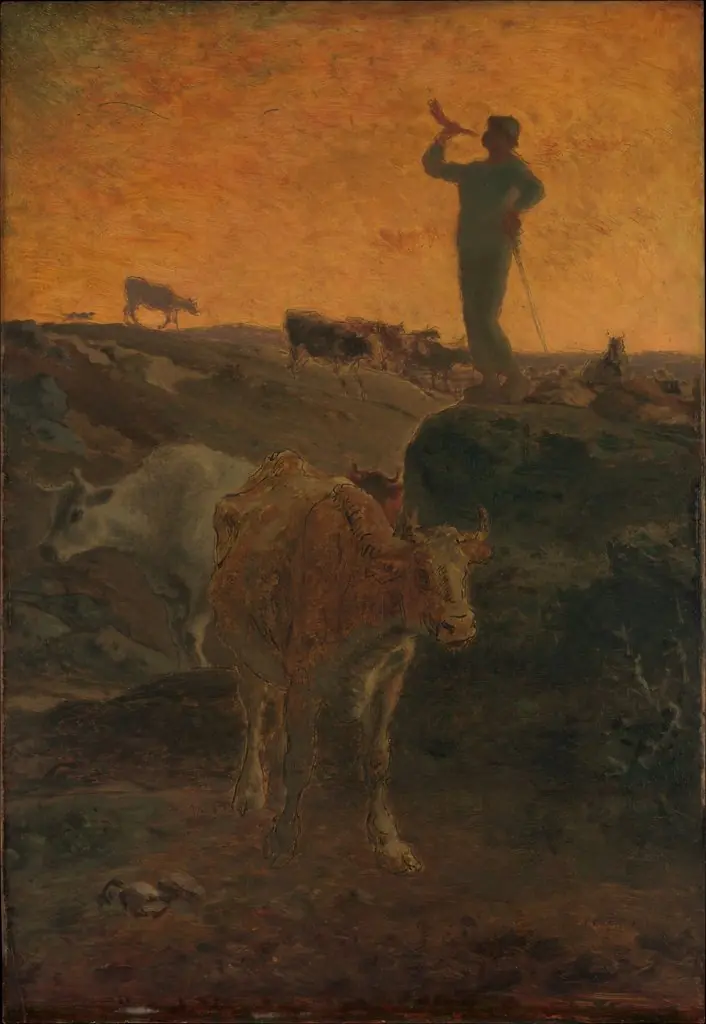
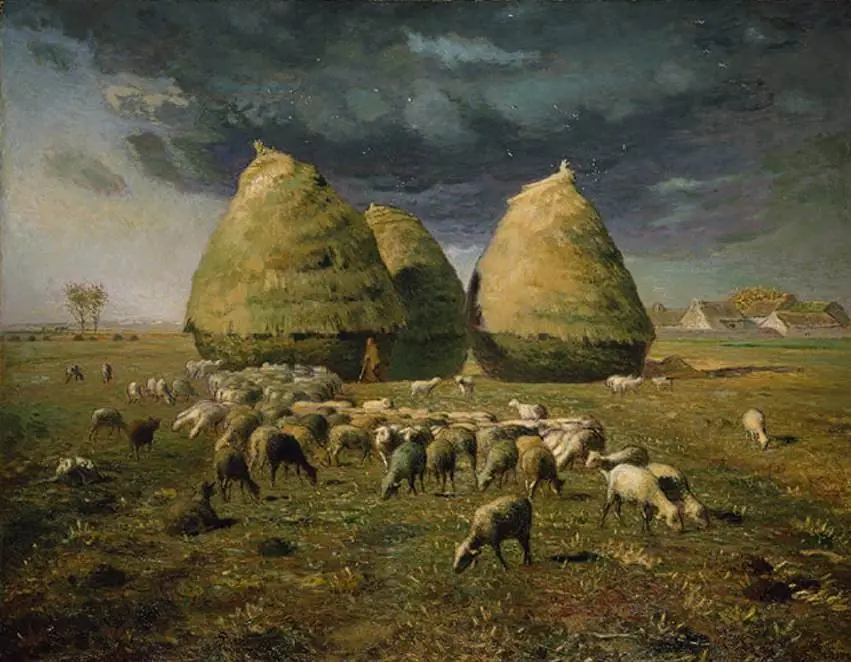
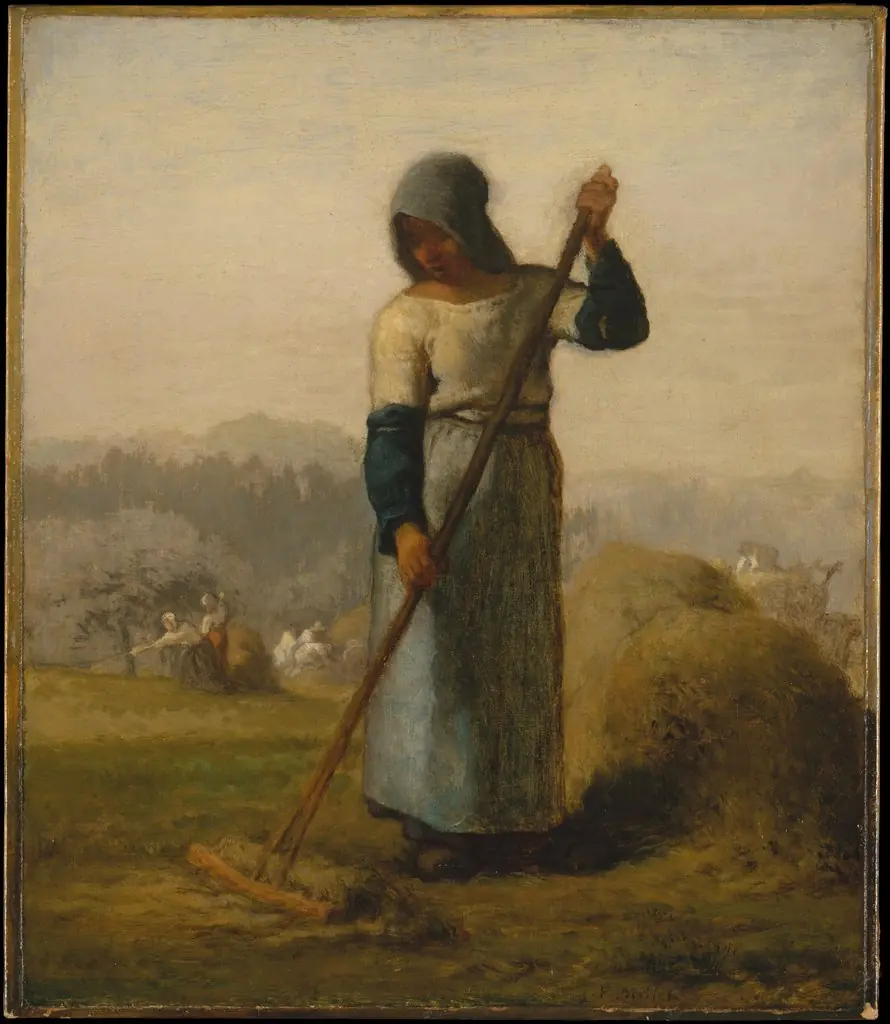
Painted in 1852, *In the Vineyard* is an oil work by Jean-François Millet, a central figure in the Barbizon school. The painting captures rural labor with quiet dignity, reflecting Millet’s commitment to portraying the lives of agricultural workers. Its subdued tones and attentive observation of nature align with the movement’s rejection of idealized landscapes in favor of authentic, everyday scenes observed directly from the French countryside.
Subject & Meaning
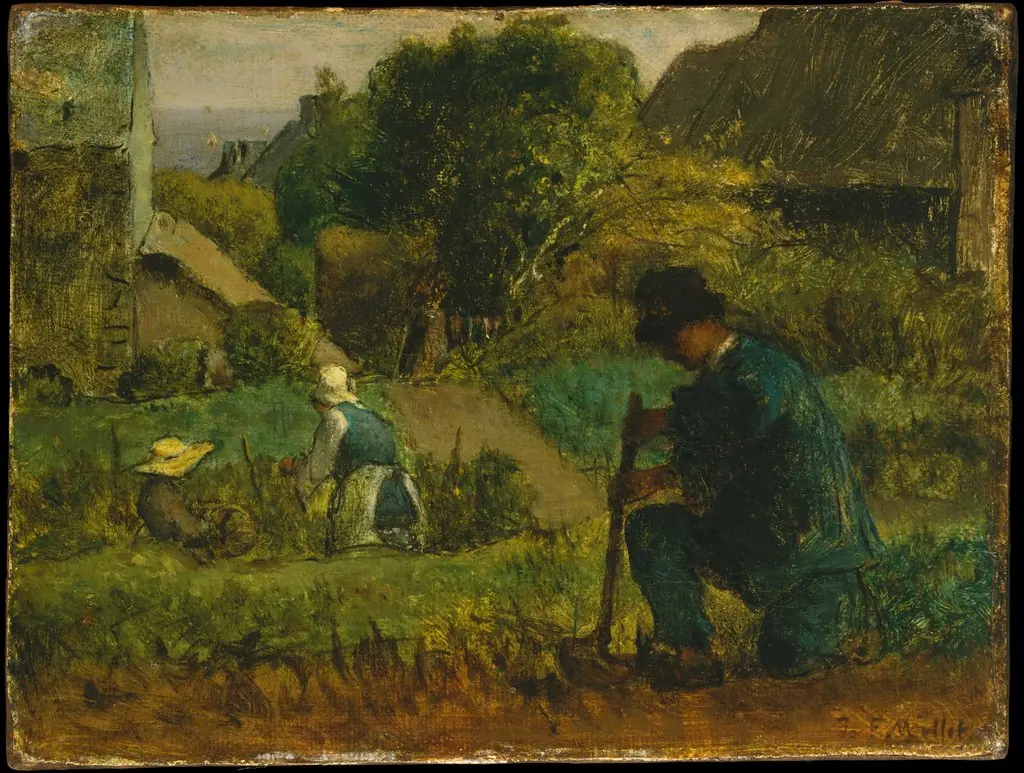
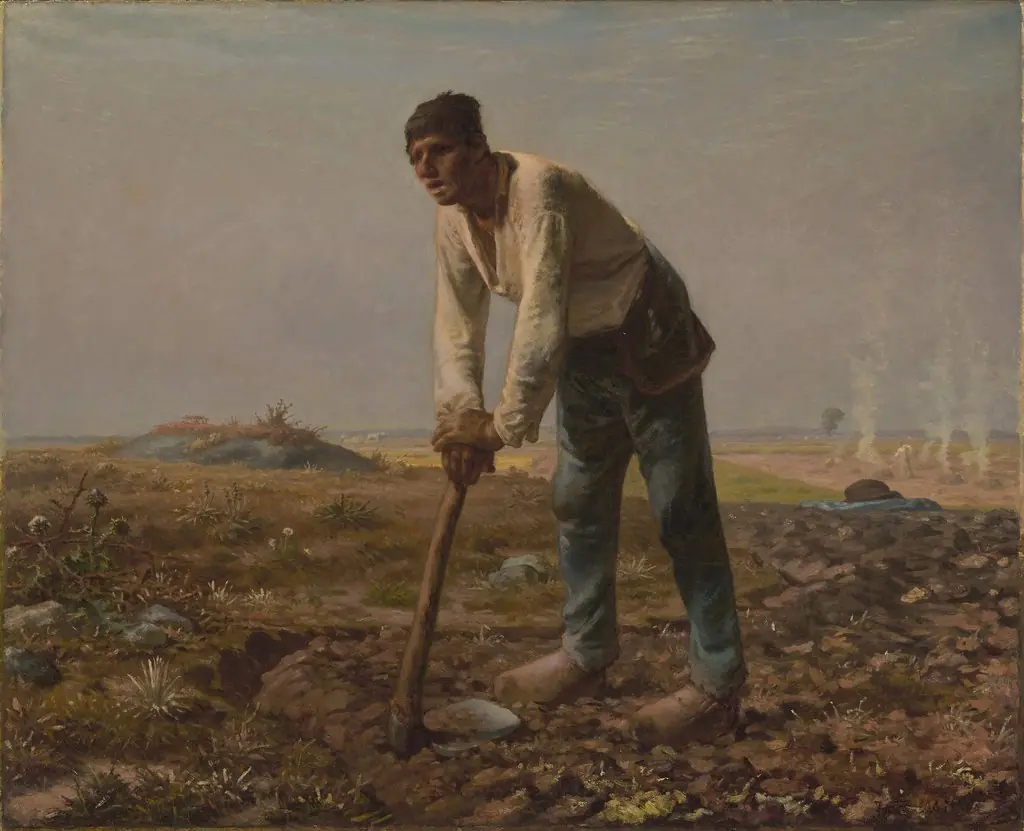
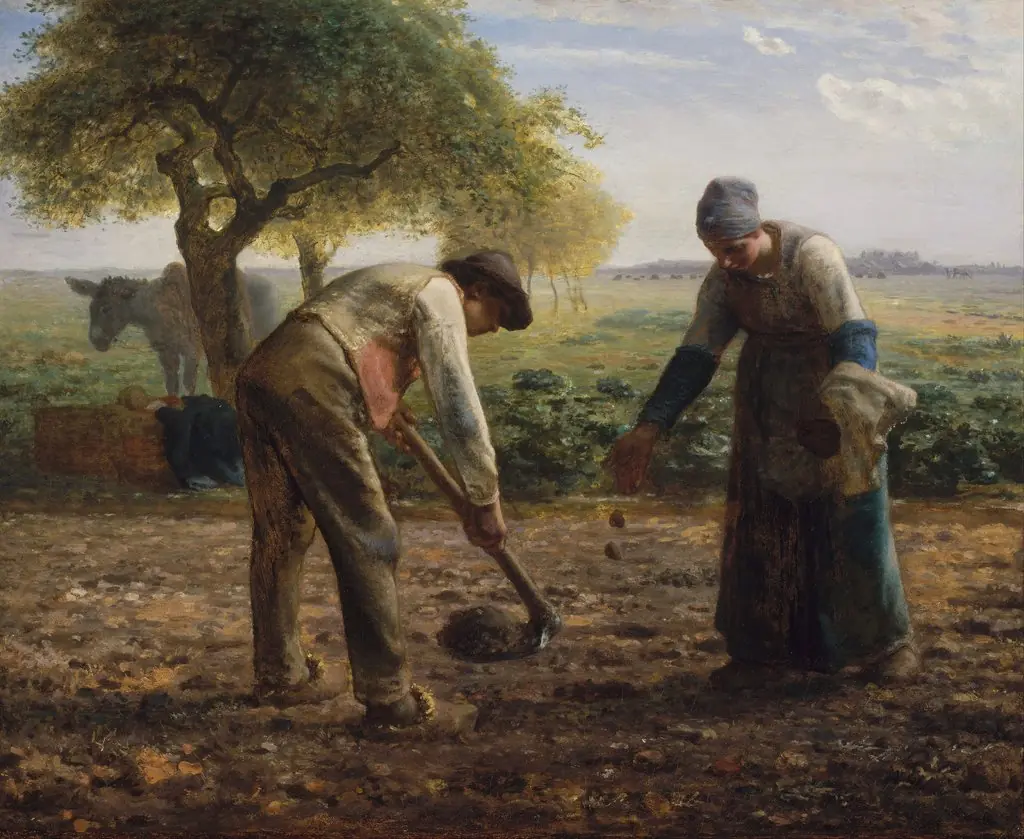
Two laborers are shown tending vines in a quiet, sunlit field. The foreground figure, bent low in concentration, embodies the physicality of farm work, while the distant figure suggests the scale and rhythm of collective labor. Millet avoids drama or sentimentality, instead presenting work as an unremarkable, essential part of rural existence. The absence of narrative or symbolism invites contemplation of the dignity inherent in routine toil.
Technique & Style
Millet employed loose, textured brushwork to suggest movement through the vines and the weight of labor. A restrained palette of earthy greens, browns, and beiges grounds the scene in naturalism. Subtle shifts in light and shadow model the figures’ forms without harsh contrast, creating depth while preserving the painting’s quiet atmosphere. The technique avoids polish, favoring tactile immediacy over refined finish.
History & Provenance
Completed in 1852, the painting entered the collection of the Museum of Fine Arts, Boston, where it remains today. It was produced during Millet’s early years in Barbizon, a period when he was developing his distinctive focus on peasant life. While not widely exhibited at the time, it contributed to the growing recognition of rural realism as a legitimate subject for serious art in mid-19th-century France.
Context
In the 1850s, French art was dominated by academic history painting and romanticized landscapes. Millet’s choice to depict anonymous laborers in their working environment challenged these conventions. His work resonated with broader social currents, including rising interest in the lives of the rural poor, though he avoided overt political messaging, focusing instead on observation and presence.
Legacy
Though less celebrated than Millet’s later works like *The Gleaners*, *In the Vineyard* exemplifies the quiet power of his early style. It helped establish a visual language for rural realism that influenced subsequent generations of artists, both in France and abroad. Its emphasis on labor as a subject worthy of sustained attention contributed to the broader redefinition of artistic value in the 19th century.
Artist & collection
Artist
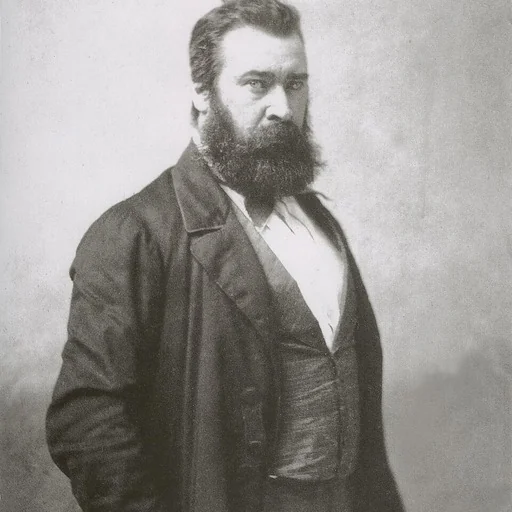
Jean-François Millet (French pronunciation: ; 4 October 1814 – 20 January 1875) was a French painter and one of the founders of the Barbizon school in rural France.