Artwork
The Well at Gruchy
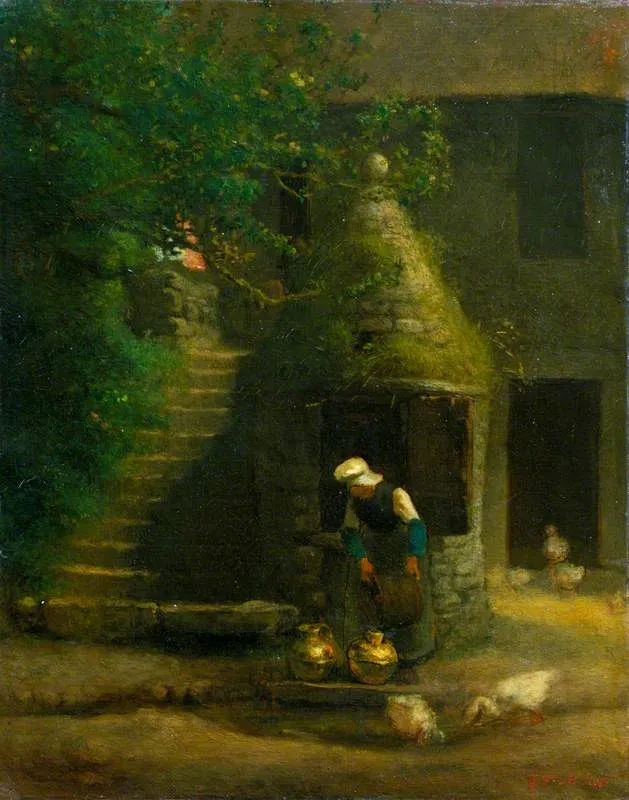
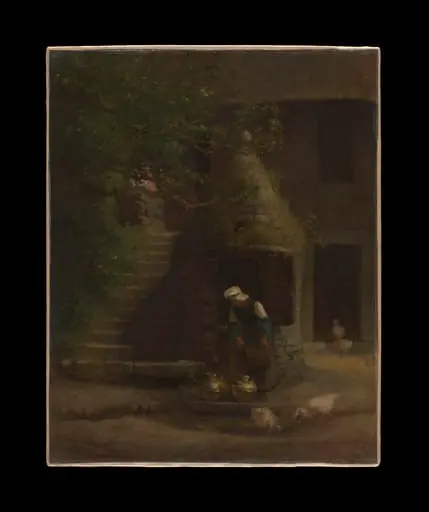
The Well at Gruchy is an oil painting by the Realist artist Jean François Millet. It dates from 1854 and is held in the collection of the Victoria and Albert Museum.
About this work
Overview
The Well at Gruchy, an 1854 oil painting, exemplifies Jean-François Millet's Realist focus on everyday peasant life, characteristic of the Barbizon school he co-founded.
Subject & Meaning
Depicting a woman poised to draw water, surrounded by chickens, at a rustic stone well, the painting highlights mundane rural tasks and the lives of common people, reflecting Millet's thematic emphasis.
Technique & Style
Executed in oil paint, the work features a naturalistic, unidealized approach, with a dark, muted background contrasting the central figure, and textured, rough-hewn stone detailing the well.
History & Provenance
Created in 1854 by Millet, a leading figure in the Barbizon school, the painting's provenance details are not specified here, though its creation aligns with the school's peak activity during this period.
Context
Emerging within the Realism movement, The Well at Gruchy responds to the era's shift towards depicting ordinary life, diverging from prevailing idealized artistic themes of the time.
Legacy
As a quintessential Barbizon school work, it influences subsequent naturalistic and Realist art movements, though its specific legacy in terms of direct artistic lineage or notable exhibitions is not detailed here.
Artist & collection
Artist
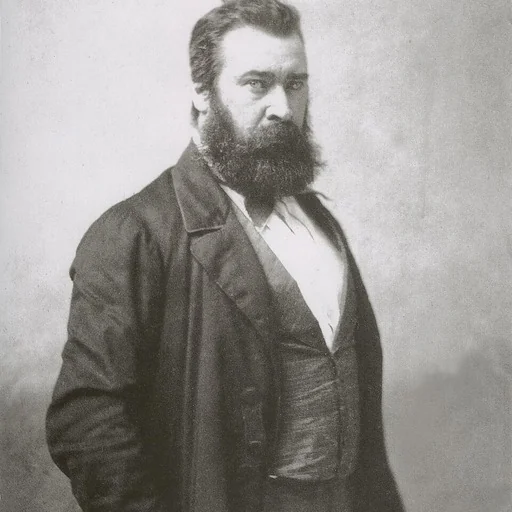
Jean-François Millet (French pronunciation: ; 4 October 1814 – 20 January 1875) was a French painter and one of the founders of the Barbizon school in rural France.