Artwork
Bacchanales
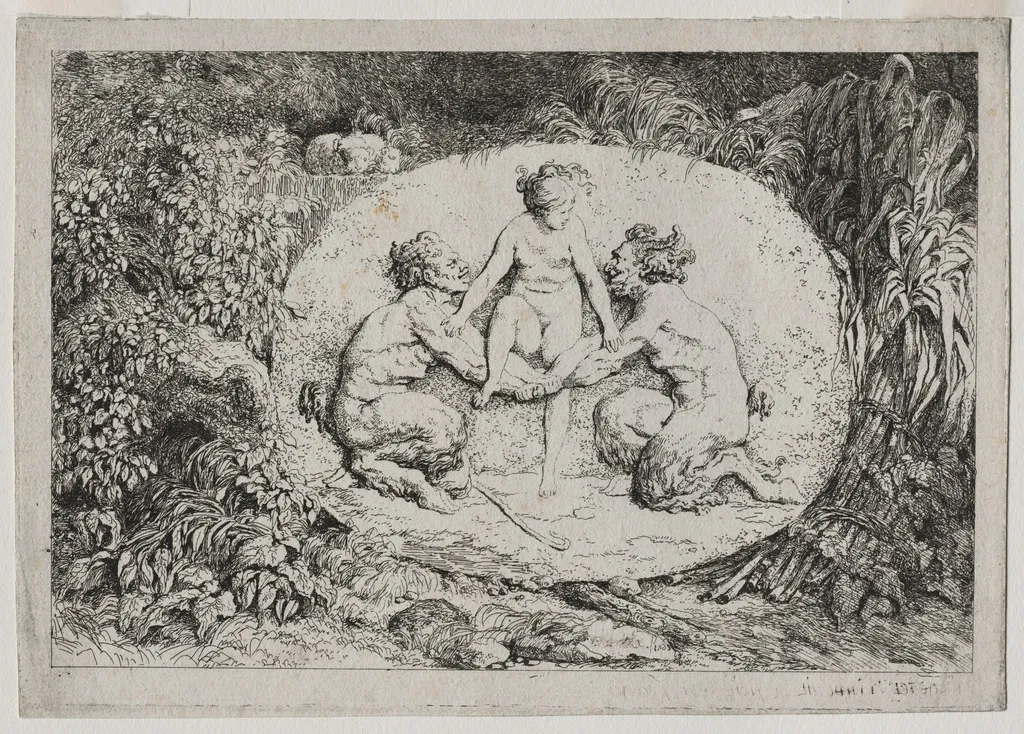
Bacchanales is a print by the Romanticist artist Jean Honoré Fragonard. It dates from 1763 and is held in the collection of the Cleveland Museum of Art.
About this work
Overview
The scenes are framed as if carved into weathered stone reliefs, embedded within dense, natural foliage, blending classical allusion with intimate observation.
Jean-Honoré Fragonard created a suite of four etchings titled Bacchanales shortly after his return to Paris from Italy. These works depict the chaotic, intimate, and often humorous activities of Bacchus’s followers, omitting the god himself. The scenes are framed as if carved into weathered stone reliefs, embedded within dense, natural foliage, blending classical allusion with intimate observation.
Subject & Meaning
The prints focus on the everyday lives of bacchants—dancing, quarreling, nurturing children, and embracing—rather than divine spectacle. By centering human behavior over mythological grandeur, Fragonard transforms ancient ritual into a tender, earthy comedy. The absence of Bacchus invites viewers to contemplate the enduring, unmediated pleasures of communal life, stripped of divine authority.
Technique & Style
Fragonard employed fine, fluid etching lines to suggest the texture of carved stone and the softness of foliage. The figures are arranged in shallow, relief-like compositions, mimicking ancient Roman or Hellenistic fragments. Delicate cross-hatching and subtle tonal gradations create depth without heavy shadow, distinguishing the work from the chiaroscuro of earlier traditions.
History & Provenance
Executed around 1760, the Bacchanales emerged from Fragonard’s exposure to Italian antiquities and contemporary neoclassical design, possibly including Jacques François Joseph Saly’s vase engravings. The prints circulated among collectors and artists in Paris, influencing decorative arts and garden ornamentation. Their intimate scale and thematic focus aligned with the rising taste for private, pastoral fantasy.
Context
In mid-18th-century France, there was a growing fascination with nature as a setting for leisure and emotional expression. Fragonard’s Bacchanales resonated within this cultural shift, offering a secular, human-centered vision of antiquity. Unlike grand historical narratives, these works celebrated informal, spontaneous moments, reflecting broader trends in Rococo aesthetics and landscape design.
Legacy
The etchings contributed to the popularization of mythological themes in domestic and garden decoration, inspiring carved panels, garden statuary, and interior motifs. Their emphasis on naturalism and informal revelry influenced later artists and designers seeking to blend classical references with intimate, lived experience. The series remains a quiet but significant pivot toward personal, secular interpretations of antiquity.
Artist & collection

Artist
Jean-Honoré Fragonard was born on 5 April 1732 in Grasse, the son of a glover, and moved with his family to Paris in 1738.

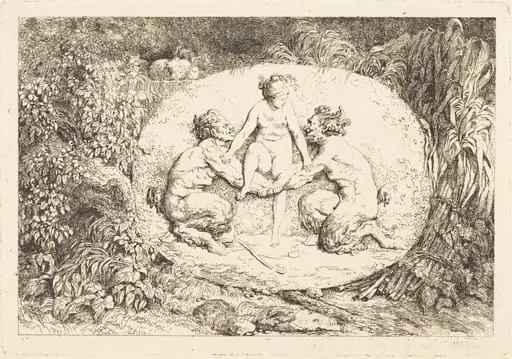 Nymph Supported by Two Satyrs (Nymphe s'asseyant sur les mains de deux satyres)
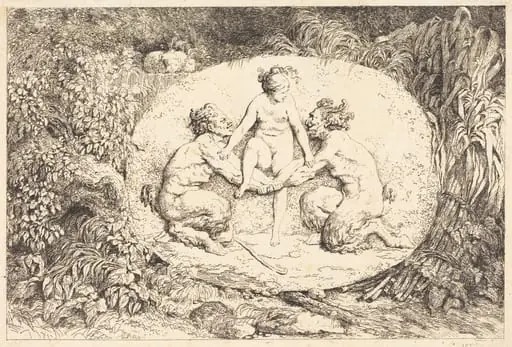 Nymph Supported by Two Satyrs (Nymphe s'asseyant sur les mains de deux satyres)
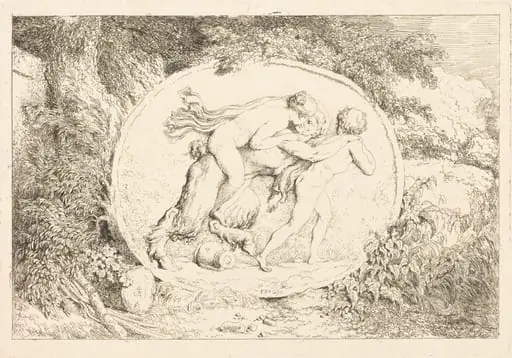 Nymph Astride a Satyr (Jeune fille a califourchon sur un satyre)
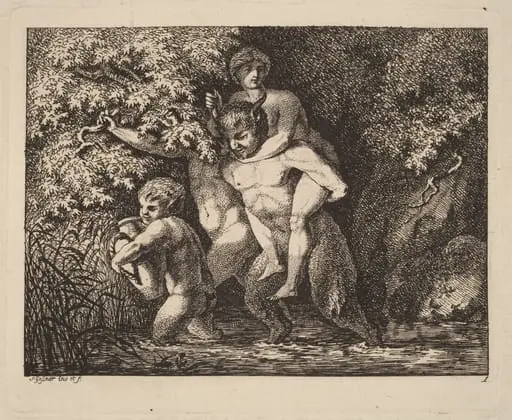 Satyr Carrying a Nymph on His Back
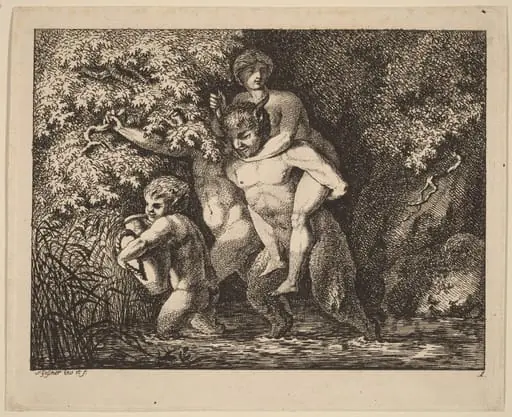 Satyr Carrying a Nymph
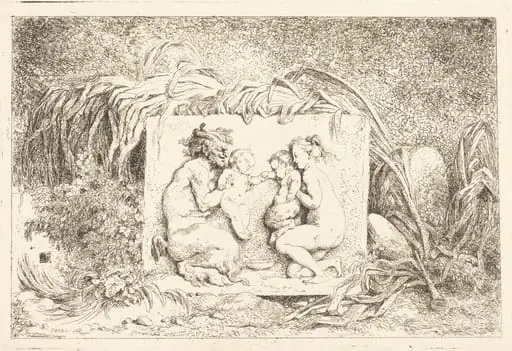 The Satyr's Family (La famille du satyre)
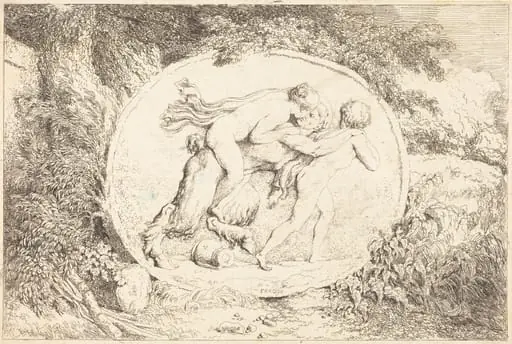 Nymph Astride a Satyr (Jeune fille a califourchon sur un satyre)