Artwork
Bacchanales: The Satyr's Dance
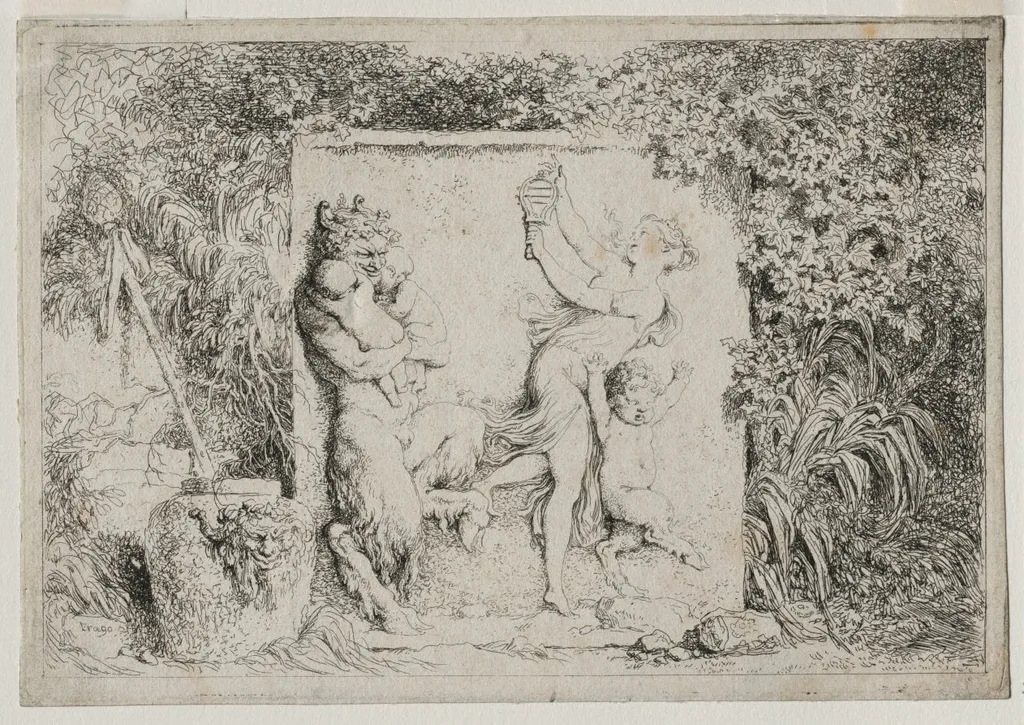
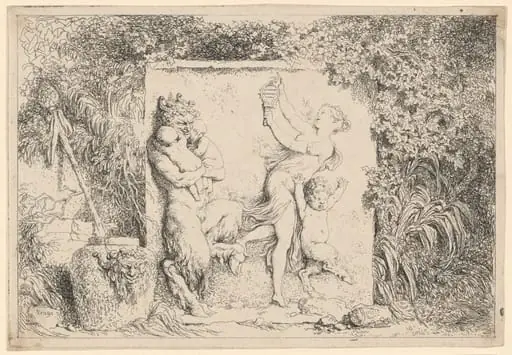
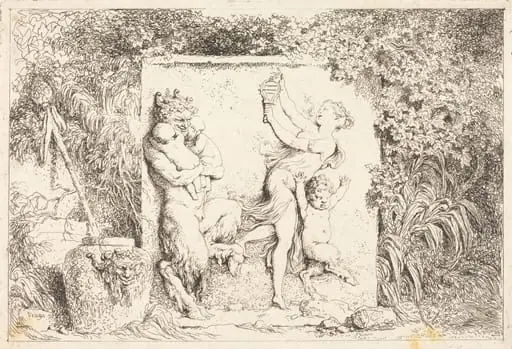
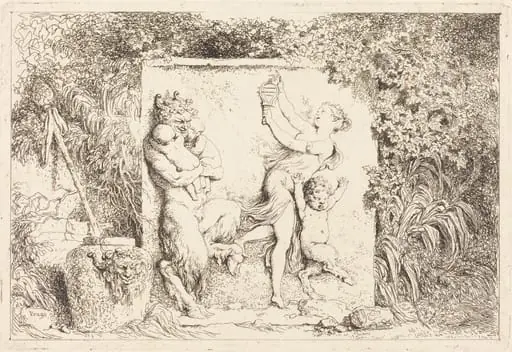
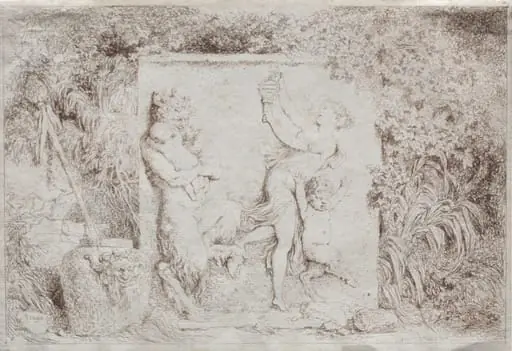
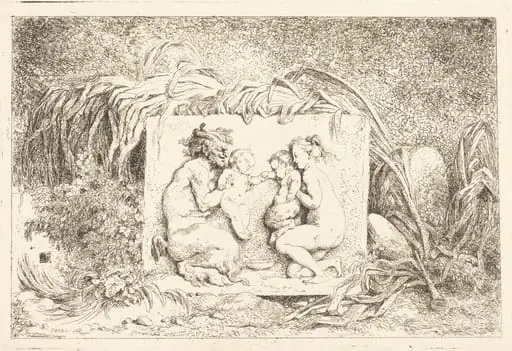
Bacchanales: The Satyr's Dance is a print by the Romanticist artist Jean Honoré Fragonard. It dates from 1763 and is held in the collection of the Cleveland Museum of Art.
About this work
Overview
Jean-Honoré Fragonard created a set of four etchings titled Bacchanales: The Satyr's Dance shortly after his return to Paris from Italy.
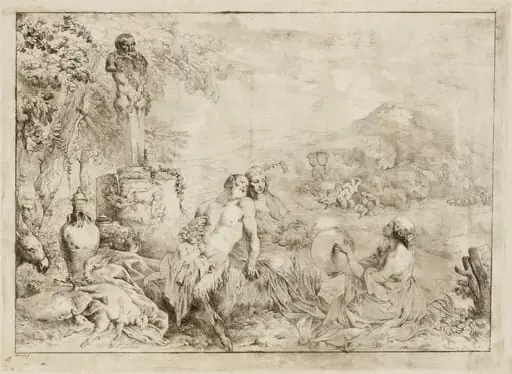
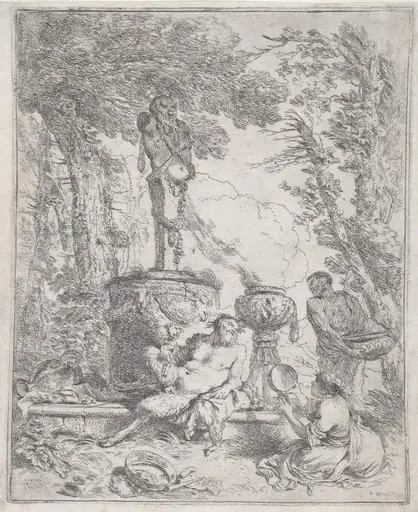
Jean-Honoré Fragonard created a set of four etchings titled Bacchanales: The Satyr's Dance shortly after his return to Paris from Italy. These works reflect his engagement with classical antiquity, particularly Roman sculpture and decorative motifs, but reinterpret them through a distinctly intimate, informal lens. Rather than depicting grand mythological narratives, Fragonard turned his attention to the unguarded moments of Bacchus’s followers, capturing their spontaneity and physicality in a natural setting.
Subject & Meaning
The prints portray a lively, unstructured community of satyrs and bacchantes engaged in dance, revelry, and domestic gestures—drinking, napping, wrestling—without the presence of Bacchus himself. This omission shifts focus from divine authority to human-like, even mundane, interactions among the divine retinue. The scenes suggest a world where mythic beings live with the irregular rhythms of earthly life, emphasizing playfulness, intimacy, and the blur between the sacred and the sensual.
Technique & Style
Fragonard employed loose, fluid etching lines to evoke movement and texture, mimicking the spontaneity of sketching. He used subtle tonal gradations and blurred contours to soften forms, creating a hazy, moonlit atmosphere reminiscent of sfumato. Figures emerge from dense foliage as if carved from stone, arranged like low-relief friezes embedded in the landscape. The technique enhances the sense of organic unity between bodies and environment, dissolving boundaries between flesh and forest.
History & Provenance
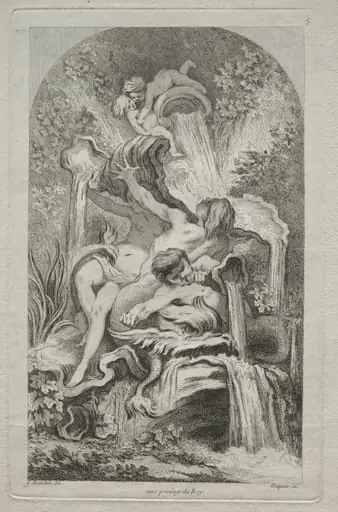
Made around 1760–1765, these prints followed Fragonard’s formative years in Rome, where he studied ancient reliefs and decorative arts. He likely drew inspiration from contemporary sources such as Jacques François Joseph Saly’s vase designs, adapting classical motifs into a more personal, Rococo idiom. The series was not widely published at the time but circulated among collectors and artists, influencing later interpretations of mythological subjects in decorative arts.
Context
In mid-18th-century France, there was a growing fascination with nature as a setting for leisure and fantasy, reflected in garden design and interior decoration. Fragonard’s Bacchanales aligned with this trend, offering a vision of nature not as ordered parkland but as a wild, intimate realm where mythic figures behave with human spontaneity. The prints contributed to a broader cultural shift toward romanticized, sensuous depictions of the natural world in French art.
Legacy
Though not immediately celebrated as major works, Fragonard’s etchings subtly shaped the visual language of French decorative arts. Their emphasis on informal, naturalistic mythological scenes influenced garden ornamentation, porcelain designs, and interior panels throughout the late 1700s. By humanizing myth and dissolving the boundary between art and environment, they prefigured Romantic sensibilities that would emerge in the following century.
Artist & collection

Artist
Jean-Honoré Fragonard was born on 5 April 1732 in Grasse, the son of a glover, and moved with his family to Paris in 1738.