Artwork
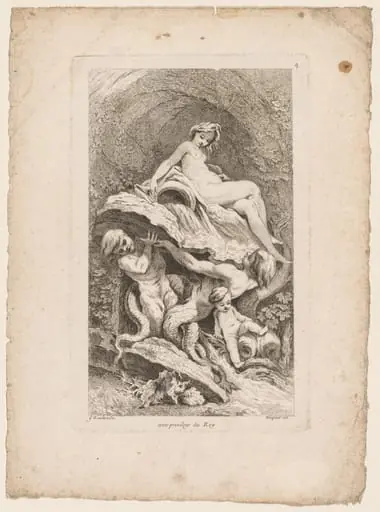
Book of Fountains: No. 5
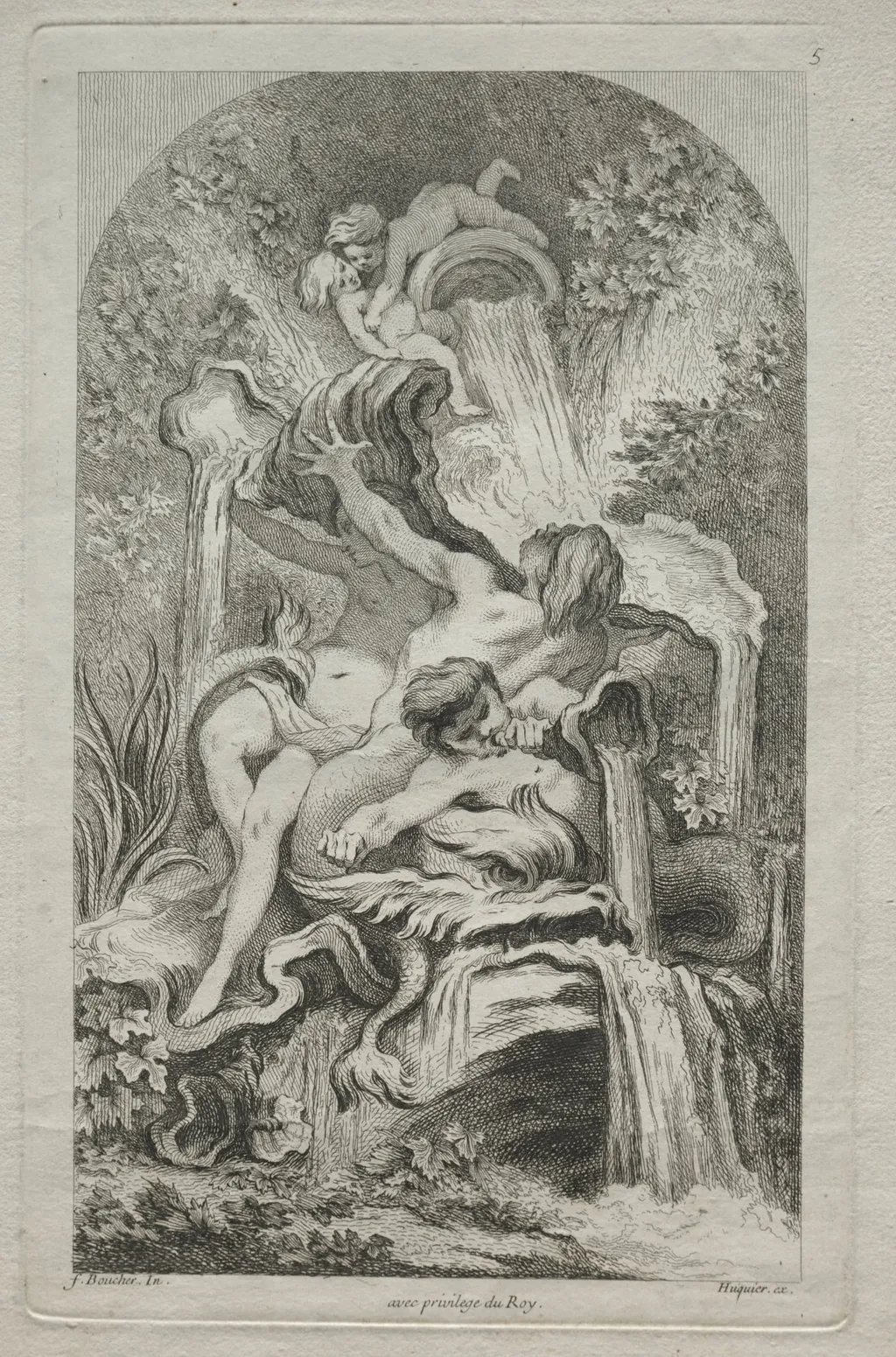
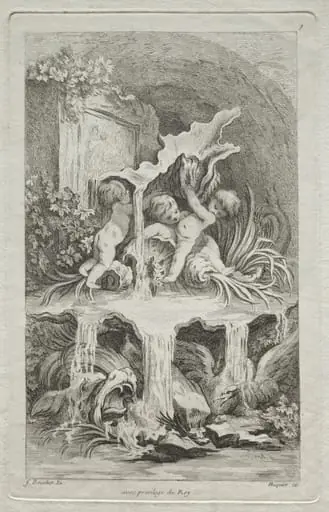
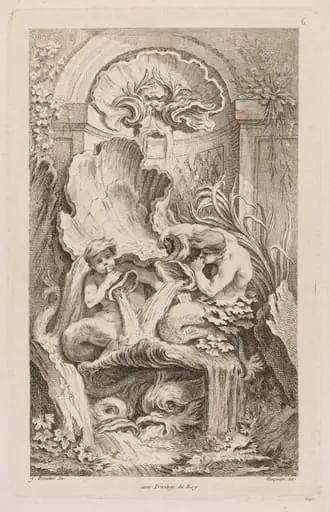
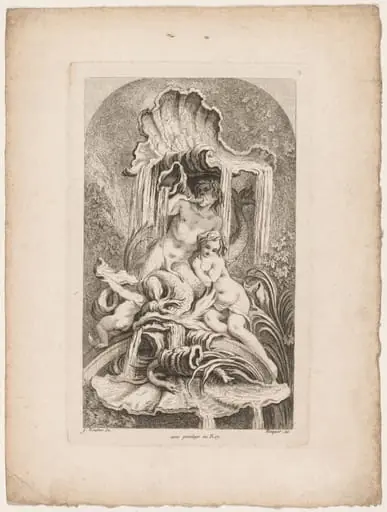
Book of Fountains: No. 5 is a print by the Baroque artist Gabriel Huquier. It dates from 1736 and is held in the collection of the Cleveland Museum of Art. Created circa 1736, this ornamental print depicts an elaborate fountain composed of intertwining shells and stylized seaweed.
About this work
This print shows a fancy fountain shaped like curling shells and seaweed. It looks like something you’d see in a royal garden, all swirly and playful.
The artist made this around 1736. Back then, France loved this light, decorative style called Rococo. It loved curves and shells and made even fountains feel like art.
Check out more Rococo prints by Gabriel Huquier at the Cleveland Museum of Art.
Overview
Created circa 1736, this ornamental print depicts an elaborate fountain composed of intertwining shells and stylized seaweed. The composition is rendered in the light, decorative manner typical of mid‑eighteenth‑century French design, emphasizing fluid lines and a sense of playful elegance.
Subject & Meaning
The image presents a fanciful water feature that could belong to a royal garden, its forms suggesting both natural growth and ornamental architecture. By arranging shells and vegetal motifs into a cohesive whole, the work celebrates the Rococo fascination with nature transformed into decorative art.
Technique & Style
Executed as a print, the design relies on delicate line work to convey the curling curves and scalloped edges of the fountain. The visual vocabulary—shells, scrolls, and plant‑like forms—reflects the Rococo’s rocaille aesthetic, a style named after the French term for shell and characterized by lightness and asymmetrical movement.
History & Provenance
The print is attributed to François Boucher, a leading French artist known for his prolific production of ornamental designs. Boucher’s prints were widely circulated among craftsmen and patrons, influencing decorative projects across Europe during the height of the Rococo period.
Context
In the 1730s France, the Rococo style dominated interior and garden decoration, favoring whimsical, curvilinear motifs over the stricter classicism of earlier eras. This print exemplifies how designers applied the style’s principles to functional objects such as fountains, turning utilitarian structures into artistic statements.
Legacy
Boucher’s ornamental prints, including this fountain design, served as reference material for later decorative arts and continue to be studied as exemplars of Rococo visual language. Their influence can be traced in subsequent garden architecture and in the work of contemporaries such as Gabriel Huquier.
Artist & collection

Artist
Gabriel Huquier (1695–1772) was an entrepreneurial French drawer (artist), engraver, printmaker, publisher, and art collector, who became a pivotal figure in the production of French 18th-century ornamental etchings and engravings

 Book of Fountains: No. 3
 The Goddess, Diana on the Clouds
 The Senses: Touch (after Boucher)
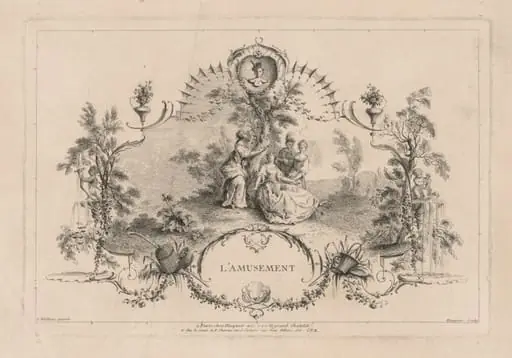 Amusement, Arabesque
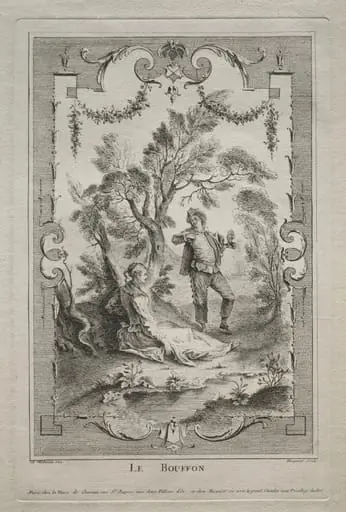 The Buffoon, Arabesque
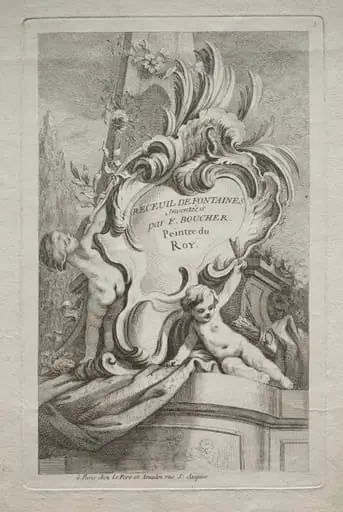 No. 1: Title Page
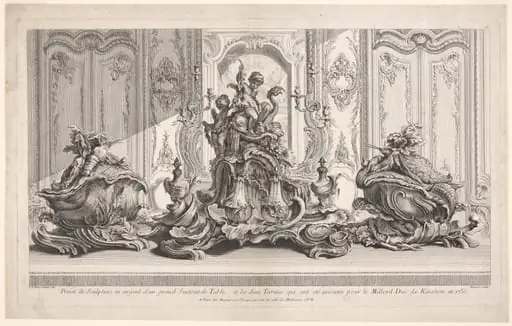 Silver Sculptural Project for a Large Centerpiece and Two Tureens Which Have Been Executed for His Lordship the Duke of Kingston, plate 115 from Works of Juste-Aurèle Meissonier (Oeuvre de Juste-Aurèle Meissonier)
 Book of Fountains: No. 4