Artwork
Venus and Cupid (Day)
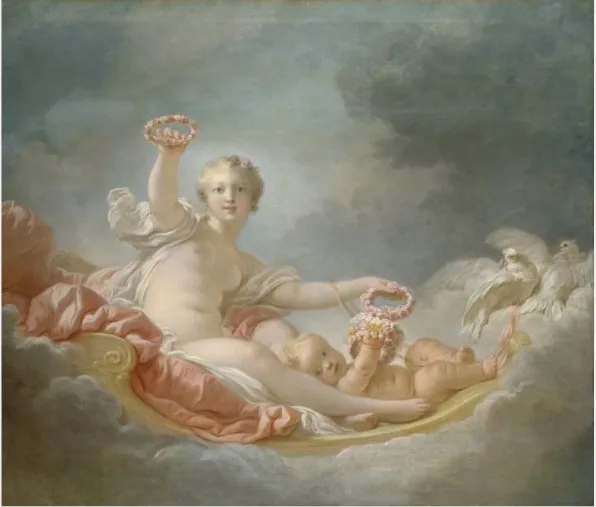
Venus and Cupid (Day) is an oil painting by the Rococo painting artist Jean Honoré Fragonard. It dates from 1755 and is held in the collection of the National Gallery of Ireland. Painted in 1755 by Jean-Honoré Fragonard, this oil-on-canvas work presents a mythological scene centered on Venus and two infants.
About this work
Overview
Painted in 1755 by Jean-Honoré Fragonard, this oil-on-canvas work presents a mythological scene centered on Venus and two infants. It resides in the National Gallery of Ireland. The composition unfolds against a backdrop of soft, drifting clouds, with muted pastel tones creating a gentle, ethereal mood. The figures are arranged in a tranquil, floating composition, emphasizing serenity over drama.
Subject & Meaning
Two infants, likely Cupid and a companion, interact with flowers and the wreath, suggesting innocence and the playful nature of desire.
The central figure is Venus, goddess of love, depicted with a wreath held aloft, symbolizing beauty and fertility. Two infants, likely Cupid and a companion, interact with flowers and the wreath, suggesting innocence and the playful nature of desire. The flying birds may allude to the soul or divine messengers. The scene evokes an idealized vision of love’s gentle, celestial realm rather than a narrative moment.
Technique & Style
Fragonard employs delicate brushwork and translucent layers to render the figures and clouds with a luminous softness. The palette favors pale pinks, blues, and creams, avoiding strong contrasts. Forms are loosely defined, enhancing the dreamlike quality. The composition’s upward drift and lack of terrestrial grounding reflect Rococo tendencies toward fantasy and lightness over structural rigor.
History & Provenance
Created during Fragonard’s early career, the painting likely served as a private commission for a collector drawn to mythological themes. It entered the National Gallery of Ireland’s collection in the 20th century, though its earlier ownership history remains partially undocumented. Its survival in good condition reflects careful preservation through centuries of changing tastes.
Context
Painted in mid-18th-century France, the work aligns with the Rococo era’s preference for intimate, sensuous subjects over grand historical or religious narratives. While mythological themes were common, Fragonard’s focus on tender, airborne intimacy distinguishes it from more theatrical treatments by contemporaries. The painting reflects aristocratic tastes for escapism and refined beauty.
Legacy
Though not among Fragonard’s most widely known works, Venus and Cupid (Day) exemplifies his skill in evoking mood through color and composition. It contributes to understanding the breadth of Rococo painting beyond grand fête scenes, highlighting a quieter, more personal engagement with classical myth. The painting remains a quiet testament to 18th-century ideals of harmony and delicate fantasy.
Artist & collection

Artist
Jean-Honoré Fragonard was born on 5 April 1732 in Grasse, the son of a glover, and moved with his family to Paris in 1738.


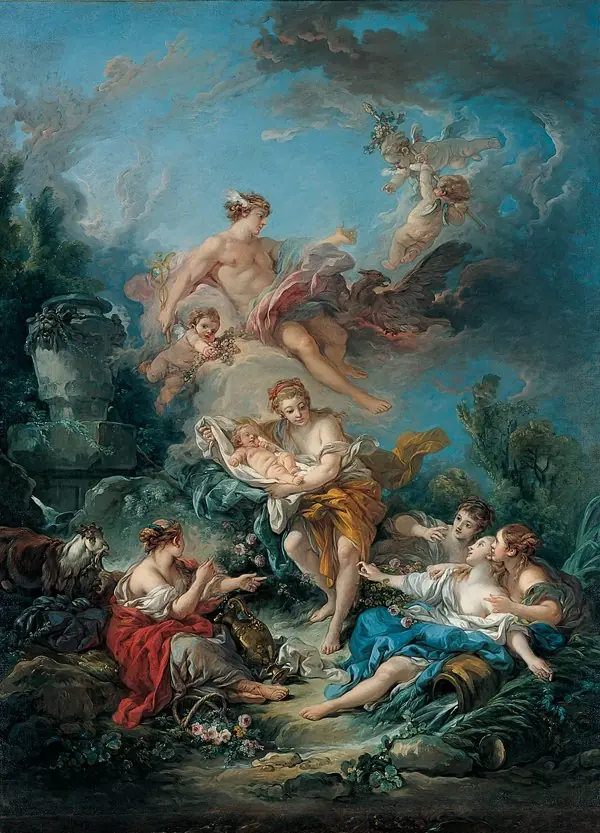 Mercury Confiding the Infant Bacchus to the Nymphs of Nysa
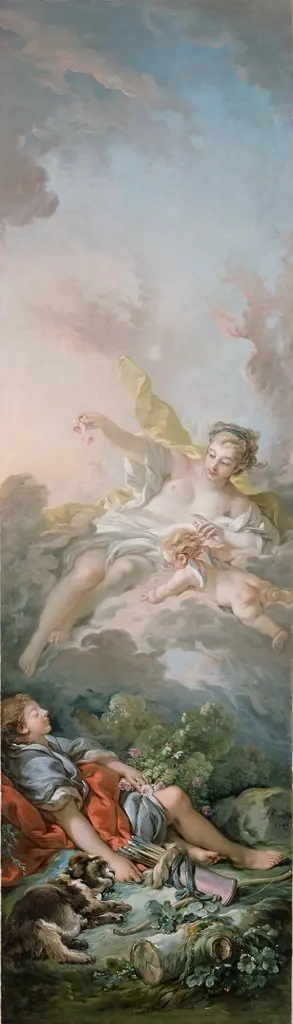 Aurora and Cephalus
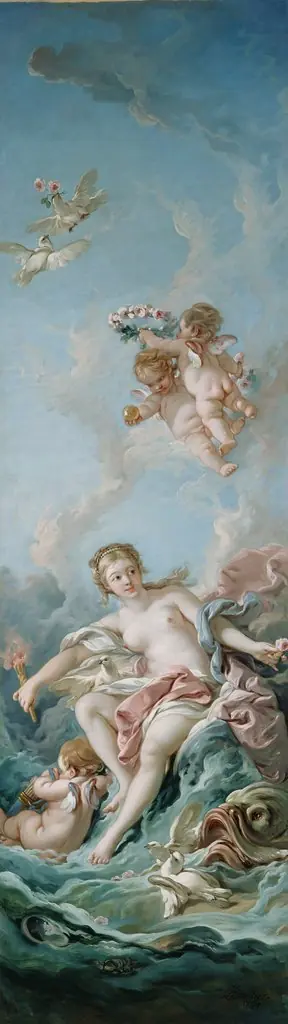 Venus on the Waves
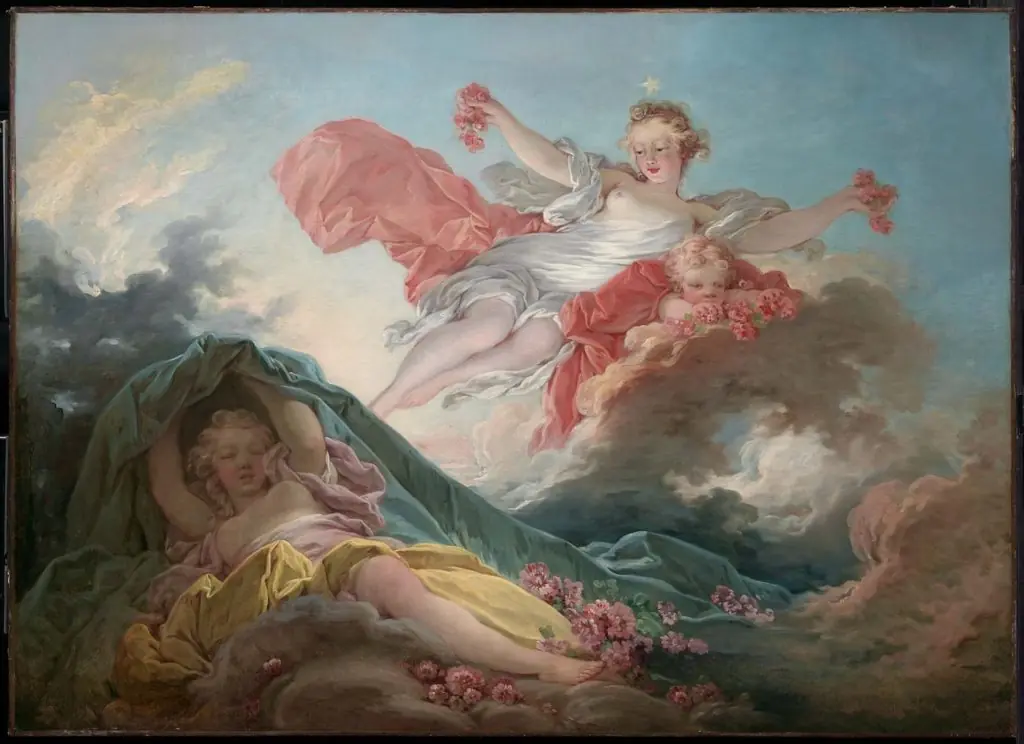 Aurora Triumphing over Night
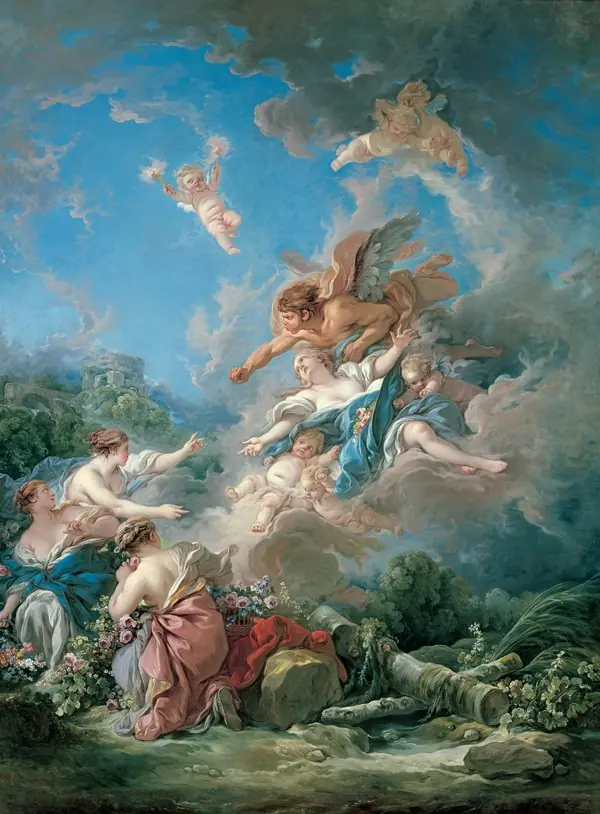 Boreas Abducting Oreithyia
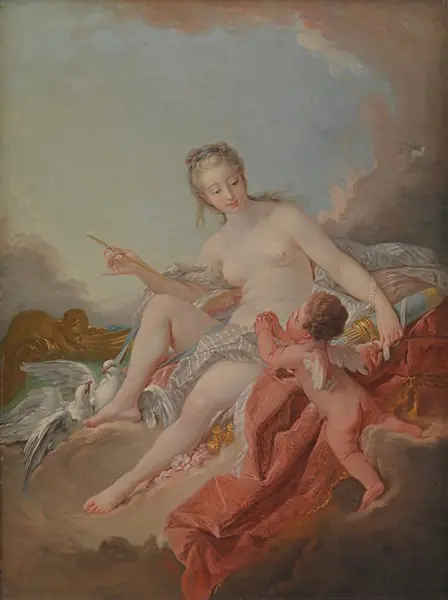 Venus og Amor
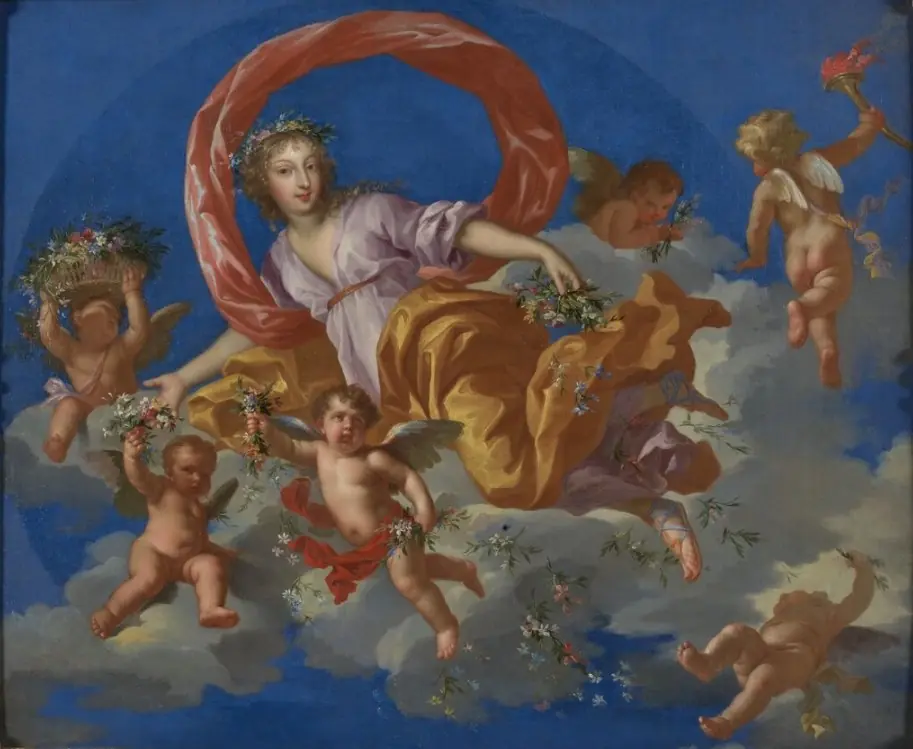 Portrait historié d'Henriette d'Angleterre, duchesse d'Orléans (1644-1670)
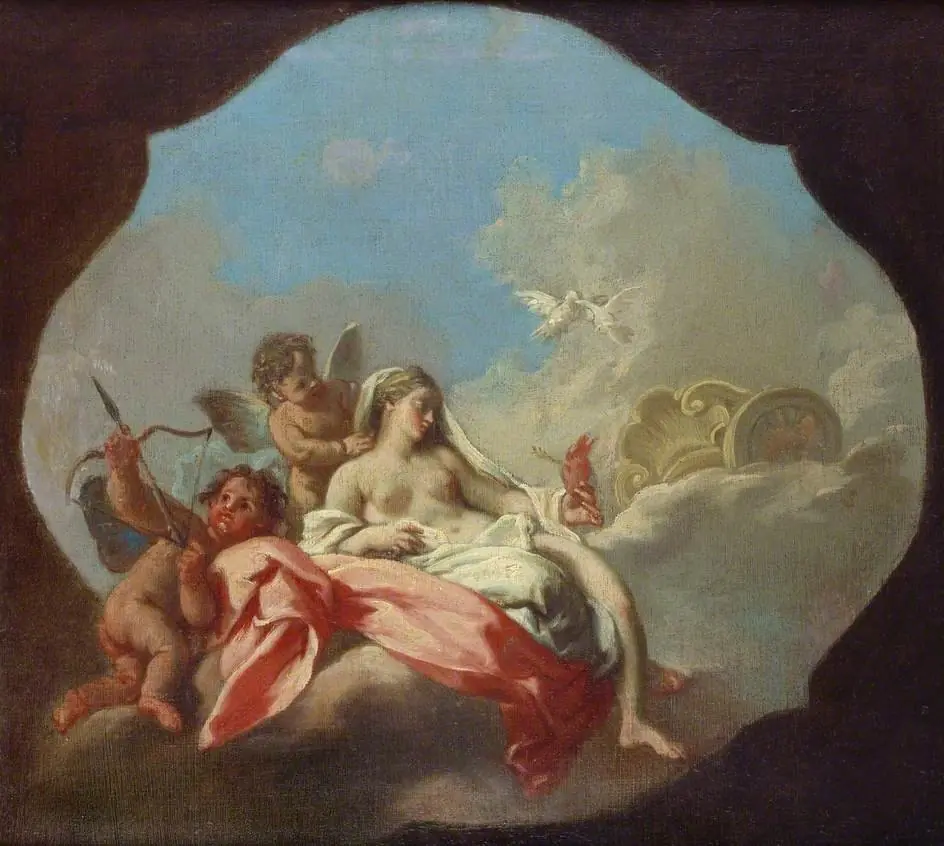 Venus and Cupid with a Putto in the Clouds
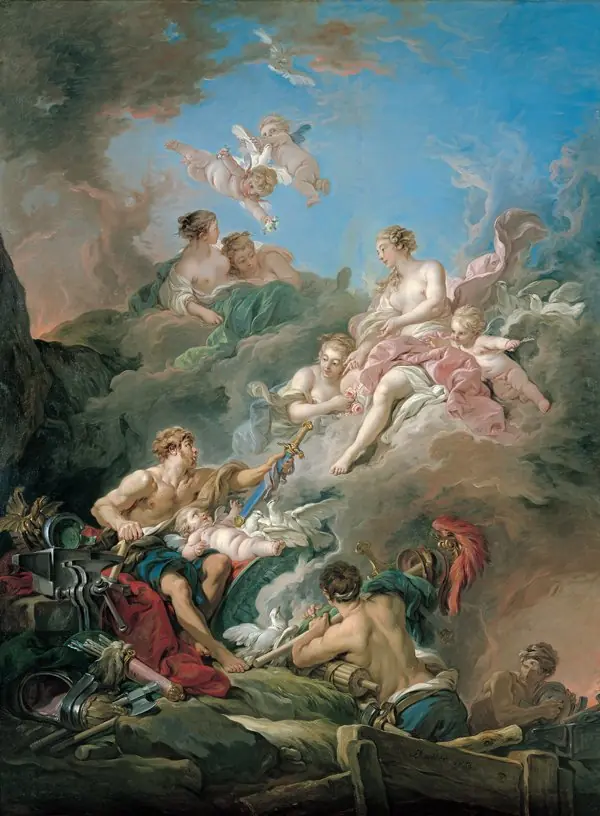 Venus at Vulcan's Forge
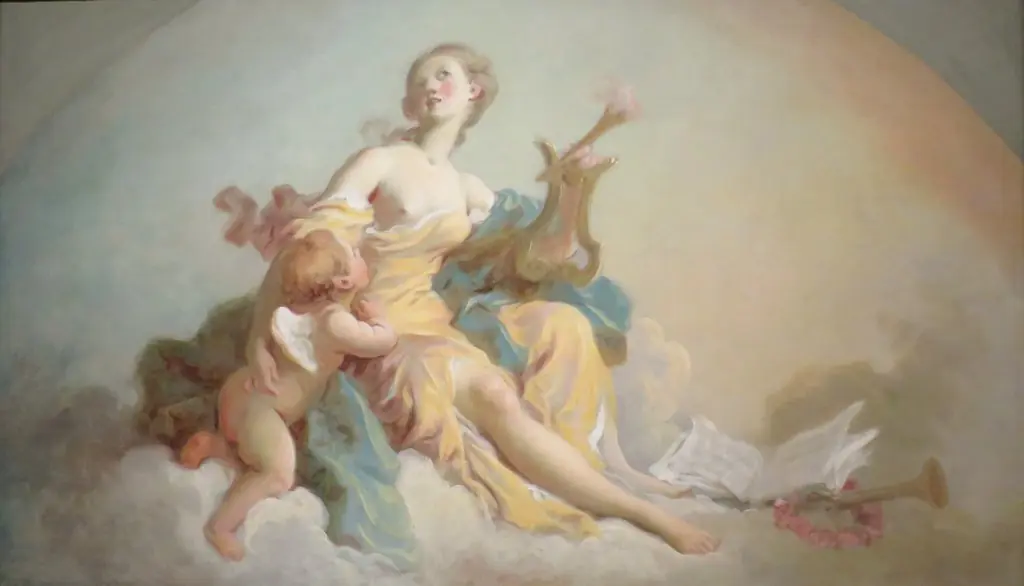 Music
Music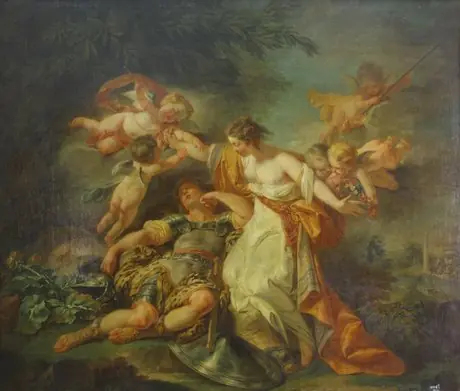 Rinaldo and Armida
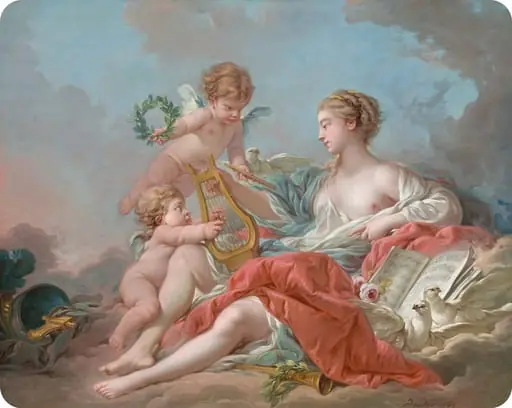 Allegory of Music