Artwork
King Clothar I of the Franks
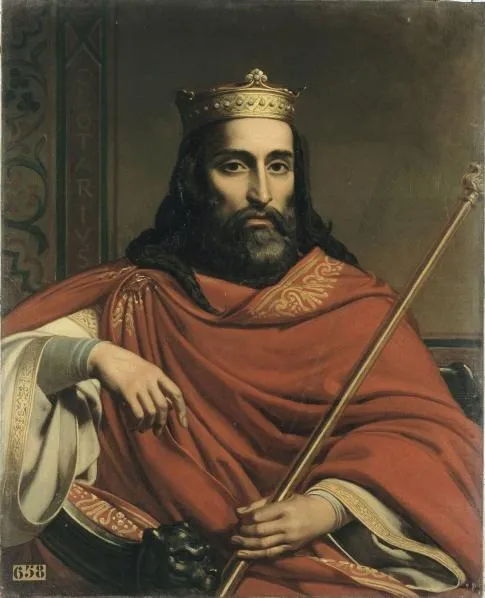
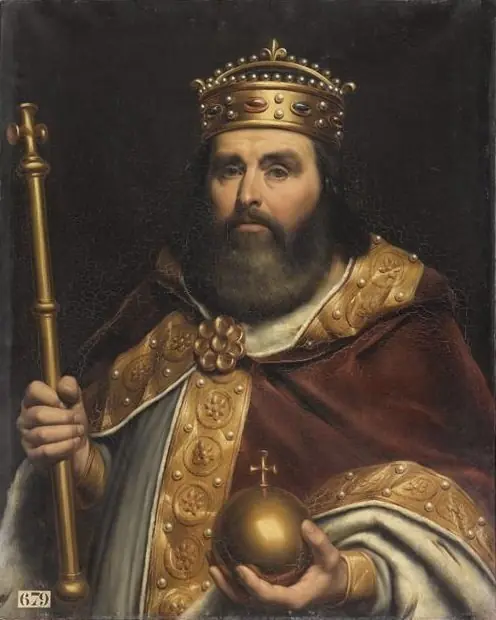
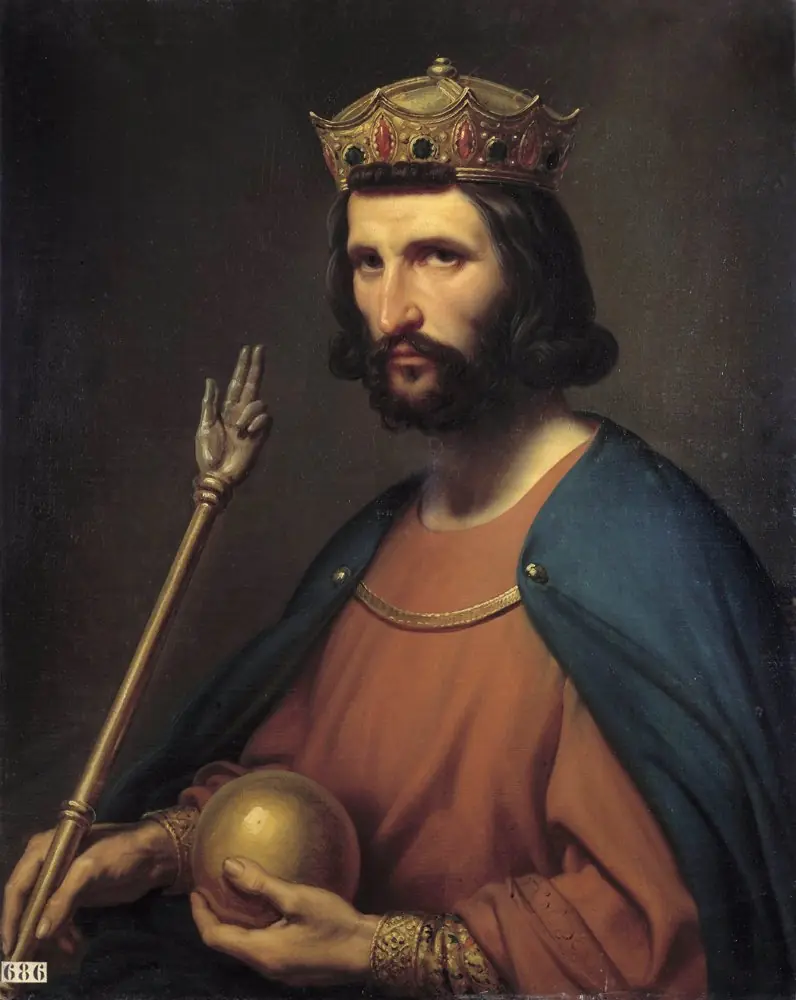
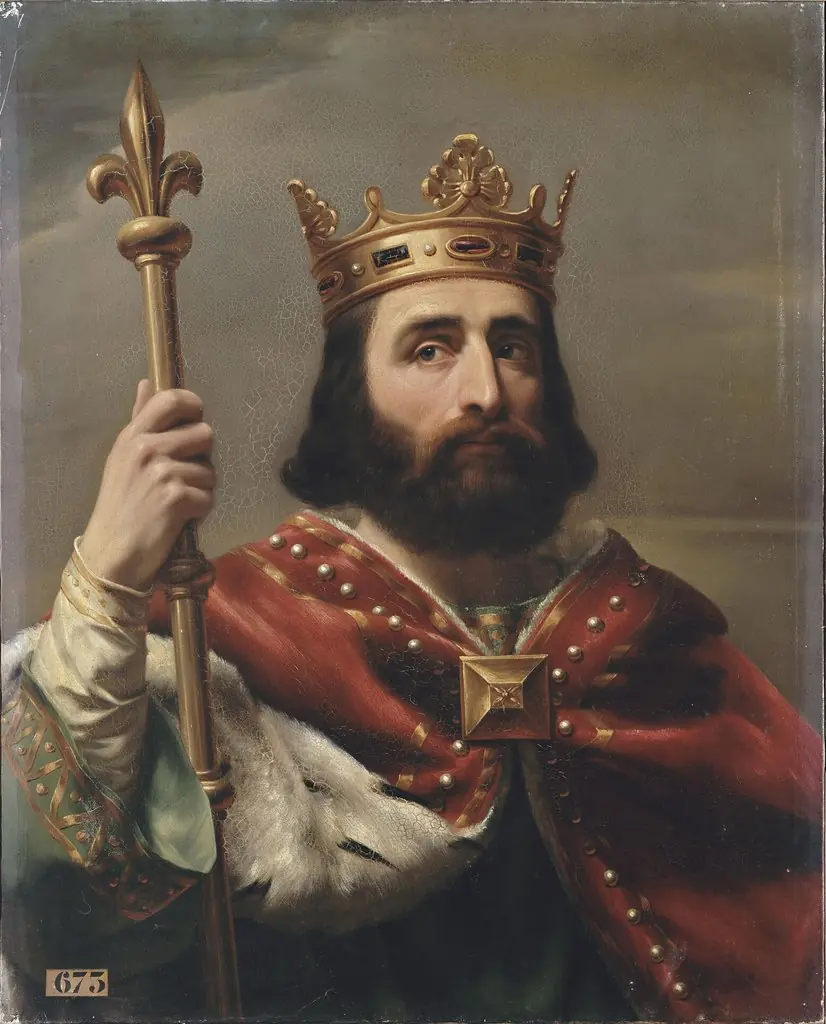
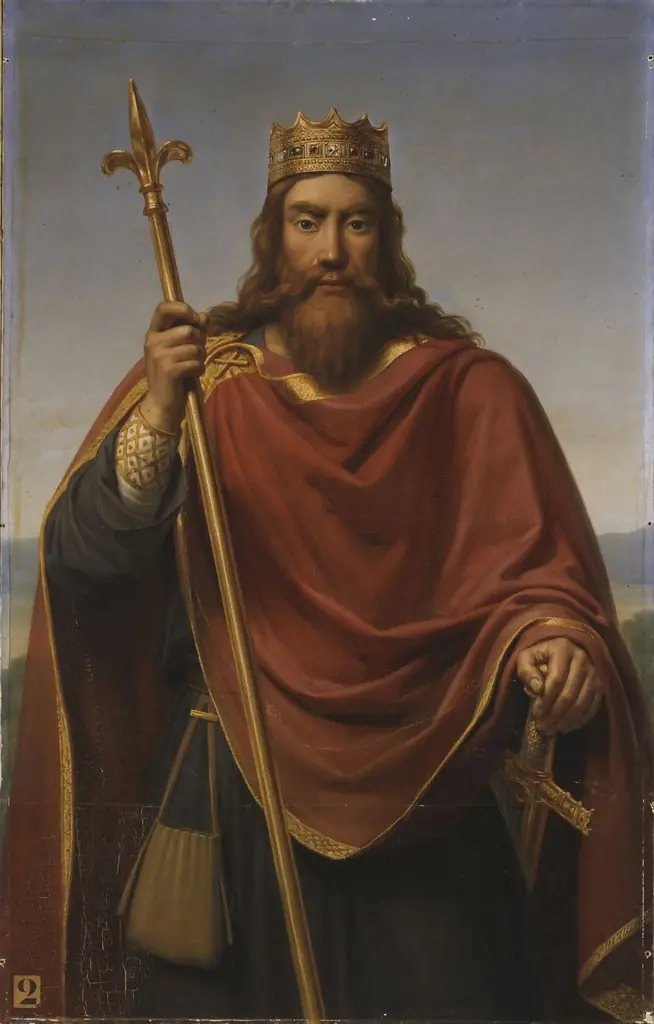
King Clothar I of the Franks is an oil painting by Jean Louis Bezard. It dates from 1838 and is held in the collection of the Palace of Versailles. Jean‑Louis Bezard’s 1838 oil on canvas portrays the Merovingian monarch Chlothar I seated on a chair.
About this work
Overview
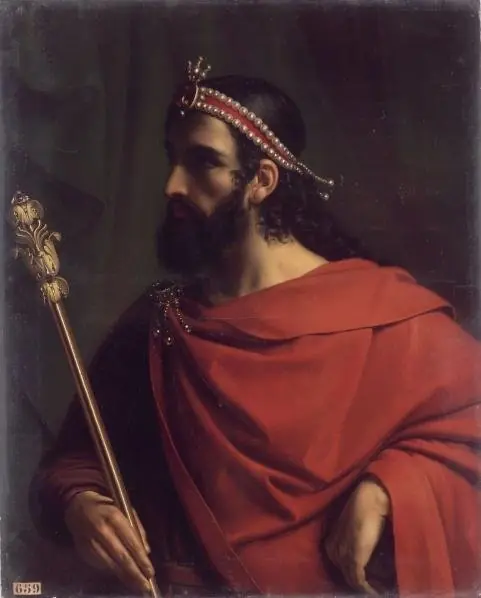
Jean‑Louis Bezard’s 1838 oil on canvas portrays the Merovingian monarch Chlothar I seated on a chair. The figure is rendered in a solemn pose, his dark hair and beard framing a dignified expression. A richly embroidered red robe, a gold‑filigreed crown, and a scepter in his right hand identify him as a ruler, while the dark, minimally detailed backdrop concentrates attention on his presence.
Subject & Meaning
The work presents Chlothar I, who united the Frankish kingdoms in the mid‑6th century, as a symbol of royal authority and continuity. By emphasizing regal regalia and a contemplative demeanor, Bezard underscores the monarch’s political legitimacy and the weight of his historical legacy, inviting viewers to reflect on the consolidation of early medieval power.
Technique & Style
Executed in oil, the painting employs a limited palette dominated by deep reds, golds, and somber shadows. Bezard’s brushwork balances fine detail—evident in the intricate gold motifs of the robe and crown—with broader, softer modeling of the surrounding darkness, creating a contrast that heightens the figure’s three‑dimensionality and solemnity.
History & Provenance
Completed in 1838, the canvas entered the collection of the Palace of Versailles, where it remains on display. Its inclusion in the royal museum aligns with 19th‑century French interest in national history, situating the portrait among other works that commemorate early French monarchs.
Context
The painting reflects the Romantic era’s fascination with medieval subjects and the revival of national identity in post‑Napoleonic France. Bezard’s choice of a historic king as a subject mirrors contemporary efforts to link modern France with its early dynastic roots, using historical portraiture as a means of cultural affirmation.
Artist & collection