Artwork
Untitled
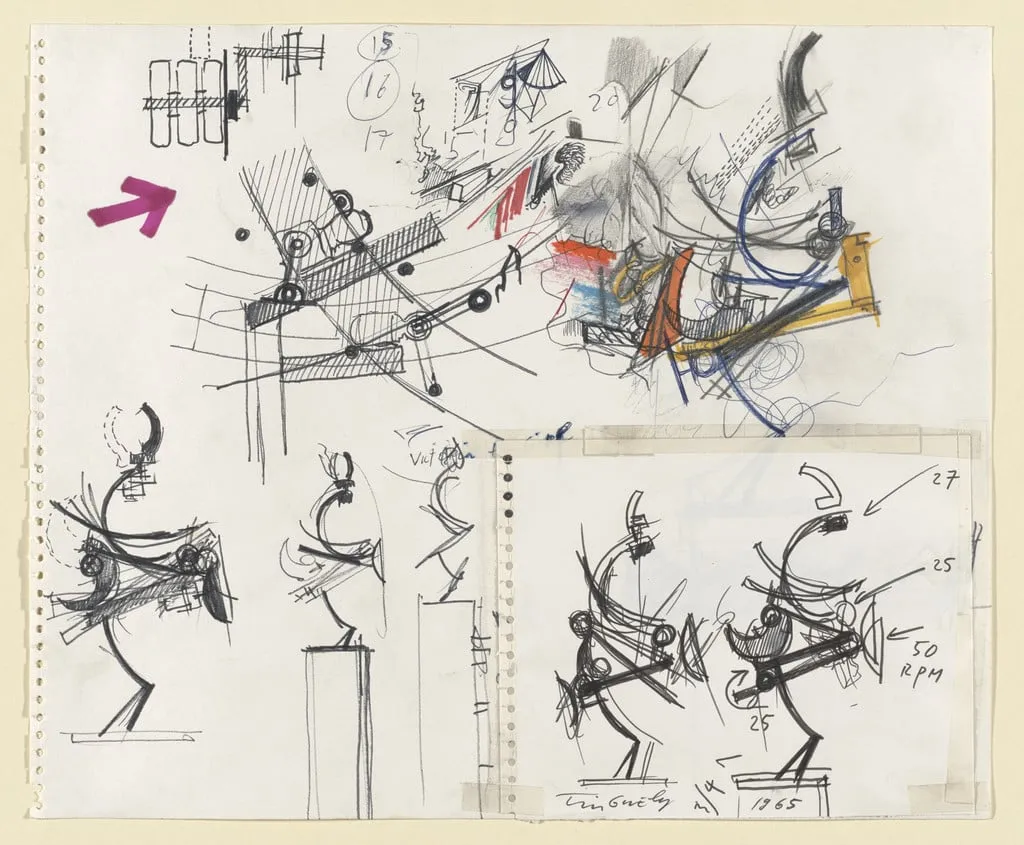
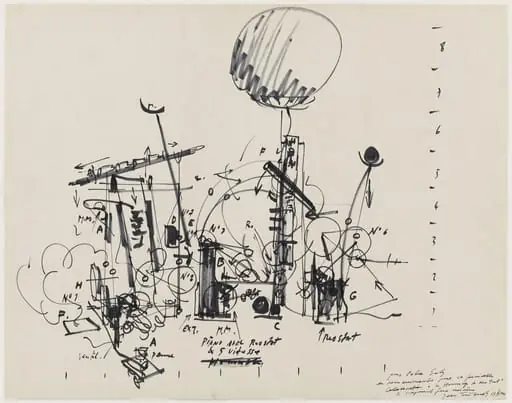
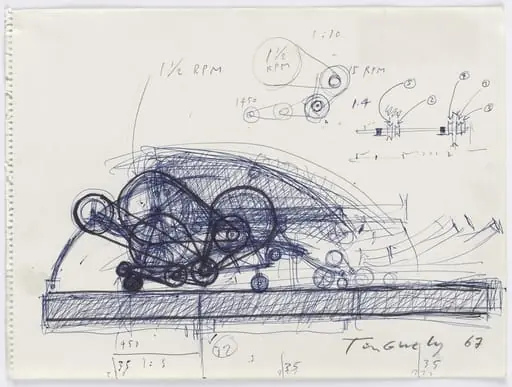
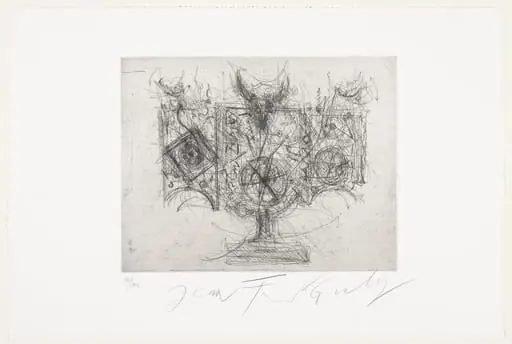
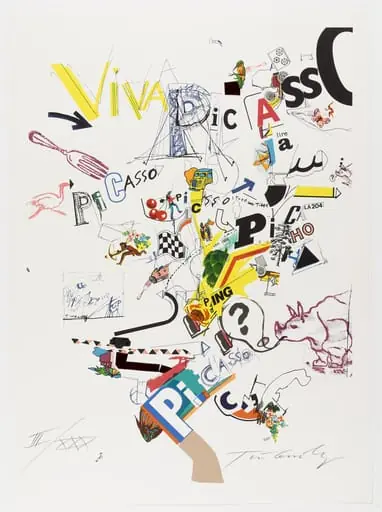
Untitled is a graphite drawing by Jean Tinguely. It dates from 1965 and is held in the collection of the Museum of Modern Art.
About this work
Overview
Created in 1965, this drawing by Jean Tinguely combines crayon, pencil, felt-tip, ballpoint, and tape on paper.
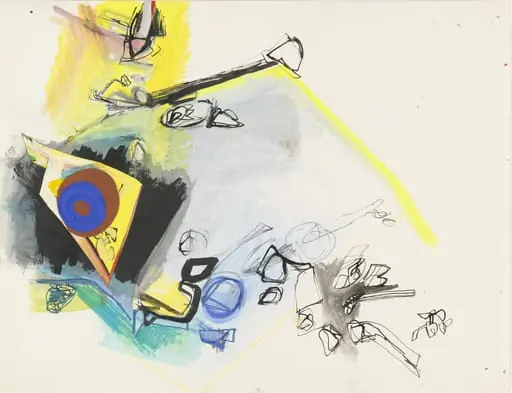
Created in 1965, this drawing by Jean Tinguely combines crayon, pencil, felt-tip, ballpoint, and tape on paper. Its fragmented composition reflects a spontaneous, almost improvisational approach. The surface is patched with taped seams, suggesting urgency or reuse. The work resists formal structure, instead embracing disorder as a deliberate aesthetic choice, aligning with Tinguely’s broader interest in motion and mechanical chaos.
Subject & Meaning
The drawing evokes mechanical systems through abstracted forms—gears, wheels, and arrows suggest machinery in motion. Scattered notations like '50 RPM' imply velocity or operational rhythm. Human or robotic figures at the base, rendered in hurried strokes, blur the line between organism and machine. The piece does not depict a specific device but rather the energy and confusion of industrial thought, reflecting Tinguely’s fascination with automation’s absurdity.
Technique & Style
Tinguely layered multiple drawing tools to create texture and contrast: sharp lines from ballpoint, bold strokes from felt-tip, and soft smudges from crayon. Bright hues—pink, blue, yellow—interrupt the white ground, heightening visual tension. The absence of clean outlines and the presence of overlapping, erasure-like marks convey immediacy. Tape, used to join paper fragments, becomes part of the composition, emphasizing the work’s makeshift nature.
History & Provenance
The drawing entered The Museum of Modern Art’s collection as part of its ongoing documentation of postwar experimental art. It was likely produced during a period when Tinguely was deeply engaged with kinetic sculpture and performance, using drawing as a rapid means to explore mechanical ideas. Its informal materials and construction suggest it was a working sketch, not a finished piece, yet it was preserved for its conceptual value.
Context
Made in the mid-1960s, the work reflects a cultural moment fascinated by machines, automation, and the collapse of traditional craftsmanship. Tinguely’s drawings often paralleled his sculptural projects, serving as visual diaries for his mechanical fantasies. In this context, the chaotic marks echo critiques of industrial progress, aligning with broader European avant-garde movements that questioned rationality and order.
Legacy
This drawing exemplifies how Tinguely used informal media to challenge distinctions between art and engineering. Its raw, unpolished quality influenced later generations of artists who embraced process over polish. While not widely exhibited, it remains a key example of how sketching functioned as a conceptual tool in his practice, bridging the gap between idea and machine in postwar art.
Artist & collection

Artist
Jean Tinguely was a Swiss sculptor best known for his kinetic art sculptural machines that extended the Dada tradition into the later part of the 20th century.