Artwork
An Aqueduct Near a Fortress
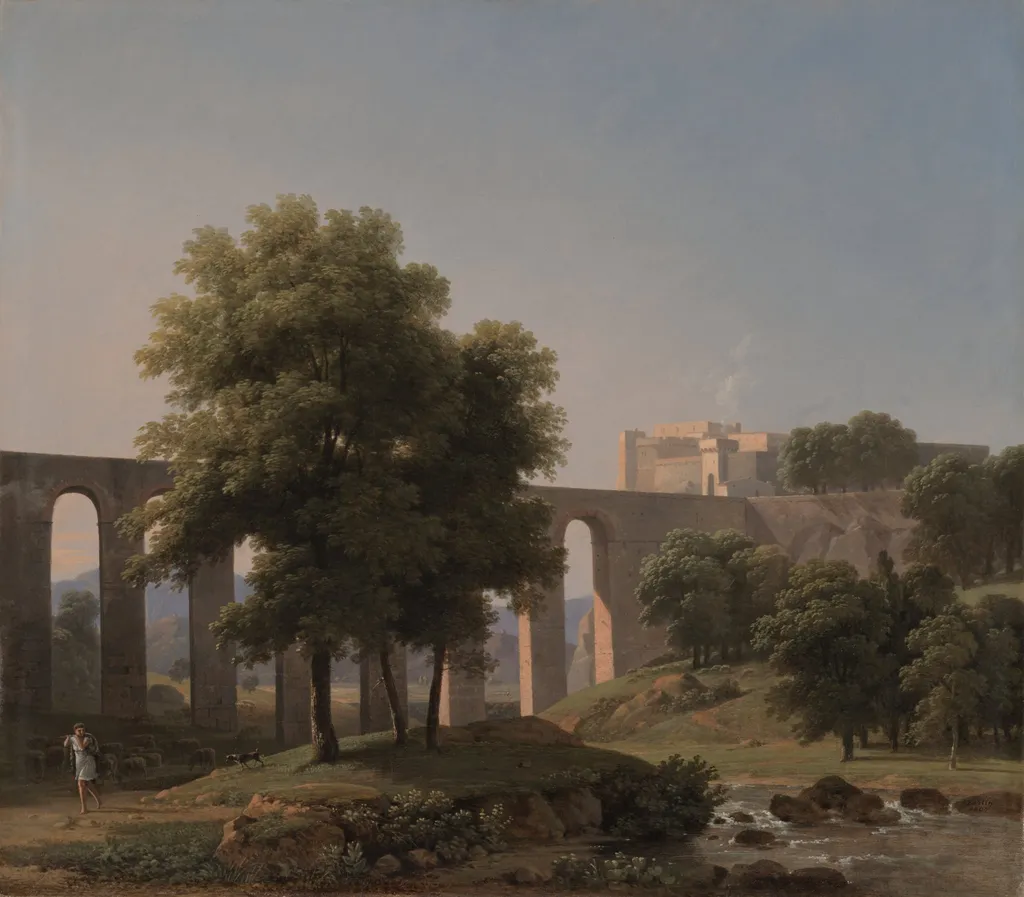
An Aqueduct Near a Fortress is an unspecified painting by the French Romanticist artist Jean-Victor Bertin. It dates from 1807 and is held in the collection of the Cleveland Museum of Art.
About this work
Look up Jean-Victor Bertin (French, 1767–1842) to see more of his dreamy ruins.
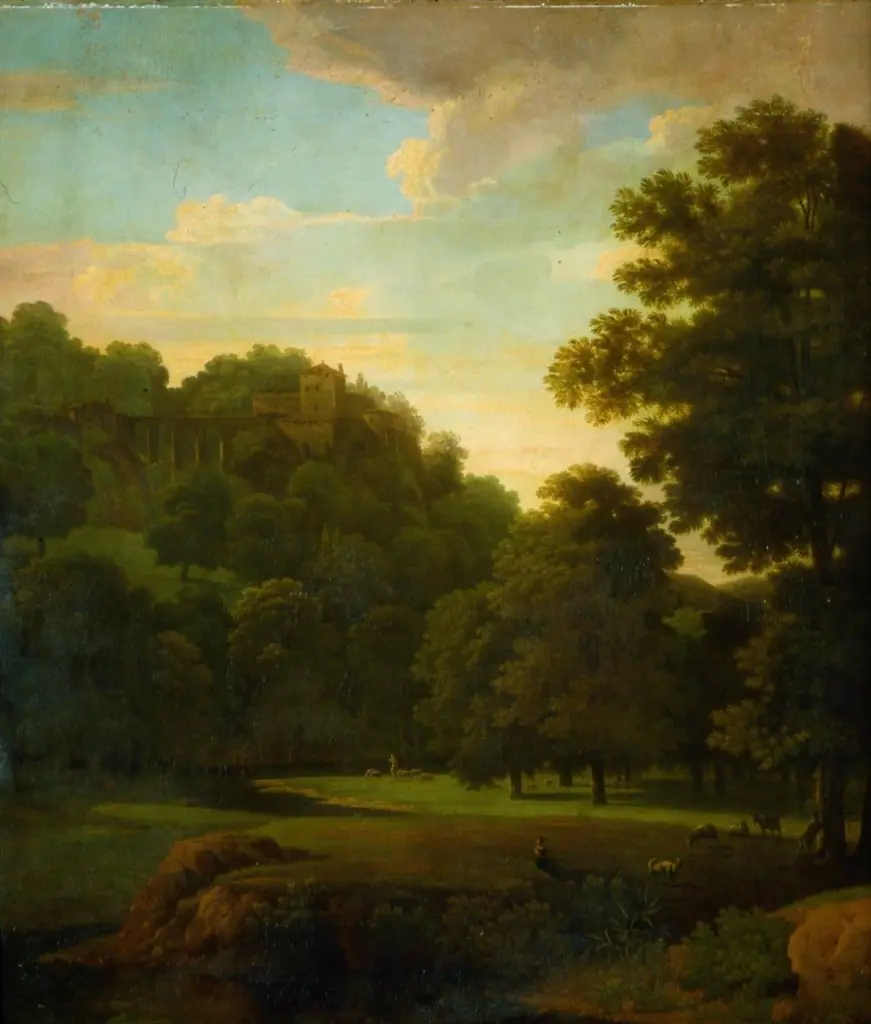
You see an old stone aqueduct arching over a quiet river. A fortress sits on the hill behind it, half in shadow. The light is soft, almost gray, like late afternoon.
This isn’t a real place—Bertin made it up. Artists back then loved fancy ruins and arches. The fortress looks solid, but the aqueduct feels light, like it’s floating.
Look up Jean-Victor Bertin (French, 1767–1842) to see more of his dreamy ruins.
Overview
The canvas presents a solitary stone aqueduct spanning a tranquil river, its arches rising against a muted sky that suggests late‑afternoon light. Behind the structure, a hill supports a partially shadowed fortress, its solid mass contrasting with the seemingly weightless aqueduct. The composition balances architectural solidity with atmospheric softness, creating a scene that feels both real and imagined.
Subject & Meaning
The work juxtaposes two types of monumental architecture: a functional Roman‑style aqueduct and a defensive fortress. This pairing reflects the early‑19th‑century fascination with ruins and the romantic ideal of nature reclaiming human constructions. The aqueduct’s airy presence may symbolize the fleeting nature of engineering achievements, while the fortress’s grounded form evokes enduring power.
Technique & Style
Executed in a restrained palette of grays and earth tones, the painting employs delicate chiaroscuro to model the arches and the fortress’s mass. Soft, diffused lighting reduces contrasts, lending the scene a dreamlike quality. Bertin’s brushwork delineates architectural detail without overt texture, emphasizing the overall harmony of the imagined landscape.
History & Provenance
Created by French landscape painter Jean‑Victor Bertin (1767–1842), the piece belongs to a period when the artist frequently incorporated imagined ruins into his canvases. While some of his aqueduct scenes derive from direct observation, this particular view is a product of invention, illustrating Bertin’s interest in constructing idealized, picturesque settings for his audience.
Own this work as a print
Artist & collection
Artist
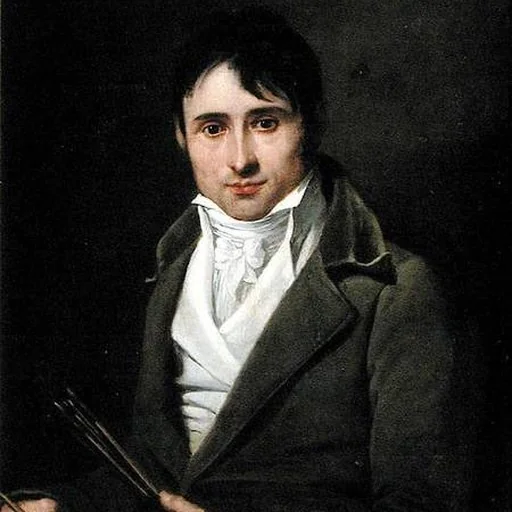
Jean-Victor Bertin (20 March 1767 – 11 June 1842) was a French painter of historical landscapes, inspired by Italy and known for the minute detail of his classical style.


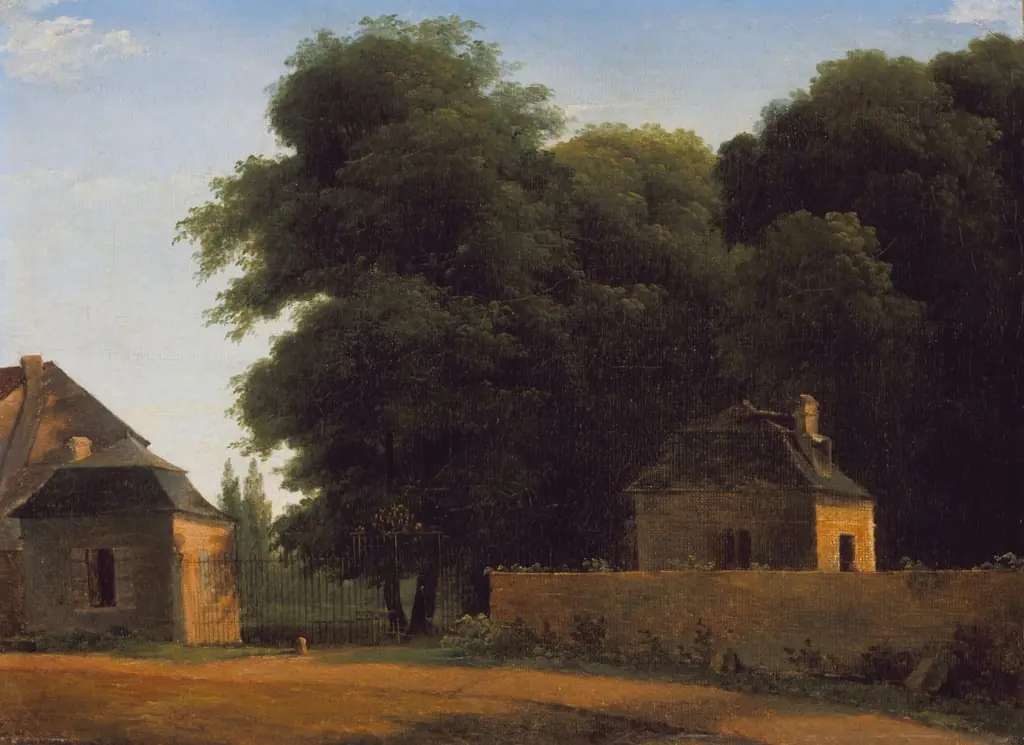
 De golf van Napels met op de achtergrond het eiland Ischia
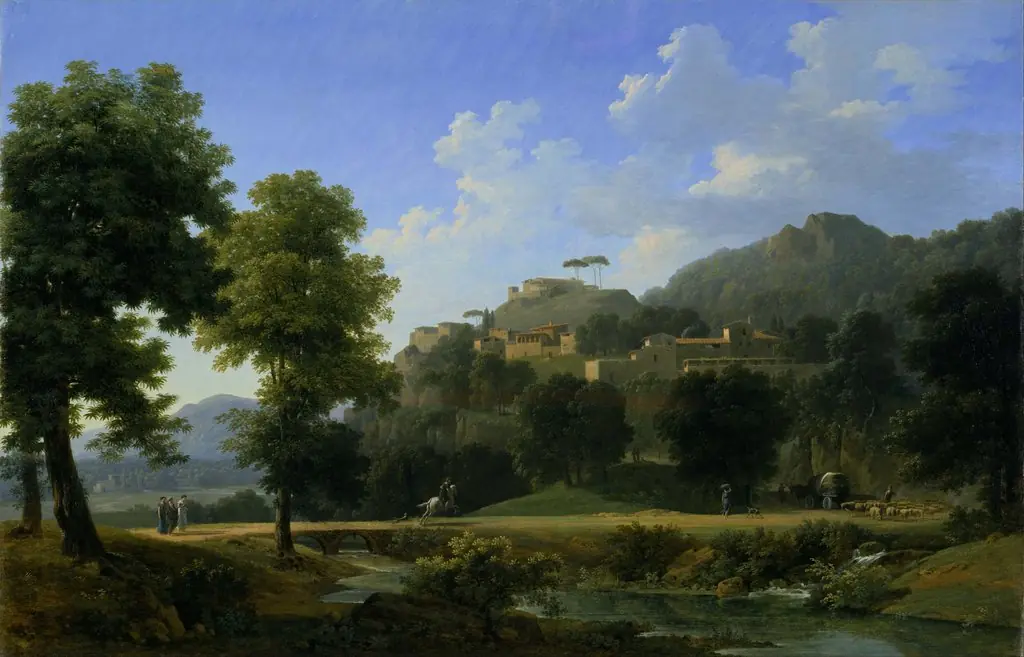 Italian Landscape (Le Paysage d'Italie)
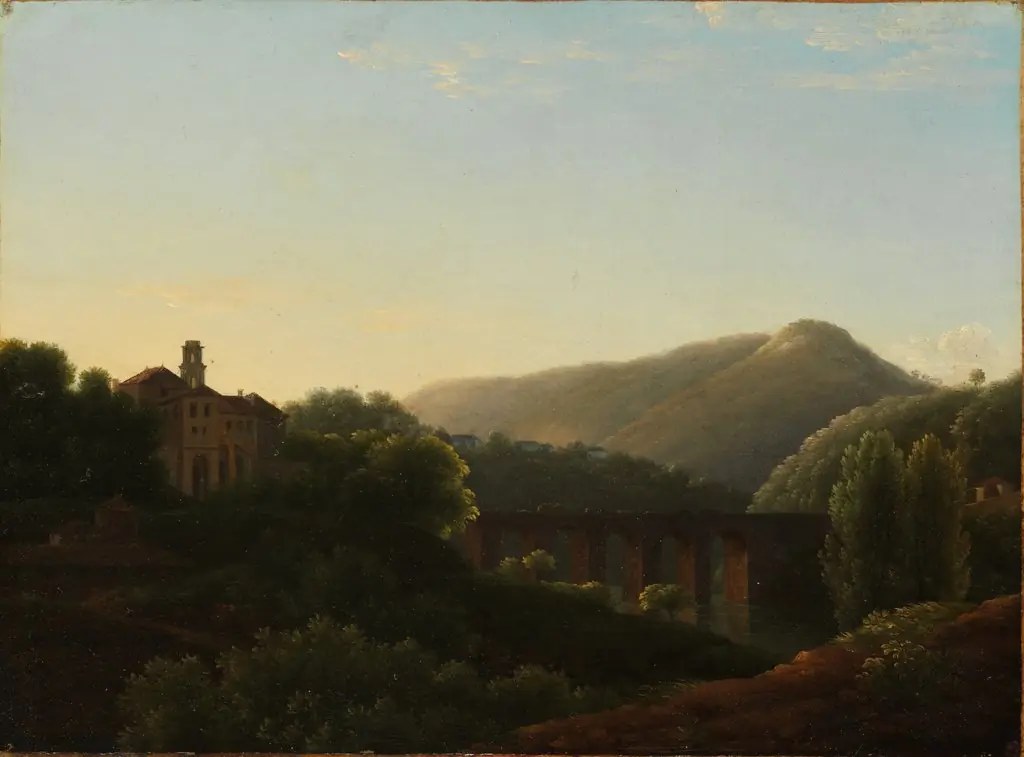 The Bridge at La Cava, Kingdom of Naples
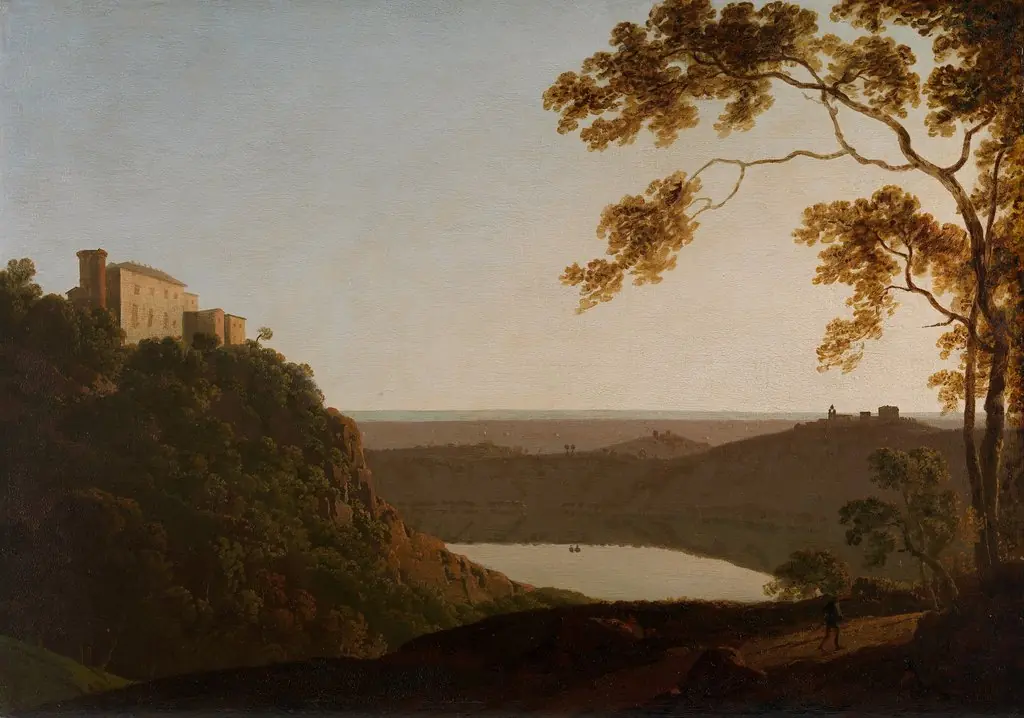 Lake Nemi, sunset
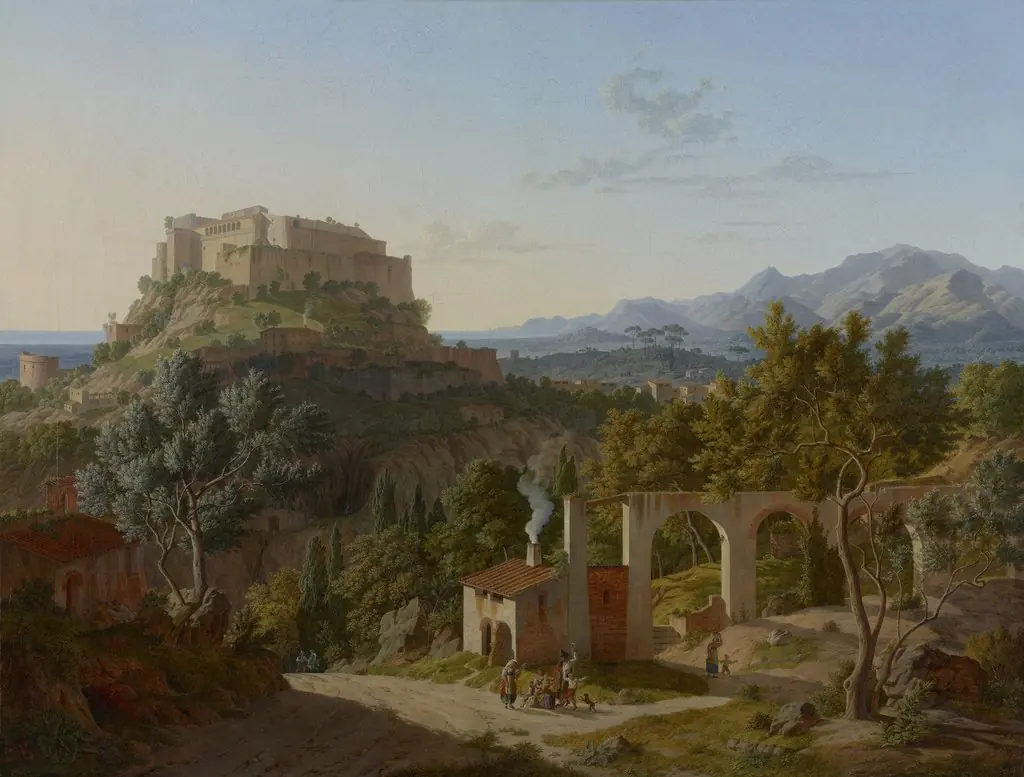 Landscape with the Castle of Massa di Carrara
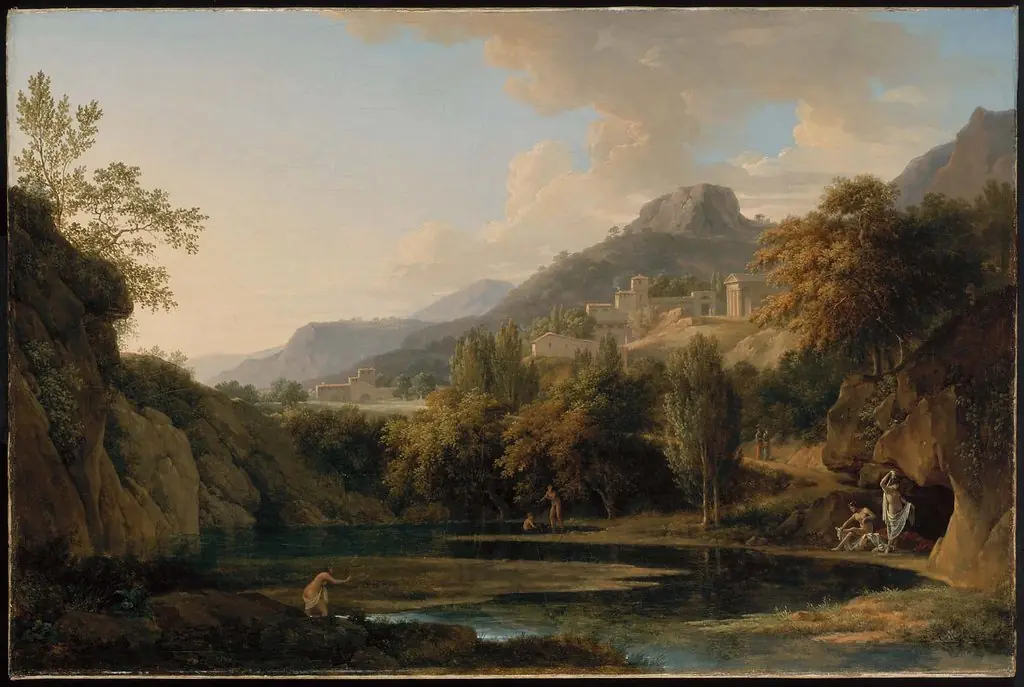 Italian Landscape with Bathers
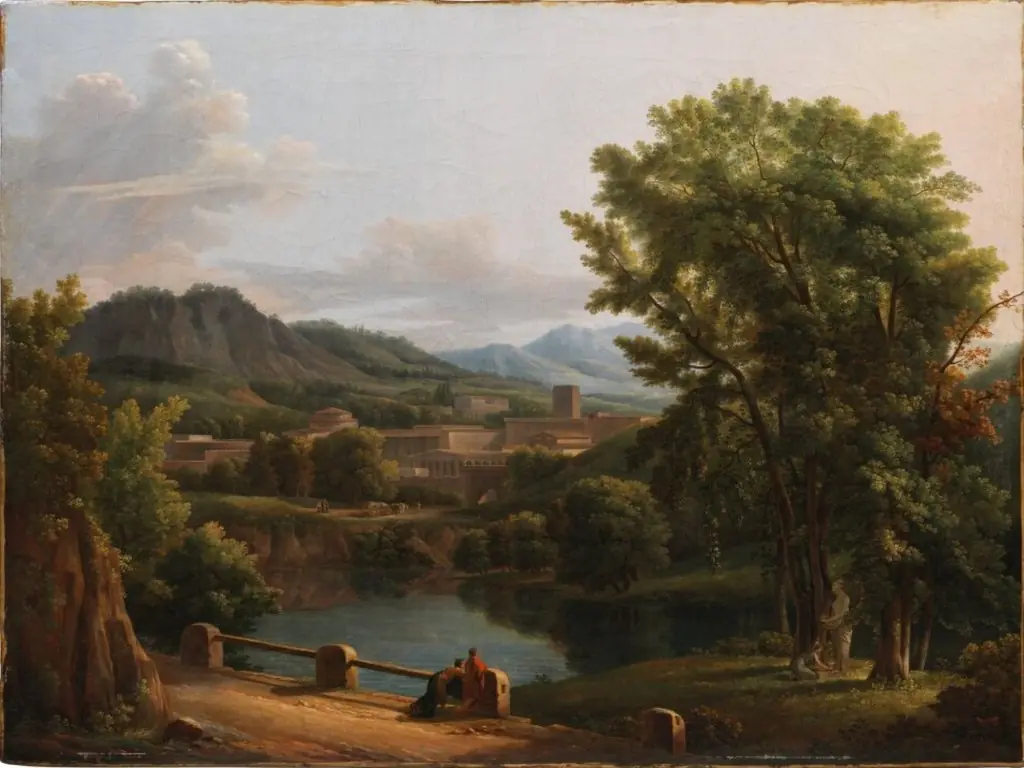 Ideal Landscape with a Sacrifice to the Goddess Flora
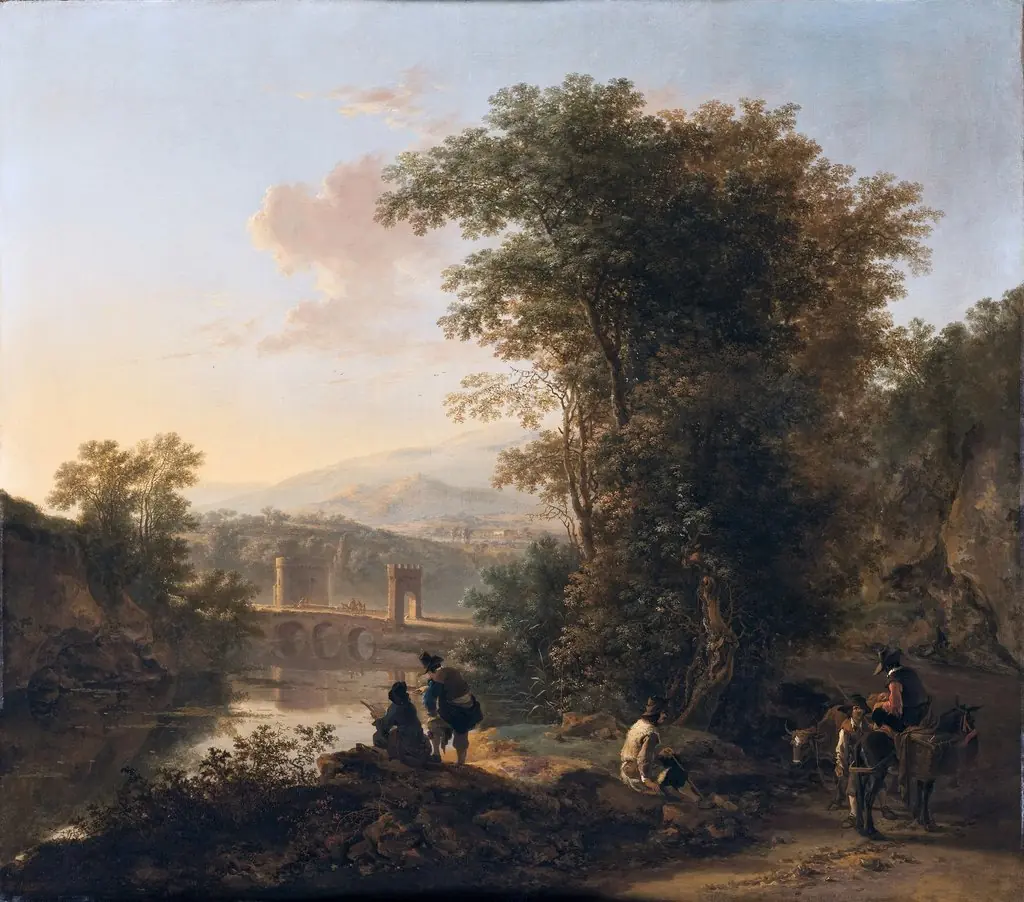 Landscape with a Draftsman
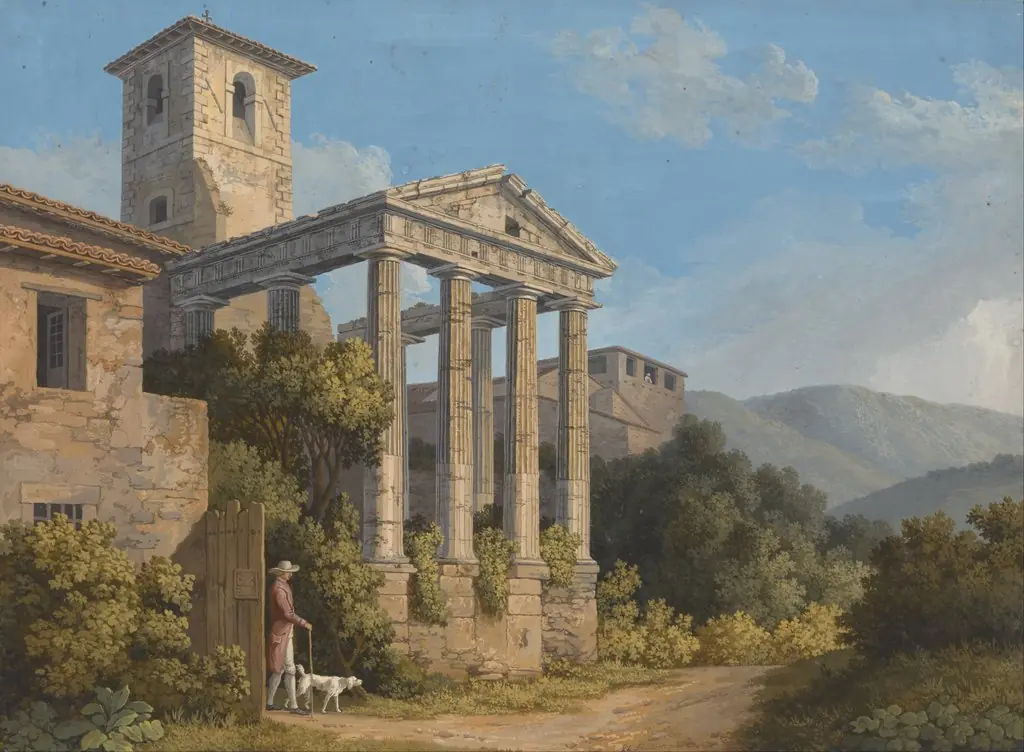 The Temple of Hercules in Cori near Velletri
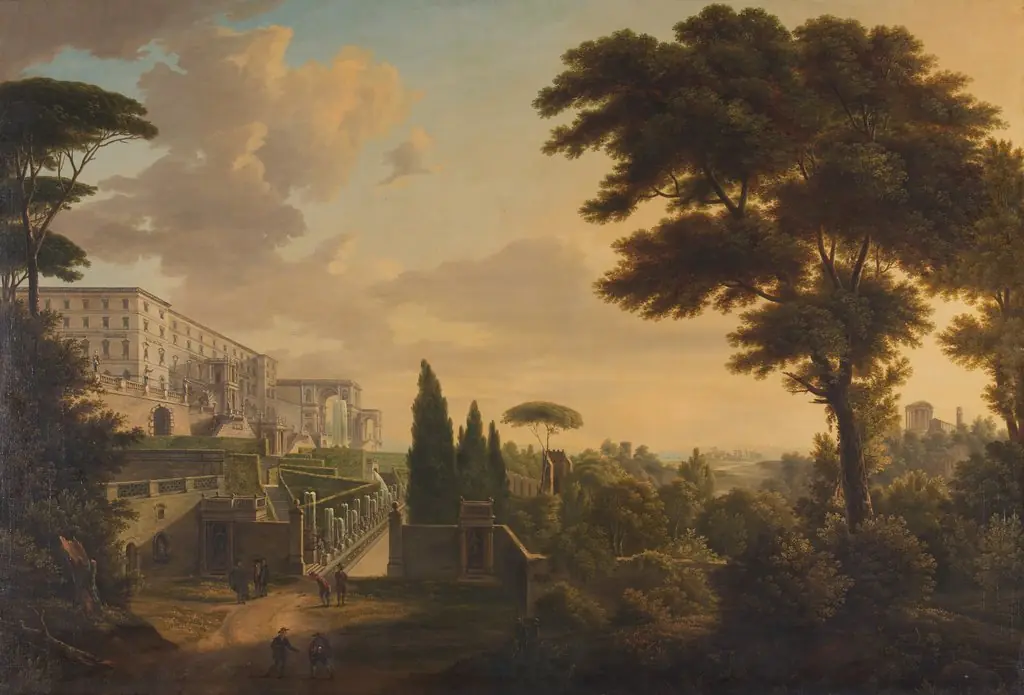 The Villa d'Este in Tivoli