Artwork
Untitled
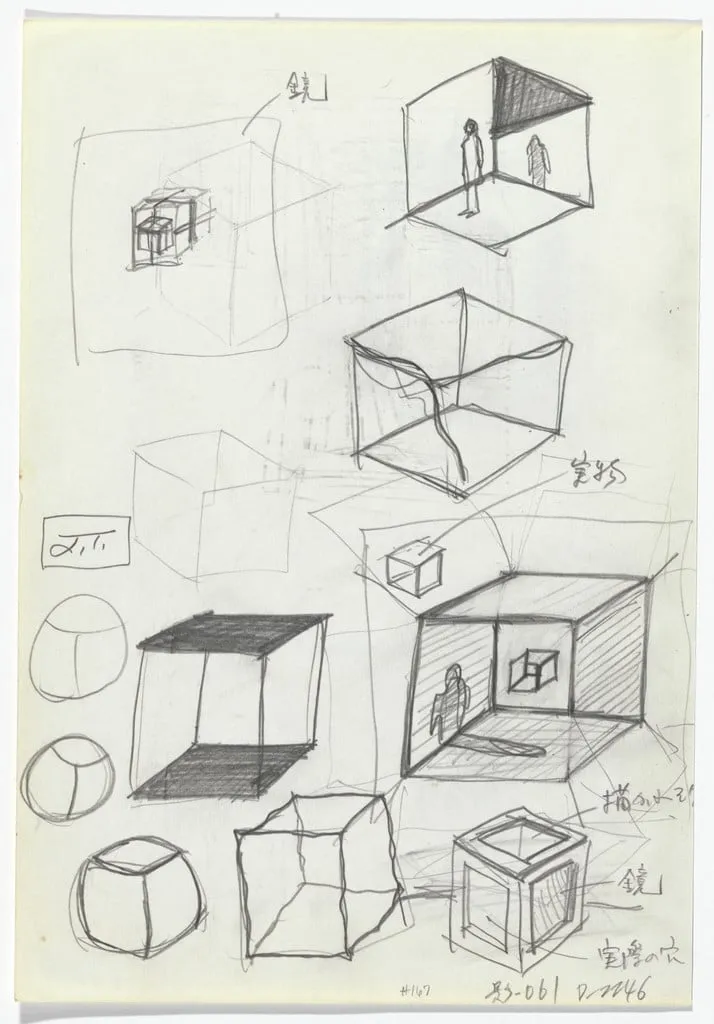
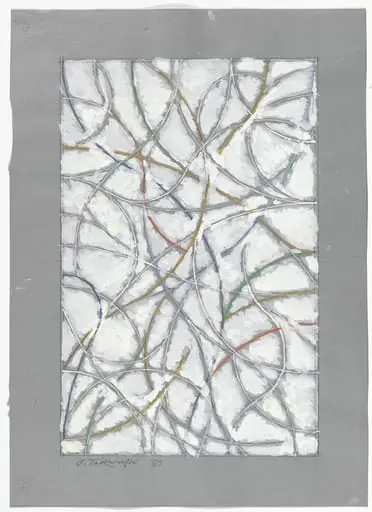
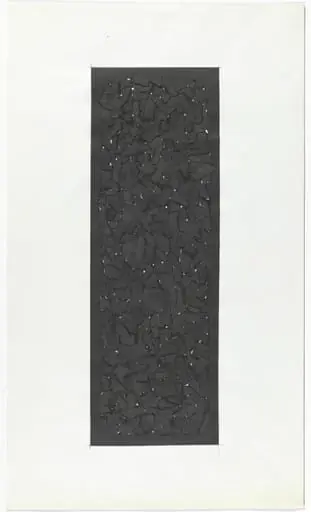
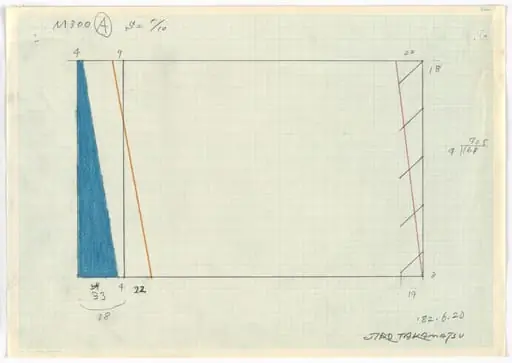
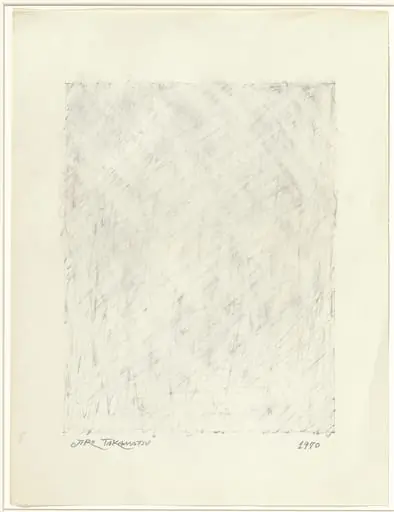
Untitled is a graphite drawing by Jiro Takamatsu. It dates from 1966 and is held in the collection of the Museum of Modern Art.
About this work
Overview
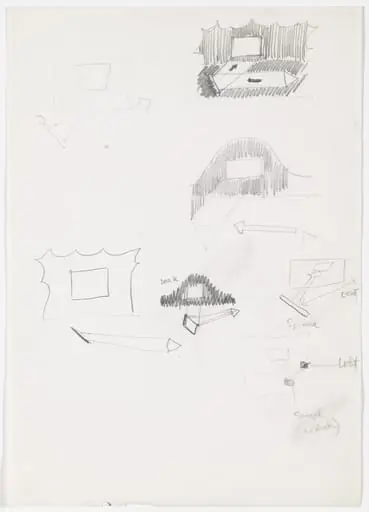
Created in 1966, this pencil drawing by Jirō Takamatsu belongs to a series of works exploring the boundaries between representation and reality.
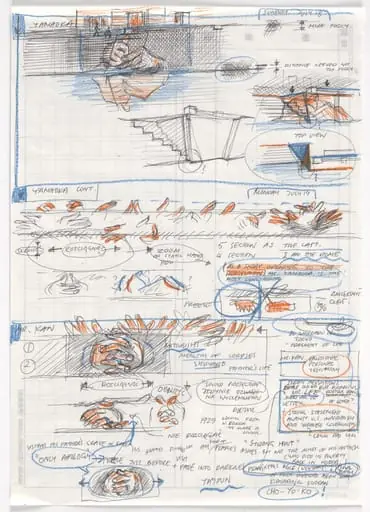
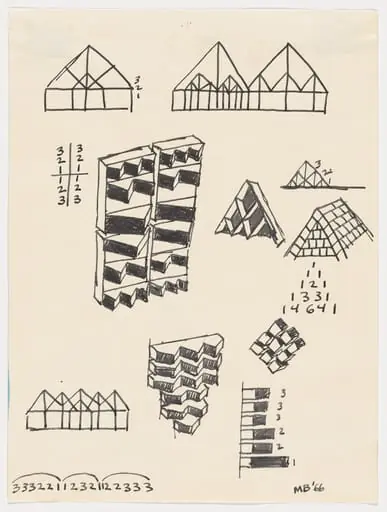
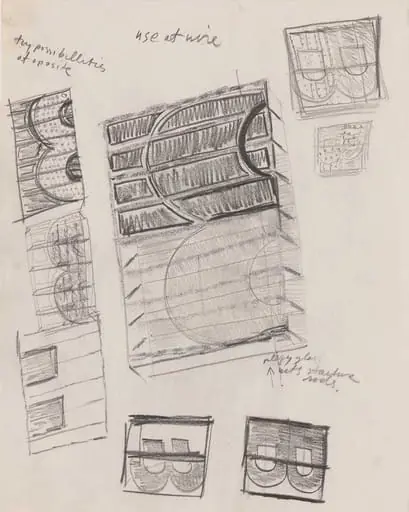
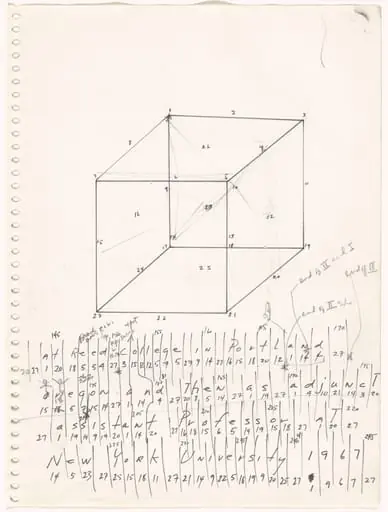
Created in 1966, this pencil drawing by Jirō Takamatsu belongs to a series of works exploring the boundaries between representation and reality. Executed in light, gestural lines, it presents a series of simple geometric forms—boxes, cones, circles—arranged without clear hierarchy. The sketchlike quality suggests a process of inquiry rather than a resolved composition, reflecting Takamatsu’s interest in art as an act of questioning rather than presentation.
Subject & Meaning
The drawing features enclosed and open boxes, some containing minimally rendered human figures. These forms evoke containment, visibility, and spatial relationships, inviting reflection on how objects and bodies are defined by their surroundings. The figures, reduced to sparse lines, appear incidental—neither central nor narrative—emphasizing the structural conditions of perception over emotional or symbolic content.
Technique & Style
Takamatsu employed a loose, rapid pencil technique, with faint, uneven lines that suggest movement and hesitation. The absence of shading or detail reinforces an emphasis on outline and negative space. This method aligns with his broader practice of stripping visual elements to their essentials, treating drawing not as illustration but as a tool to expose the mechanics of seeing and representing.
History & Provenance
This work entered the collection of The Museum of Modern Art as part of its effort to document postwar Japanese conceptual practices. It was produced during a period when Takamatsu was actively engaging with performance, photography, and sculpture, often blurring disciplinary boundaries. The drawing’s inclusion in the museum’s holdings reflects its significance within the international discourse on art’s material and epistemological limits.
Context
In mid-1960s Japan, artists like Takamatsu responded to rapid modernization and the legacy of wartime trauma by interrogating the foundations of visual culture. Rejecting expressive abstraction, he turned to minimal forms and systemic structures. This drawing aligns with contemporaneous movements in Europe and America that prioritized idea over aesthetics, yet remains distinct in its quiet, almost clinical focus on spatial and perceptual ambiguity.
Legacy
Takamatsu’s drawings from this period influenced later generations of Japanese conceptual artists who prioritized process and perception over finished objects. His use of basic forms to question representation became a touchstone for examining how meaning is constructed visually. Though understated, this work exemplifies a broader shift in postwar art toward dematerialization and critical self-reflection.
Artist & collection
Artist
Jirō Takamatsu (高松 次郎, Takamatsu Jirō; 20 February 1936 – 25 June 1998) was one of the most important postwar Japanese artists.