Artwork
Rest during the Flight to Egypt
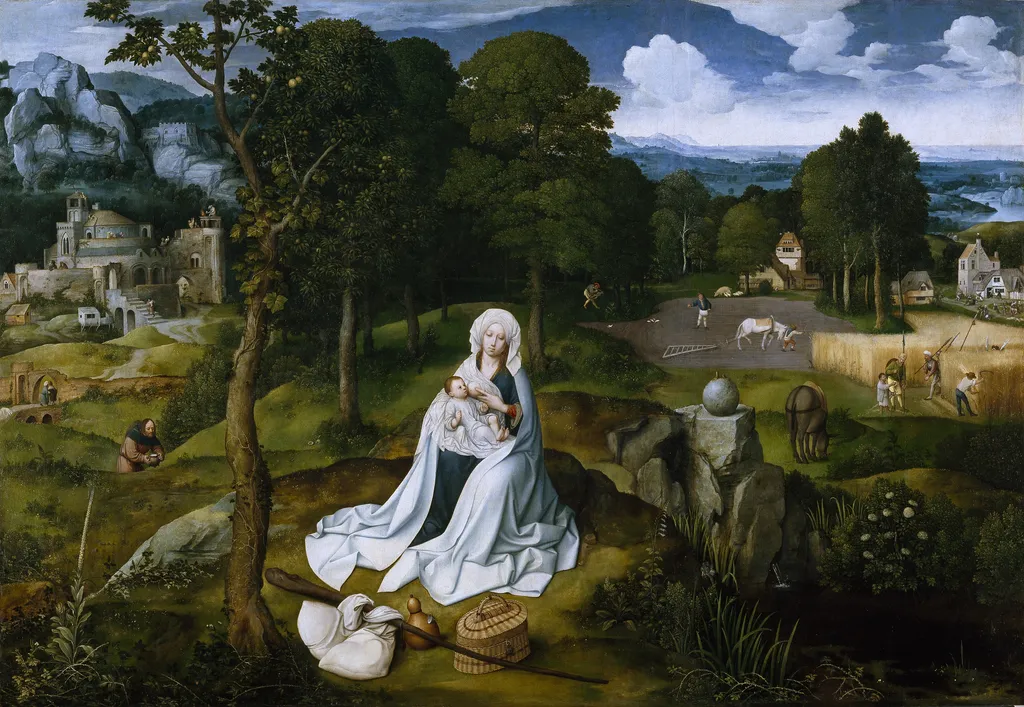
Rest during the Flight to Egypt is an oil painting by the Northern Renaissance artist Joachim Patinir. It dates from 1518 and is held in the collection of the Museo del Prado.
About this work
Overview
Mary is seated on a rocky outcrop in the foreground, holding the infant Jesus, while Joseph stands nearby, often depicted with a staff or leading a donkey.
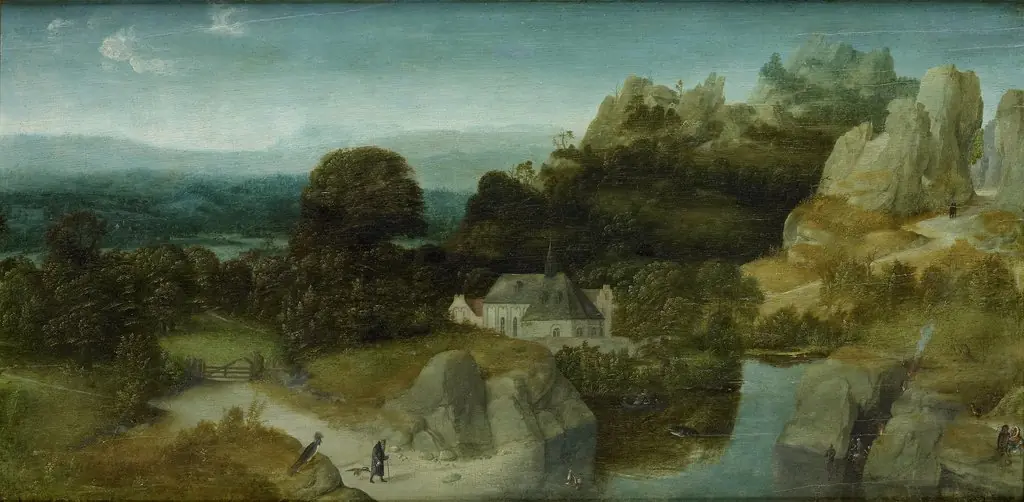
Rest during the Flight to Egypt, painted by Joachim Patinir in 1518, is a quintessential example of early Netherlandish landscape painting where the natural setting dominates the religious narrative. The work depicts the Holy Family pausing during their escape to Egypt, a subject that serves primarily as a pretext for the artist to construct a panoramic world. Mary is seated on a rocky outcrop in the foreground, holding the infant Jesus, while Joseph stands nearby, often depicted with a staff or leading a donkey. The composition utilizes a high horizon line and a bird's-eye view, allowing the viewer to survey a vast, winding landscape that recedes into atmospheric distance. Patinir employs his characteristic color progression, shifting from warm earth tones in the foreground to cool blues and grays in the background to create depth. A winding path leads the eye through rolling hills, dense forests, and a distant village, illustrating the artist's innovation in elevating landscape from a backdrop to the primary subject. This painting, executed in oil on panel, solidifies Patinir's reputation as one of the first independent landscape painters in Western art history, blending devotional imagery with a profound observation of the natural world.
Subject & Meaning
The painting illustrates the biblical narrative of the Holy Family's flight from Herod. Mary is shown seated on a rock, cradling the infant Jesus, with a small white cloth nearby. The background unfolds into a vast, detailed landscape featuring a winding road leading to a distant village, framed by rolling hills and trees. Within this expansive setting, subtle details such as a bridge, a piece of body armor, and a combat helmet are discernible, hinting at the world beyond their serene resting place.
Technique & Style
Patinir's artistic approach is evident in the painting's expansive "world landscape," a style he helped pioneer. He employs color and light to establish a profound sense of depth and atmosphere, drawing the viewer's gaze across the detailed scene. The soft, muted palette of the natural surroundings provides a visual counterpoint to the more vibrant hues used for the central figures, achieving a harmonious and balanced composition that highlights the sacred moment within its grand setting.
History & Provenance
This oil painting, completed in 1518, has been a significant part of art historical collections for centuries. Its current home is the Museo del Prado, where it is preserved among other notable works from the period. The artwork contributes to the understanding of early Netherlandish landscape painting and Patinir's role in its development.
Own this work as a print
Artist & collection

Artist
Joachim Patinir, also called Patenier, was a Flemish Renaissance painter of history and landscape subjects.