Artwork
Mars and Venus Surprised by Vulcan
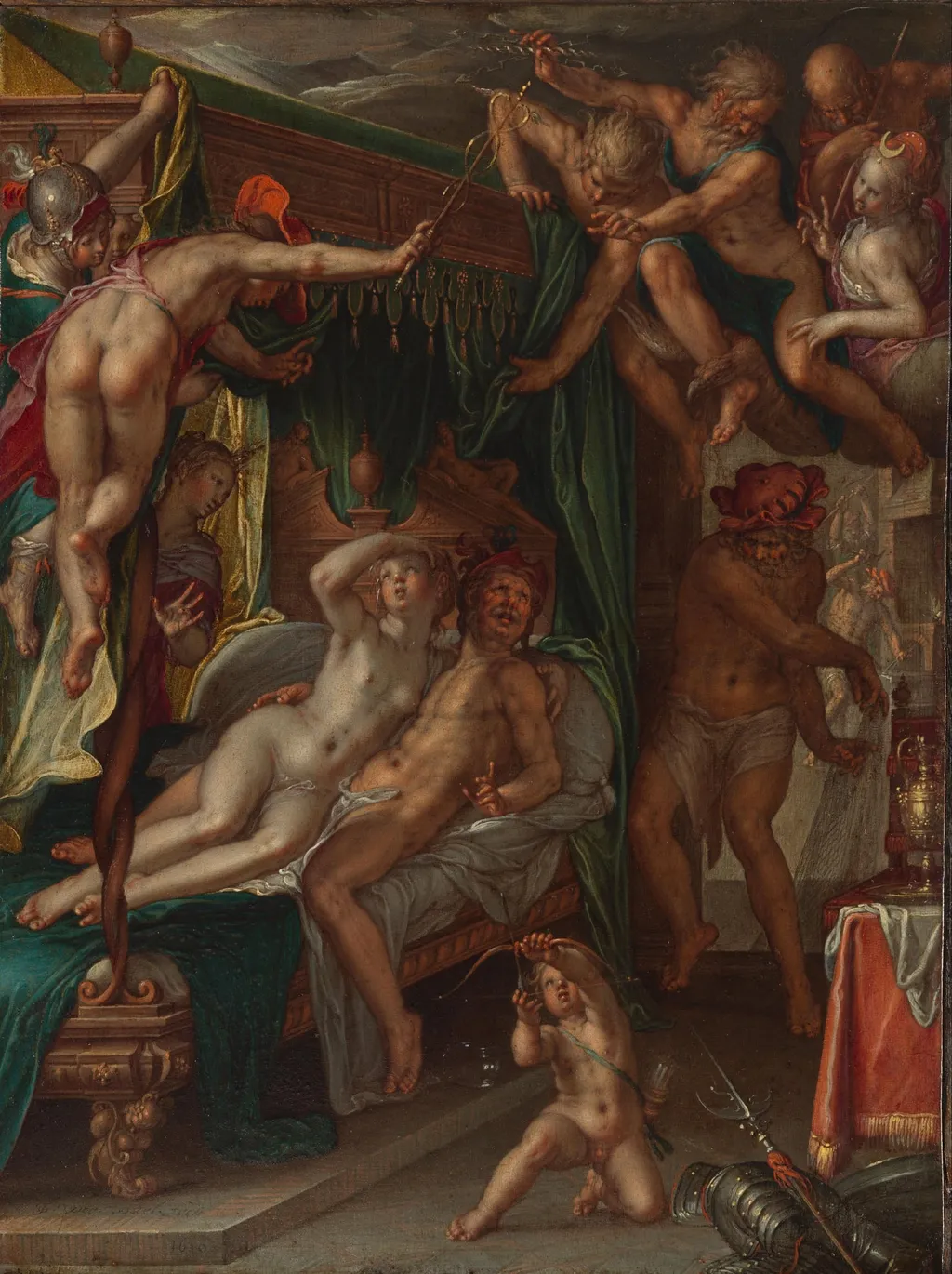
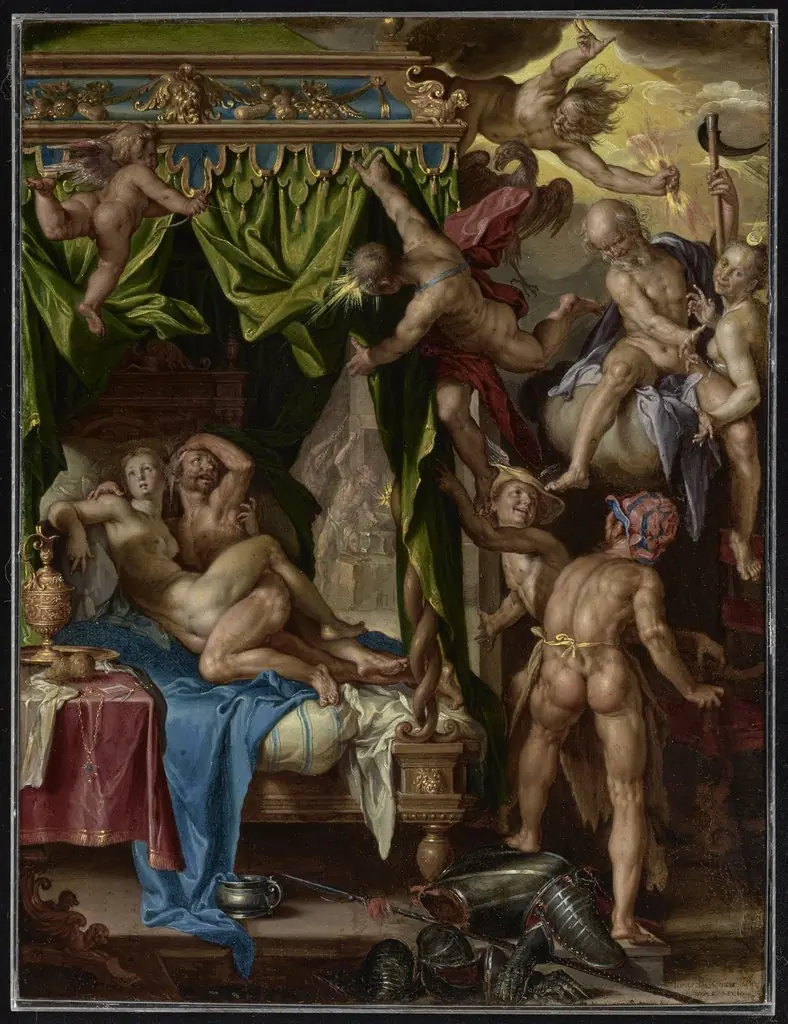
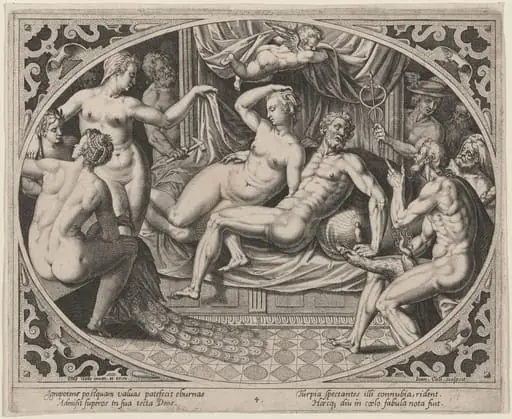
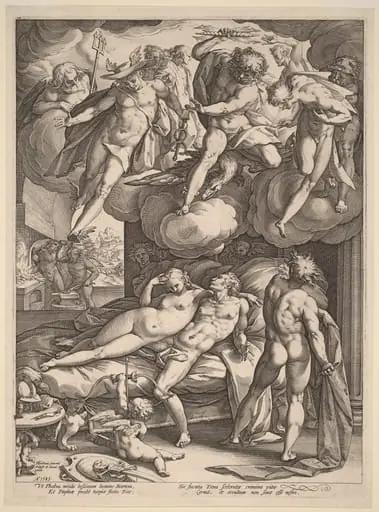
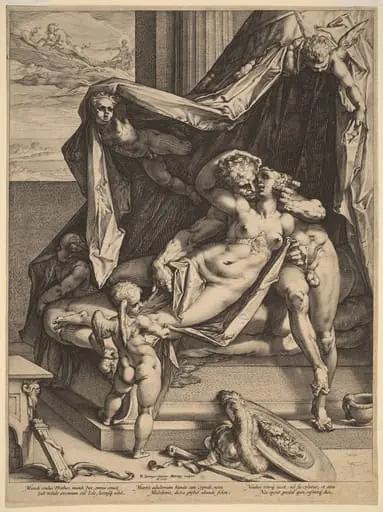
Mars and Venus Surprised by Vulcan is an unspecified painting by the Mannerist artist Joachim Wtewael. It dates from 1610 and is held in the collection of the Rijksmuseum. The canvas depicts the mythological episode in which Vulcan discovers his wife Venus in the arms of Mars.
About this work
Overview
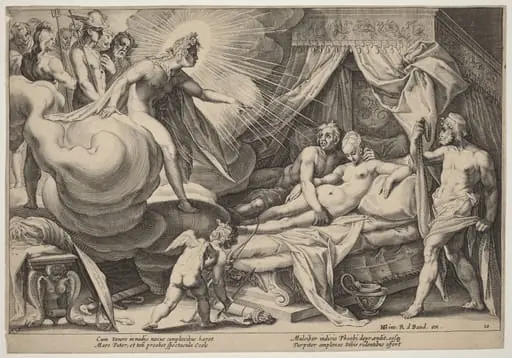
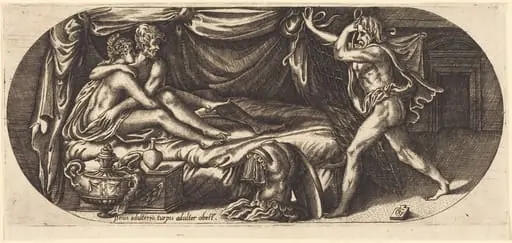
The canvas depicts the mythological episode in which Vulcan discovers his wife Venus in the arms of Mars. The scene unfolds with the three principal deities—Venus, Mars and Vulcan—surrounded by a hovering Mercury, all rendered in a highly contorted composition that emphasizes the drama of the revelation.
Subject & Meaning
Rooted in classical mythology, the narrative shows Venus’s infidelity with Mars, the god of war, and Vulcan’s clever trap that exposes the lovers before a gathering of amused gods. Mercury’s presence, offering to exchange places with Mars, adds a layer of comic intercession, underscoring the theme of divine folly and the public nature of private transgressions.
Technique & Style
The artist employs the exaggerated anatomy and elongated poses characteristic of Dutch Mannerism. Muscles are rendered with hyper‑dramatic vigor, while the figures twist in serpentine forms that defy natural proportion. A vivid palette of pinks, reds and metallic tones heightens the theatricality, turning the myth into a visually dynamic spectacle.
History & Provenance
Created by the Dutch painter Wtewael, a leading exponent of the late‑16th‑century Mannerist movement, the work reflects the period’s fascination with complex compositions and learned subjects. Though specific ownership records are scarce, the painting has been cited in scholarly surveys of Dutch Mannerist art as a prime example of the style’s narrative exuberance.
Context
During the Dutch Golden Age, artists often revisited classical myths to display their technical skill and erudition. Wtewael’s treatment aligns with contemporary tastes for intellectual wit and visual virtuosity, positioning the work within a broader cultural interest in allegorical storytelling and the moralizing potential of myth.
Legacy
The painting remains a reference point for studies of Northern Mannerism, illustrating how Dutch artists adapted Italianate exaggeration to local sensibilities. Its vivid portrayal of a mythological scandal continues to inform discussions of gender, power, and the performative aspects of divine narratives in early modern art.
Own this work as a print
Artist & collection
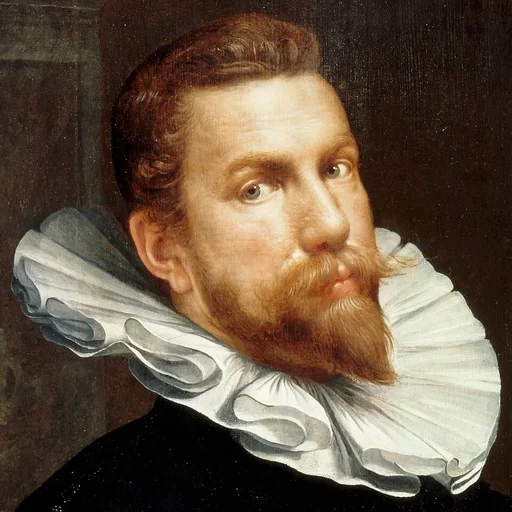
Artist
Joachim Anthoniszoon Wtewael (Dutch pronunciation: ; 1566 – 1 August 1638), also known as Uytewael (pronounced ), was a Dutch Mannerist painter and draughtsman, as well as a highly successful flax merchant, and town councillor of Utrecht.