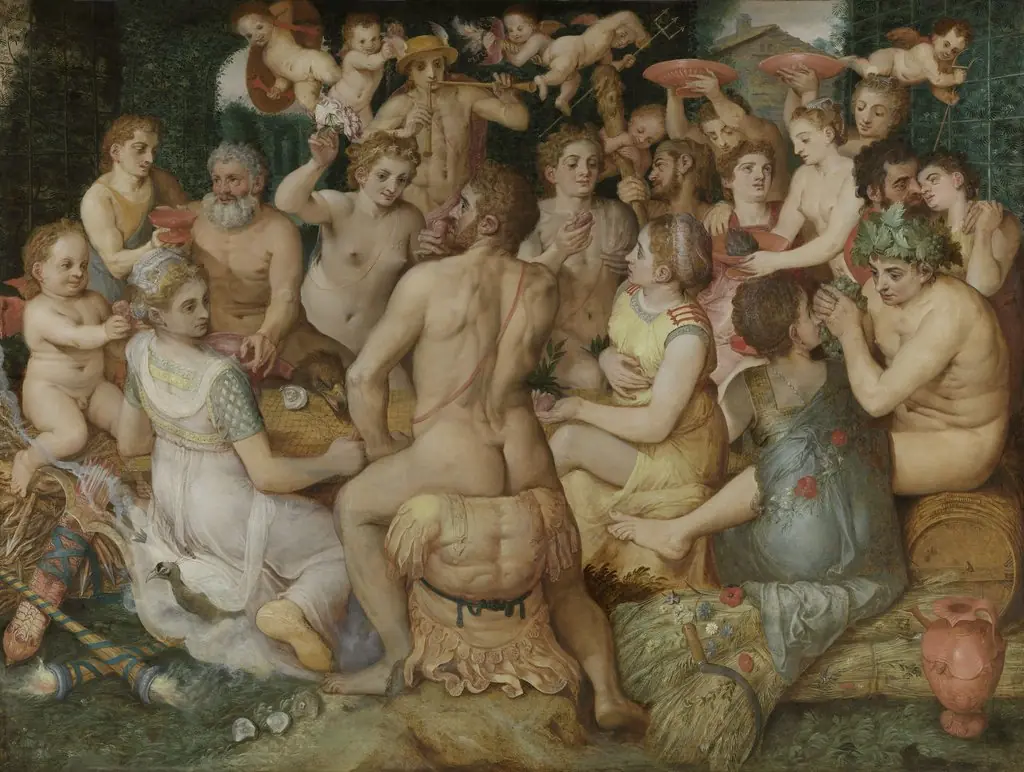
Artwork
Mars and Venus
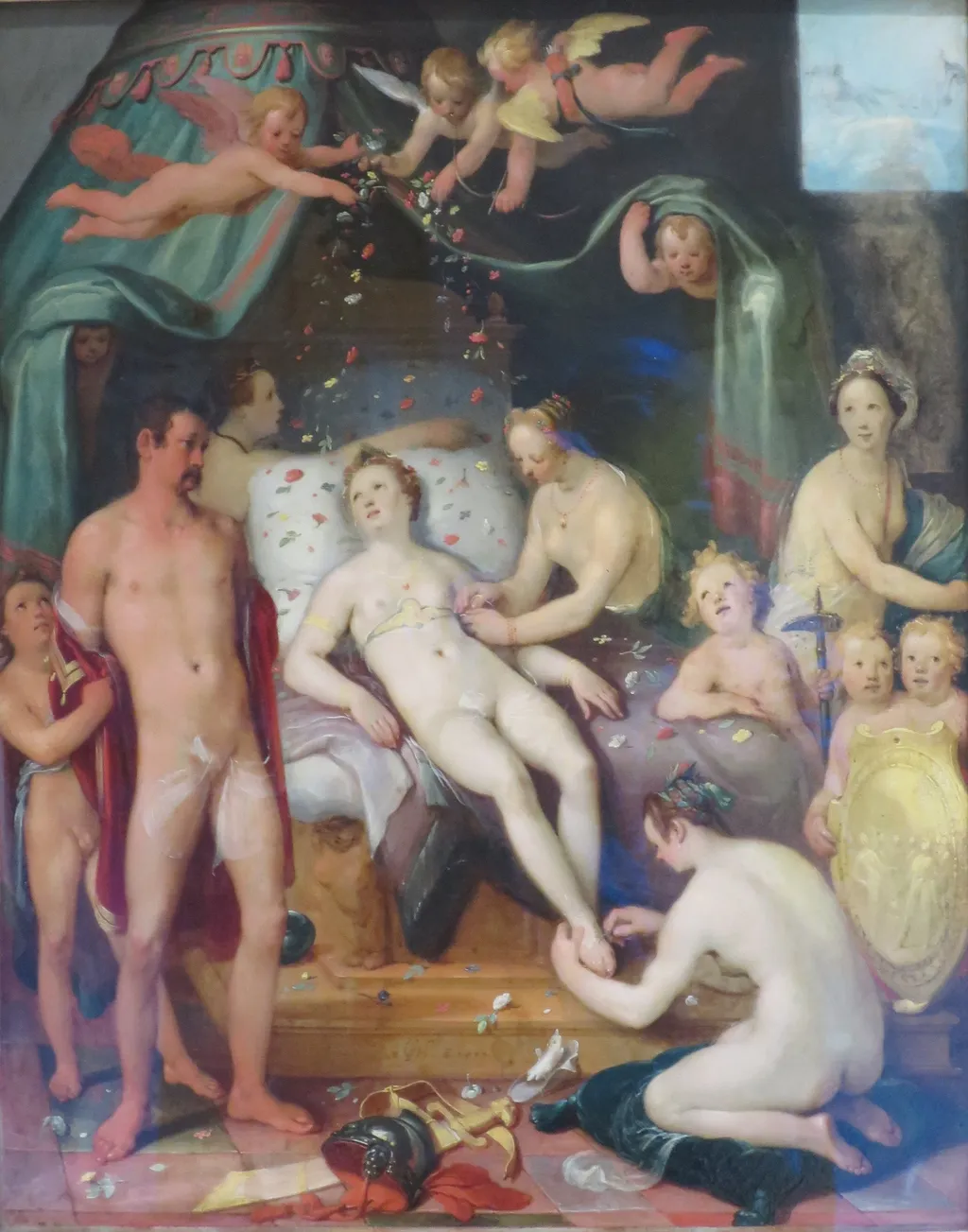
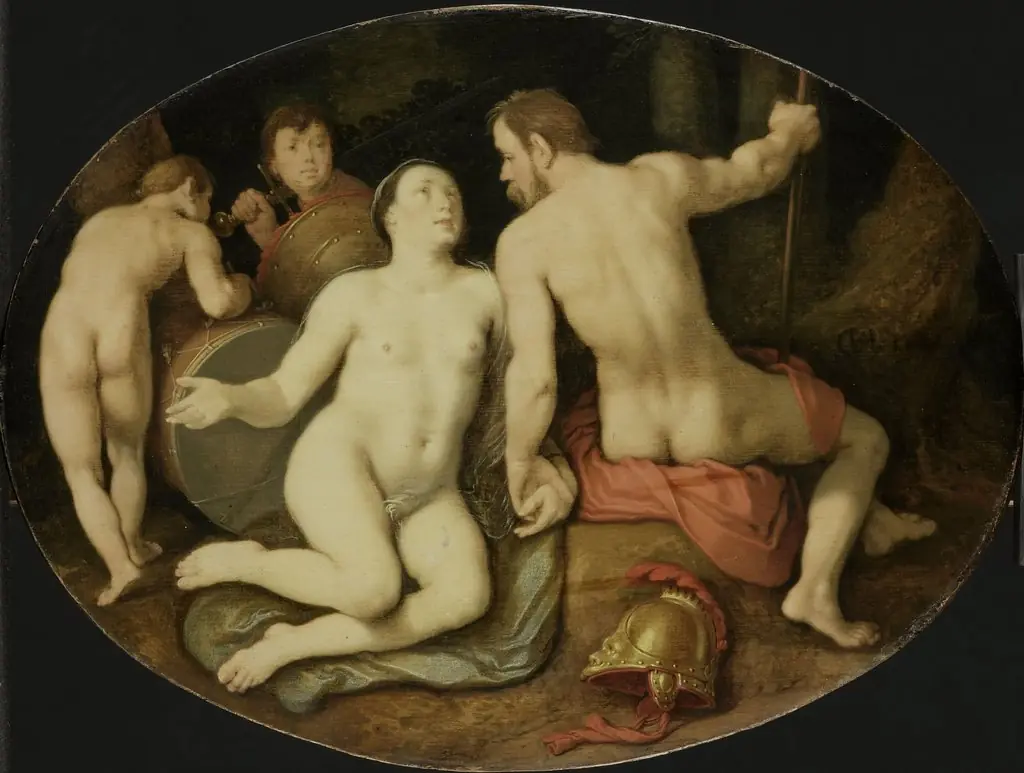
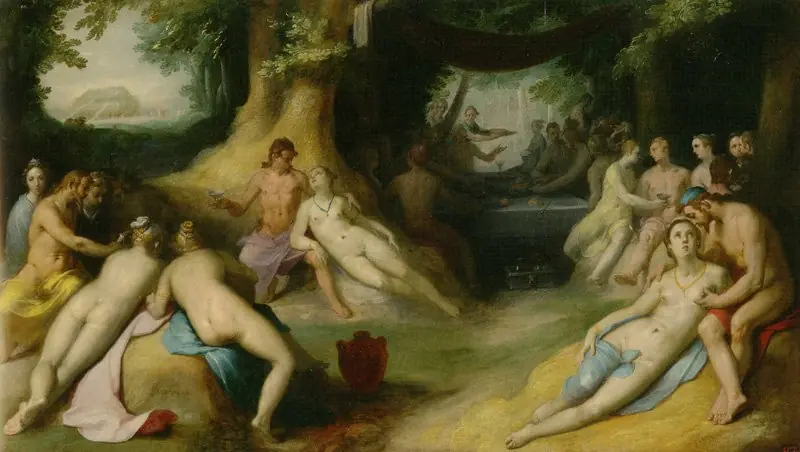
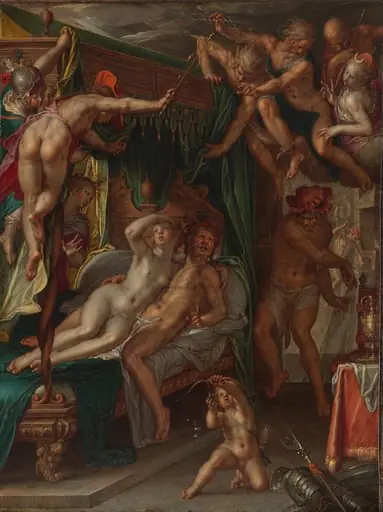
Mars and Venus is an oil painting by the Early Baroque Italian artist Cornelis van Haarlem. It dates from 1600 and is held in the collection of the Norton Simon Museum.
About this work
Overview
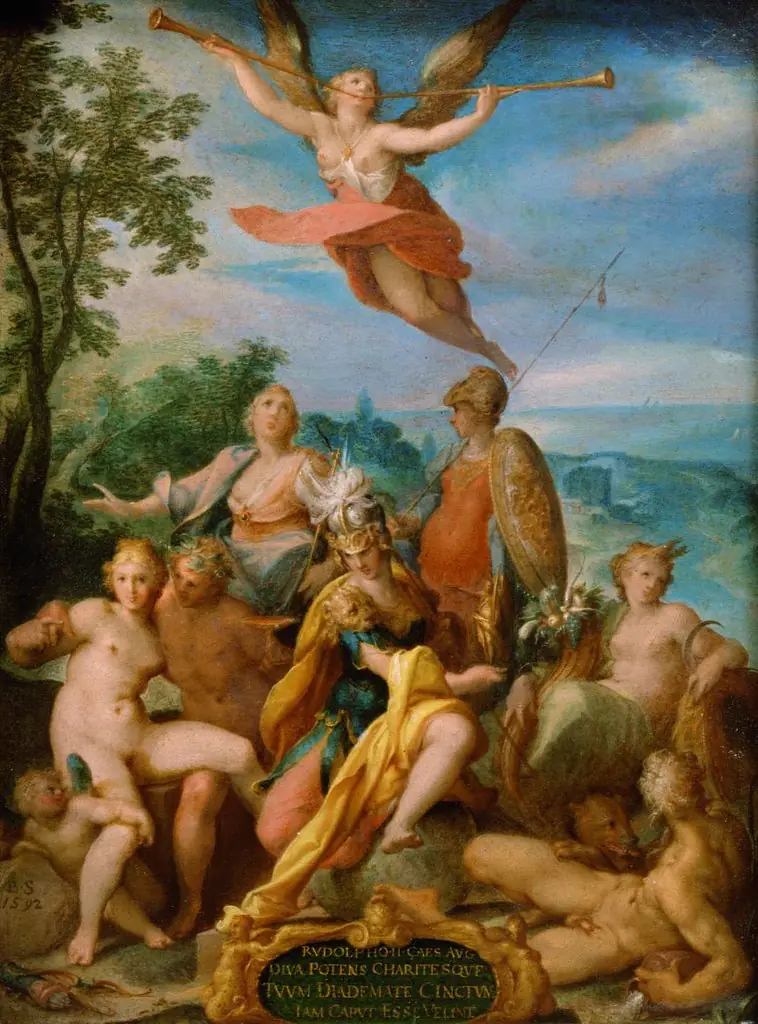
Mars and Venus, a copper painting by Cornelis van Haarlem (1600), presents an allegorical scene featuring the Roman gods of war and love. Characteristic of the early Baroque period, it reflects the artist's Italian influences during his foreign studies.
Subject & Meaning
The painting depicts Mars (god of war) and Venus (goddess of love) in an intimate, nude pose on a couch, surrounded by other figures, both clothed and naked. The scene conveys themes of luxury, pleasure, and the contrasting yet intertwined realms of war and love.
Technique & Style
Executed on copper, the work showcases intricate detail, vibrant colors, and varied textures, hallmarks of van Haarlem's Northern Mannerist style. The dynamic composition, with diverse figures, expressions, and poses, anticipates the shift towards more energetic Dutch art.
History & Provenance
Created in 1600 by Cornelis van Haarlem, a pivotal Dutch Golden Age painter, Mars and Venus is now part of the Norton Simon Museum's collection.
Context
Reflecting van Haarlem's exposure to Italian art, this piece bridges Northern European and Italian Baroque influences, contributing to the evolution of Dutch painting.
Legacy
As a work by a leading Northern Mannerist, Mars and Venus influences the transition to more dynamic Dutch Baroque compositions, leaving a mark on the Dutch Golden Age's artistic development.
Artist & collection
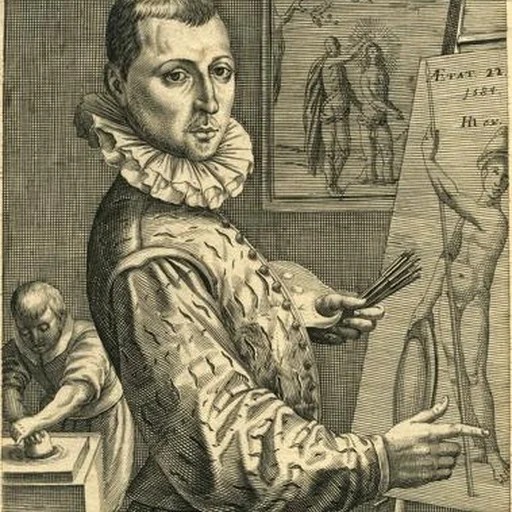
Artist
Cornelis Corneliszoon van Haarlem (Dutch: ; 1562 – 11 November 1638) was a Dutch Golden Age painter and draughtsman, one of the leading Northern Mannerist artists in the Netherlands, and an important forerunner of Frans Hals as a…