Artwork
Mars and Venus Surprised by Vulcan
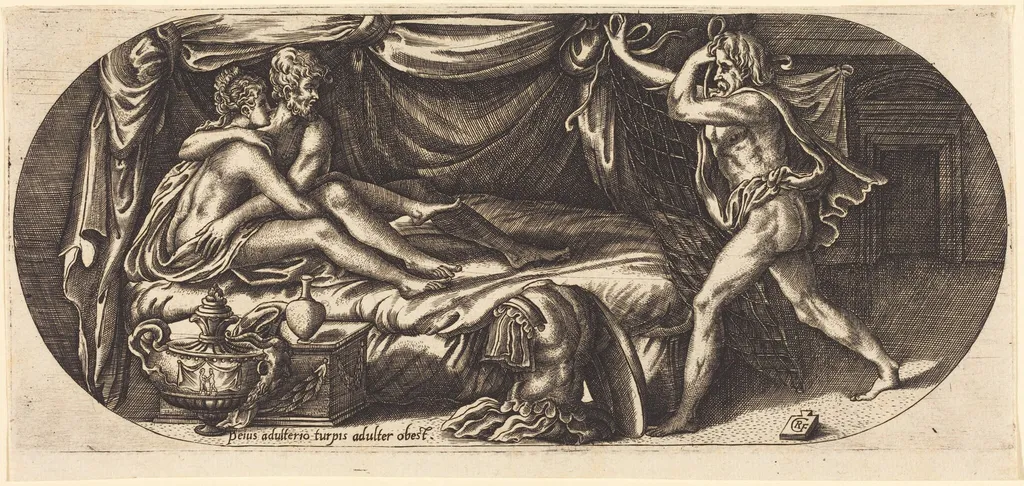
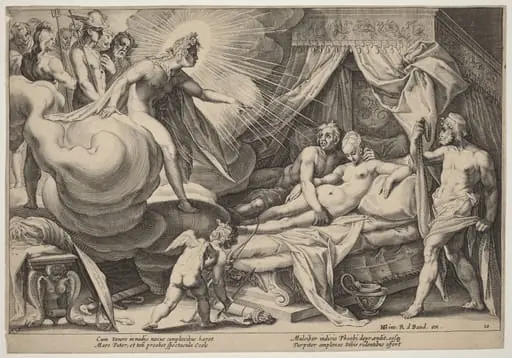
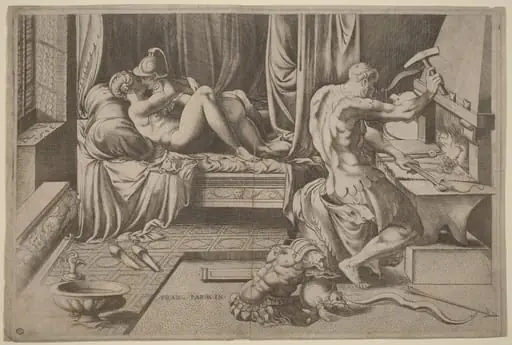
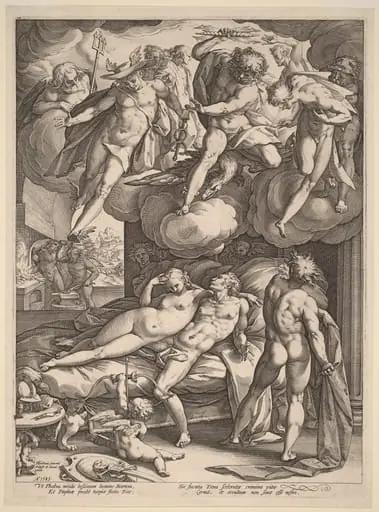
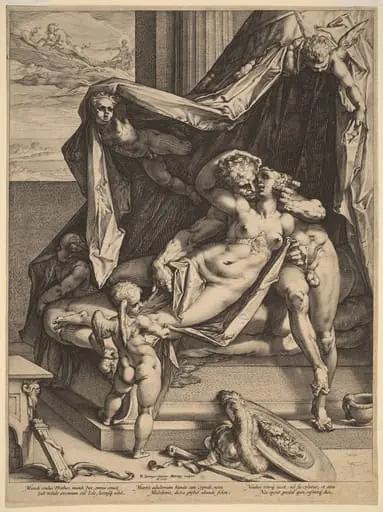
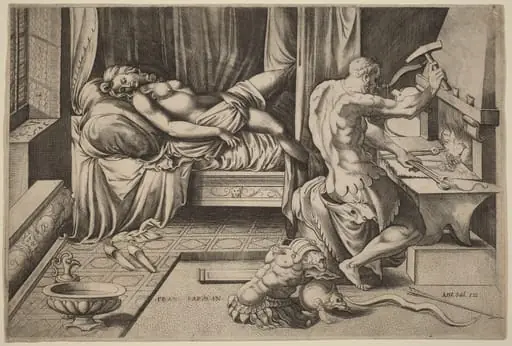
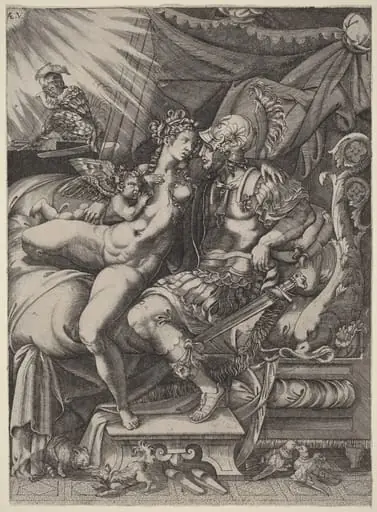
Mars and Venus Surprised by Vulcan is an ink print by the Renaissance artist Georges Reverdy. It dates from 1551 and is held in the collection of the National Gallery of Art.
About this work
Overview
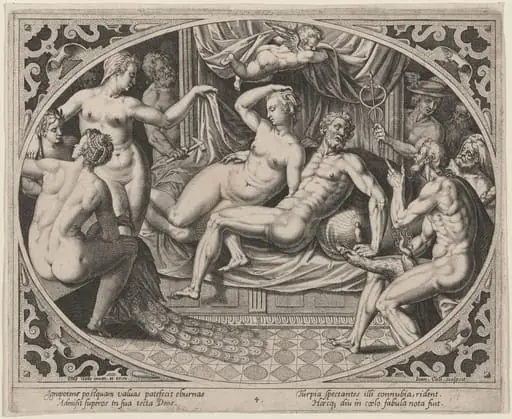
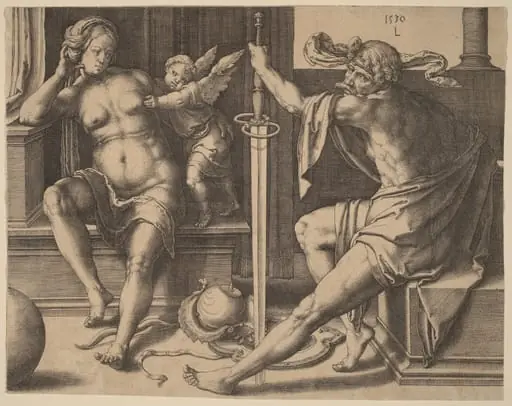
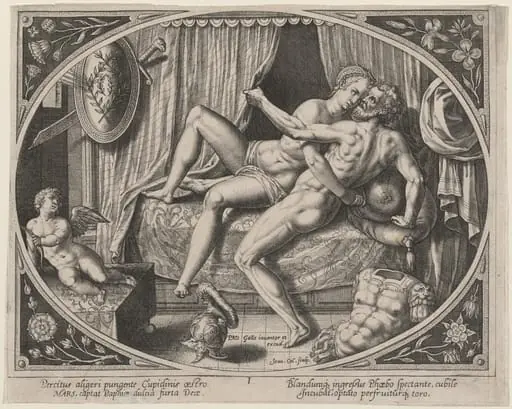
Georges Reverdy’s 1551 engraving presents a scene from classical mythology in which the god of war, Mars, and the goddess of love, Venus, are caught in an intimate moment, while the blacksmith god Vulcan observes them from the shadows. Executed as a print, the work exemplifies the narrative focus and technical precision characteristic of mid‑sixteenth‑century engraving.
Subject & Meaning
The composition dramatizes the well‑known tale of Vulcan’s discovery of his wife’s affair with Mars. Venus reclines on a bed, Mars leans over her, and both appear startled as Vulcan, brandishing a net, enters the frame. The juxtaposition of love, war, and craft underscores themes of betrayal and the vulnerability of divine relationships.
Technique & Style
Reverdy employs fine cross‑hatching to model forms and suggest the dim interior lighting, creating a sense of depth within the limited tonal range of the engraving. The intricate line work delineates textiles, flesh, and architectural elements, while the careful modulation of shadows contributes to the overall atmospheric tension of the scene.
History & Provenance
Created in 1551, the print belongs to the later phase of the Renaissance, a period when printmaking disseminated mythological subjects to a broader audience. Although specific ownership records are scarce, the engraving has appeared in several catalogues of Renaissance prints and is held in the collections of major European museums.
Context
During the Renaissance, artists frequently revisited classical narratives to explore human emotions and moral lessons. Reverdy’s choice of the Mars‑Venus‑Vulcan episode reflects contemporary interest in the complexities of love and fidelity, while the medium of engraving allowed for reproducibility, aligning with the era’s expanding visual culture.
Artist & collection