Artwork
Untitled
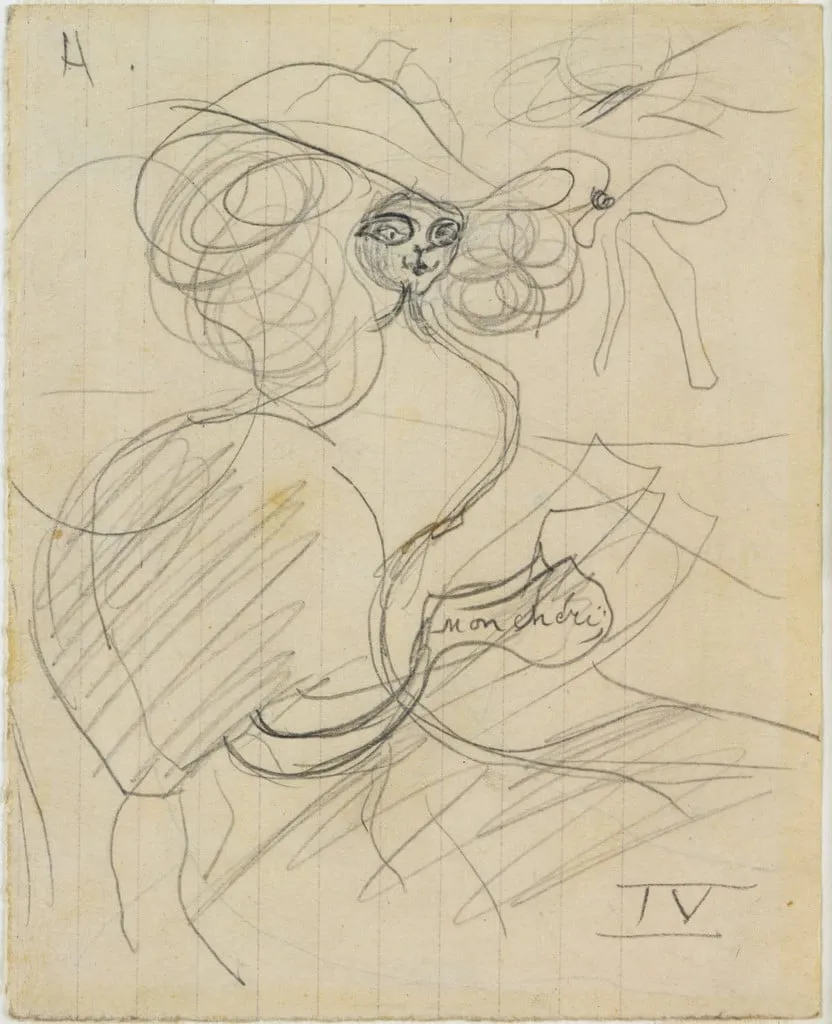
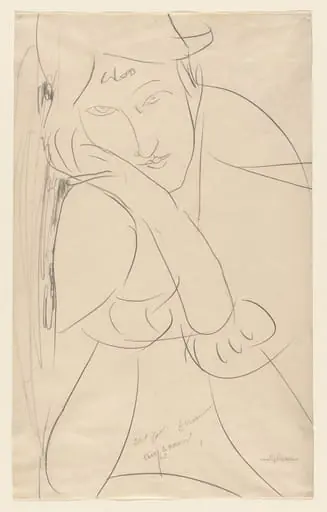
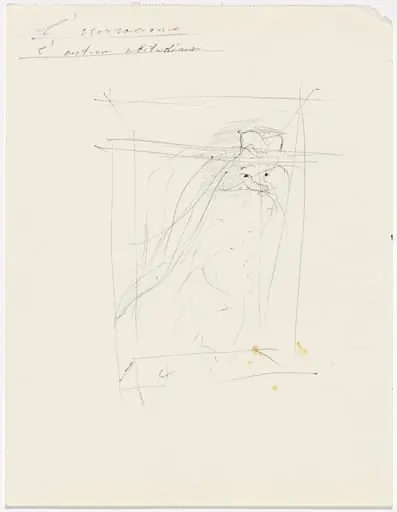
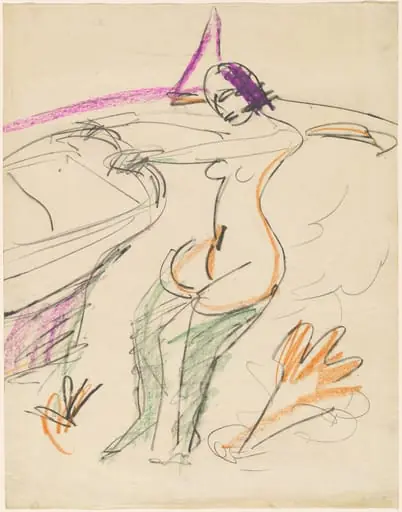
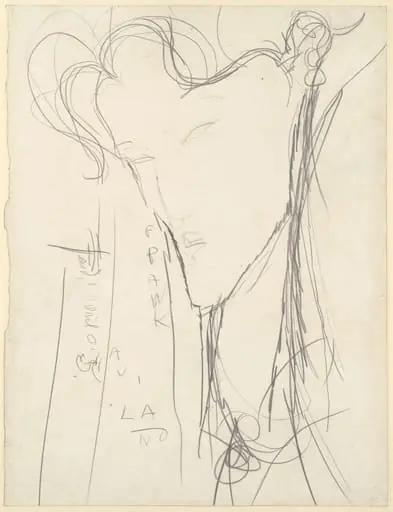
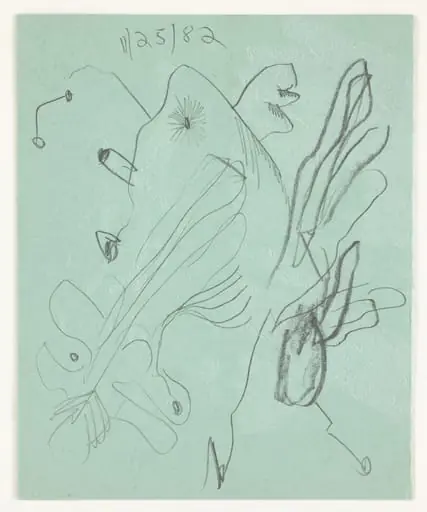
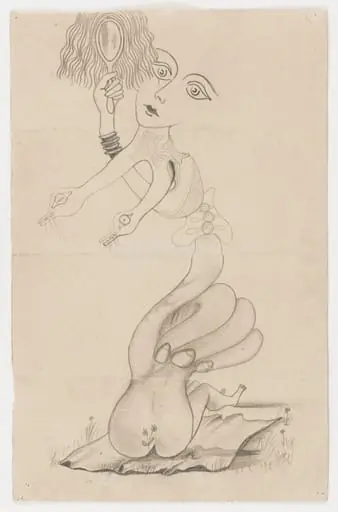
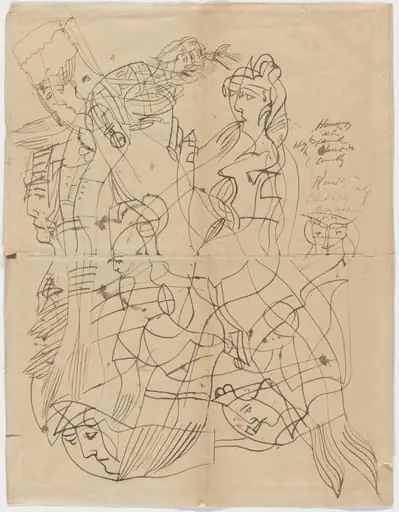
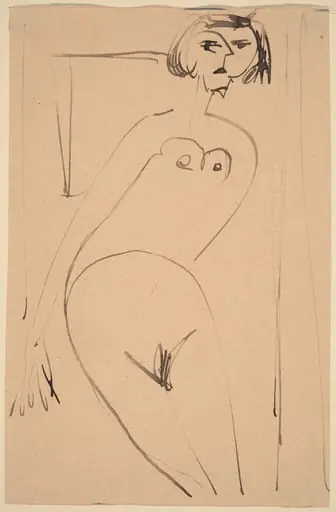
Untitled is a graphite drawing by Joan Miró. It dates from 1929 and is held in the collection of the Museum of Modern Art.
About this work
Overview
Created in 1929, this graphite drawing on lined paper is one of many informal studies Joan Miró produced during a period of intense experimentation.
Created in 1929, this graphite drawing on lined paper is one of many informal studies Joan Miró produced during a period of intense experimentation. Executed with rapid, unrefined strokes, the work reflects his interest in spontaneous mark-making. The presence of the paper’s grid suggests it was made on a common notebook page, underscoring its provisional nature. Miró signed it discreetly in one corner, treating the sketch as a personal record rather than a finished piece.
Subject & Meaning
The figure depicted is abstracted and minimal—a simplified human form with exaggerated eyes and one hand resting on the hip. No narrative or symbolic context is provided; instead, the drawing evokes a sense of bodily presence through gesture rather than detail. Miró’s focus on elemental shapes aligns with his broader interest in tapping into subconscious imagery, where form emerges from instinct rather than observation.
Technique & Style
Miró used loose, overlapping pencil lines to build the figure, creating a textured, scratchy surface that conveys immediacy. The uneven pressure and irregular contours suggest a hand moving quickly, with little revision. The graphite interacts with the paper’s ruled lines, sometimes contrasting, sometimes blending, adding an unintended structural rhythm. This approach prioritizes energy over precision, characteristic of his early Surrealist sketches.
History & Provenance
The drawing entered The Museum of Modern Art’s collection as part of a broader acquisition of Miró’s works from the late 1920s and early 1930s. It was likely acquired during the artist’s rising international recognition following his participation in Surrealist exhibitions. Its modest materials and informal quality contrast with his larger paintings, yet it remains a key example of his process-oriented practice.
Context
In 1929, Miró was deeply engaged with Surrealist ideas, particularly automatic drawing as a means to bypass rational control. While he never fully aligned with the group’s dogma, his work from this time reflects an effort to access the unconscious through free association. This drawing, made on ordinary paper, exemplifies how he transformed everyday materials into vehicles for psychological exploration.
Legacy
This sketch exemplifies Miró’s influence on postwar artists who valued process over polish. Its rawness and intimacy helped redefine the status of the drawing as a legitimate artistic medium, not merely a preparatory step. Later generations recognized such works as vital expressions of creative spontaneity, bridging Surrealist theory with the physical act of making.
Artist & collection
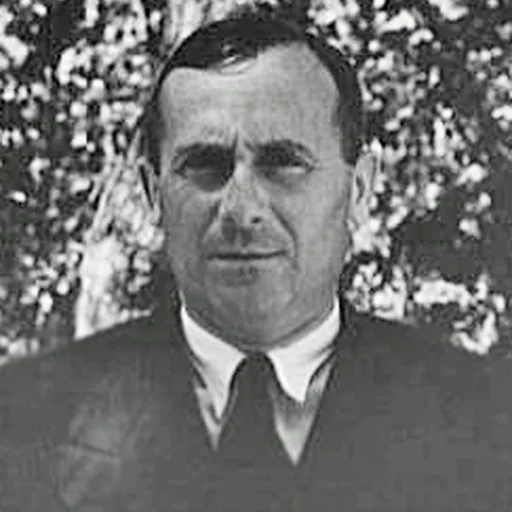
Artist
Joan Miró i Ferrà ( mirr-OH, US also mee-ROH, Catalan: ; 20 April 1893 – 25 December 1983) was a Catalan painter, sculptor and ceramist from Spain.