Artwork
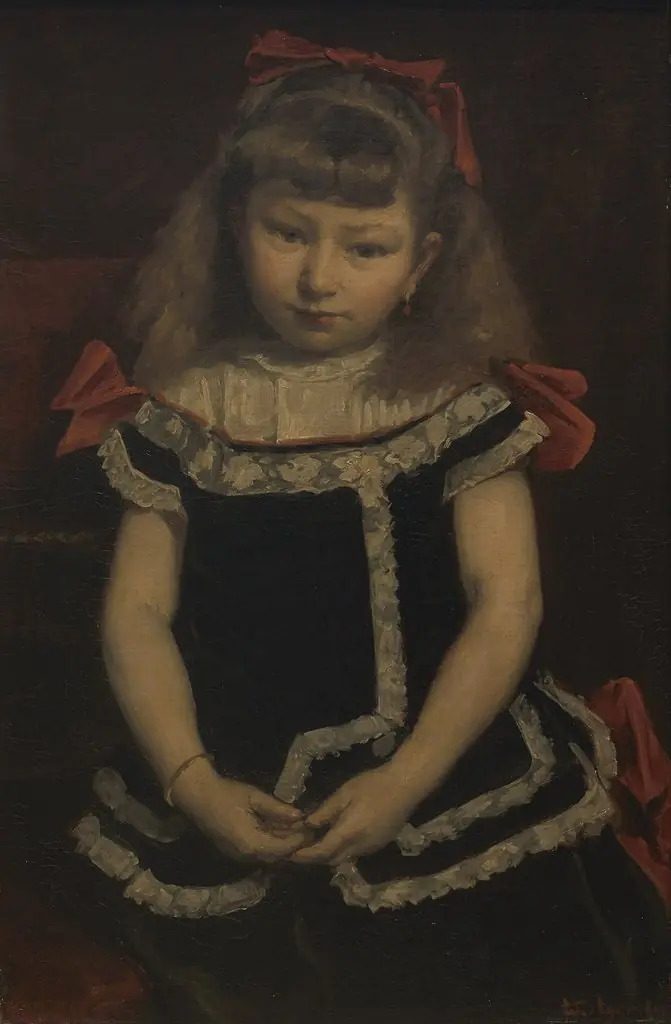
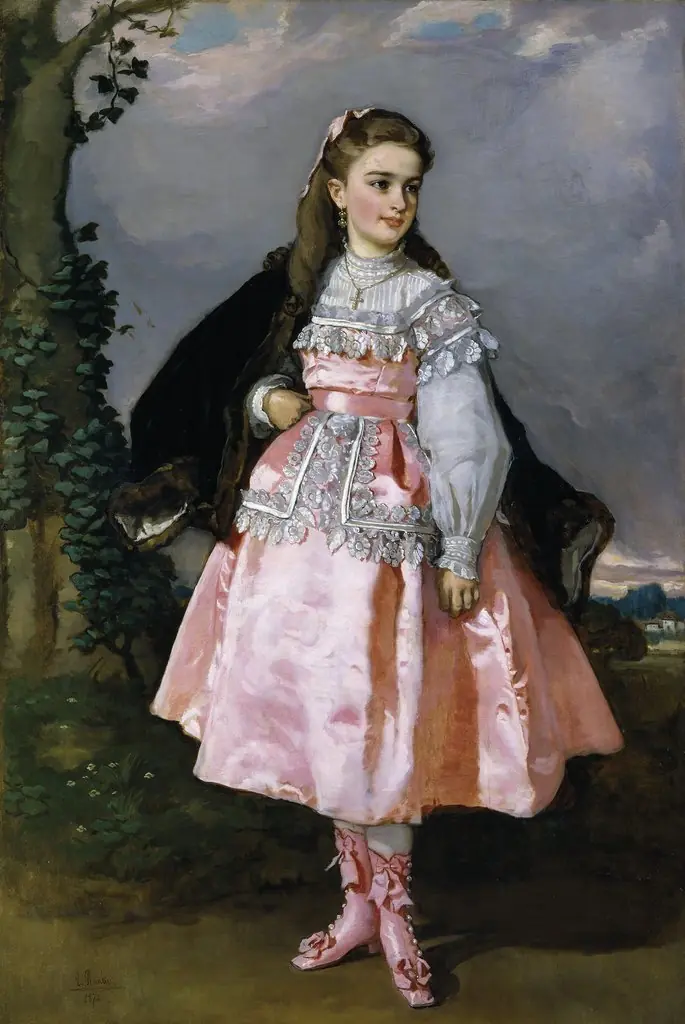
La niña María Figueroa vestida de menina
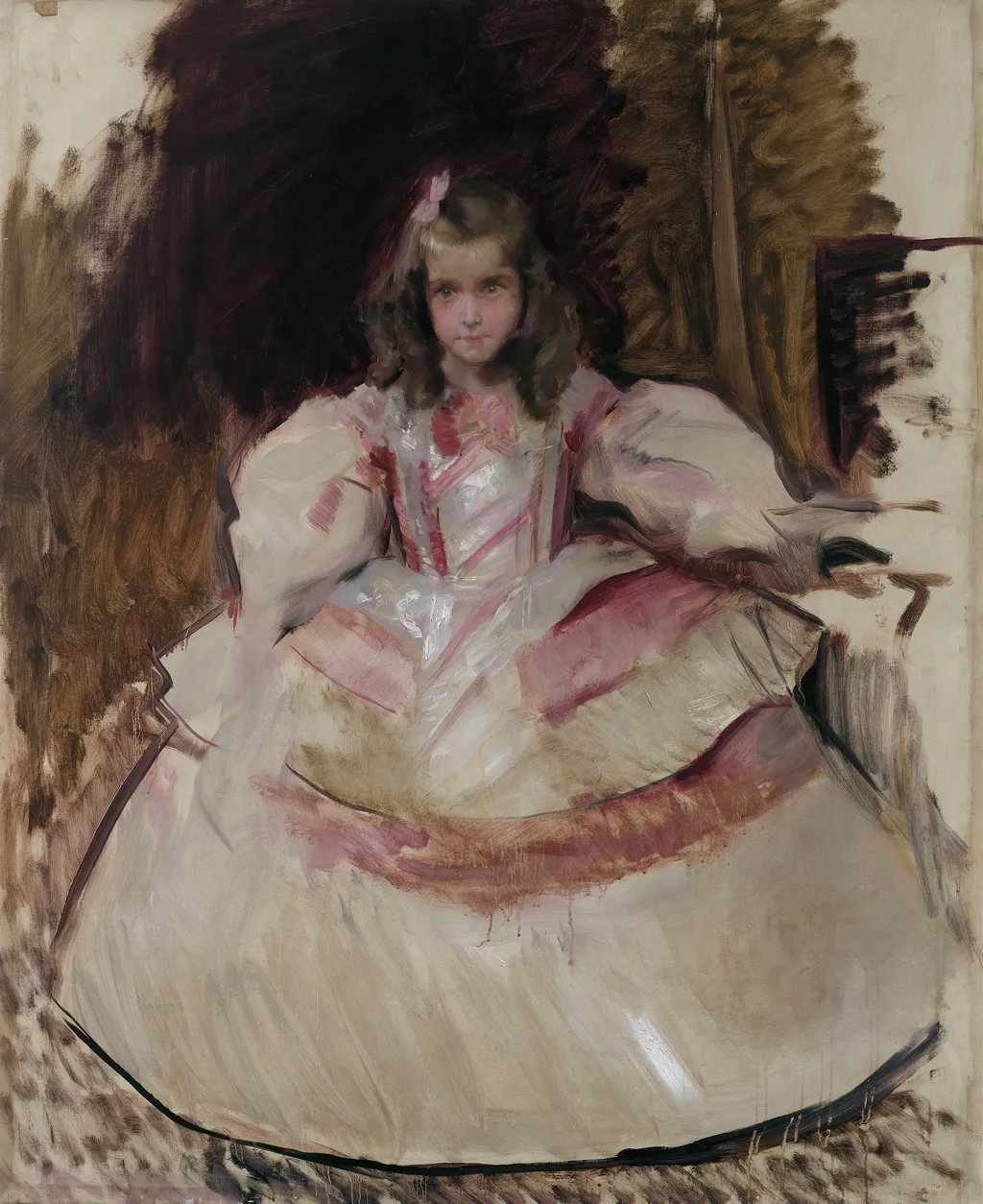
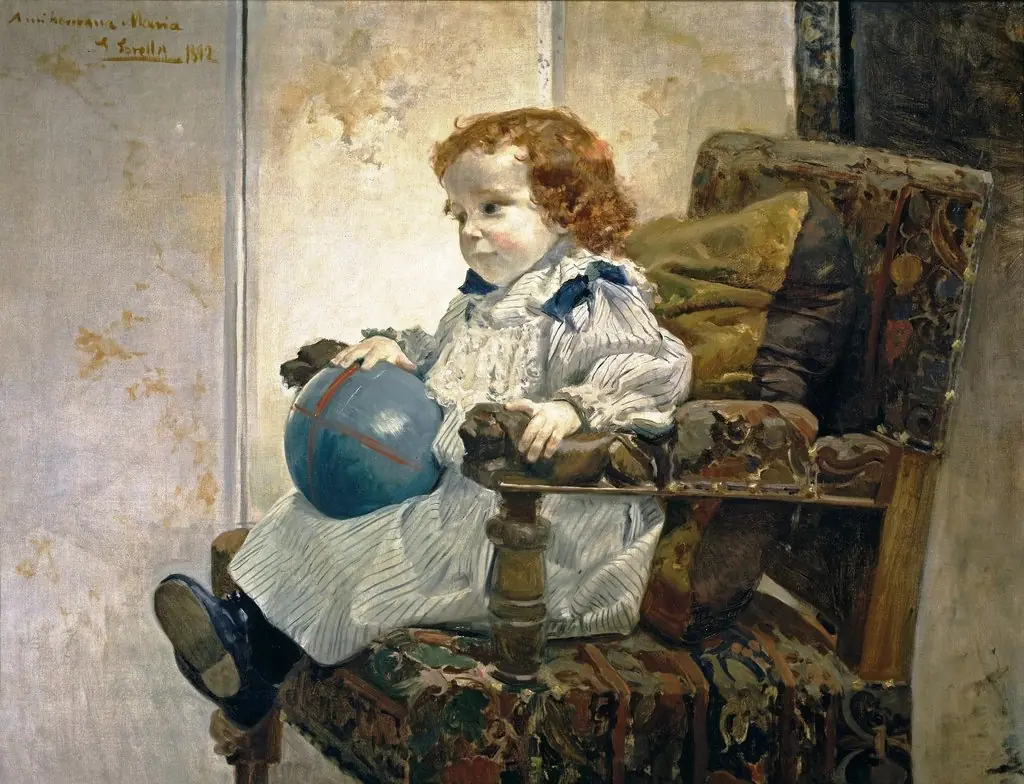
La niña María Figueroa vestida de menina is an oil painting by the Post-Impressionist artist Joaquín Sorolla. It dates from 1901 and is held in the collection of the Museo del Prado.
About this work
Overview
Created in 1901, this oil painting by Joaquín Sorolla captures a young girl seated on a chair. The work is part of the Museo del Prado’s collection and exemplifies Sorolla’s engagement with post‑impressionist techniques, especially his handling of light and color.
Subject & Meaning
The sitter is a child named María Figueroa, dressed in the traditional costume of a *menina*—the term used for maidens serving in the Spanish royal court. Her serious expression and direct gaze convey a formal portraiture style, while the attire links the image to historic courtly traditions.
Technique & Style
Sorolla employs a noticeable impasto, applying thick paint to the folds of the pink dress and the wooden chair. The brushwork is vigorous, creating texture that contrasts with a softly rendered, dark background. The palette balances delicate pinks with richer reds, lending the composition a subtle vibrancy.
History & Provenance
The painting was completed during a prolific period in Sorolla’s career when he focused on intimate portraiture. After its creation, it entered private ownership before being acquired by the Museo del Prado, where it remains on display as part of the museum’s early‑20th‑century holdings.
Context
At the turn of the century, Spanish artists were exploring post‑impressionist ideas, moving beyond academic realism. Sorolla’s work reflects this shift, combining naturalistic detail with expressive brushstrokes, and situates the portrait within broader trends of modern Spanish painting.
Artist & collection
Artist
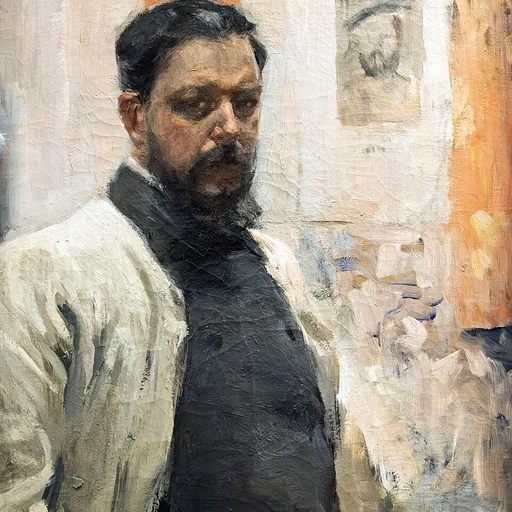
Joaquín Sorolla y Bastida (27 February 1863 – 10 August 1923) was a Spanish painter.