Artwork
Untitled
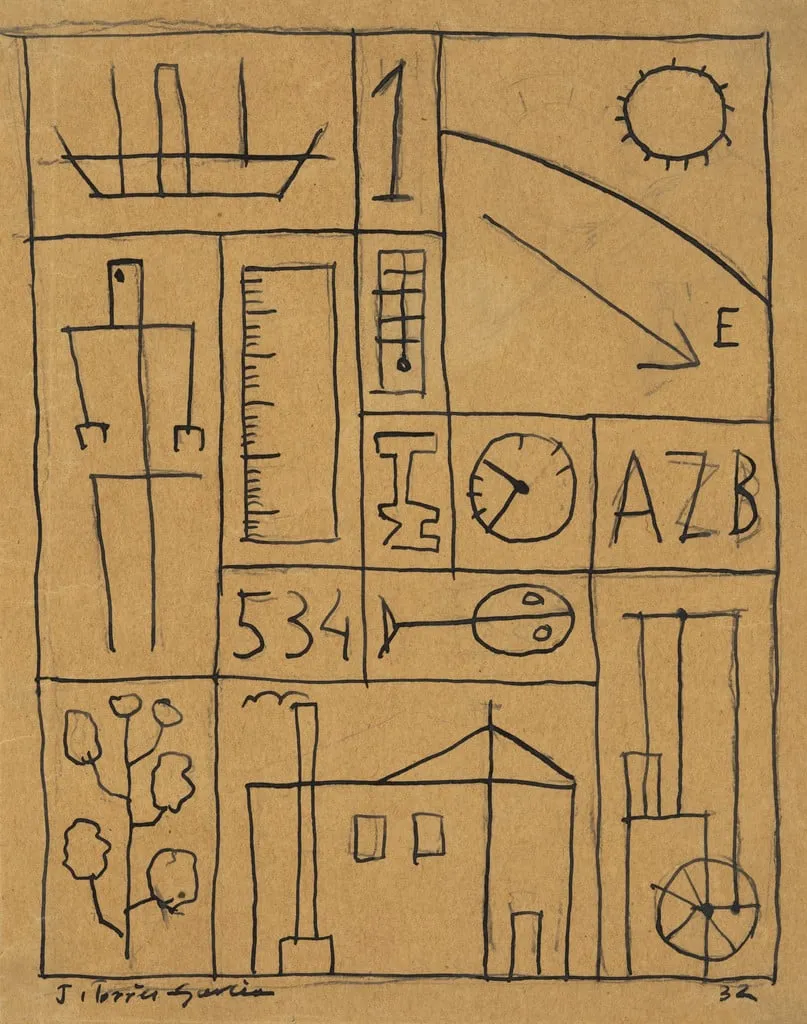
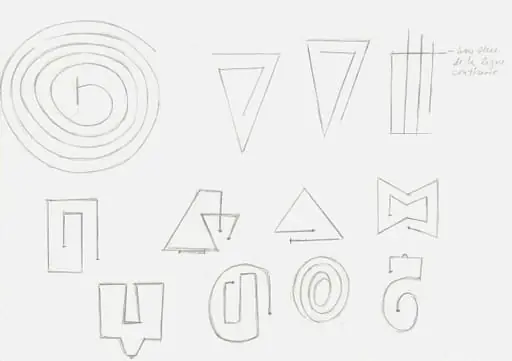
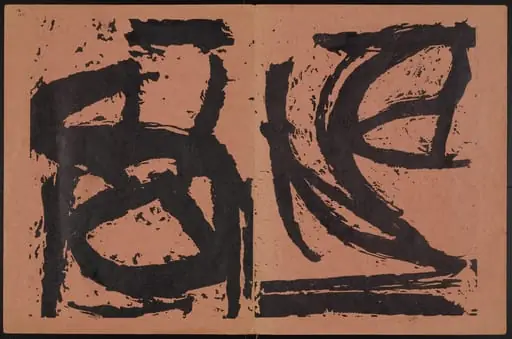
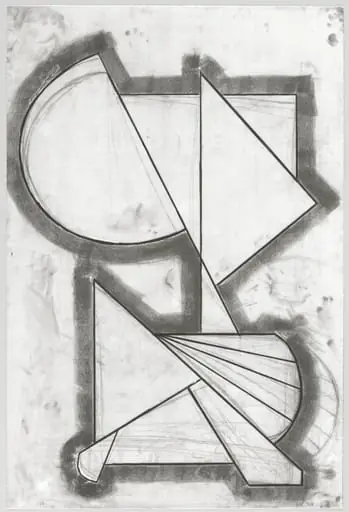
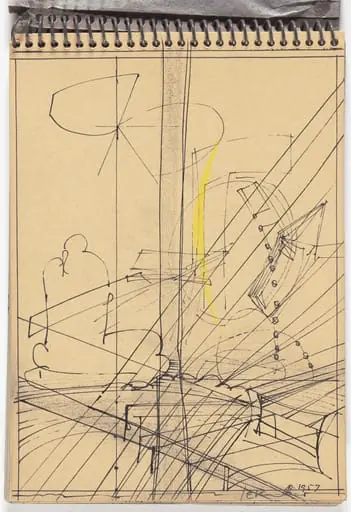
Untitled is a graphite drawing by Joaquín Torres-García. It dates from 1932 and is held in the collection of the Museum of Modern Art.
About this work
Overview
Executed on a modest, textured surface resembling notebook stock, it reflects his interest in personal notation and symbolic systems.
Created in 1932, this ink and pencil drawing on brown paper is one of many intimate works by Joaquín Torres-García. Executed on a modest, textured surface resembling notebook stock, it reflects his interest in personal notation and symbolic systems. The piece is part of The Museum of Modern Art’s collection, representing a quieter, exploratory side of an artist better known for large-scale murals and theoretical writings on universal form.
Subject & Meaning
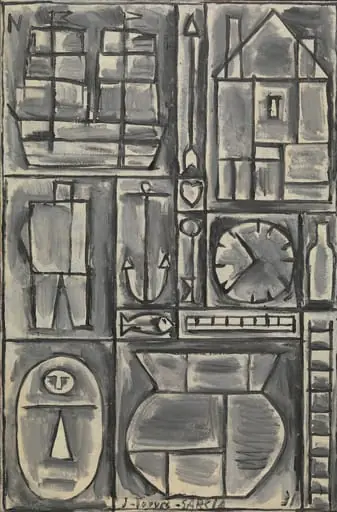
The drawing arranges everyday objects—boat, house, clock, ruler—and abstract symbols like the sun, letters, and a yin-yang within a loose grid. These elements appear as visual shorthand, possibly drawn from the artist’s notebooks or personal lexicon. Numbers and cryptic sequences such as '534' or 'AZB' suggest coded references, perhaps to time, location, or internal systems of thought, rather than narrative content.
Technique & Style
Torres-García used quick, uneven pencil and ink lines, creating a sense of immediacy and spontaneity. The forms are simplified, almost childlike, yet deliberately placed within a structured grid. The brown paper’s texture enhances the raw, unpolished quality, reinforcing the impression of a private sketch rather than a finished composition. The signature, a faint scrawl in the corner, underscores the work’s informal, personal nature.
History & Provenance
The drawing entered The Museum of Modern Art’s collection through documented acquisition, though its earlier ownership remains unrecorded. It was likely made during Torres-García’s time in Europe, where he engaged with avant-garde circles. Its survival as a small, fragile work on paper reflects its role as a preparatory or private study, later recognized for its insight into his evolving symbolic language.
Context
Made during Torres-García’s engagement with European abstraction, this piece aligns with his participation in groups like Cercle et Carré, where artists explored geometric form and universal symbols. Unlike his later, more systematic compositions, this drawing reveals an experimental phase—where personal iconography and spontaneous mark-making preceded his mature, structured compositions rooted in pre-Columbian and classical ideals.
Legacy
This drawing exemplifies Torres-García’s belief in art as a language of universal signs. Though modest in scale, it anticipates his later codified systems and informs how scholars interpret his symbolic vocabulary. Its preservation in a major institution underscores its value as a window into the artist’s private thought process, bridging his theoretical ambitions with the tactile reality of his daily practice.
Artist & collection
Artist
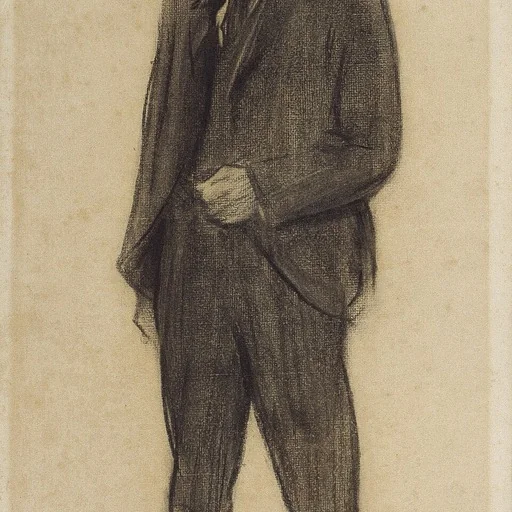
Joaquín Torres-García (28 July 1874 – 8 August 1949), was a Spanish Uruguayan painter, theorist, teacher and author, who spent most of his adult life in Spain.