Artwork
Sorrow
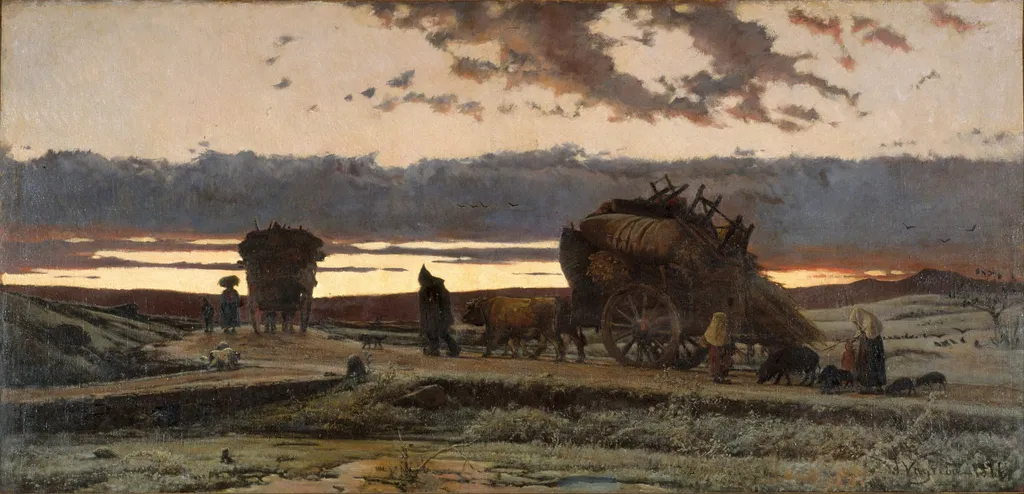
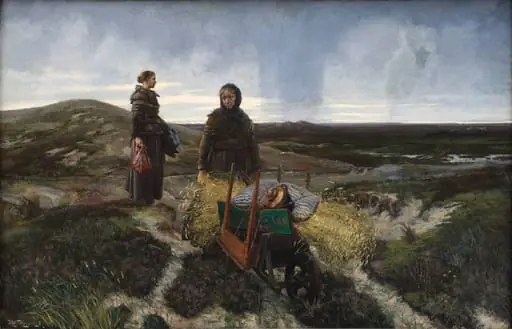
Sorrow is an oil painting by Joaquim Vayreda i Vila. It dates from 1888 and is held in the collection of the Museu Nacional d'Art de Catalunya.
About this work
Overview
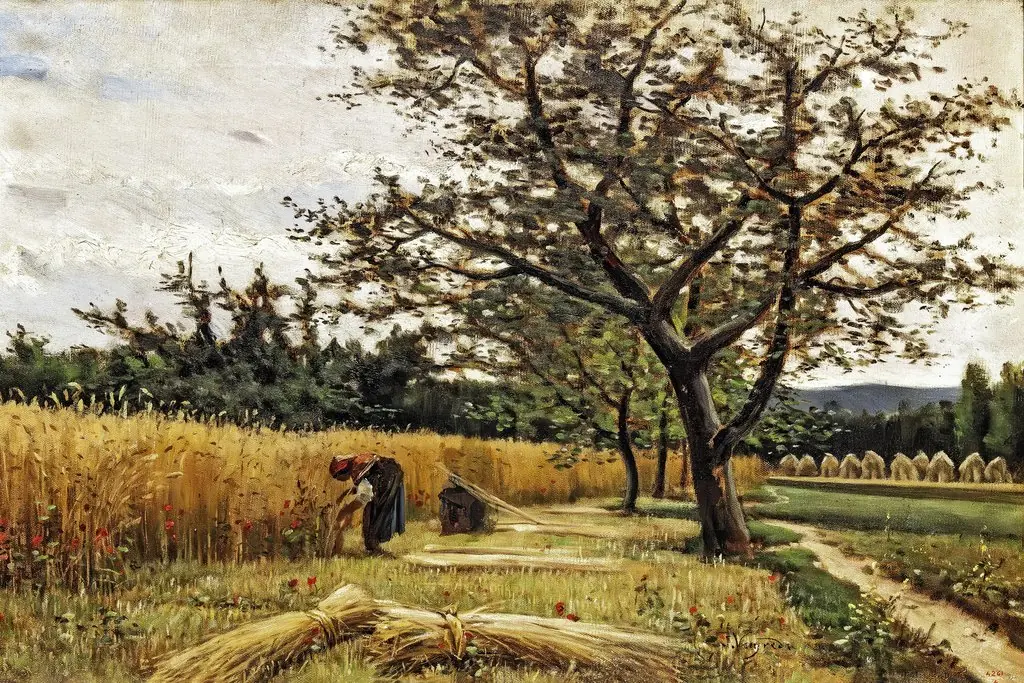
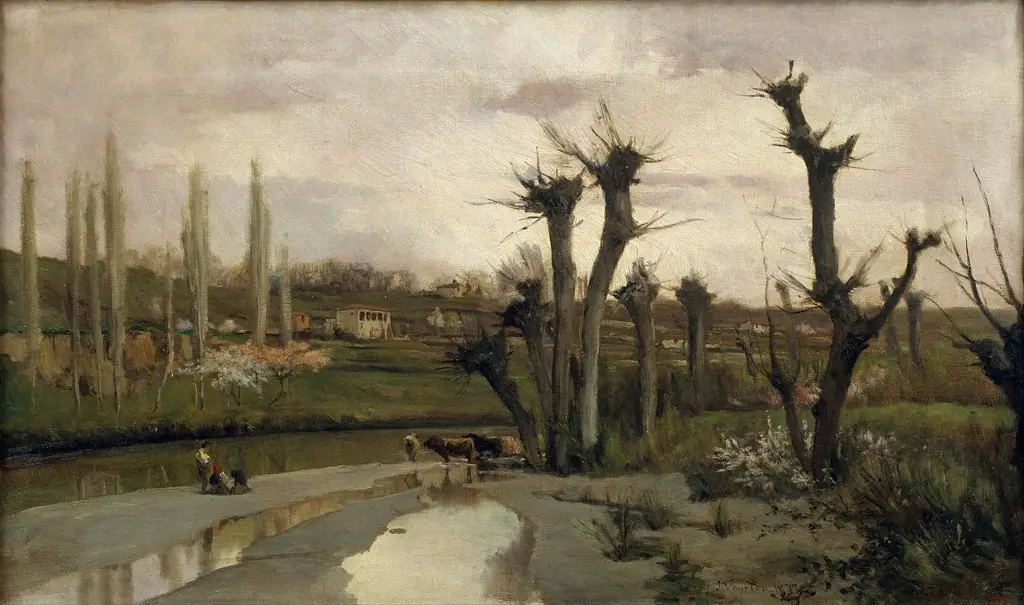
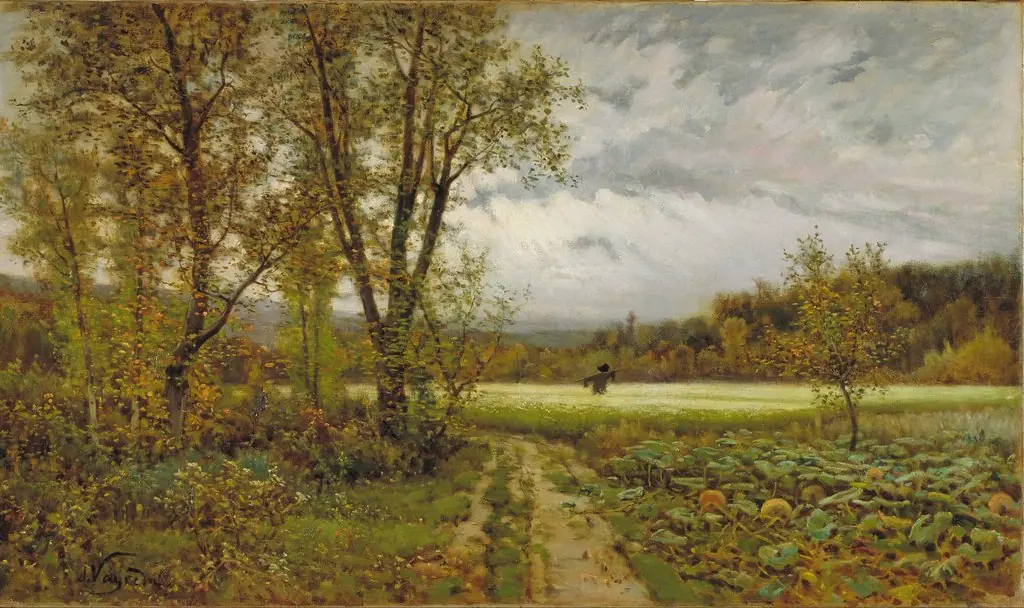
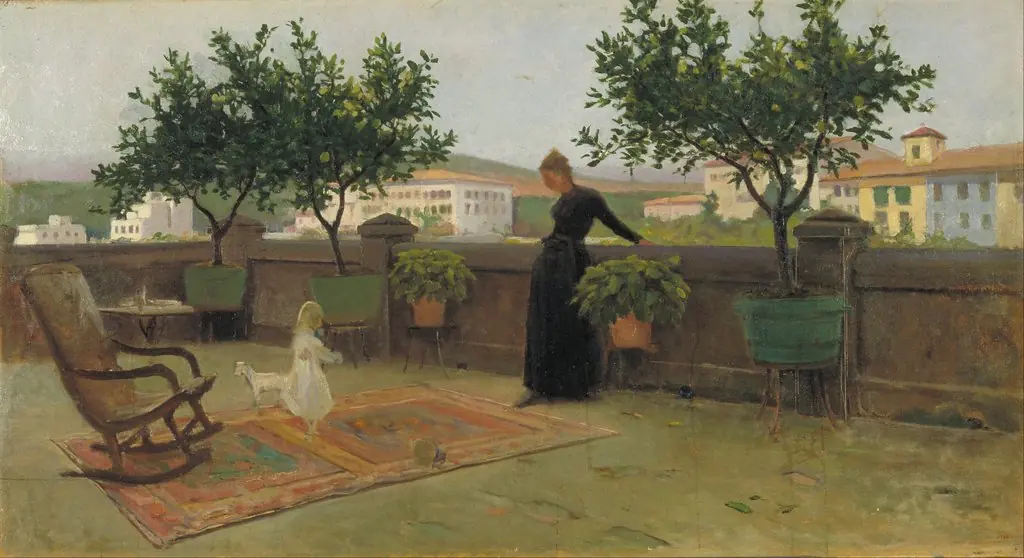
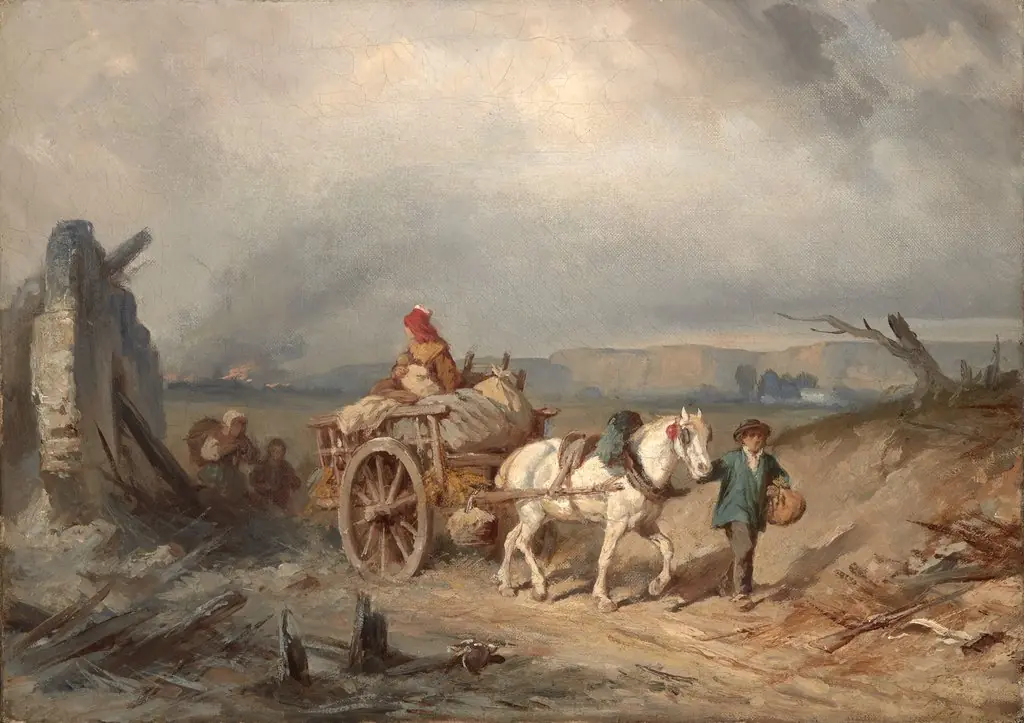
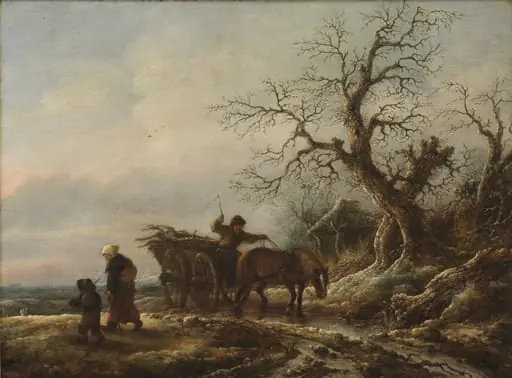
Created in 1888, *Sorrow* is an oil painting by Joaquim Vayreda i Vila, a Spanish artist known for his landscape work. The composition depicts a rural scene with a horse‑drawn cart, a standing woman, and a cloudy sky, rendered in subdued browns and grays. The work belongs to the collection of the Museu Nacional d'Art de Catalunya.
Subject & Meaning
The canvas presents a solitary woman attending a horse‑drawn cart laden with bundles, set against a muted horizon. The quiet posture of the figures and the overcast atmosphere suggest a moment of contemplation or melancholy, inviting viewers to consider the everyday hardships of rural life.
Technique & Style
Vayreda employs a restrained palette of earth tones, allowing subtle tonal shifts to define form. Visible brushwork creates a tactile surface, while chiaroscuro enhances the spatial depth, emphasizing the contrast between illuminated areas and shadowed planes. The overall handling reflects the artist's transition from Barbizon influences toward a more localized, realist approach.
History & Provenance
After its completion, the painting entered the holdings of the Museu Nacional d'Art de Catalunya, where it remains on display. Vayreda's role in founding the Olot school situates the work within the broader development of Catalan landscape painting in the late nineteenth century.
Context
*Sorrow* emerges at a time when Spanish painters were turning toward regional subjects and naturalistic representation. Vayreda's early exposure to the Barbizon school informed his attention to atmosphere and light, while his later involvement with the Olot school anchored his practice in the Catalan countryside, a theme evident in this work.
Artist & collection
Artist
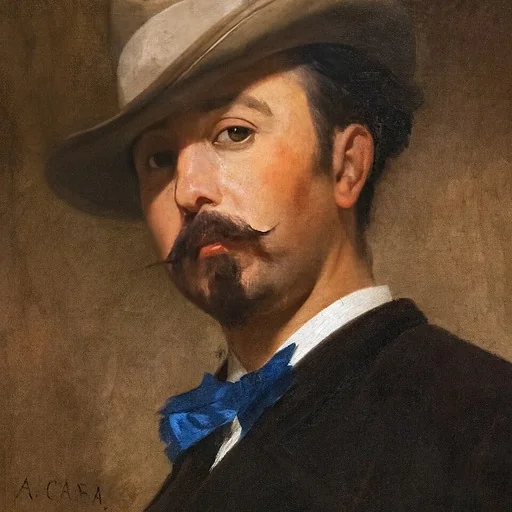
Joaquim Vayreda i Vila (23 May 1843 – 31 October 1894) was a Spanish landscape painter. He was originally influenced by the Barbizon school, but later became one of the founders of the Olot school.