Artwork
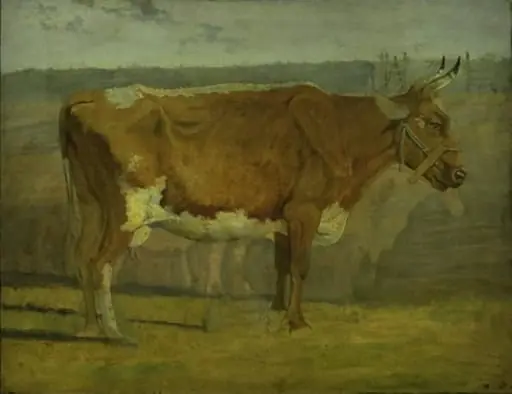
Study of a Cow
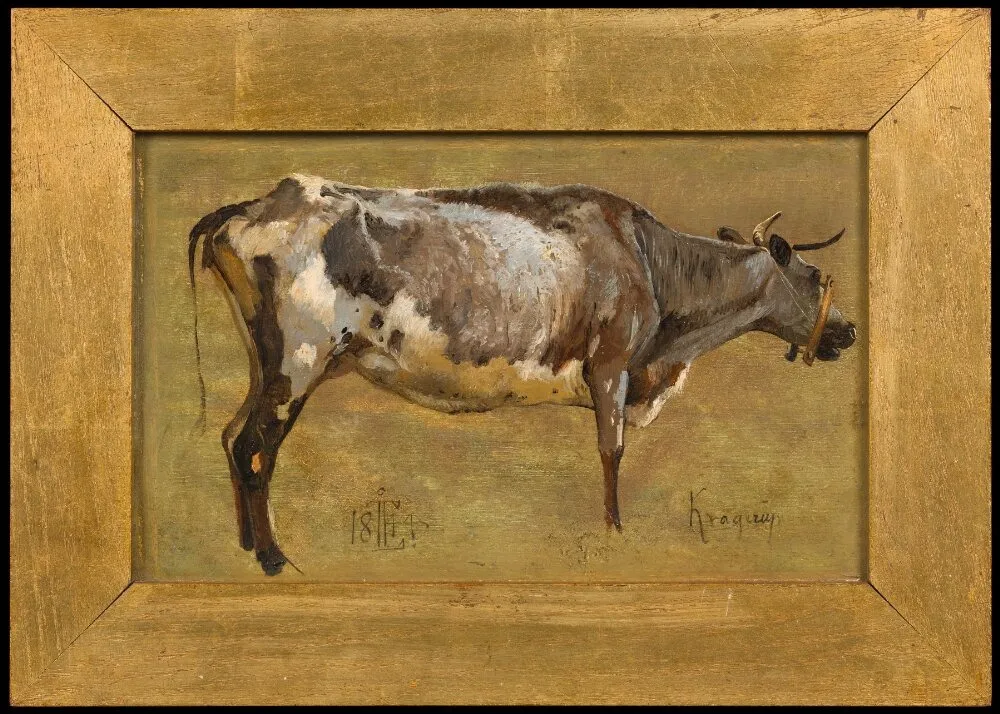
Study of a Cow is an unspecified painting by the Barbizon school artist Johan Lundbye. It dates from 1844 and is held in the collection of the Nationalmuseum.
About this work
The artist's use of color and composition creates a sense of depth and dimensionality, drawing the viewer's eye to the cow's gentle features.
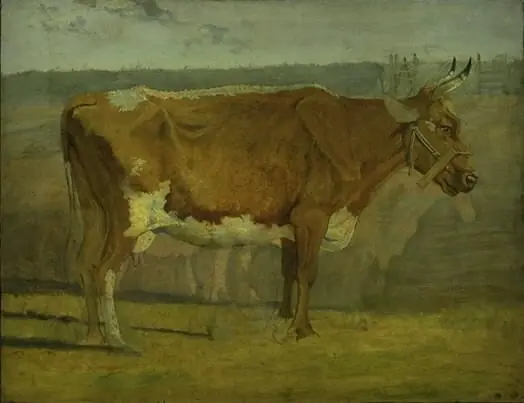
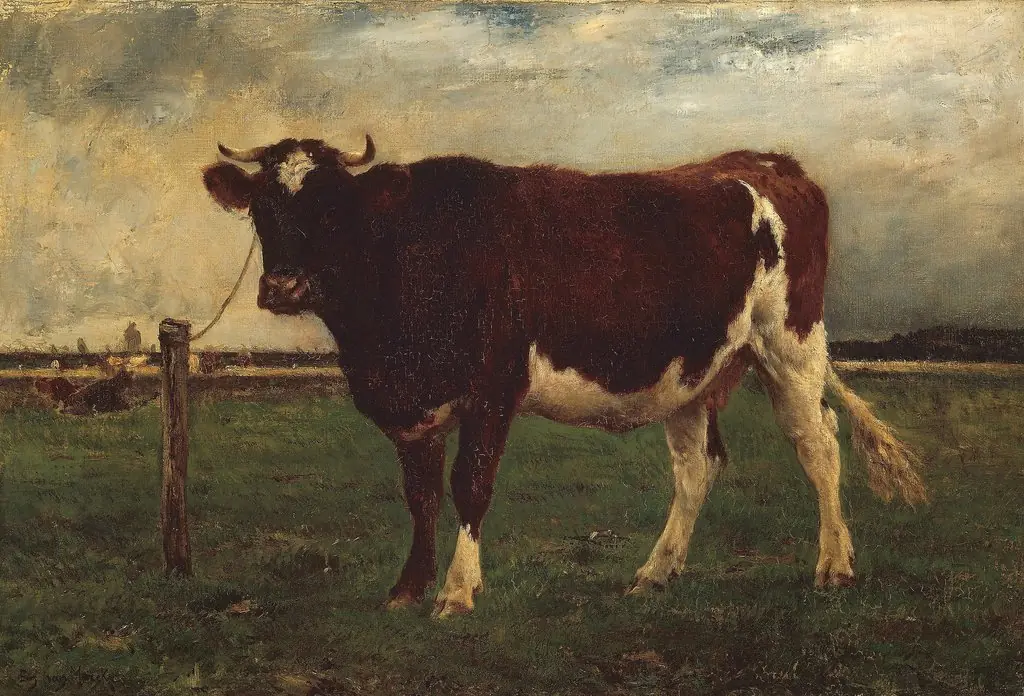
This painting depicts a cow in profile, facing right. The cow's body is rendered in shades of brown and white, with darker tones on its legs and head. A yellowish-brown frame surrounds the image.
In the lower-left corner, the year "1844" is inscribed, while the artist's signature, "Johan Lundbye," appears in the lower-right corner. The overall style of the painting suggests a focus on realism and attention to detail.
The artist's use of color and composition creates a sense of depth and dimensionality, drawing the viewer's eye to the cow's gentle features. If you're interested in learning more about the artist's techniques and style, you might want to explore the work of Johan Lundbye.
Overview
Johan Lundbye’s 1844 oil painting presents a solitary cow rendered in profile against a muted landscape. The animal’s brown and white coat is depicted with careful modeling, while a subtle tonal background suggests depth. The composition is framed by a simple yellow‑brown border, and the work bears the date and artist’s signature in opposite corners, emphasizing its documentary character.
Subject & Meaning
The painting focuses on a single bovine figure, embodying the everyday agrarian life of mid‑nineteenth‑century Denmark. By isolating the cow, Lundbye highlights the dignity of rural labor and the natural world, reflecting contemporary nationalist ideas that valued the country’s pastoral heritage as a source of cultural identity.
Technique & Style
Lundbye employs a restrained palette of earth tones, using layered brushwork to model the animal’s musculature and fur texture. The realistic rendering aligns with the naturalist tendencies of the Barbizon‑inspired circle, while the careful attention to light and shadow creates a modest three‑dimensional effect without overt dramatization.
History & Provenance
Created in 1844, the work was produced during a period when Danish artists responded to Niels Laurits Høyen’s call for national subjects. It entered the collection of Sweden’s Nationalmuseum, where it remains part of the institution’s holdings of 19th‑century Scandinavian art.
Context
Lundbye’s interest in animal and landscape painting placed him alongside contemporaries such as P. C. Skovgaard and Lorenz Frølich, who also explored national romantic themes. The piece reflects the broader movement toward depicting ordinary Danish scenery as a means of fostering cultural pride.
Artist & collection
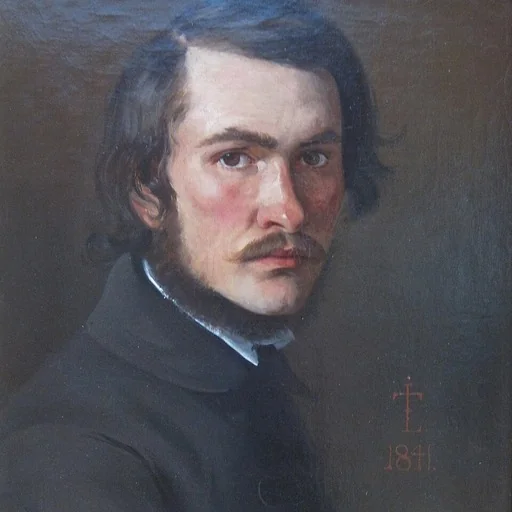
Artist
Johan Thomas Lundbye (1 September 1818 – 25 April 1848) was a Danish painter and graphic artist, known for his animal and landscape paintings.

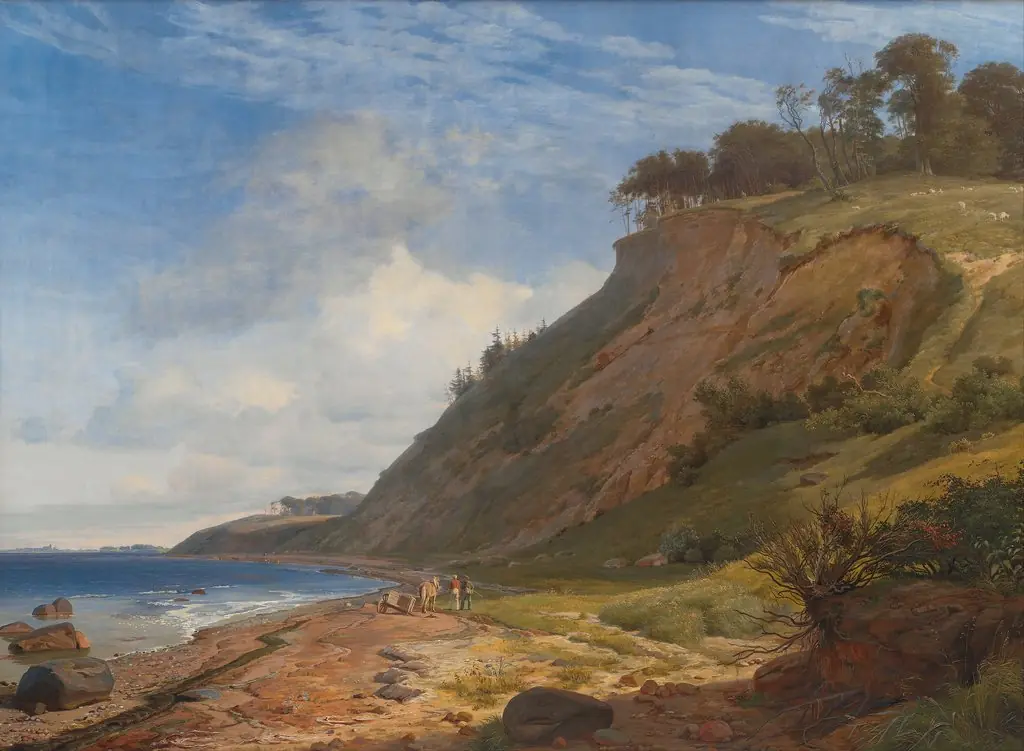 A Danish Coast. View from Kitnæs on Roskilde Fjord. Zealand
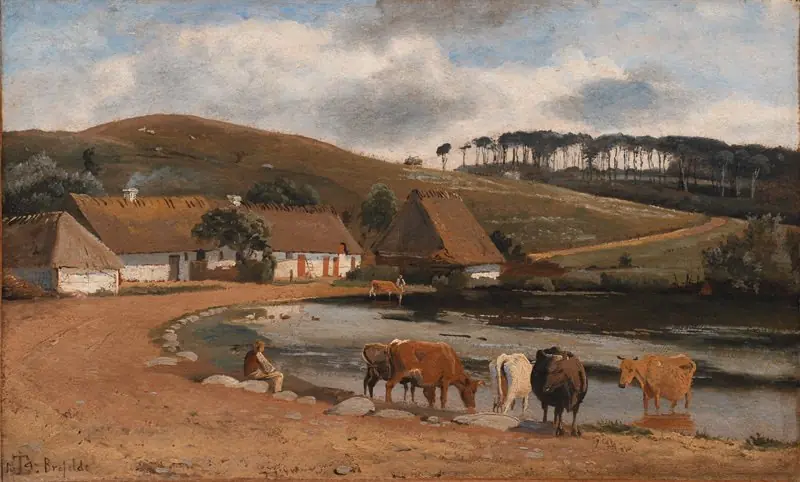 Cows being Watered at a Village Pond. Brofelde, Zealand
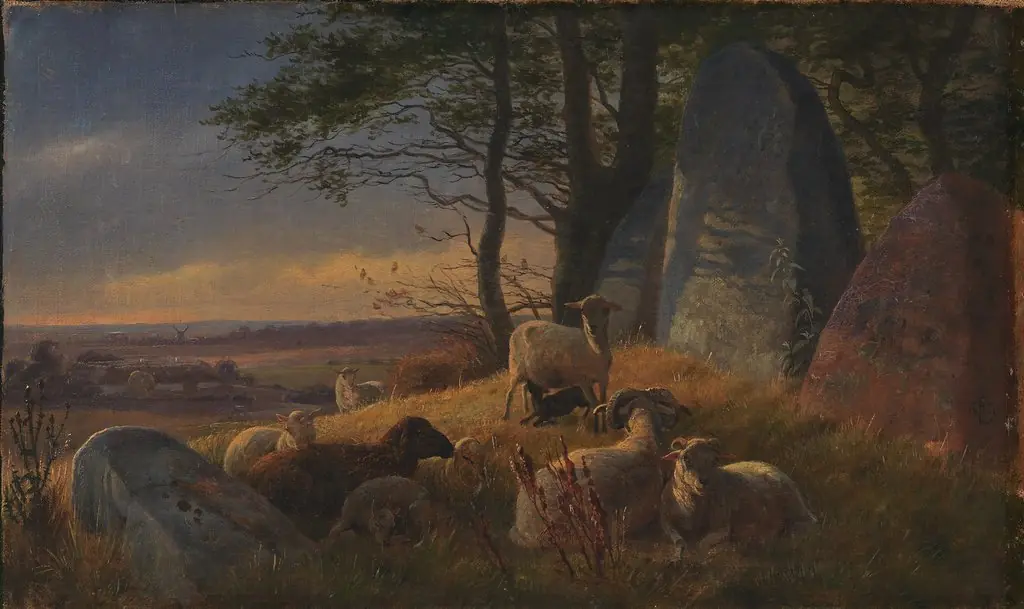 Evening Scene with Sheep on a Mound
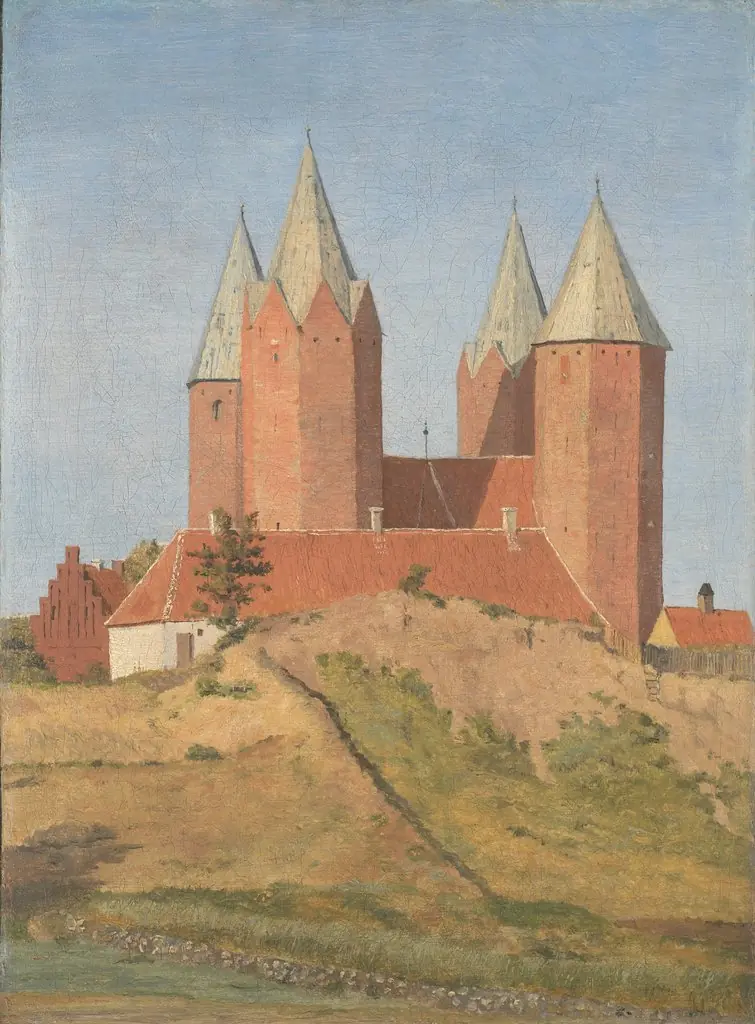 Kalundborg Church
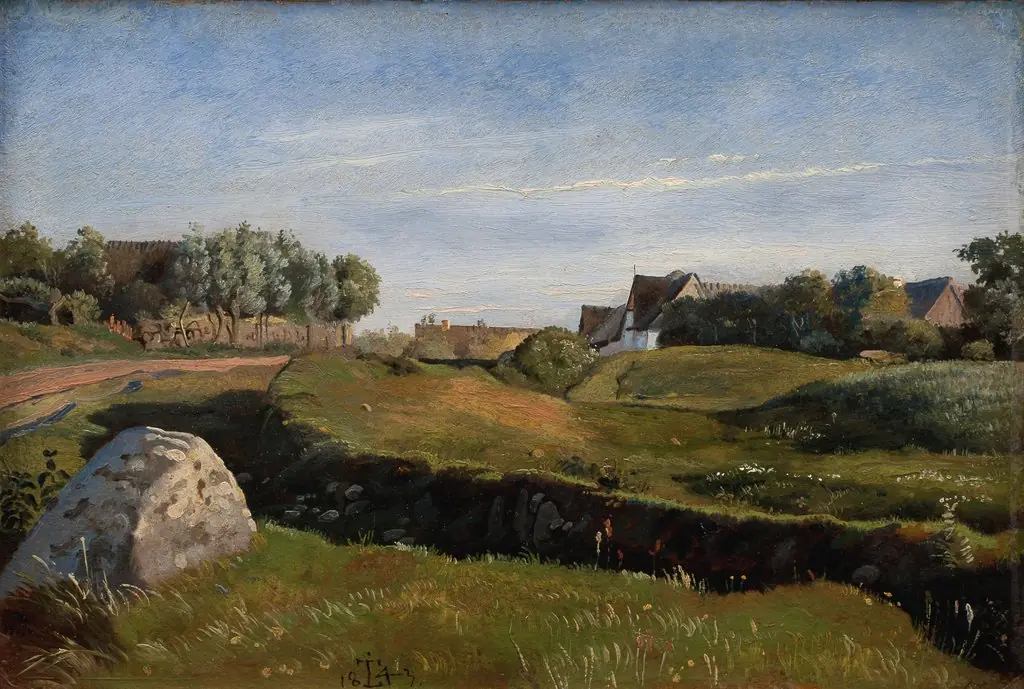 Landscape near Vejby seen from the North. Afternoon Light
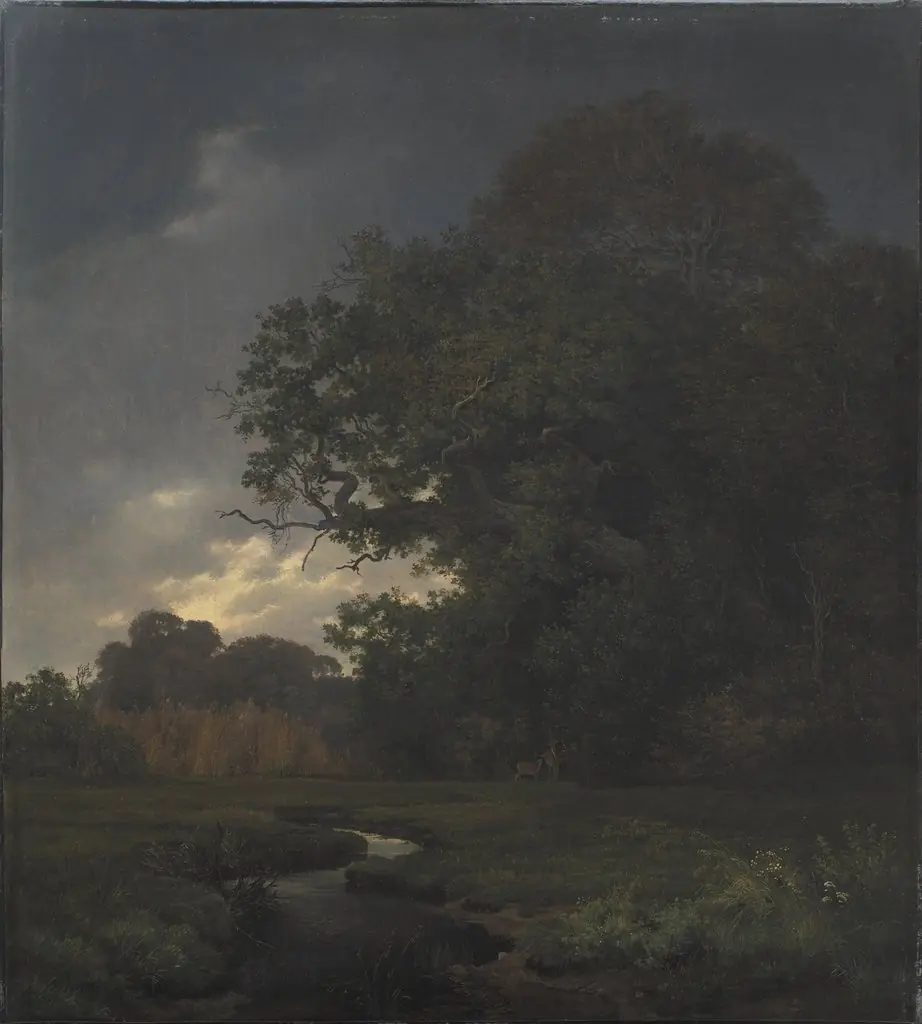 Landscape in Cloudy Weather. Late Afternoon
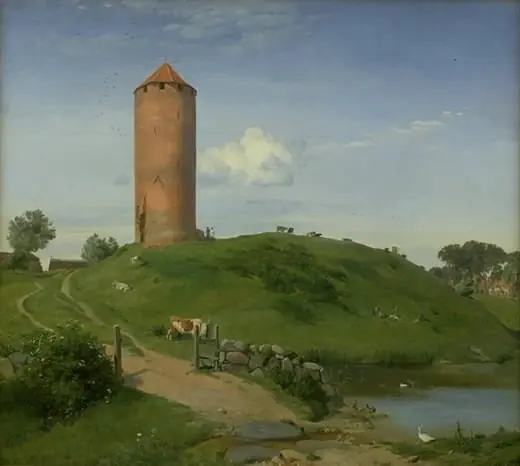 The Goose Tower in Vordingborg, Zealand
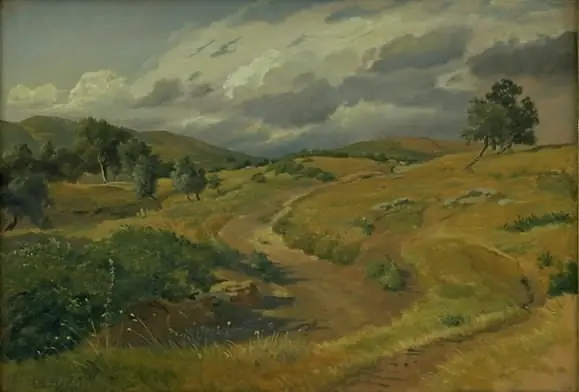 Landscape near Tivoli, Italy