Artwork
The Brothers Eberhard
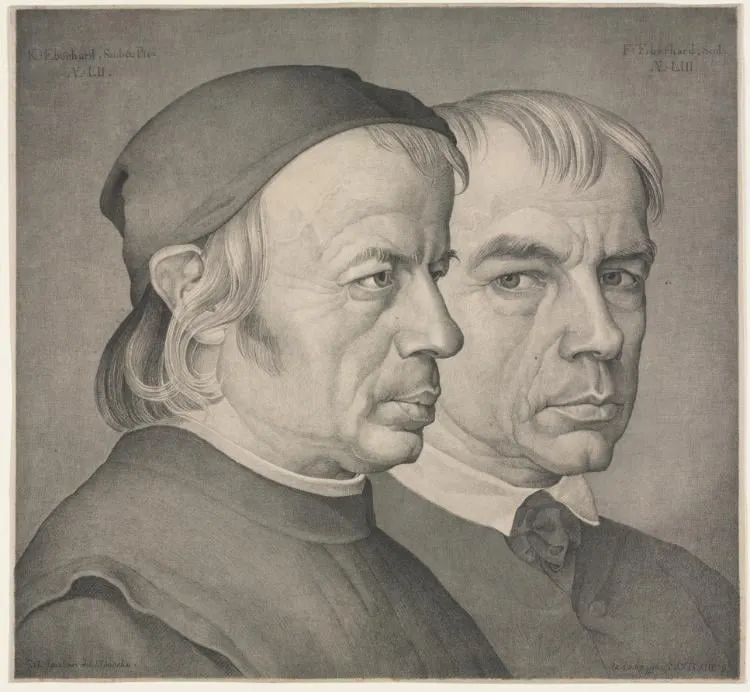
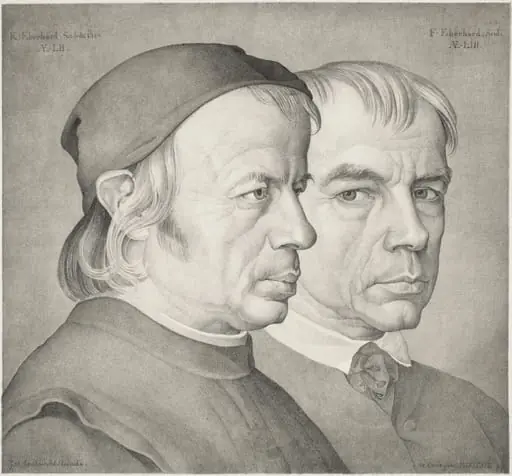
The Brothers Eberhard is a print by the Romanticist artist Johann Anton Ramboux. It dates from 1822 and is held in the collection of the Cleveland Museum of Art.
About this work
Overview
Executed in the early 19th century, the work belongs to the tradition of Freundschaftsbilder—intimate portraits exchanged among artists to honor personal bonds.
Johann Anton Ramboux created this lithograph as a personal gift to the Eberhard brothers, fellow artists within his circle. Executed in the early 19th century, the work belongs to the tradition of Freundschaftsbilder—intimate portraits exchanged among artists to honor personal bonds. Ramboux, aligned with the Nazarene movement, favored precise draftsmanship and spiritual sincerity over theatricality, qualities evident in this restrained yet evocative composition.
Subject & Meaning
The print depicts two brothers, both artists, rendered in profile with quiet dignity. Their placement side by side suggests equality and closeness, reinforcing the portrait’s function as a token of friendship. The absence of context or narrative elements focuses attention on their shared identity and mutual respect. As a Freundschaftsbild, the work transcends mere likeness, serving as a silent testament to artistic camaraderie in a time when such bonds were central to creative life.
Technique & Style
Ramboux employed lithography to achieve subtle tonal gradations, modeling the brothers’ faces with delicate chiaroscuro. The soft transition from light to shadow lends volume without theatrical contrast, reflecting the Nazarenes’ reverence for early Renaissance and Northern Renaissance draftsmanship. The dark, unmodeled background isolates the figures, heightening their presence and emphasizing the precision of line and tone that defined the group’s aesthetic ideals.
History & Provenance
Created in the 1820s or 1830s, the print was likely made for private circulation among Ramboux’s artistic peers. It was not intended for public exhibition but as a personal memento, consistent with the Nazarenes’ rejection of commercial art markets. The Eberhard brothers, active in the same German artistic circles, would have received it as both a tribute and a shared artifact of their creative community.
Context
The Nazarenes sought to revive the moral and technical integrity of pre-Raphaelite art, rejecting academic conventions in favor of spiritual clarity and handcrafted precision. In this context, the Freundschaftsbild was more than a portrait—it was an act of cultural resistance, affirming personal connection over public acclaim. Ramboux’s lithograph aligns with this ethos, valuing intimacy and craftsmanship over spectacle.
Legacy
Though little known outside specialist circles, this print exemplifies a broader 19th-century practice among artists to document relationships through handmade images. Its survival offers insight into the private networks that sustained artistic communities outside institutional frameworks. The work remains a quiet artifact of solidarity, reflecting how art could serve as a medium of personal and professional kinship.
Artist & collection

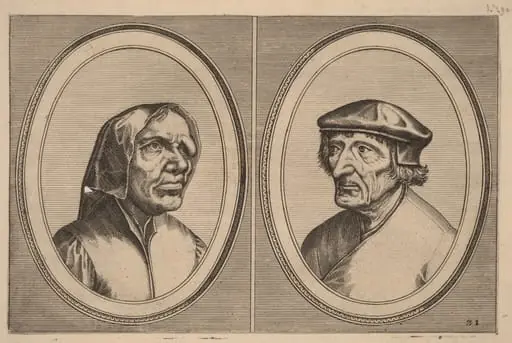 "Trijn Bulle-bacx" and "Voorsichtighe Oenne"
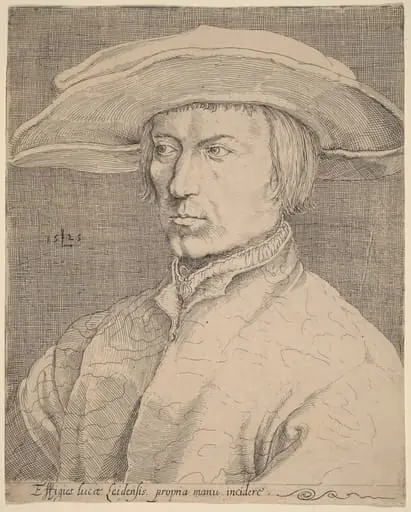 Self-Portrait
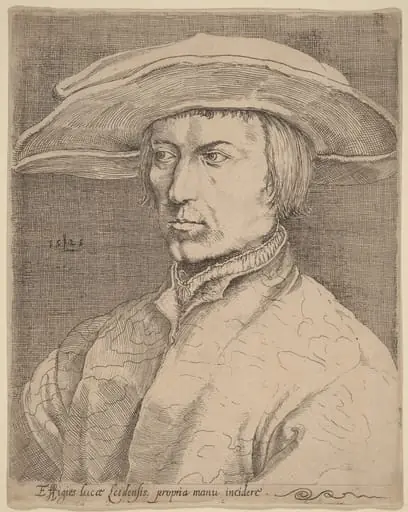 Self-Portrait
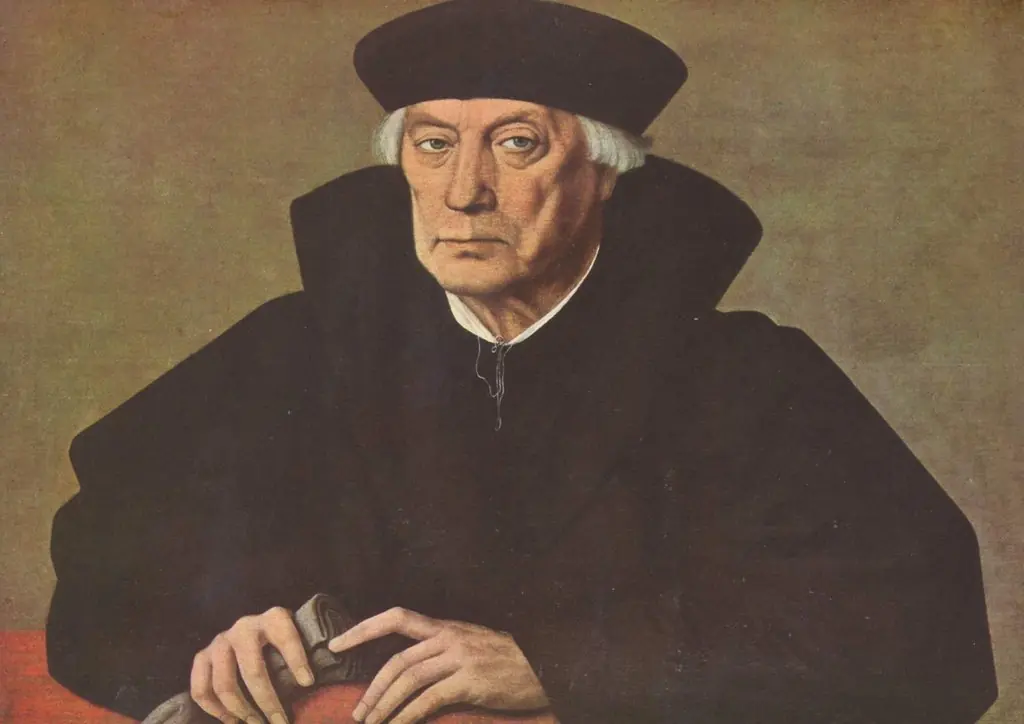 Portrait of Jean de Carondelet (1469-1544)
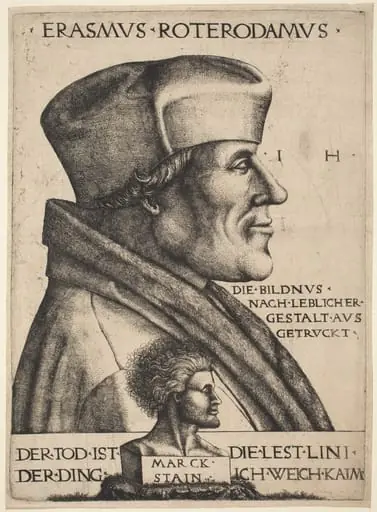 Erasmus of Rotterdam
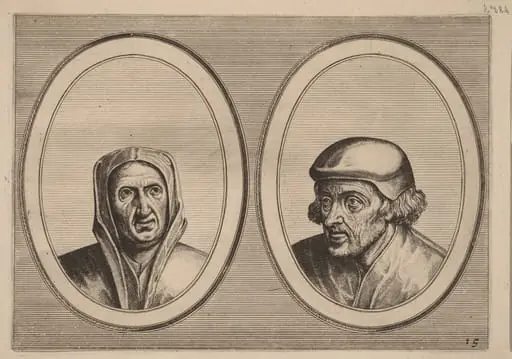 "Beveynsde Hil" and "Listighe Jorden"
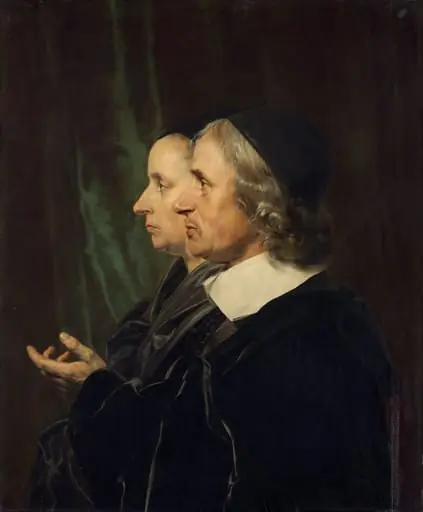 Portrait of the Artist's Parents, Salomon de Bray and Anna Westerbaen
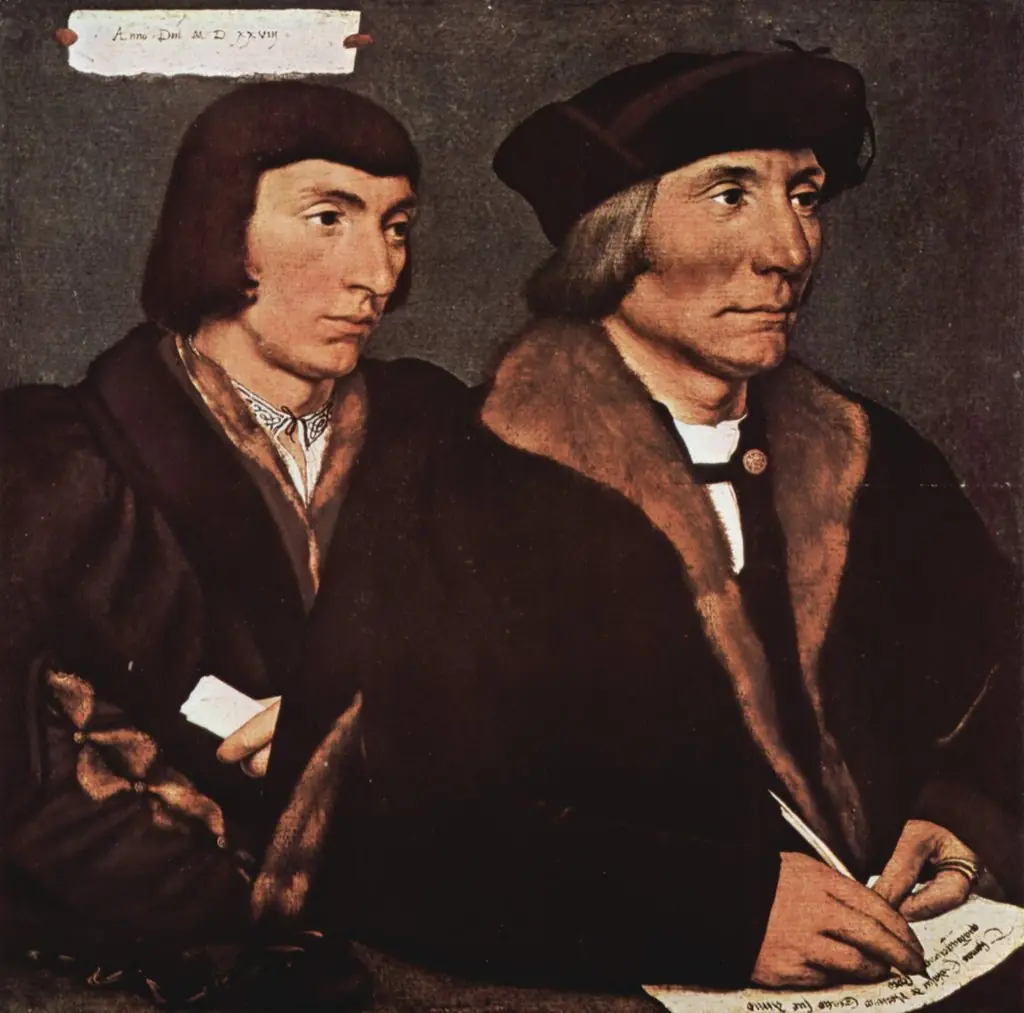 Portrait of Thomas Godsalve and his Son John
 Man in black beret holding a pair of gloves
 John Fisher and Sir Thomas More