Artwork
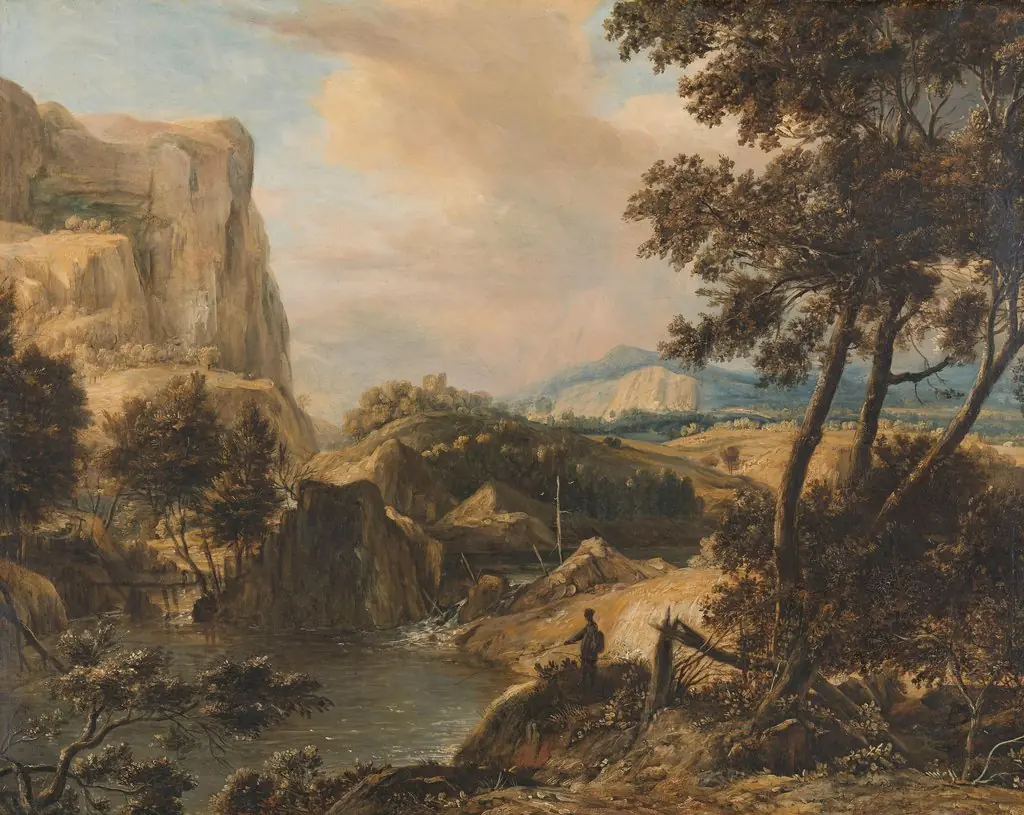
Felslandschaft mit Fischern
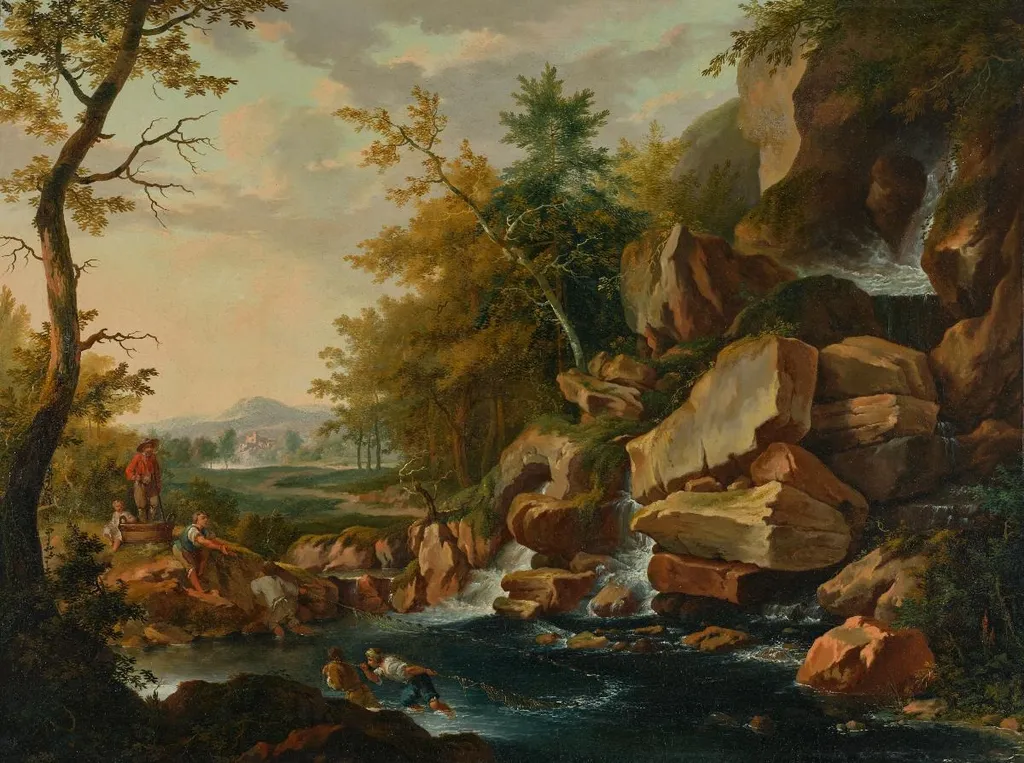
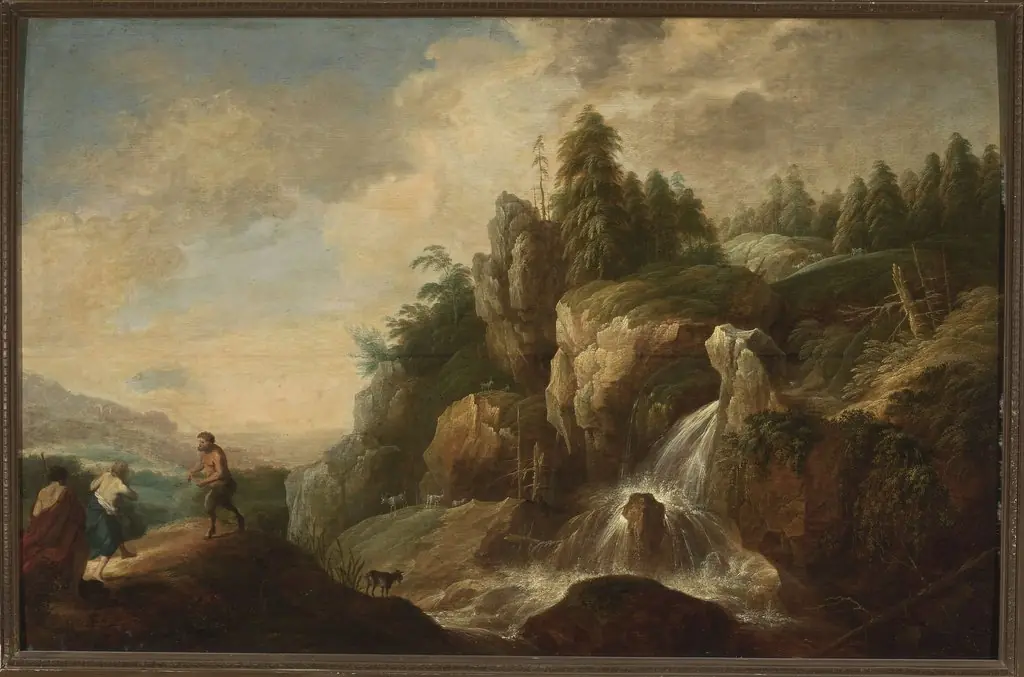
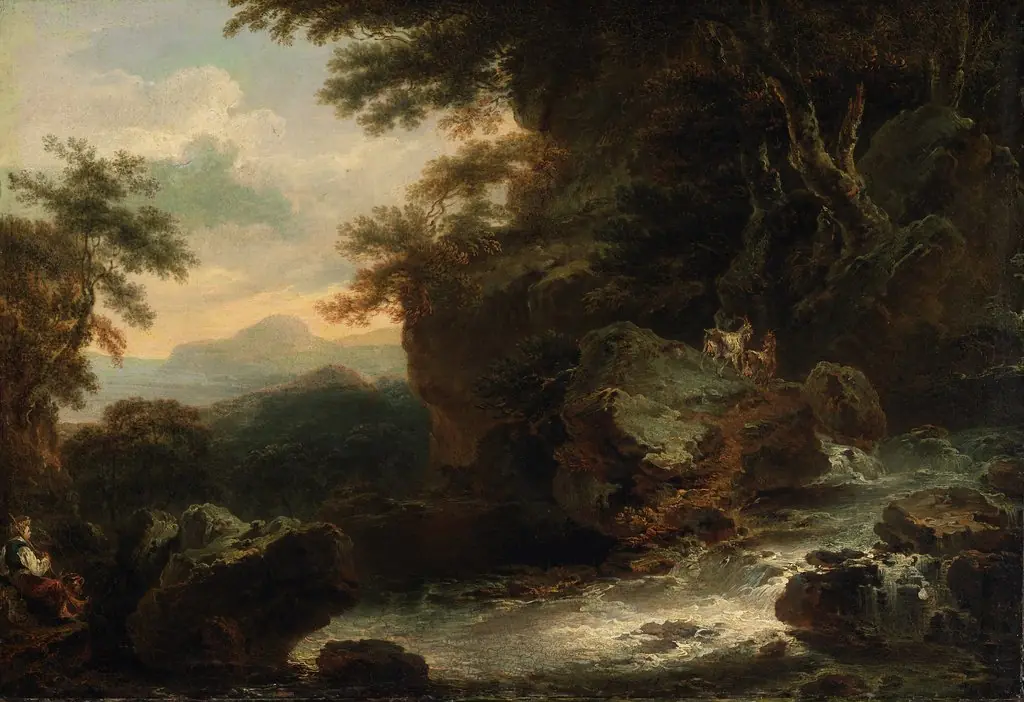
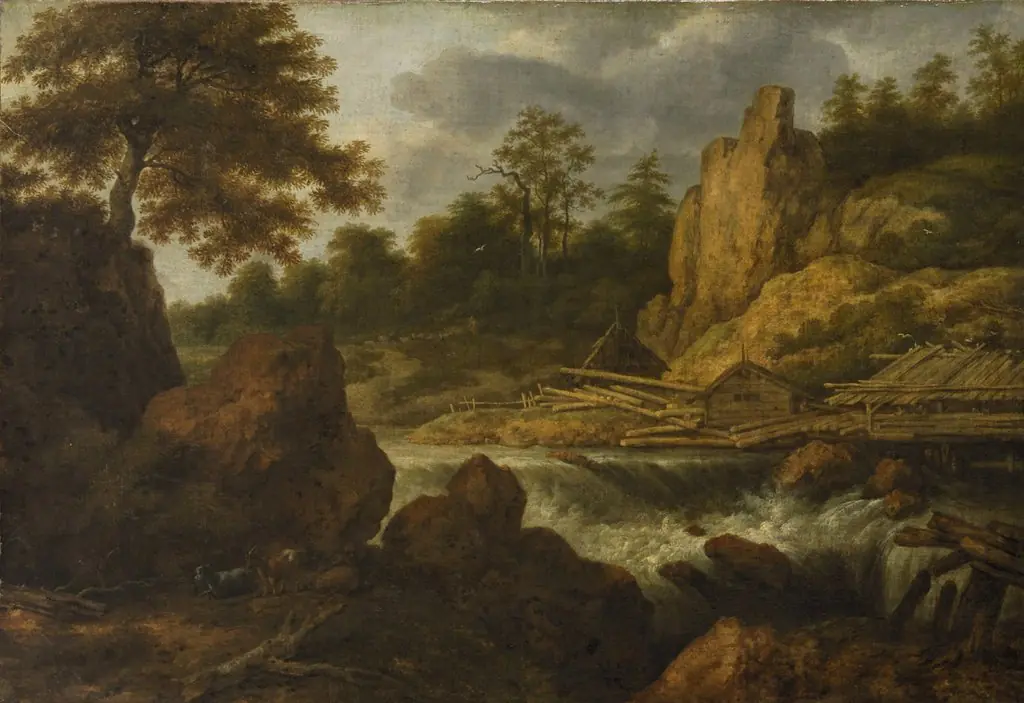
Felslandschaft mit Fischern is an oil painting by the Rococo painting artist Johann Balthasar Bullinger. It dates from 1753 and is held in the collection of the Kunsthaus Zürich.
About this work
Overview
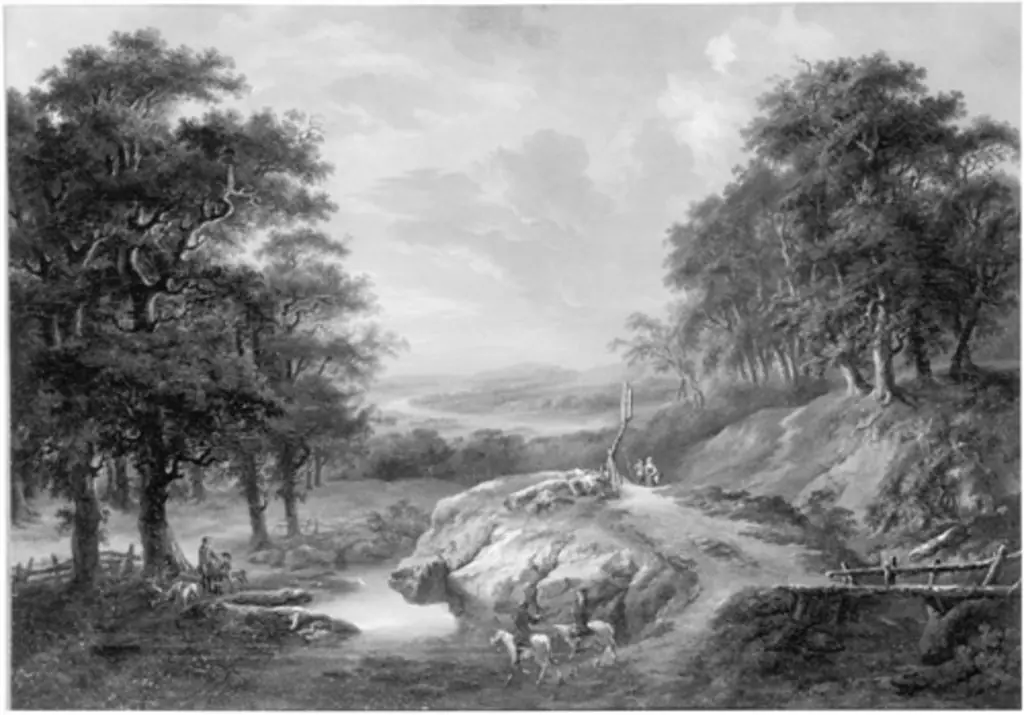
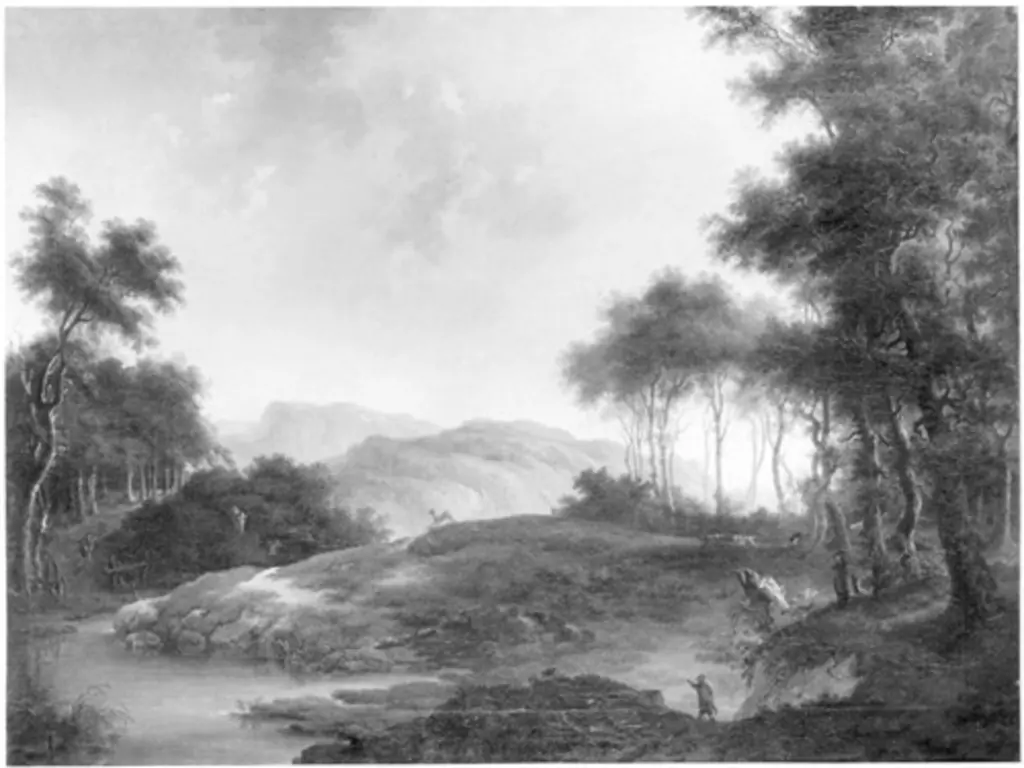
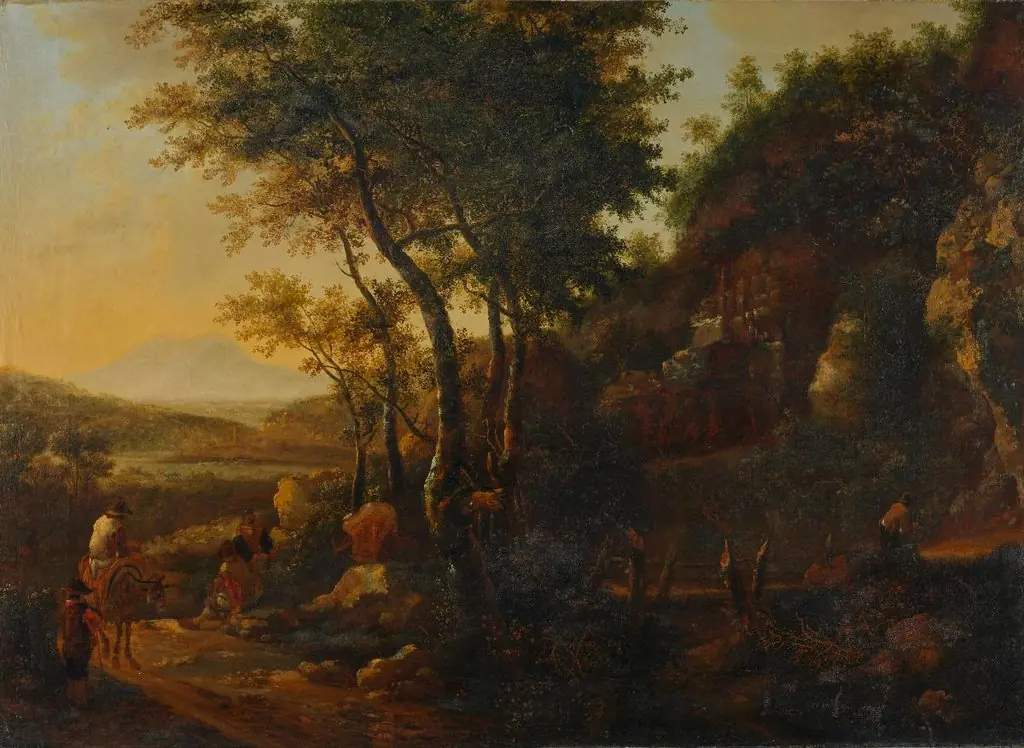
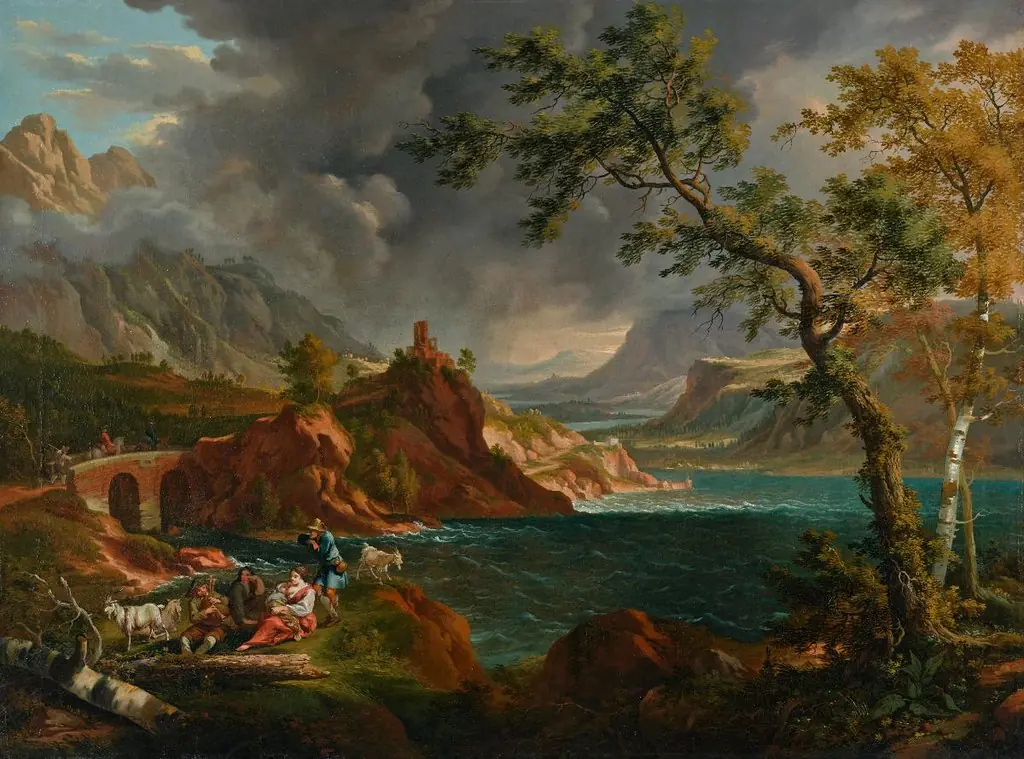
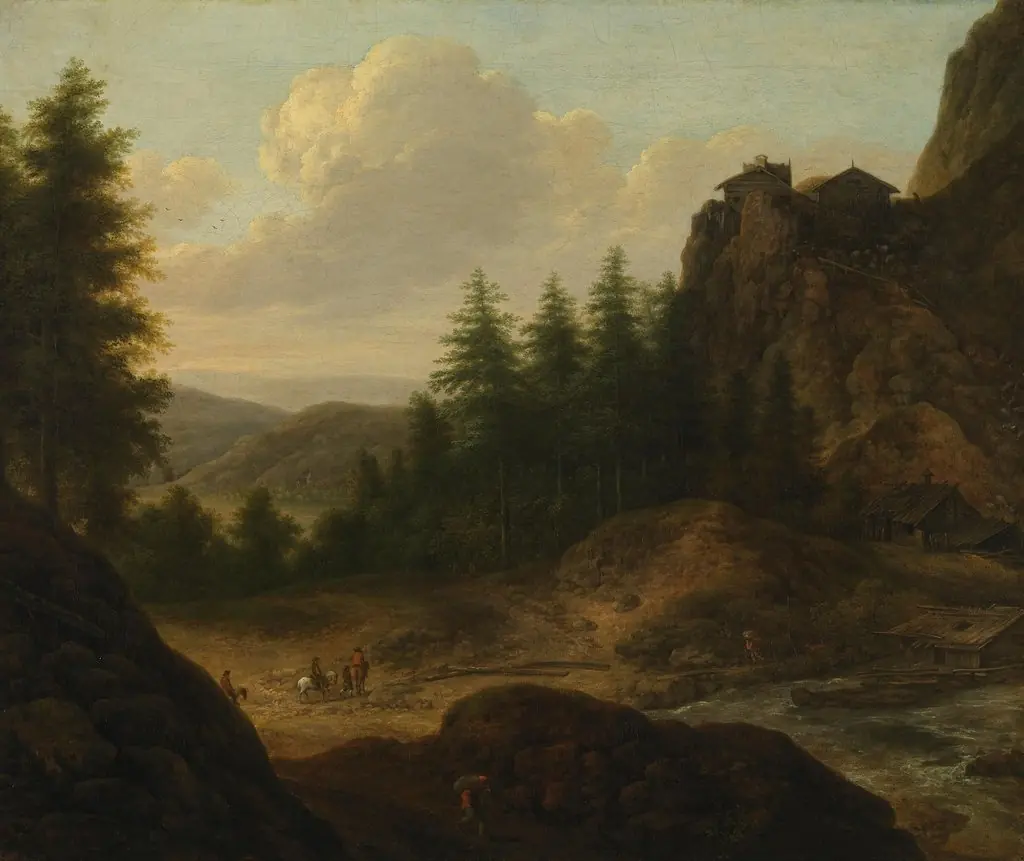
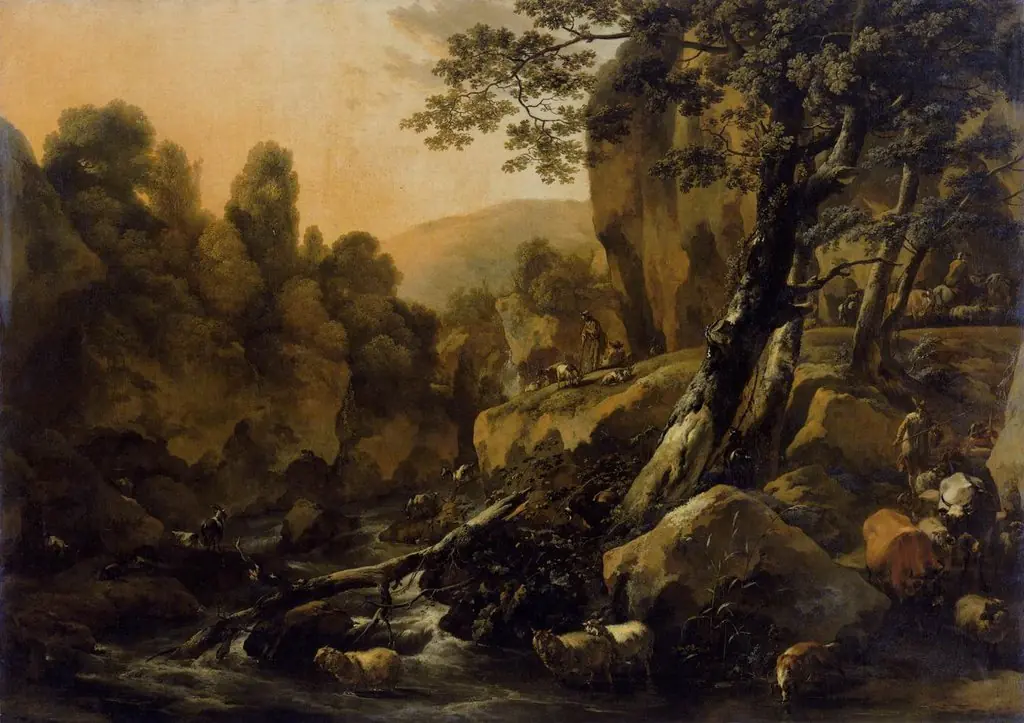
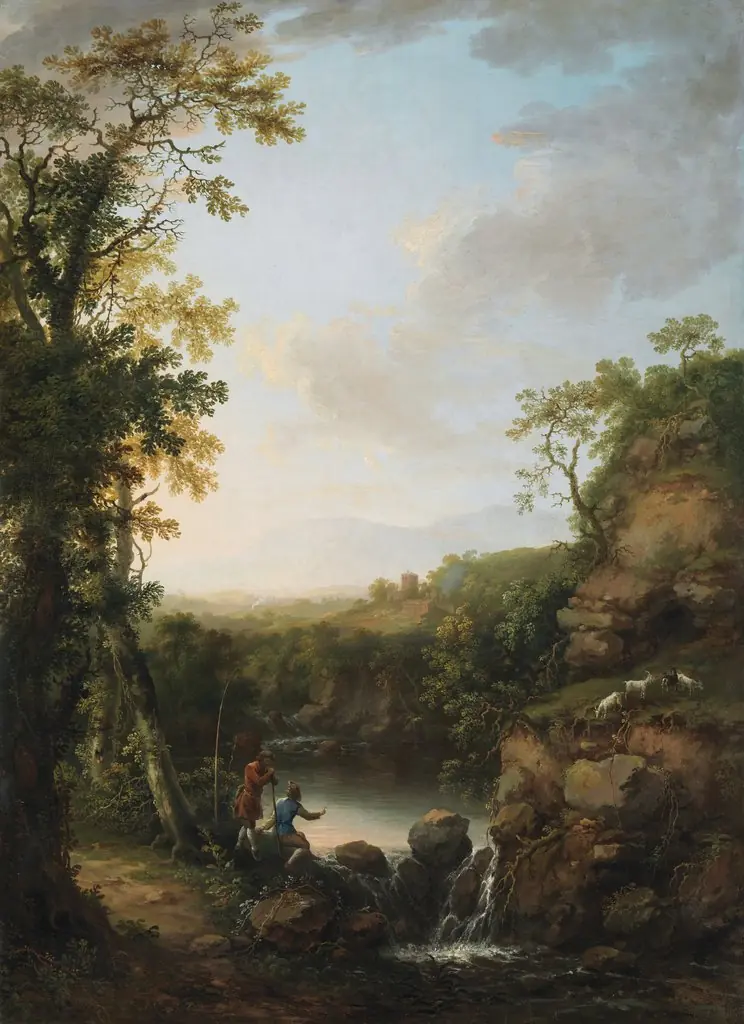
Painted in 1753 by Johann Balthasar Bullinger, this oil-on-canvas work depicts a Swiss alpine stream scene. It resides in the collection of the Kunsthaus Zürich and exemplifies 18th-century landscape painting through its quiet observation of nature and human presence. The composition balances rugged terrain with subtle human activity, avoiding dramatic flair in favor of restrained realism.
Subject & Meaning
The scene centers on a narrow mountain stream flanked by weathered cliffs and dense foliage. Figures in the foreground—some seated, others standing—engage with the water, suggesting daily tasks like fishing or washing. Their small scale emphasizes nature’s dominance, reflecting a period interest in harmony between humans and the rural environment rather than conquest or idealization.
Technique & Style
Bullinger employed oil paint to build layered textures, using soft transitions between light and shadow to model rock surfaces and foliage. Earth tones dominate, accented by muted greens and browns, creating a naturalistic palette. The handling of light suggests awareness of chiaroscuro, though applied subtly to enhance spatial depth without theatrical contrast.
History & Provenance
Created in 1753, the painting remained in Swiss collections and entered the Kunsthaus Zürich’s holdings in the 19th or early 20th century. Its documented history is limited, but its preservation suggests it was valued locally as a representative work of regional landscape tradition. No major exhibitions or ownership changes are recorded prior to its institutional acquisition.
Context
Bullinger worked during a time when Swiss artists increasingly turned to local scenery as subject matter, moving away from grand European traditions. This painting aligns with a growing regional interest in documenting topography and rural life with accuracy. It reflects a quieter, more introspective current in 18th-century Swiss art, distinct from the ornate styles of courtly painting.
Legacy
Though not widely known outside Switzerland, the painting contributes to the understanding of regional landscape practice in the 1700s. It stands as an example of how Swiss artists cultivated a visual language rooted in their immediate environment, influencing later generations who sought authenticity over idealization in depicting the Alps.
Artist & collection
Artist
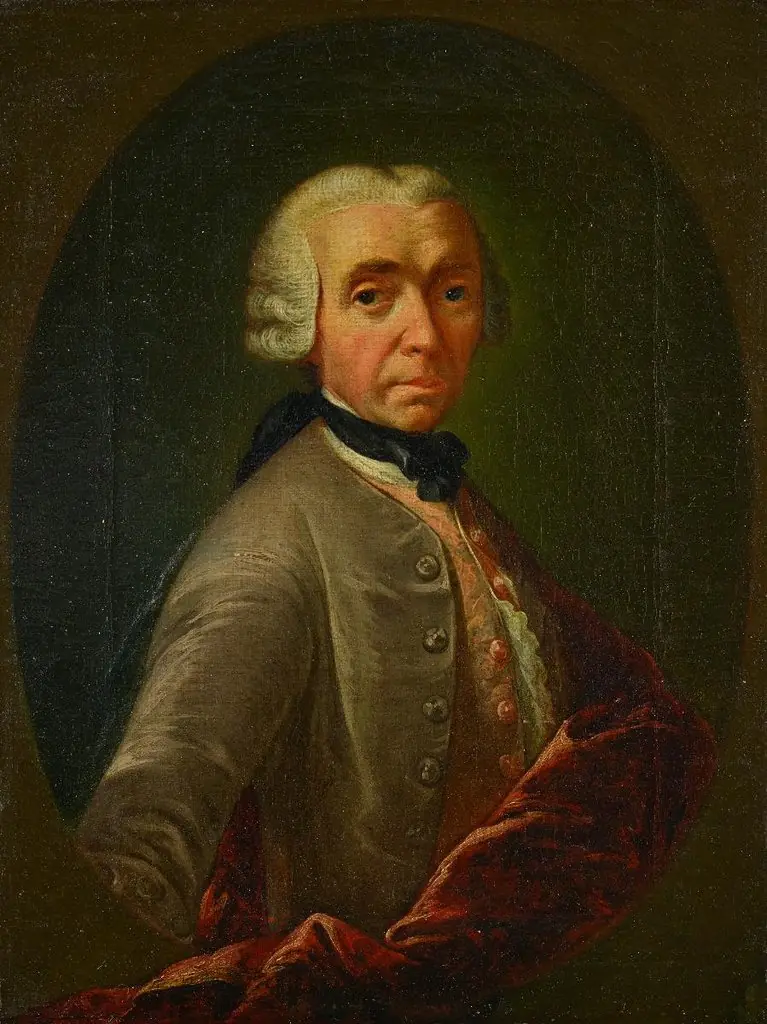
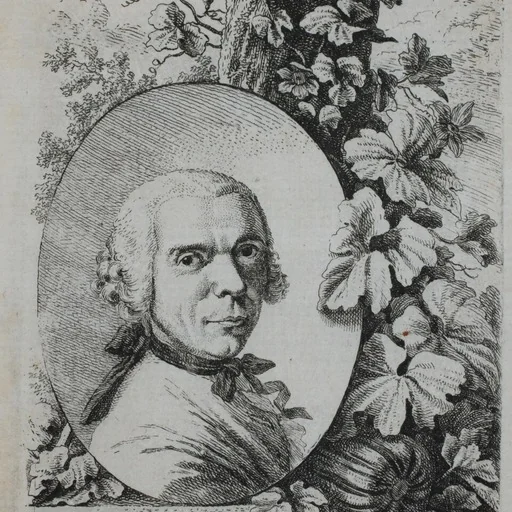
Johann Balthasar Bullinger (1713–1793) was an artist, born in Langnau am Albis.