Artwork
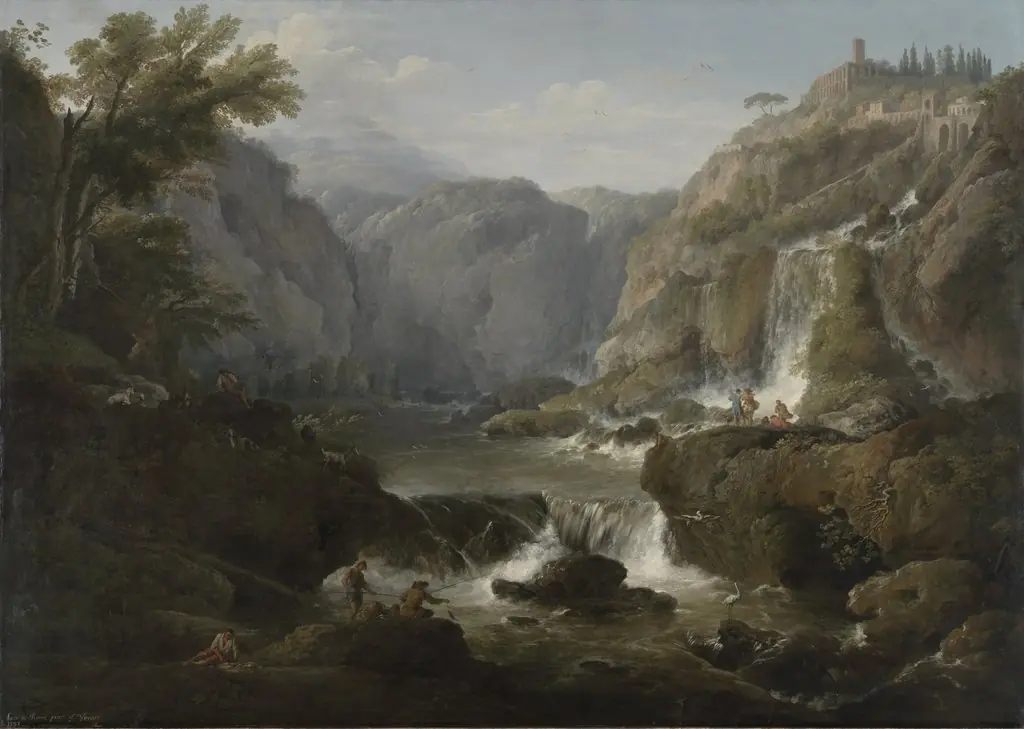
The Waterfalls at Tivoli
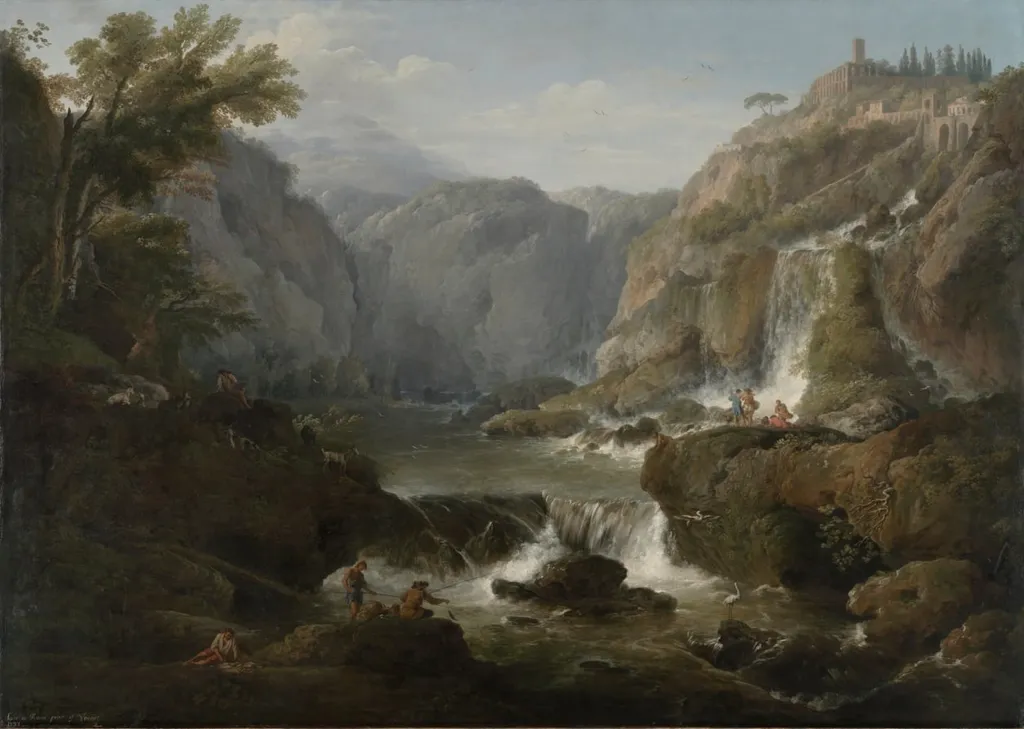
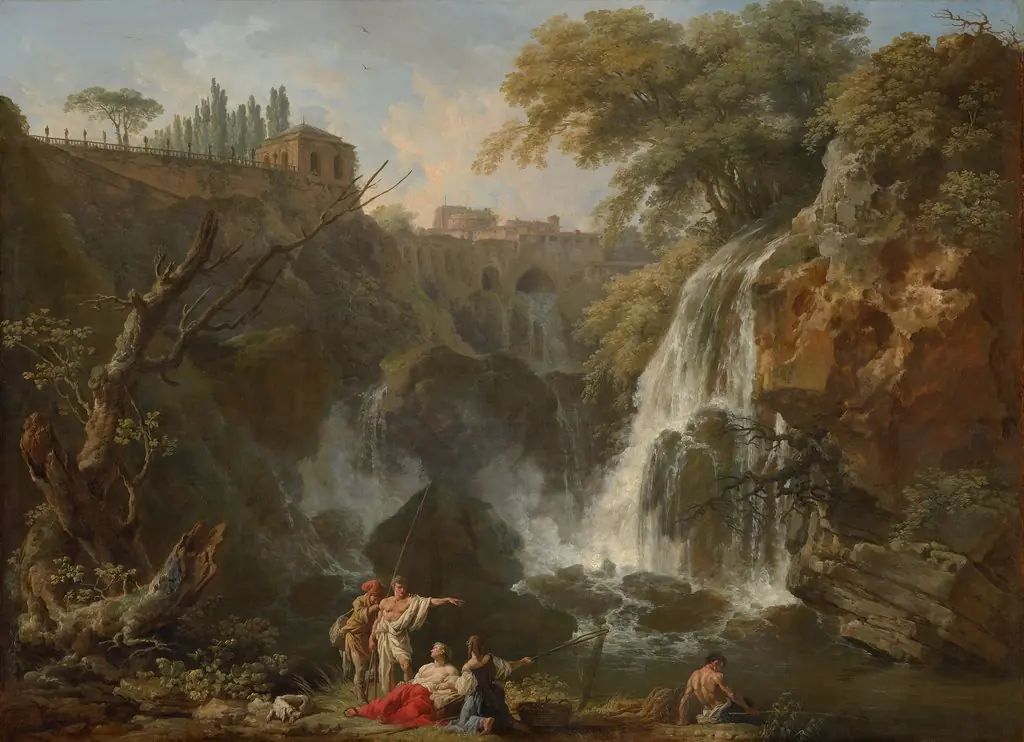
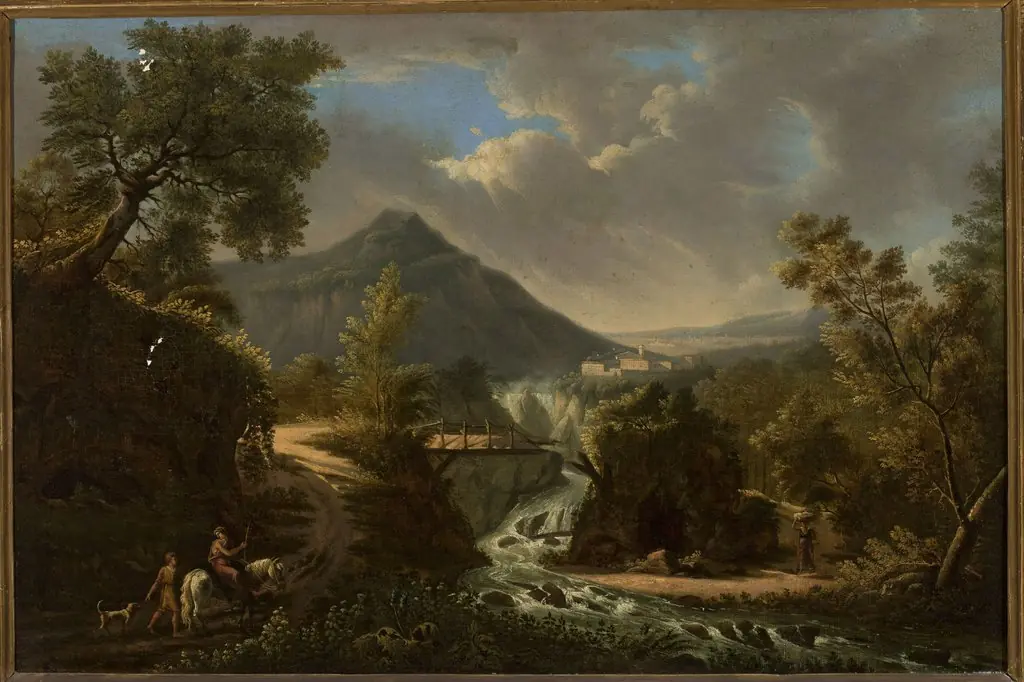
The Waterfalls at Tivoli is an unspecified painting by the Baroque artist Claude-Joseph Vernet. It dates from 1737 and is held in the collection of the Cleveland Museum of Art.
About this work
Overview
Created during Claude-Joseph Vernet’s early period in Rome, the canvas captures the renowned waterfalls of Tivoli, a town situated about twenty miles east of the capital. A towering cascade plunges into a river framed by trees, while a diminutive group of figures and distant signs of settlement occupy the foreground, emphasizing the dominance of the natural scene.
Subject & Meaning
The composition centers on the power of water, a recurring motif in Vernet’s oeuvre, juxtaposing the dramatic fall of the waterfall with the tranquil pastoral surroundings. Human presence is limited to fishermen and small settlements, suggesting a harmonious coexistence of civilization and the overwhelming forces of nature.
Technique & Style
Vernet blends the rugged, dramatic landscape tradition of 17th‑century Italian painters such as Salvator Rosa with the softer, luminous approach of French masters like Claude Lorrain. His handling of light accentuates the spray of the cascade, while the precise rendering of rock and foliage conveys both texture and atmospheric depth.
History & Provenance
The work was likely Vernet’s first major painting produced while studying in Rome. Its reputation grew quickly, eventually entering the collection of Lucien Bonaparte, brother of Napoleon, reflecting the artist’s early popularity among elite patrons.
Context
By integrating Italian dramatic scenery with French pastoral sensibilities, Vernet helped define 18th‑century French landscape painting. The Tivoli waterfalls exemplify his capacity to merge international influences, a practice that contributed to his standing as a leading French landscape painter of his century.
Artist & collection
Artist
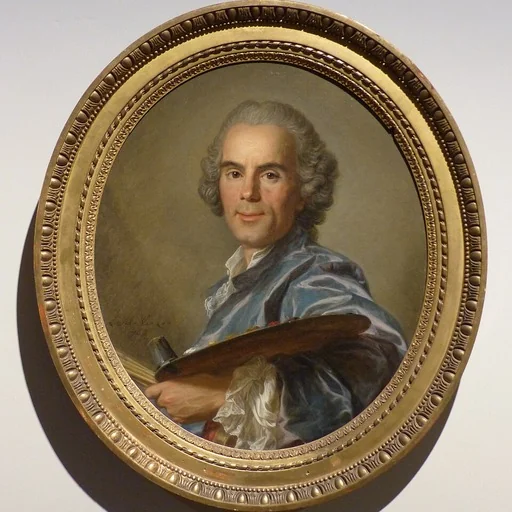
Claude-Joseph Vernet (French pronunciation: ; 14 August 1714 – 3 December 1789) was a French painter. His son Carle Vernet and daughter Marguerite Émilie Chalgrin were also painters.