Artwork
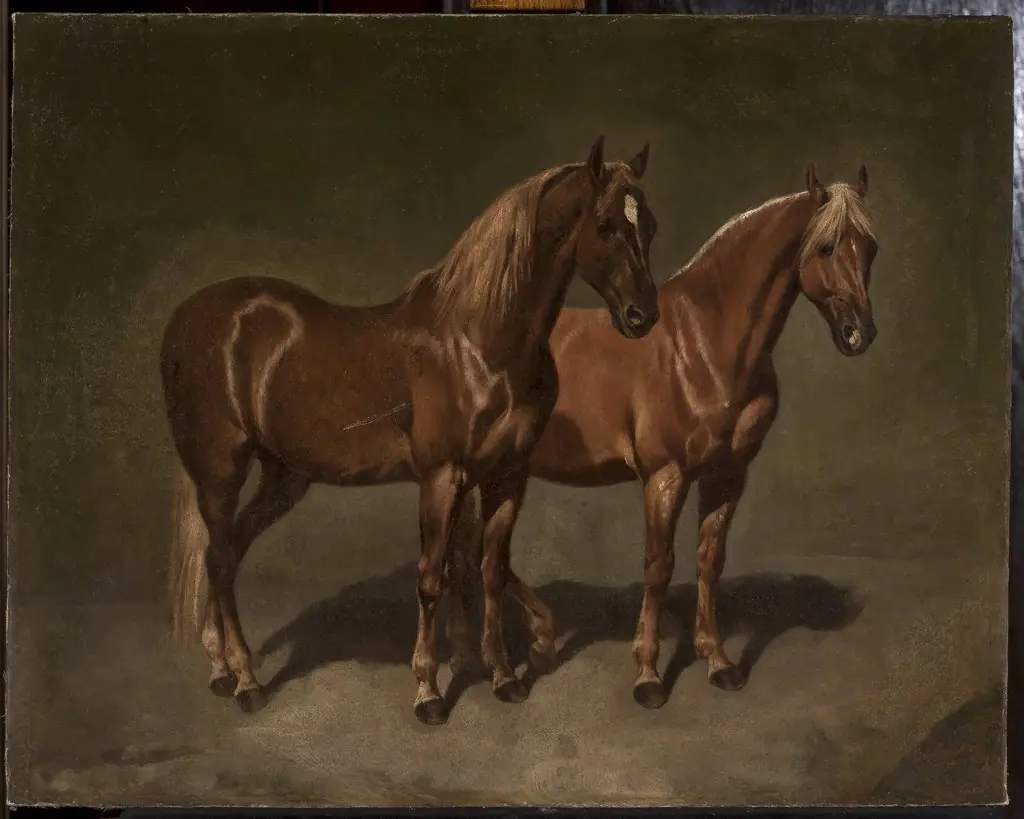
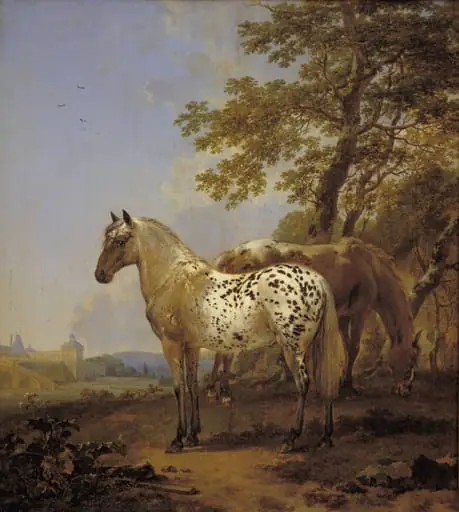
Two draft horses in the stable
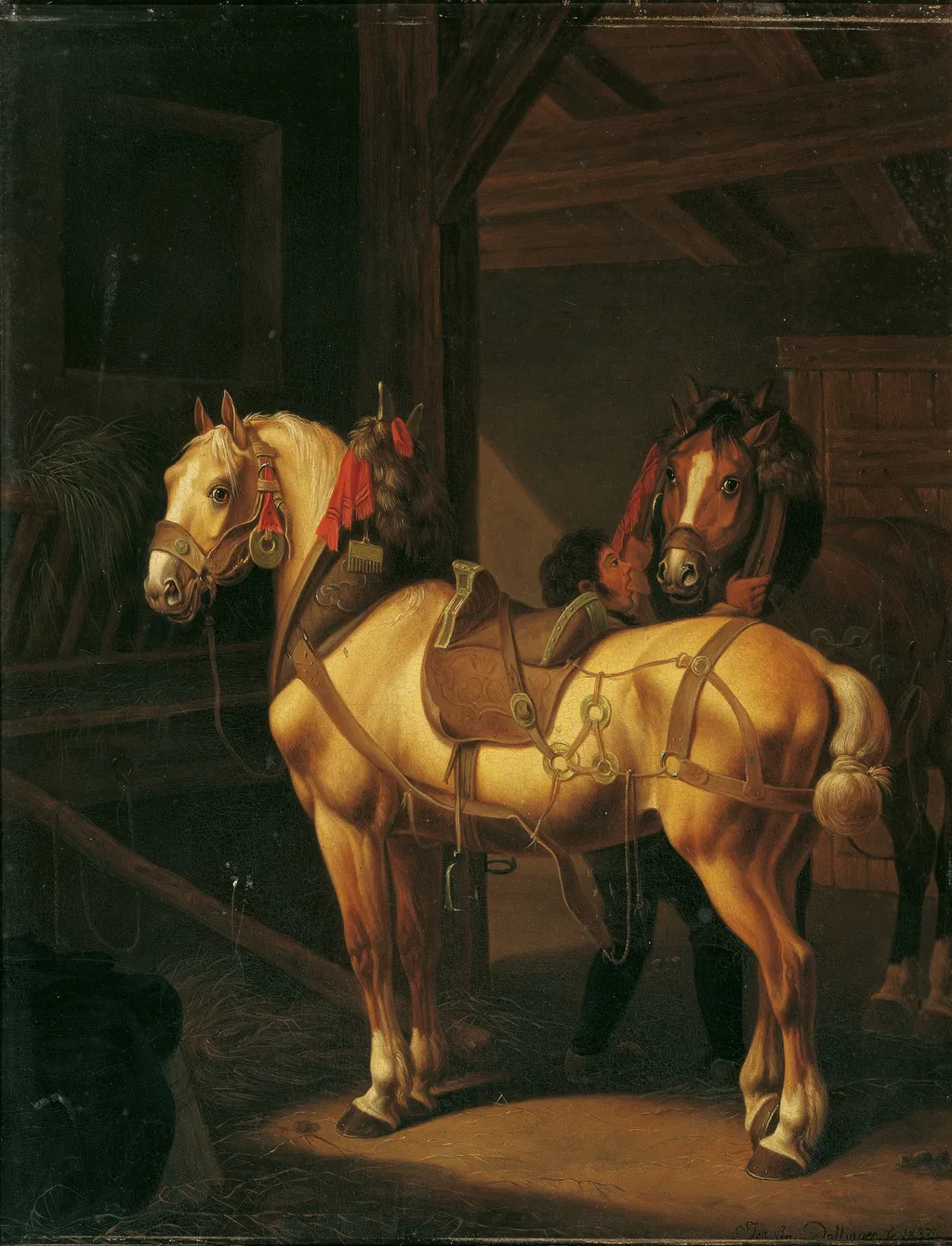
Two draft horses in the stable is an oil painting by the Biedermeier artist Johann Baptist Dallinger von Dalling. It dates from 1832 and is held in the collection of the Kunsthistorisches Museum.
About this work
Overview
Painted in 1832 by Austrian artist Johann Baptist Dallinger von Dalling, this oil on canvas depicts two draft horses within a stable interior.
Painted in 1832 by Austrian artist Johann Baptist Dallinger von Dalling, this oil on canvas depicts two draft horses within a stable interior. Dallinger von Dalling, trained by his father and active in Vienna throughout his life, specialized in animal and genre subjects. The work reflects his engagement with the quiet realism of the Biedermeier era, drawing subtle inspiration from Dutch Old Master traditions in its attention to texture and light.
Subject & Meaning
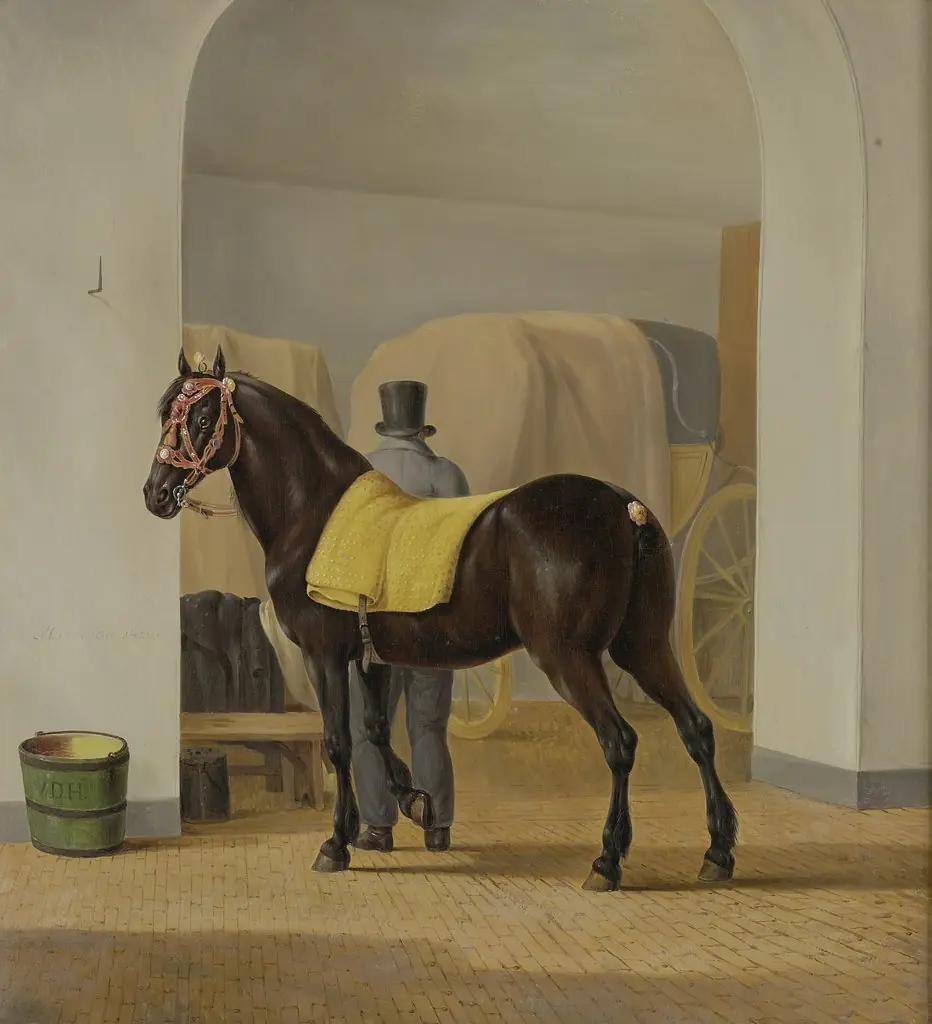
The painting presents two working horses, their forms rendered with quiet dignity. One is light brown with a white mane, the other darker, both equipped with saddles and bridles, and adorned with red ribbons—likely decorative or ceremonial. Their stillness and the modest setting suggest a moment of rest after labor, emphasizing utility over grandeur. The absence of human figures reinforces the animals as central subjects, honoring their role in rural economy.
Technique & Style
Dallinger von Dalling employs chiaroscuro to model the horses’ muscular forms against the dim stable interior, creating a sense of volume and spatial depth. The wooden beams and earthen floor are rendered with restrained detail, allowing the animals to dominate the composition. His brushwork is precise yet unobtrusive, favoring tonal harmony over dramatic contrast. The style aligns with Biedermeier sensibilities—calm, intimate, and grounded in observed reality rather than idealization.
History & Provenance
Completed in 1832, the painting entered the collection of the Kunsthistorisches Museum in Vienna, where it remains today. Dallinger von Dalling, born in Vienna in 1782 and active until his death in 1868, produced numerous works depicting animals and rural life. His consistent presence in the city’s artistic circles ensured his works were preserved within local institutions, reflecting the cultural value placed on domestic and agricultural themes in 19th-century Austria.
Context
In early 19th-century Austria, the Biedermeier movement favored domestic tranquility and naturalistic observation over romantic grandeur. Horses, vital to transport and agriculture, were common subjects in this context. Dallinger von Dalling’s focus on working animals aligns with broader societal appreciation for the quiet dignity of labor. His work stands apart from theatrical equestrian portraits, instead offering a grounded, unadorned view of rural life.
Legacy
Though not widely known beyond regional circles, Dallinger von Dalling’s animal studies contributed to a tradition of Austrian realism that valued careful observation over narrative drama. This painting exemplifies how everyday subjects were elevated through technical precision and restrained composition. Its continued presence in the Kunsthistorisches Museum underscores its role as a representative work of Biedermeier-era animal painting in Central Europe.
Artist & collection
Artist
Johann Baptist Dallinger von Dalling
Johann Baptist Dallinger von Dalling (1782–1868) was an Austrian painter. A son of Johann Dallinger von Dalling, he was born in Vienna, and painted landscapes and animals in the old Dutch style, as well as portraits and…