Artwork
Portrait of ES Zhadimerovskaya
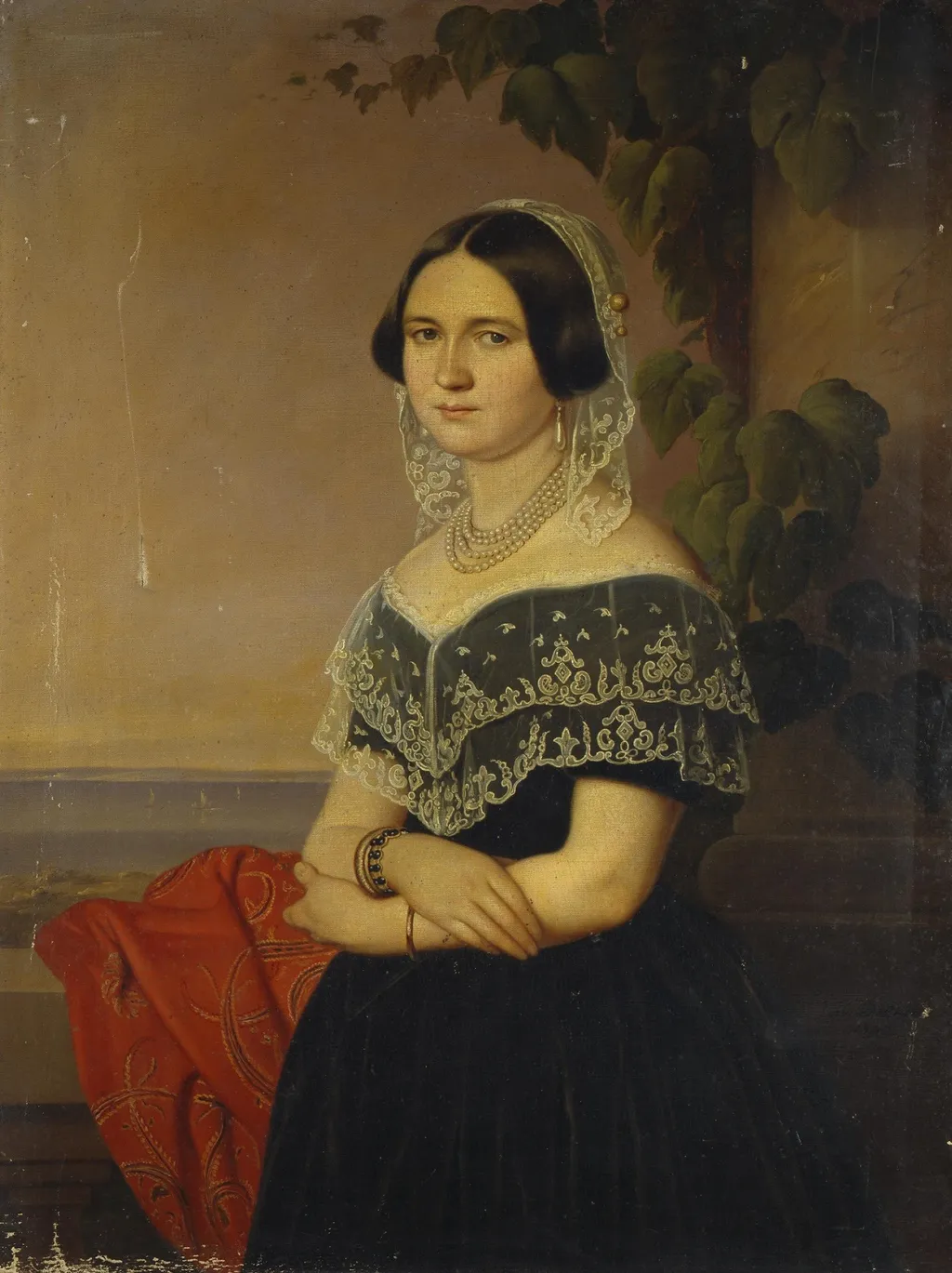
Portrait of ES Zhadimerovskaya is an oil painting by the Biedermeier artist Johann Conrad Dorner. It dates from 1846 and is held in the collection of the Hermitage Museum.
About this work
Overview
Painted in 1846 by Johann Conrad Dorner, this oil portrait depicts ES Zhadimerovskaya, a woman of likely noble standing. The work resides in the State Hermitage Museum in Saint Petersburg. Rendered with restrained elegance, the composition focuses on the sitter’s composed demeanor and the subtle interplay of light and fabric, reflecting the quiet refinement of mid-19th-century portraiture.
Subject & Meaning
The subject, ES Zhadimerovskaya, is portrayed in a static, introspective pose with arms crossed, suggesting dignity and self-possession.
The subject, ES Zhadimerovskaya, is portrayed in a static, introspective pose with arms crossed, suggesting dignity and self-possession. Her attire—dark dress, lace collar, and pearl necklace—signals social status without ostentation. The red drape behind her may imply domestic luxury or serve as a deliberate tonal counterpoint, reinforcing her presence without diverting attention from her expression.
Technique & Style
Dorner employs soft chiaroscuro to model the sitter’s face, creating gentle transitions between light and shadow that enhance volume without dramatic contrast. The lace details are rendered with precision, while the background remains muted, isolating the figure. The red cloth introduces a restrained accent, balancing the monochrome palette and guiding the viewer’s eye toward the subject’s upper torso.
History & Provenance
The portrait entered the collection of the State Hermitage Museum in the 19th century, likely through imperial acquisition or donation. Its provenance traces back to Dorner’s active period in Russia, where he painted members of the aristocracy. No significant alterations or reattributions are recorded, and the work has remained in stable condition since its creation.
Context
Created during a period when Russian aristocratic portraiture emphasized restraint and moral gravitas, the painting aligns with trends favoring psychological depth over theatricality. Dorner, trained in German academic traditions, adapted his style to Russian tastes, blending Northern European precision with the subdued elegance favored by the imperial court.
Legacy
Though not widely exhibited outside Russia, the portrait remains a representative example of mid-19th-century Russian portraiture. It illustrates how artists like Dorner contributed to a visual language of quiet authority among the elite. Its preservation in the Hermitage underscores its role as a document of social and aesthetic values of its time.
Artist & collection

 Portrait of a young woman
 Ksenia Cavos
 Portret de femeie
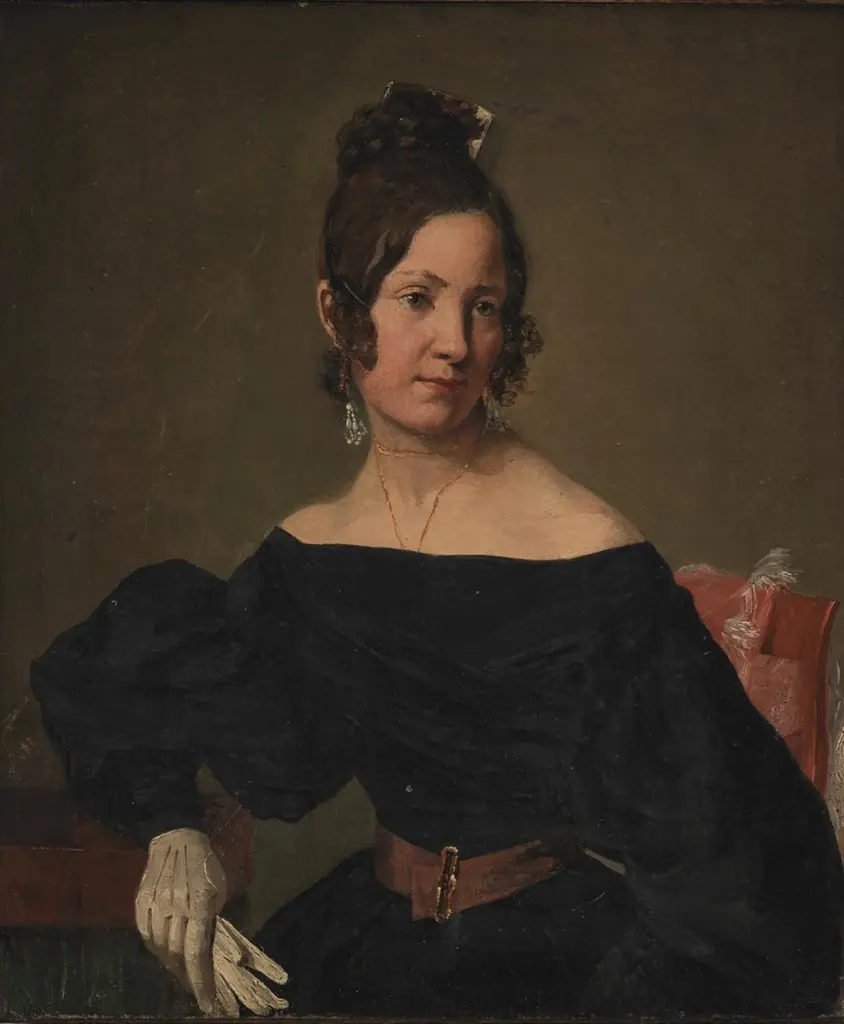 Actress Anna Nielsen
 Skuespilleren Anna Nielsen
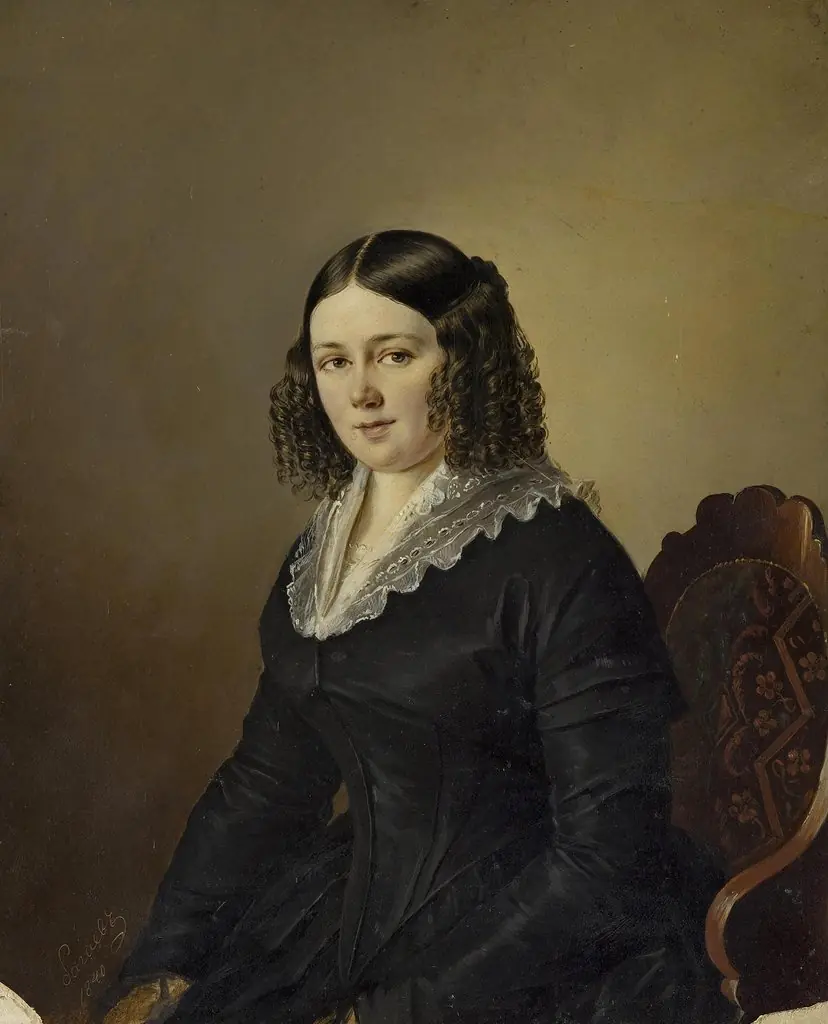 Portrait of A.I. Kolychiova
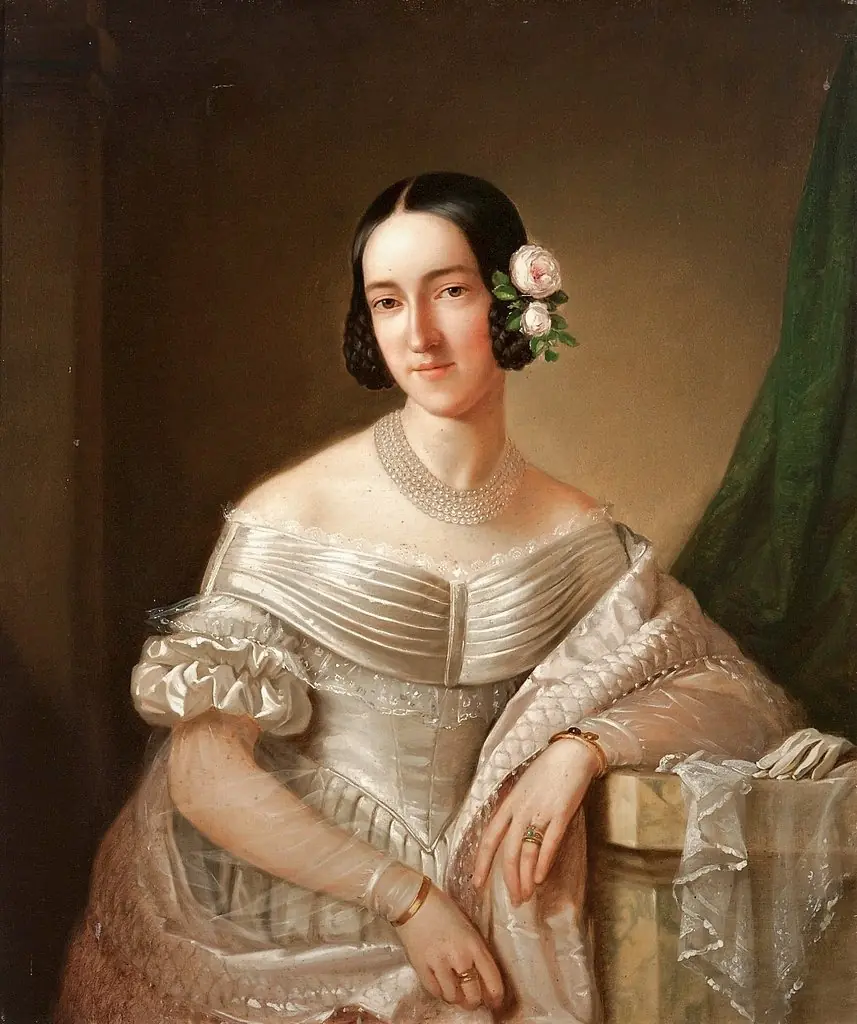 Portrait of Archduchess Hermine of Austria
 Julie (Julia Mathilda) Berwald, g. Åkerhielm af Margrethelund (1822-1877), operasångerska, gift med friherre hovmarskalk Gustaf Georg Knut Åkerhielm af Mergrethelund
 Portrait of Józefa Jabłonowska née Piwocka