Artwork
Horsemen at the Blacksmith's
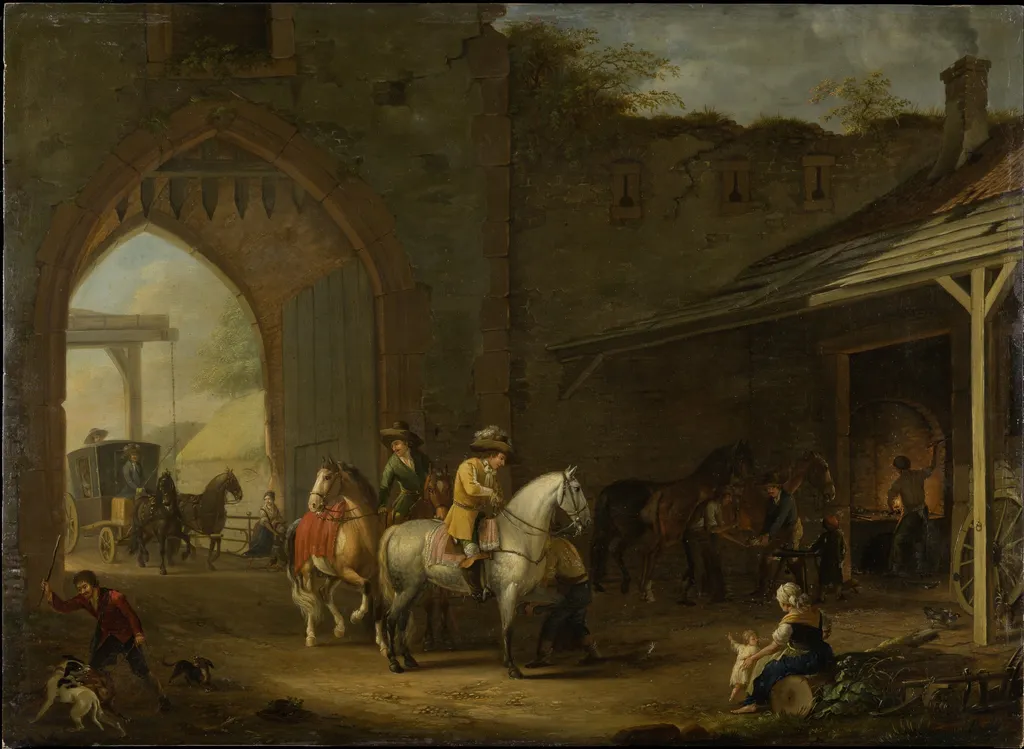
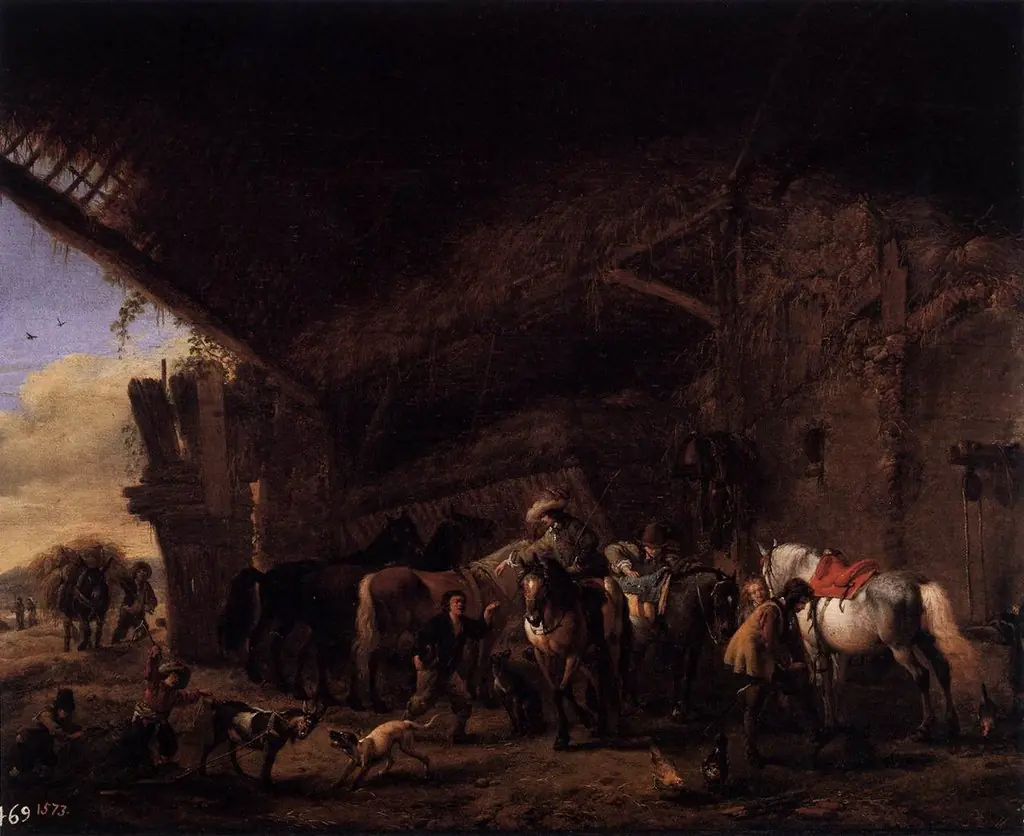
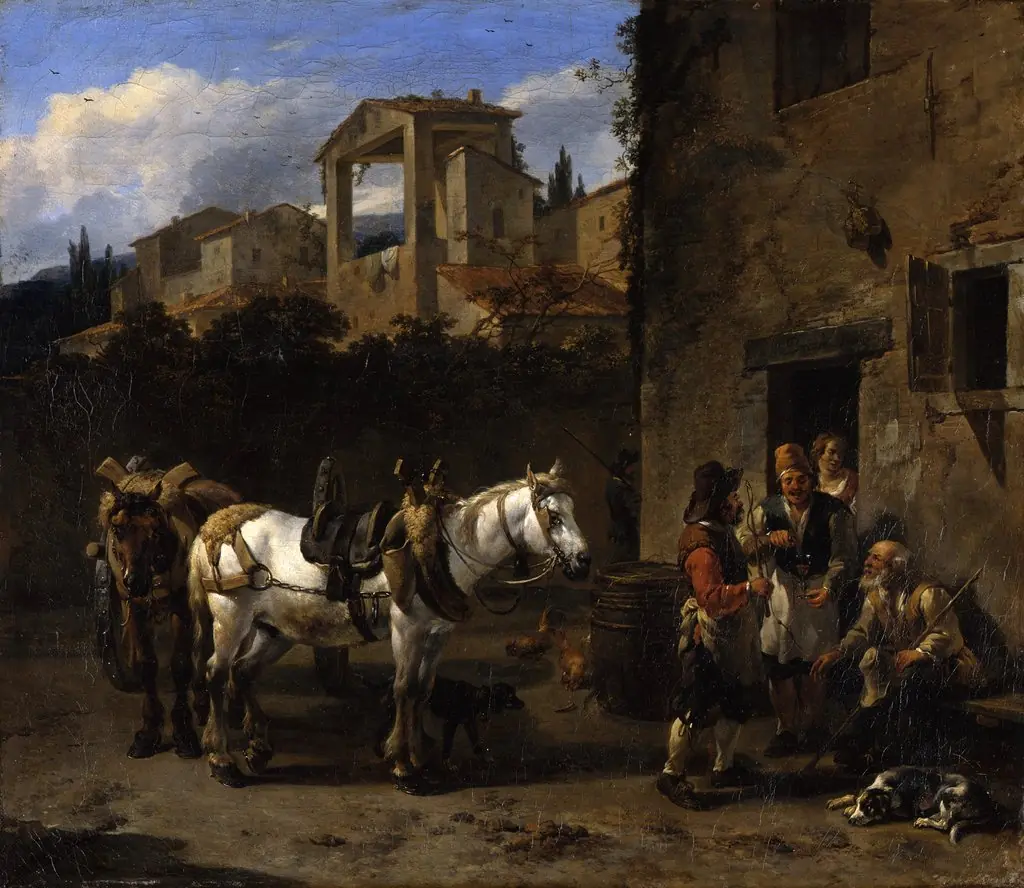
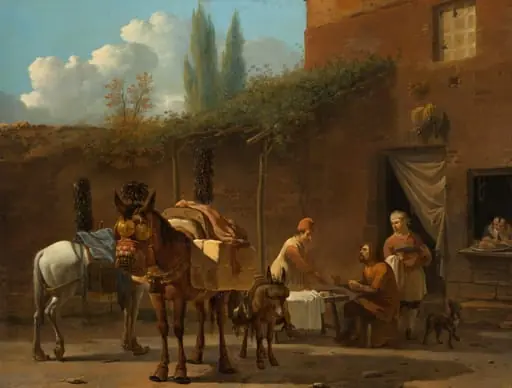
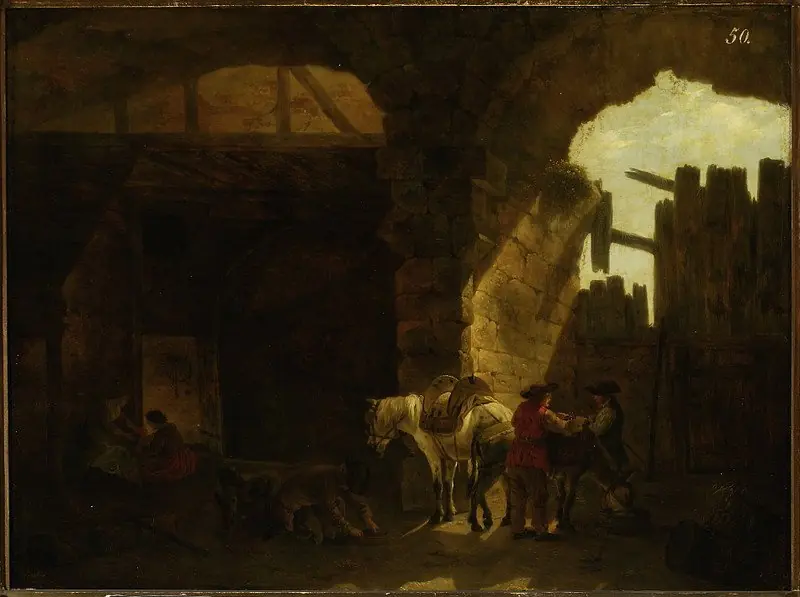
Horsemen at the Blacksmith's is an unspecified painting by the Rococo painting artist Johann Georg Pforr. It dates from 1794 and is held in the collection of the Städel Museum.
About this work
Overview
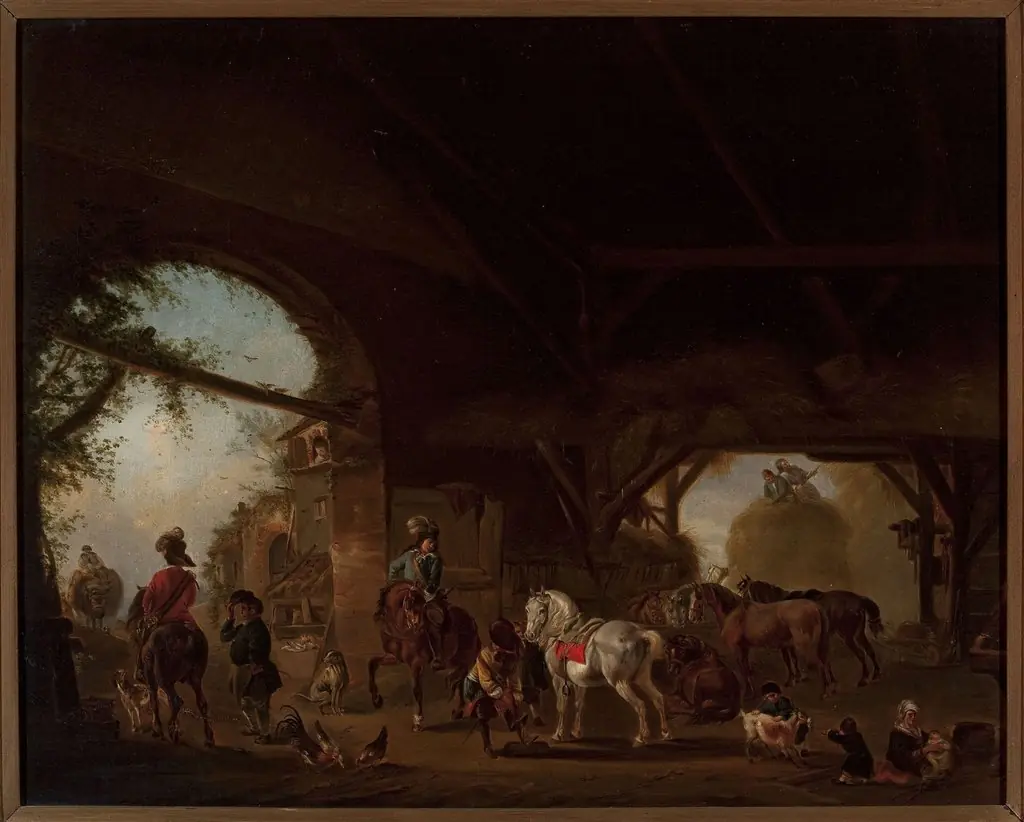
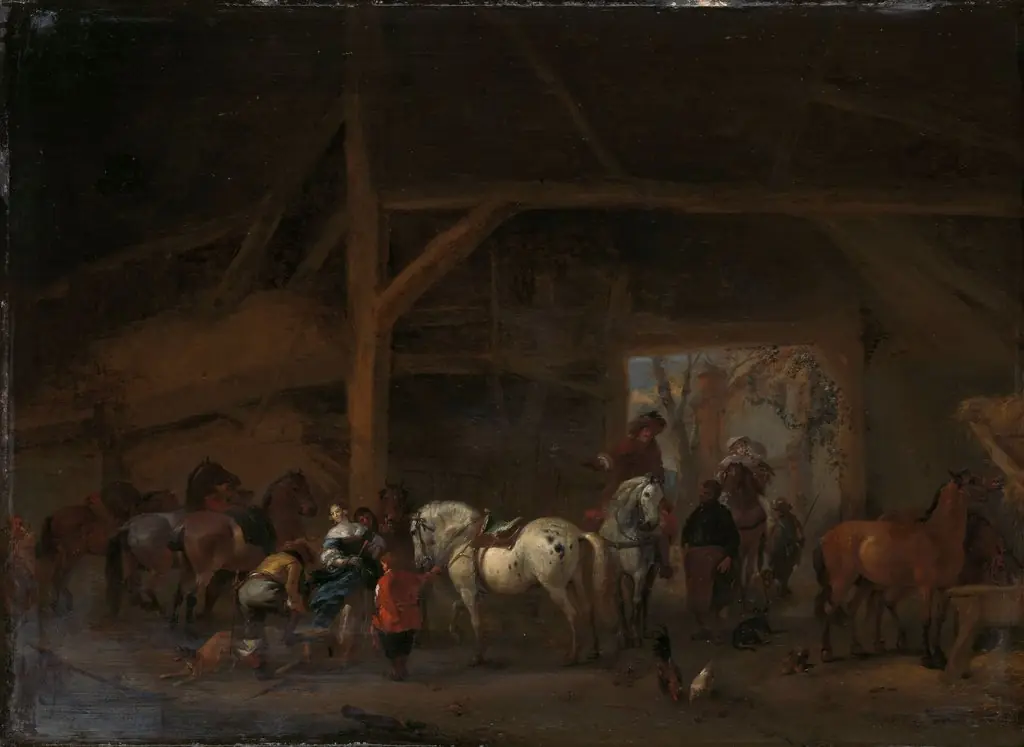
The composition centers on a group of riders in bright attire gathered near the shop’s archway, while a blacksmith attends to a horse’s hoof inside.
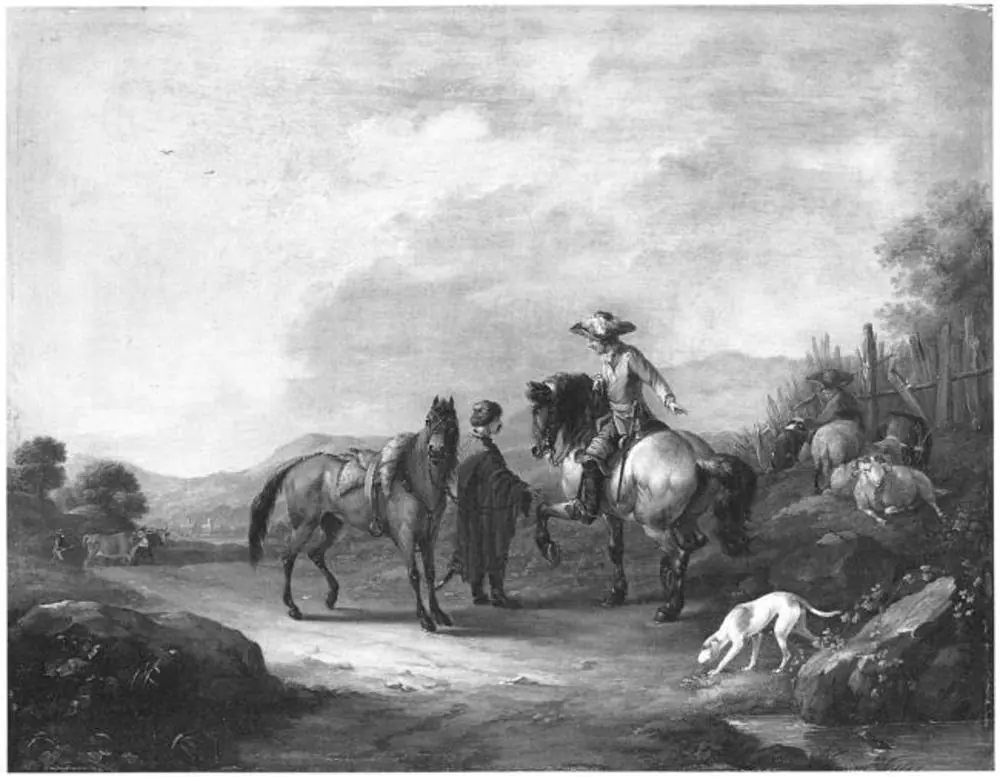
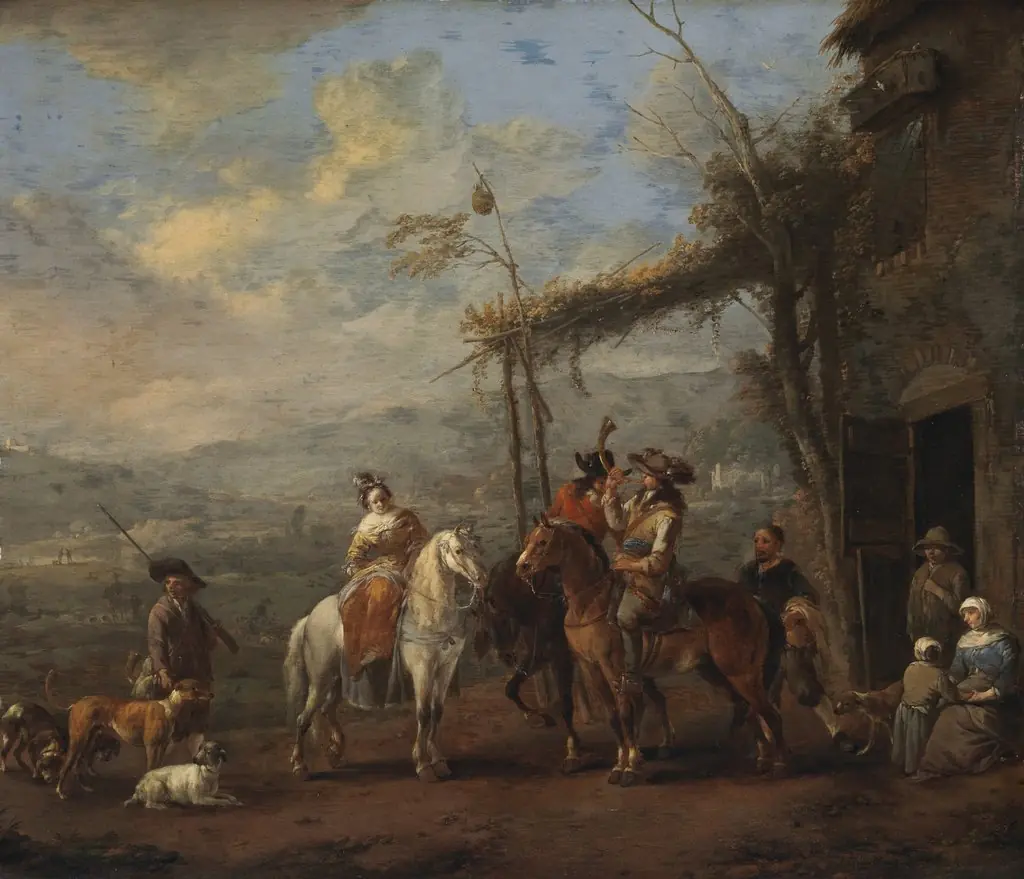
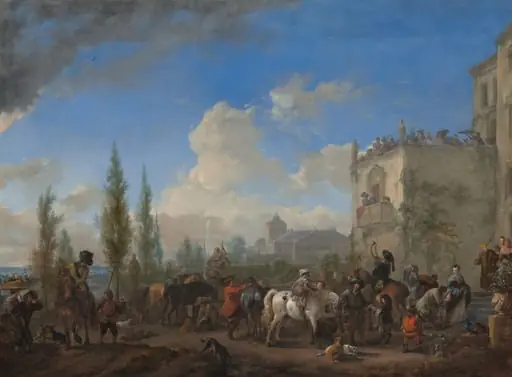
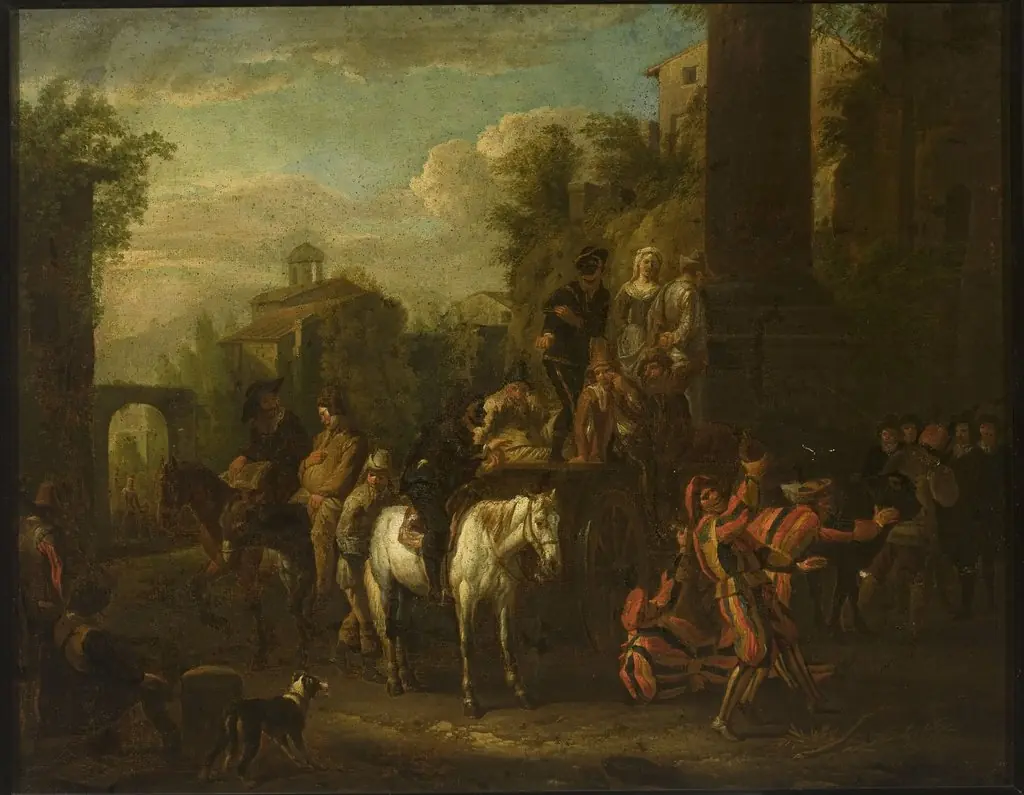
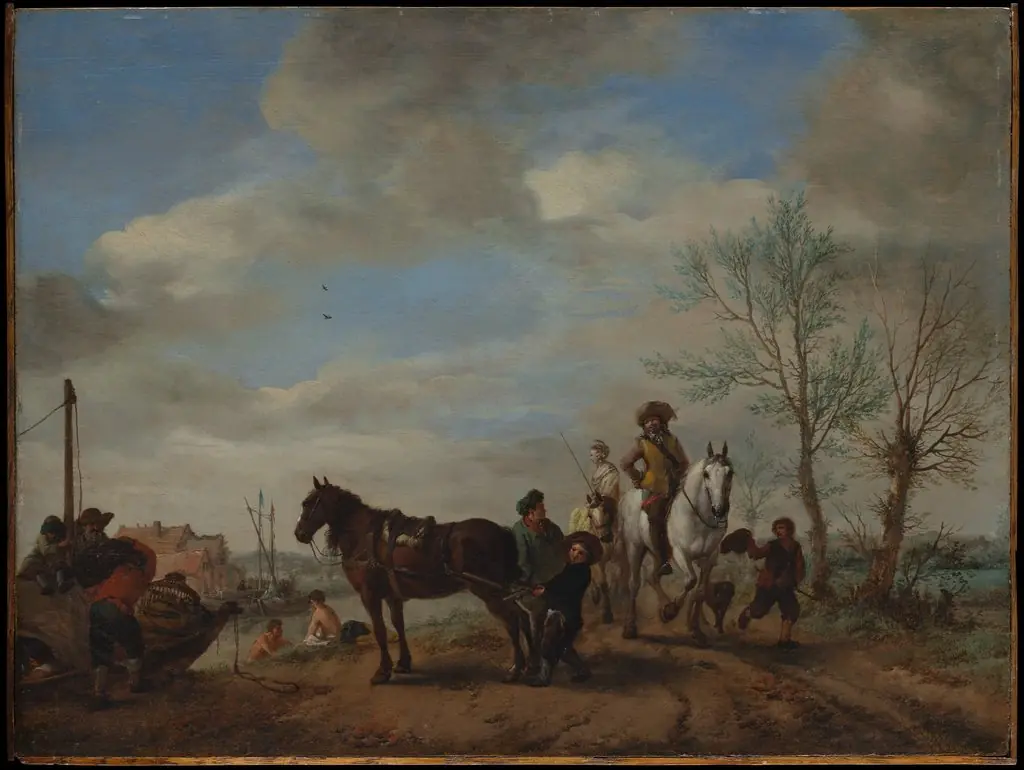
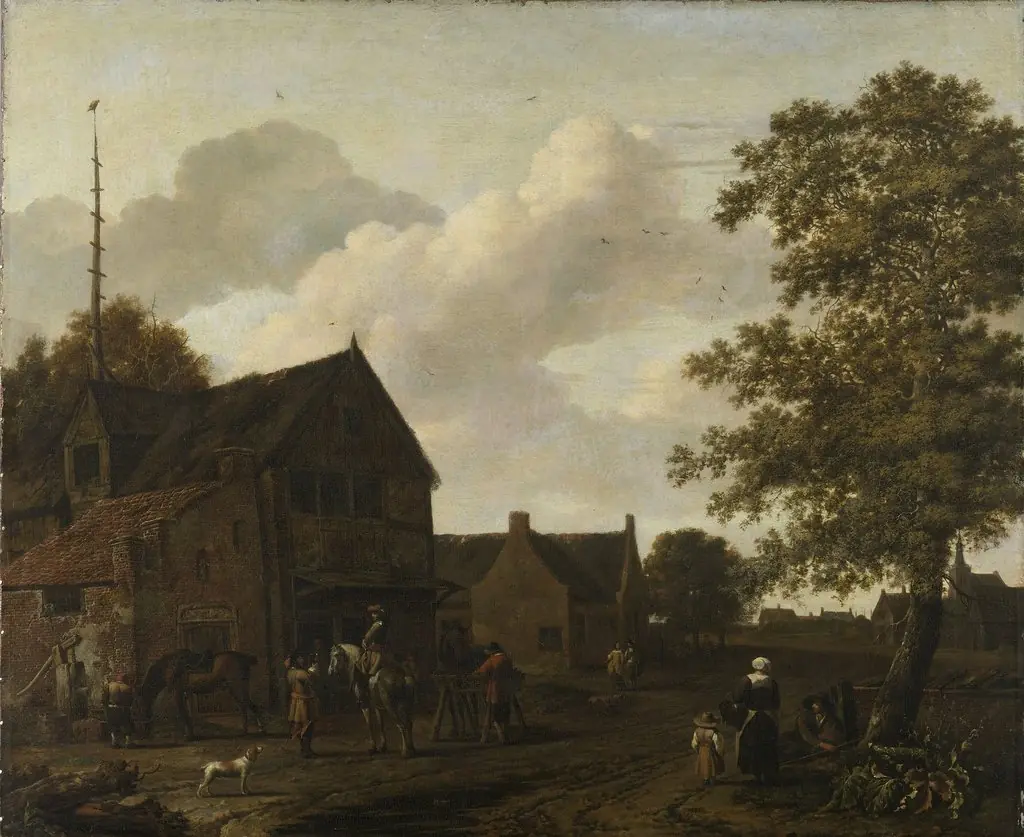
Johann Georg Pforr’s 1794 oil painting, Horsemen at the Blacksmith’s, depicts a lively outdoor setting in front of a stone workshop. The composition centers on a group of riders in bright attire gathered near the shop’s archway, while a blacksmith attends to a horse’s hoof inside. A seated woman with a child and a man caring for a dog occupy the foreground, adding domestic detail to the bustling scene.
Subject & Meaning
The work captures a moment of everyday labor and social interaction in an eighteenth‑century village. By juxtaposing the vigorous activity of the blacksmith and the relaxed presence of families, Pforr highlights the interdependence of trade, travel, and community life, suggesting a harmonious rhythm between work and domesticity.
Technique & Style
Pforr renders the stone façade and textile textures with meticulous brushwork, emphasizing the tactile quality of each surface. Warm, earthy tones dominate the palette, reinforcing the sense of vigor and conviviality. The composition balances detailed foreground figures with a broader architectural backdrop, reflecting the genre‑painting tradition of attentive observation.
History & Provenance
Created in 1794, the painting entered the collection of the Städel Museum in Frankfurt, where it remains on display. Its acquisition history reflects the museum’s focus on German art of the late Enlightenment, preserving Pforr’s contribution to the genre‑scene tradition.
Context
During the late eighteenth century, depictions of rural labor and market scenes were popular in German art, aligning with Enlightenment interests in everyday life and social order. Pforr’s choice of a blacksmith’s shop—a hub of communal activity—places the work within this broader cultural fascination with the dignity of work.
Own this work as a print
Artist & collection