Artwork
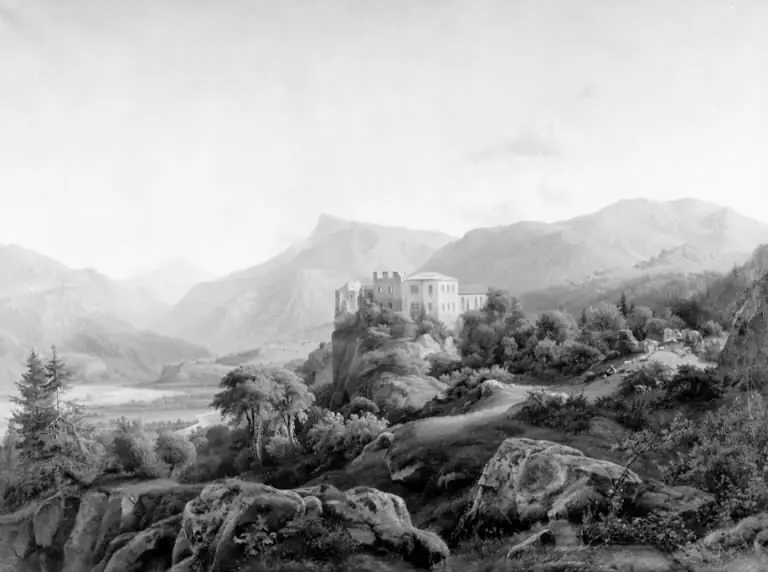
Kriebstein Castle at Zschoppau in Saxony. Morning
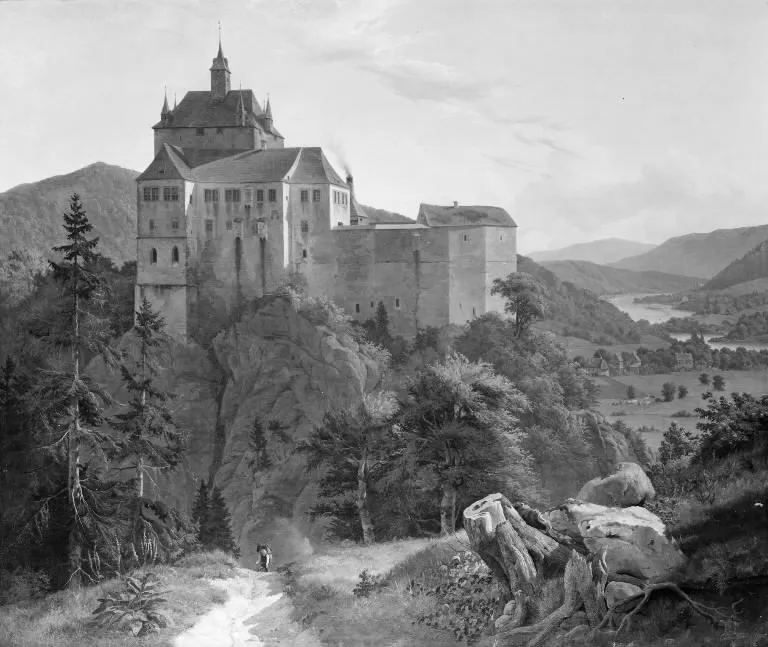
Kriebstein Castle at Zschoppau in Saxony. Morning is an oil painting by Johann Hermann Carmiencke. It dates from 1838 and is held in the collection of the Statens Museum for Kunst. Johann Hermann Carmineck’s 1838 oil on canvas, titled Kriebstein Castle at Zschoppau in Saxony.
About this work
Overview
Johann Hermann Carmineck’s 1838 oil on canvas, titled Kriebstein Castle at Zschoppau in Saxony. Morning, portrays a fortified residence perched on a hilltop. The composition is anchored by a winding path that leads the eye toward the castle’s imposing walls, while a pale sky hints at early daylight. The work is part of the Statens Museum for Kunst collection.
Subject & Meaning
The painting captures the historic Kriebstein Castle surrounded by a wooded landscape and distant mountains.
The painting captures the historic Kriebstein Castle surrounded by a wooded landscape and distant mountains. A solitary figure traverses the foreground path, suggesting a personal encounter with the site. The tranquil morning light emphasizes the structure’s durability and the quietude of the surrounding nature, inviting contemplation of the interplay between human architecture and the natural environment.
Technique & Style
Executed in oil, the work benefits from the medium’s capacity for layered detail and subtle tonal variation. Carmineck employs a muted palette to render the hazy mountains and the soft morning sky, while the castle’s stonework and windows are delineated with sharper brushstrokes. The overall effect balances realism with a gentle atmospheric softness characteristic of early‑19th‑century landscape painting.
History & Provenance
Created in 1838, the canvas entered the holdings of Denmark’s national gallery, the Statens Museum for Kunst, where it remains on display. Its acquisition reflects the museum’s broader interest in European landscape art of the period, though specific details of its earlier ownership are not recorded in the available documentation.
Context
Carmineck, a German‑born artist active in the early 1800s, often depicted historic sites within romanticized natural settings. This piece aligns with contemporary trends that valorized medieval architecture as symbols of cultural heritage, set against idealized, pastoral backdrops that conveyed both nostalgia and national pride.
Artist & collection

Artist
Johann Hermann Carmiencke (1810–1867) was an artist, born in Hamburg.

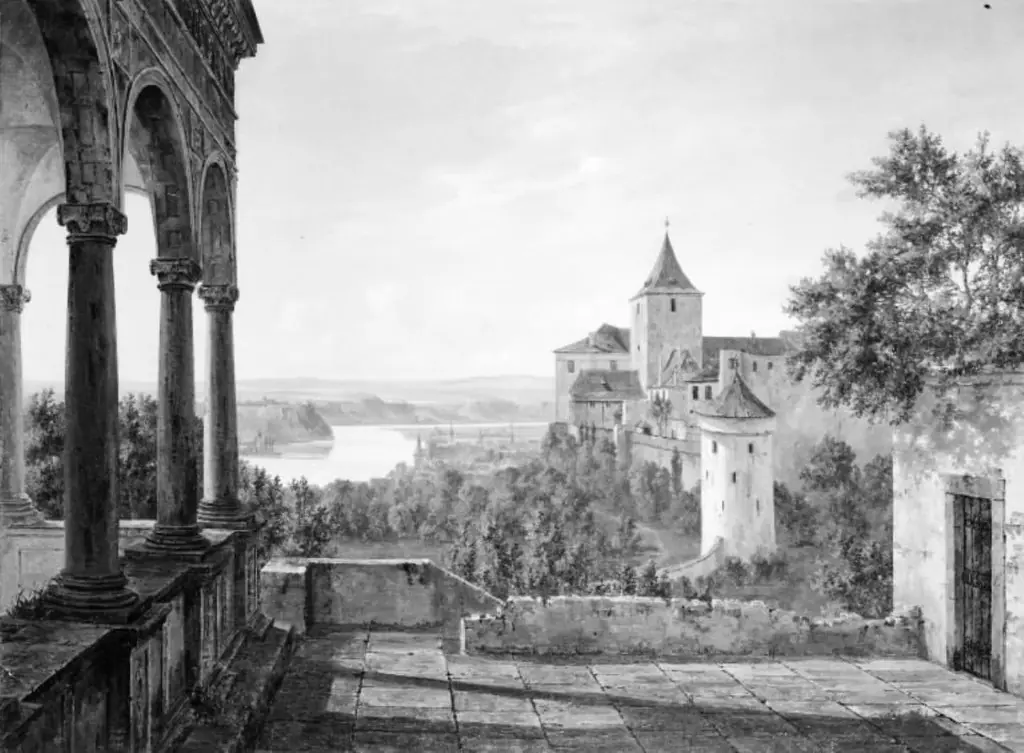 Udsigt ved Tycho Brahes observatorium i Prag
 Udsigt ved Tycho Brahes observatorium i Prag
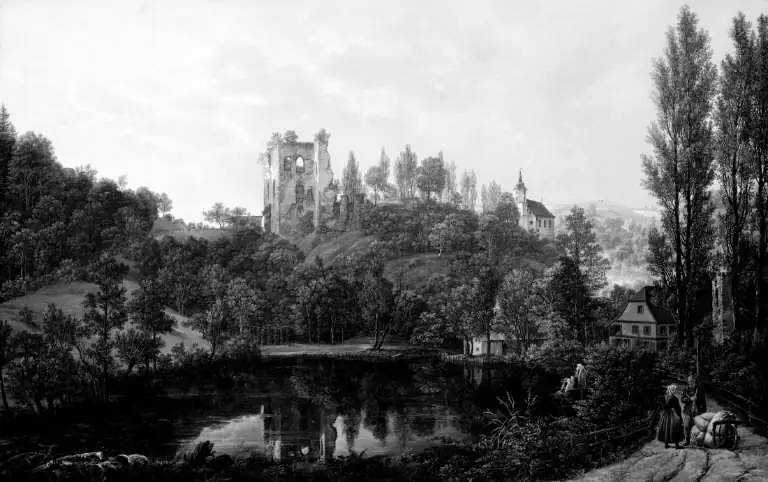 The Castle Ruin at Tharandt
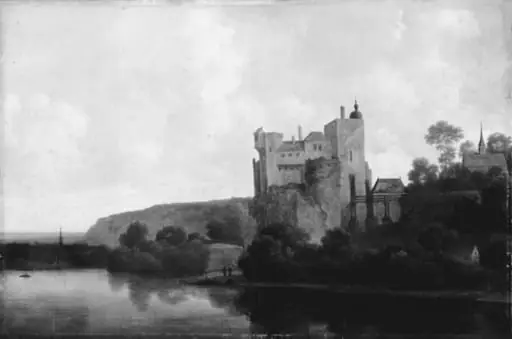 Castle by a River
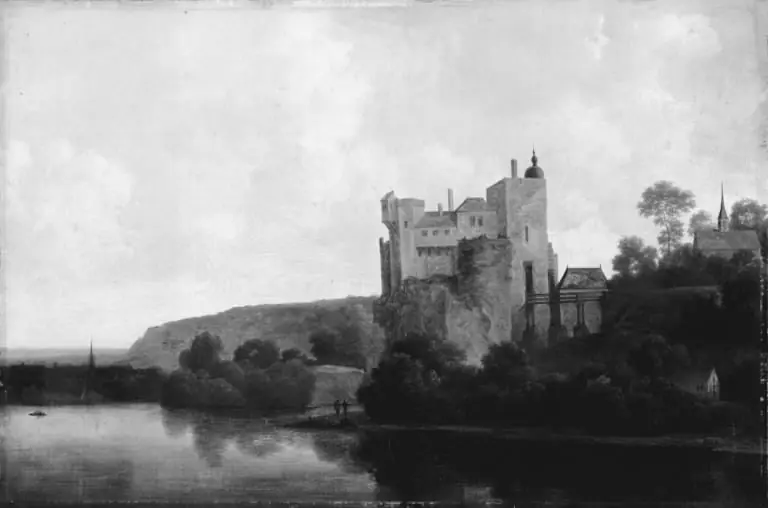 Castle by a River
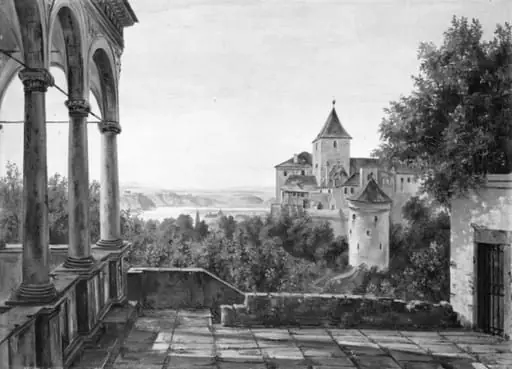 Udsigt ved Tycho Brahes observatorium i Prag
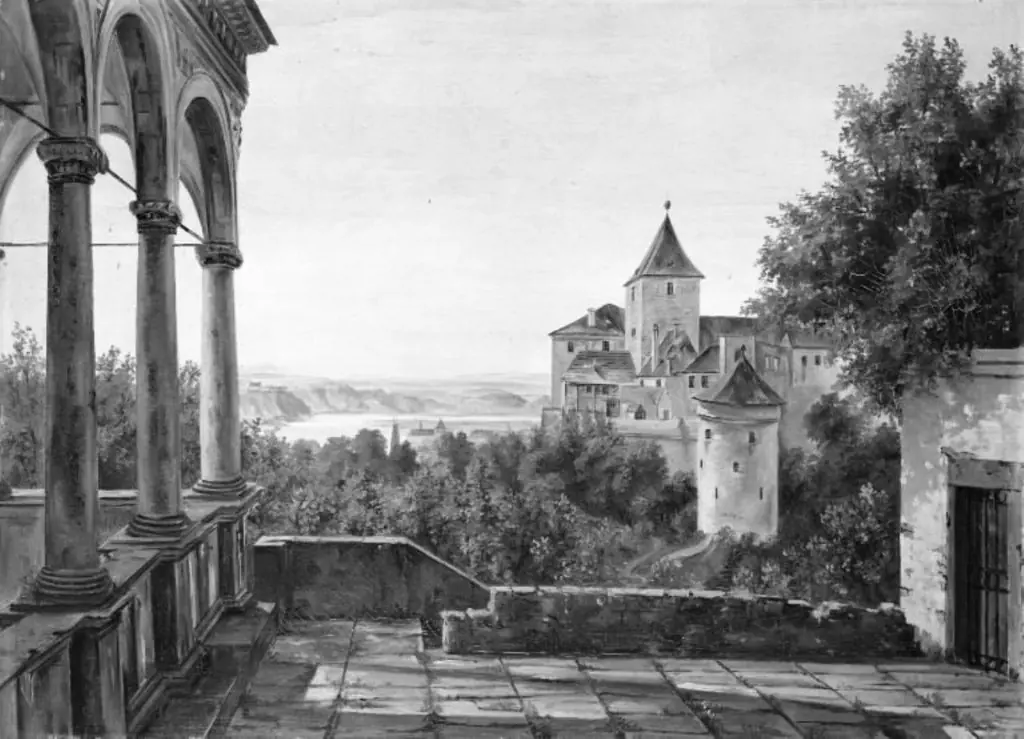 Udsigt ved Tycho Brahes observatorium i Prag
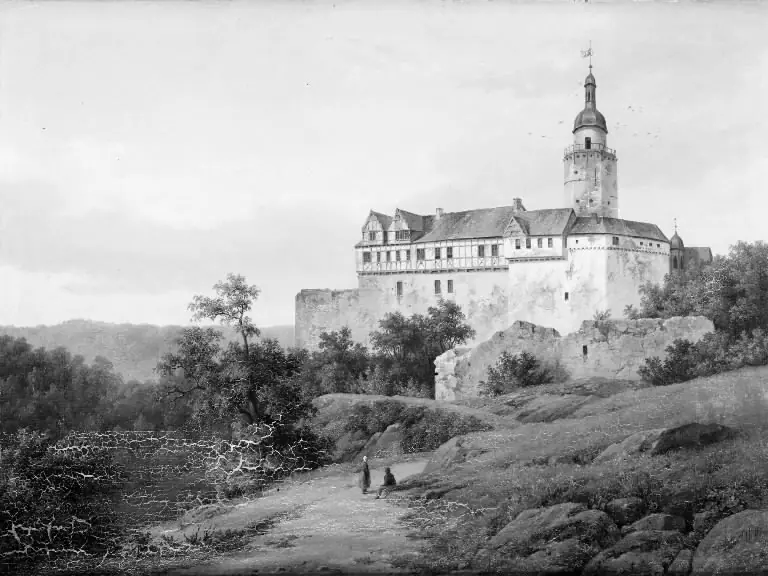
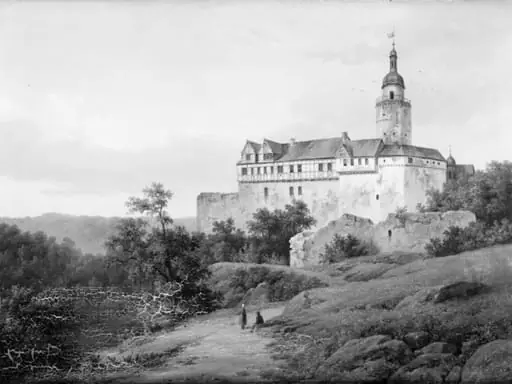 Falkenstein Castle in the Harz
 River Scenery
 Falkenstein Castle in the Harz